
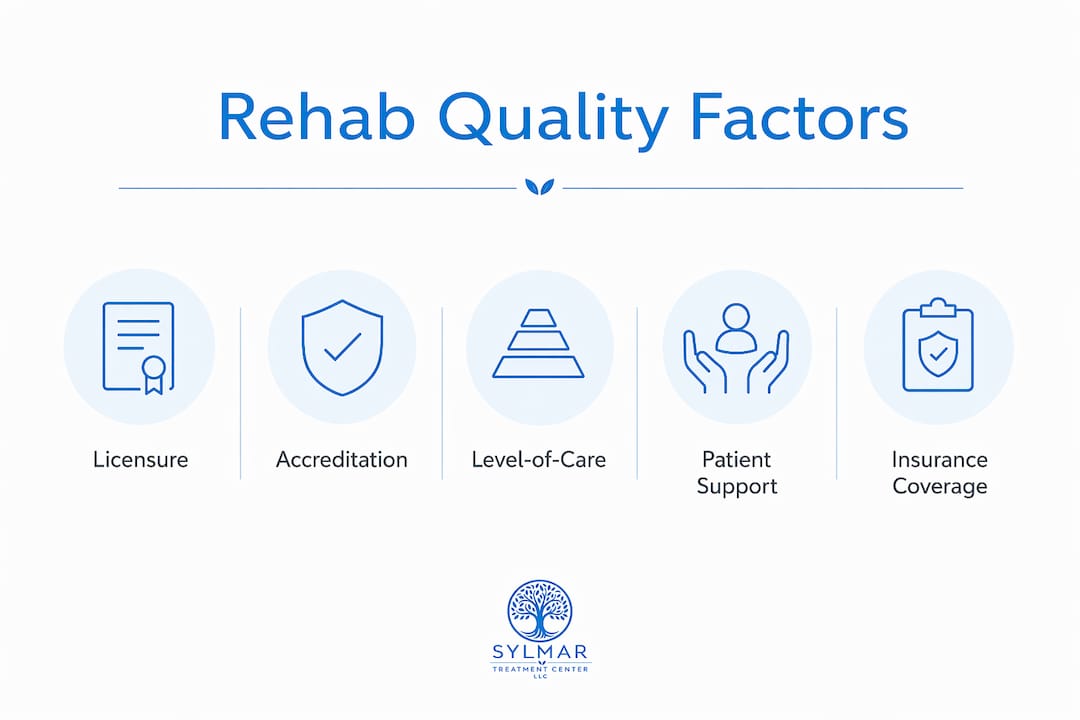
When you’re comparing thehouseoflife.com alternatives, the five factors that actually separate a safe, effective program from a risky one are: state licensure, level-of-care designation, independent accreditation, staff credentials, and a concrete aftercare plan. Everything else, including the photos, the amenities, and the marketing copy, comes second.
Before calling any facility, confirm these points:
- State license: The facility must hold a current DHCS license or equivalent state authorization.
- Level-of-care (LOC) designation: California requires facilities to hold a DHCS LOC designation aligned with ASAM criteria, confirming the program can actually deliver the care intensity the patient needs.
- Independent accreditation: Look for CARF International or The Joint Commission certification, which signals an outside audit has verified quality standards.
- Licensed clinical staff: Confirm therapists, counselors, and medical personnel hold active state licenses.
- Aftercare planning: A discharge plan with relapse prevention support should be built into the program, not offered as an optional add-on.
Why state licensure and level-of-care designations matter most
California’s Health and Safety Code Section 11834.015 requires DHCS to adopt ASAM treatment criteria as the minimum standard of care for all licensed adult alcohol and drug (AOD) facilities. That legal baseline is your first filter when evaluating any program.
The DHCS LOC designation program breaks residential care into distinct tiers:
- Level 3.1: Clinically managed, low-intensity residential services
- Level 3.2: Clinically managed residential withdrawal management
- Level 3.3: Clinically managed, population-specific high-intensity residential services
- Level 3.5: Clinically managed, high-intensity residential services
Matching a patient to the wrong tier causes real harm. Someone who needs medically managed detox placed in a low-intensity residential program faces serious safety risks. California regulations treat medical detoxification as a separately licensed service, so always verify that a facility’s LOC designation actually covers the withdrawal management level your situation requires.
Pro Tip: Ask the admissions coordinator for the facility’s DHCS license number and LOC designation in writing. You can cross-check both through the DHCS provider directory before committing.
How independent accreditation helps you evaluate rehab quality
State licensure sets the legal floor. Accreditation raises the bar. About 30% of US treatment centers hold CARF accreditation, and about 23% hold Joint Commission accreditation. Both are voluntary, which is exactly why they carry weight: a facility that pursues independent auditing is signaling something about how it operates.
What accreditation actually involves:
- An independent body reviews clinical protocols, safety procedures, staff qualifications, and patient rights policies.
- Surveyors conduct on-site visits and compare operations against national standards.
- Accreditation must be renewed periodically, so a current certificate reflects ongoing compliance, not a one-time review.
Pairing accreditation status with licensure verification gives you a much clearer picture of a facility than either check alone. You can confirm Joint Commission status at qualitycheckjointcommission.org and CARF status at carf.org. Neither search takes more than two minutes.
Questions to ask every rehab center you’re comparing
Standardized questions let you compare facilities on the same dimensions rather than reacting to each center’s sales pitch. RehabHive recommends matching level of care to severity first, then drilling into staff and therapy before anything else.
Ask every center these questions:
- What is your current DHCS license number and LOC designation?
- Are you accredited by The Joint Commission or CARF? When was your last review?
- What licenses do your primary therapists and counselors hold?
- Which evidence-based modalities do you use? (CBT, DBT, and MAT are the most common benchmarks.)
- Do you treat co-occurring mental health disorders alongside addiction?
- What does your aftercare plan look like at discharge, and who manages it?
- What is your current capacity, and is there a wait list?
- Can you share patient outcome data or satisfaction results?
A facility that deflects or gives vague answers to licensing and accreditation questions is telling you something important.
Payment models and typical costs for rehab alternatives
Cost shapes the decision for most families, even when it shouldn’t be the deciding factor. House of Life typically charges a substantial amount for 30 days and works with most PPO insurance providers on an out-of-network basis. The facility does not accept Medi-Cal, Medicaid, Medicare, or HMO plans.
When evaluating any alternative, verify these payment details directly:
- PPO insurance: Most private PPO plans cover some portion of residential treatment. Get the facility’s billing team to verify your specific benefits in writing before admission.
- Cash pay: Rates vary widely by program length and level of care. Directory listings often reflect outdated pricing, so always request a current quote.
- Medicaid and Medicare: Not all facilities accept government-funded insurance. Confirm this upfront rather than assuming.
- Sliding-scale and financing: Some programs offer payment plans or sliding-scale fees. Ask directly.
Under federal parity law, most insurance plans must cover addiction treatment at the same level as other medical conditions. Understanding your private insurance rehab coverage before you start calling facilities saves significant time and prevents surprises at admission.
Sylmartreatmentcenter: a clinically accredited alternative worth considering
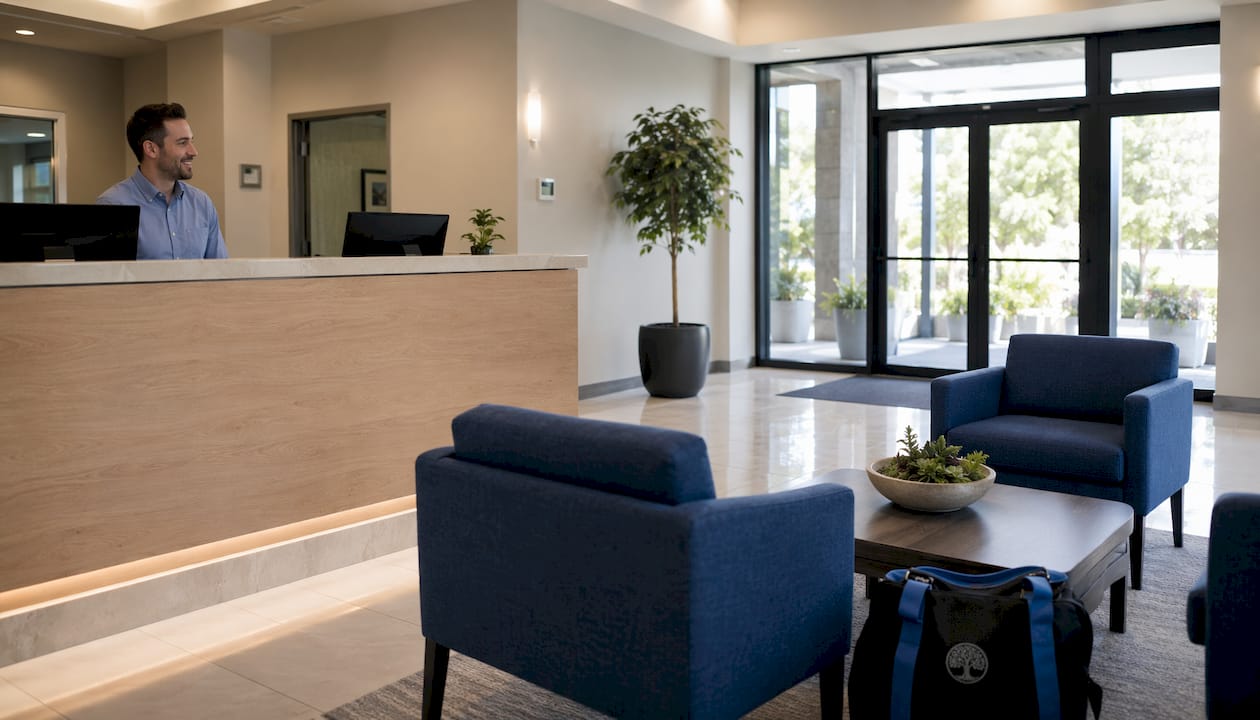
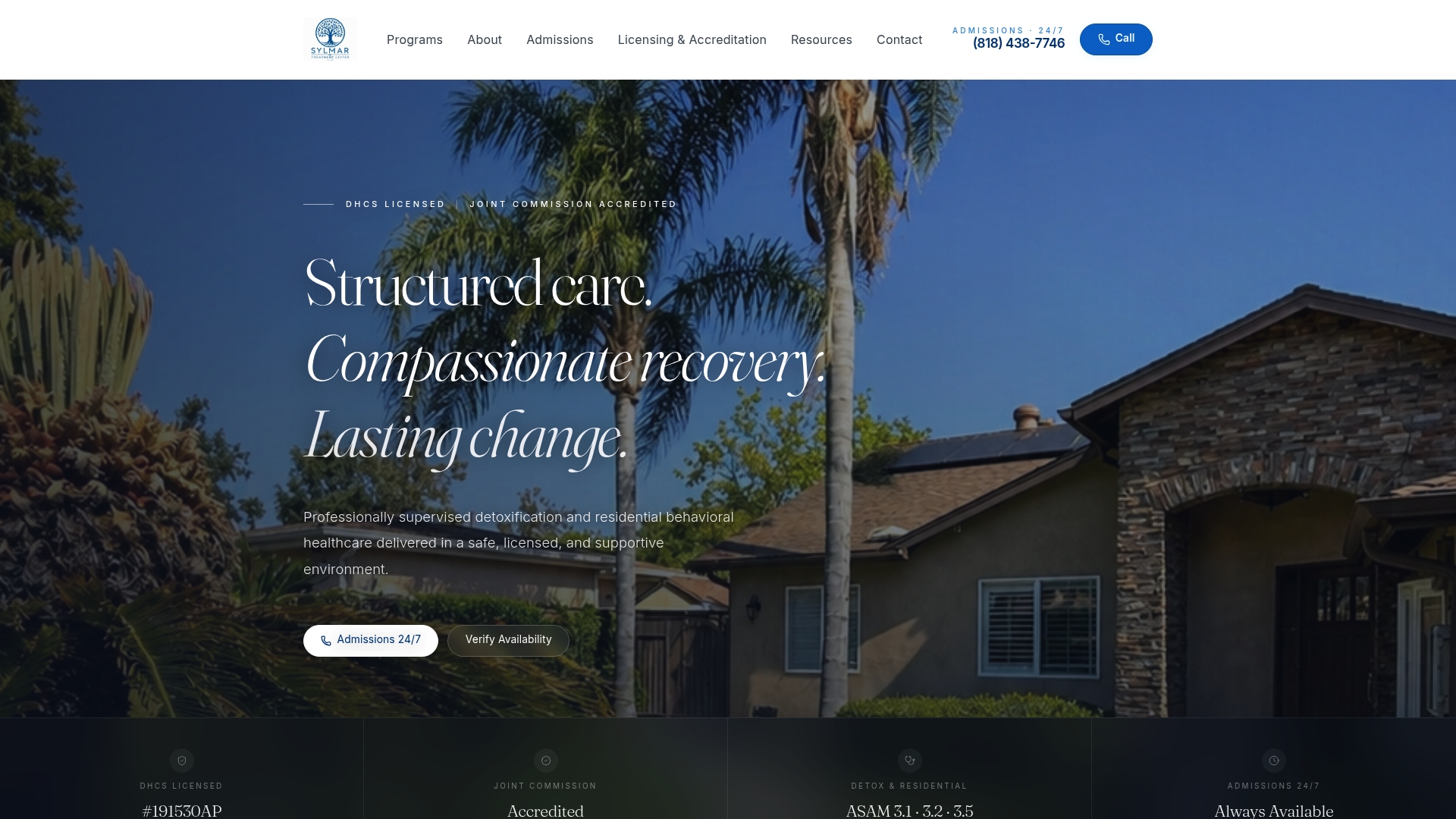
Sylmartreatmentcenter holds both a DHCS license and Joint Commission accreditation, placing it in the minority of US facilities that have passed independent auditing on top of state requirements. The center operates a six-bed residential program, which is intentionally small. That size means each patient gets a custom care plan built from a thorough clinical assessment, not a standardized intake protocol applied to everyone.
The clinical program addresses both substance use disorders and co-occurring mental health conditions through evidence-based treatment programs, including modalities like CBT and DBT. Dual diagnosis care is integrated into the program rather than offered as a separate track. Aftercare planning starts early in treatment, and the team builds a relapse prevention plan tailored to each patient’s specific triggers and support network.
Admissions support runs 24/7, which matters when a family reaches a crisis point outside of business hours. For families weighing their options, Sylmartreatmentcenter’s combination of regulatory credentials, small patient capacity, and individualized care makes it a substantive option to place alongside any other facility on your shortlist.
If you’re ready to verify coverage or ask about current availability, contact Sylmartreatmentcenter directly. The admissions team can confirm insurance benefits and walk you through the intake process.
Key Takeaways
Choosing a rehab alternative to thehouseoflife.com requires verifying DHCS licensure, LOC designation, independent accreditation, licensed clinical staff, and a concrete aftercare plan before any other consideration.
| Point | Details |
|---|---|
| Verify licensure first | Confirm the facility’s DHCS license and LOC designation before evaluating anything else. |
| Match care level to need | DHCS designations range from Level 3.1 to 3.5; mismatched placement leads to poor outcomes. |
| Accreditation adds a layer | About 30% of US centers hold CARF accreditation and about 23% hold Joint Commission accreditation. |
| Confirm payment details directly | House of Life charges around $40,000 for 30 days; always get current pricing and insurance verification in writing. |
| Sylmartreatmentcenter meets both standards | DHCS license plus Joint Commission accreditation, six-bed capacity, and 24/7 admissions support. |