A six-bed treatment center is a residential facility capped at six residents, providing personalized, 24/7 addiction recovery and mental health care in a home-like setting. This model sits between outpatient therapy and large institutional rehab, offering clinical intensity without the chaos of a 30-bed ward. Families searching for intimate, structured care often find that small treatment centers deliver something larger facilities simply cannot: staff who know your name, your triggers, and your progress. Sylmartreatmentcenter is built on exactly this model, holding a DHCS license and Joint Commission accreditation to back its six-bed approach.
What is a six-bed treatment center and how does it work?
A six-bed treatment center, formally classified in many states as a residential care home or family care home, is a licensed facility where no more than six individuals receive round-the-clock addiction and mental health treatment. The physical setting is typically a converted single-family home, which creates a calm, predictable atmosphere rather than a clinical ward. Staff are present 24 hours a day, and care plans are built around each resident individually rather than applied to a group.
The term “six-bed” is descriptive rather than a formal regulatory label in every state, but the concept is consistent: small capacity, high staff contact, and a therapeutic environment that mirrors stable home life. California’s Department of Health Care Services and North Carolina’s Division of Health Service Regulation both license small residential facilities separately from larger institutions, recognizing that the care model is fundamentally different. That regulatory distinction matters because it shapes staffing requirements, zoning rules, and the level of oversight residents receive.
Pro Tip: When evaluating any small residential program, ask directly whether the facility holds a current state license for its specific bed count. A license issued for a six-bed home does not automatically authorize a seventh resident.
What types of treatment do six-bed centers offer?
Six-bed rehab facilities deliver a level of therapeutic intensity that outpatient programs rarely match. Residents typically receive 20–40 hours of therapy per week, compared to roughly one hour in standard outpatient care. That difference is not just quantitative. It means residents are actively working through their recovery for a significant portion of every day.
The core treatment modalities in a well-run six-bed center include:
- Cognitive Behavioral Therapy (CBT): Identifies and restructures thought patterns that drive substance use.
- Eye Movement Desensitization and Reprocessing (EMDR): Processes trauma that often underlies addiction.
- Motivational Enhancement Therapy (MET): Builds internal motivation for change, especially useful in early recovery.
- Group counseling: Small groups of two to five residents create genuine peer accountability without the anonymity of large group sessions.
- Individual therapy: Sessions with a licensed therapist or psychiatrist, often several times per week.
The multidisciplinary team in a six-bed setting typically includes psychiatrists, licensed therapists, peer support specialists, and medical staff for detox supervision. Medically supervised detox is a standard entry point, managing withdrawal safely before residential therapy begins. Beyond formal sessions, daily structure with fixed meal times, therapy blocks, and rest periods functions as a therapeutic tool in itself. For individuals whose lives before admission lacked any predictability, that structure stabilizes the nervous system and builds the foundation for lasting recovery.
Pro Tip: Ask any program you consider for a sample daily schedule. A well-designed six-bed program should have structured therapeutic activity from morning through evening, not just two or three sessions per day.
How do six-bed centers differ from larger rehab facilities?
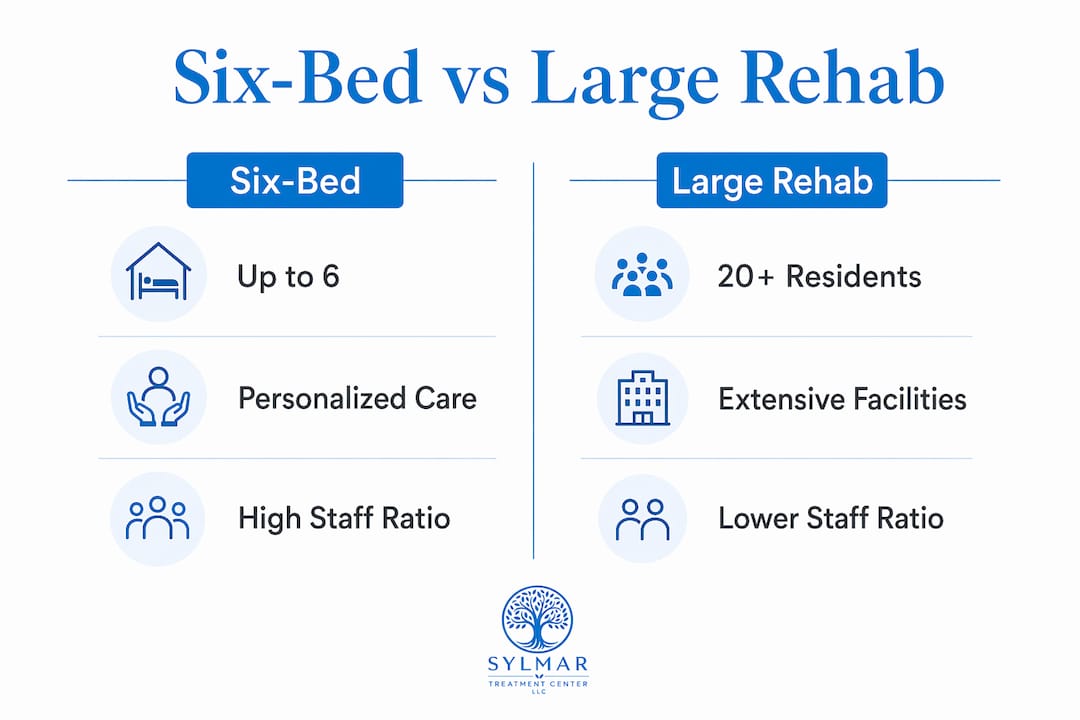
The most significant difference between six-bed rehab facilities and large residential programs is the staff-to-resident ratio and continuous personal oversight. In a six-bed center, management is often physically present daily. Staff know every resident by name and history. In a 40-bed facility, shift-based care means a resident may interact with a different counselor each day.
| Feature | Six-Bed Center | Large Rehab Facility |
|---|---|---|
| Resident capacity | Up to 6 | 20–100+ |
| Staff-to-resident ratio | Very high | Moderate to low |
| Physical setting | Home-like, residential | Campus or clinical building |
| Therapy hours per week | 20–40 hours | Varies, often 10–20 hours |
| Recreational amenities | Limited | Gyms, pools, outdoor spaces |
| Staff continuity | Consistent, often owner-operated | Shift-based rotation |
| Privacy level | High | Moderate |

Six-bed centers excel at privacy and personalized therapy, but they typically lack the gyms, pools, and extensive recreational amenities that large campus-style programs offer. That trade-off is worth understanding clearly before choosing. If a resident’s primary need is clinical intensity and a stable peer environment, the six-bed model wins. If someone requires specialized medical equipment or a wide range of recreational programming, a larger facility may be more appropriate.
The home-like environment also reduces what researchers call sensory load. Large facilities with dozens of residents, multiple staff rotations, and constant activity can overwhelm individuals who are already in a fragile state. Smaller, stable peer groups allow residents to form genuine connections with both peers and staff, which research consistently links to better recovery outcomes.
What are the licensing requirements for six-bed centers?
Licensing requirements for six-bed treatment centers are specific and non-negotiable. States treat these facilities as a distinct category from larger residential programs, applying rules that reflect their residential character and small scale.
| Requirement | Details |
|---|---|
| Capacity limit | Strictly capped at 6 residents |
| Zoning approval | Local zoning board must approve residential use |
| Fire safety inspection | Required before initial license issuance |
| Sanitation inspection | Health department review of kitchen, bathrooms, and living areas |
| Staffing coverage | 24/7 on-site staff required; specific ratios vary by state |
| Initial license duration | Often issued for six months, then renewed annually |
| State licensing body | Varies: DHCS in California, DHSR in North Carolina |
North Carolina’s Division of Health Service Regulation, for example, classifies 2–6 bed homes separately from larger care institutions, requiring distinct inspections and local zoning approvals before any license is issued. California applies similar distinctions through its DHCS framework. Initial licenses in many states are issued for six months to allow regulators to verify that the facility operates as described before granting a full annual license.
These regulatory distinctions protect residents. A facility that skips proper licensing may lack the safety infrastructure, staff training, or accountability mechanisms that a licensed center must maintain. When evaluating a six-bed addiction recovery program, verifying current licensure is the single most important due diligence step a family can take.
Who benefits most from a six-bed treatment center?
The definition of six-bed center care points directly at a specific type of resident: someone who needs clinical intensity but thrives in a calm, predictable, low-stimulation environment. Not everyone fits this profile, and understanding who does helps families make a well-informed choice.
Ideal candidates for six-bed rehab facilities include:
- Individuals with co-occurring mental health disorders such as PTSD, anxiety, or depression, who are sensitive to chaotic or overstimulating environments.
- People who have previously struggled in large institutional settings and need a more personal therapeutic relationship with staff.
- Residents who require medically supervised detox followed by immediate residential care without a gap in oversight.
- Individuals who value privacy and do not want to share their recovery experience with dozens of strangers.
- Those whose clinical complexity demands frequent, individualized attention from a consistent care team rather than rotating staff.
The intimacy of care in six-bed centers cannot be replicated by large facilities. Families often prefer these settings for patients who are sensitive to institutional chaos, and that preference is clinically supported. Small-bed models also allow for earlier and more effective crisis intervention by dedicated teams in a calm environment, which improves outcomes in acute substance use disorders.
The trade-off is real, though. If a resident needs specialized medical equipment, a large on-site gym, or a wide peer community, a six-bed center may feel limiting. The right question is not which facility is better in the abstract. It is which environment gives this specific person the best chance at lasting recovery.
Key takeaways
A six-bed treatment center delivers the highest therapeutic contact and staff continuity available in residential addiction care, making it the strongest option for individuals who need personalized, clinically intensive recovery in a stable environment.
| Point | Details |
|---|---|
| Definition and capacity | A six-bed center houses no more than six residents in a home-like, licensed residential setting with 24/7 care. |
| Therapy intensity | Residents receive 20–40 hours of therapy per week, far exceeding standard outpatient care. |
| Staff continuity | High staff-to-resident ratios and often owner-operated management create consistent, accountable oversight. |
| Licensing requirements | State licensing bodies require zoning approval, safety inspections, and 24/7 staffing before issuing a license. |
| Best-fit candidates | Individuals sensitive to institutional settings, those with co-occurring disorders, and anyone needing high clinical contact benefit most. |
Why the environment itself is the treatment
After years of observing addiction recovery across facility types, I have come to one conclusion that most treatment marketing ignores: the environment is not just the backdrop for treatment. It is the treatment. Six-bed centers represent a fundamental shift toward stability and predictability as therapeutic agents, not just a smaller version of a larger program.
I have seen individuals cycle through multiple large residential programs without lasting results, then stabilize quickly in a six-bed setting. The difference was not the therapy modality. CBT is CBT. The difference was that in the smaller setting, a staff member noticed when someone was withdrawing before it became a crisis. A peer group of five people cannot hide dysfunction the way a group of thirty can.
That said, I want to set realistic expectations. Six-bed centers are not luxury retreats. They will not have a lap pool or a meditation garden with mountain views. Families who prioritize amenities over clinical culture are often disappointed. My honest recommendation: visit the facility, meet the staff who will actually be present during the resident’s stay, and ask about the daily schedule in detail. The quality of the therapeutic relationship matters more than the square footage of the common room.
The importance of six-bed facilities in the broader treatment system is often underestimated. They serve a population that large facilities genuinely cannot serve well. That is not a marketing claim. It is a structural reality.
— Jim
Personalized six-bed care at Sylmartreatmentcenter
Sylmartreatmentcenter offers exactly the model described in this article: an intimate, DHCS-licensed, Joint Commission-accredited six-bed residential program built around individualized care plans and a consistent multidisciplinary team.
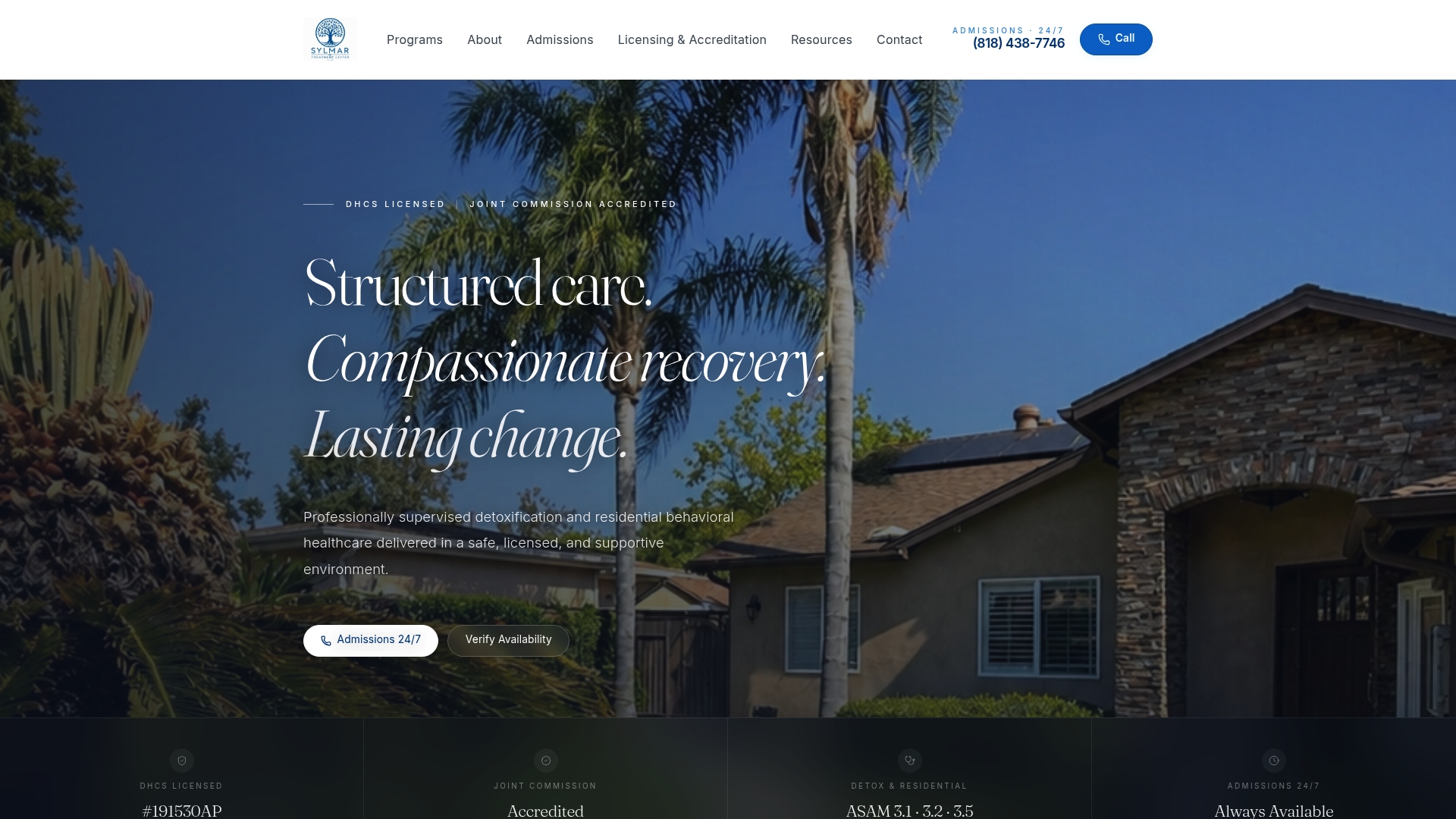
The center’s medical detox program provides 24/7 medically supervised withdrawal management as the entry point into residential care, with no gap between detox and ongoing treatment. From there, residents move into a structured residential treatment program that includes CBT, EMDR, group and individual therapy, and dual diagnosis support for co-occurring mental health disorders. Every care plan is built from a comprehensive assessment, not a template. If you are evaluating options for yourself or a family member, Sylmartreatmentcenter’s admissions team is available 24/7 to answer questions and walk you through what to expect.
FAQ
What is the maximum capacity of a six-bed treatment center?
A six-bed treatment center is strictly limited to six residents at any one time. This capacity limit is defined by state licensing frameworks and is the core feature that distinguishes these facilities from larger residential programs.
How many therapy hours do residents receive per week?
Residents in six-bed rehab facilities typically receive 20–40 hours of therapy per week, including individual sessions, group counseling, and specialized modalities such as CBT and EMDR. This far exceeds the roughly one hour per week typical of outpatient care.
Are six-bed treatment centers licensed differently than large rehab facilities?
Yes. States like California and North Carolina license small residential facilities as a distinct category from larger institutions, with specific zoning, fire safety, sanitation, and staffing requirements. Initial licenses are often issued for six months before annual renewal.
Who is the best candidate for a six-bed addiction recovery program?
Individuals with co-occurring mental health disorders, those sensitive to chaotic institutional environments, and anyone requiring high staff contact and consistent oversight benefit most from the six-bed model. The intimate setting is especially effective for people who have not responded well to larger residential programs.
Do six-bed centers offer medical detox?
Many six-bed treatment centers include 24/7 medically supervised detox as the entry point into residential care. This allows residents to manage withdrawal safely before transitioning into the full therapeutic program without leaving the facility.