
Long-term recovery requires community because sustained sobriety depends on social connection, accountability, and practical resources that no individual can generate alone. Willpower gets people through detox. Community keeps them sober for years. Approximately 50.2 million American adults identify as being in recovery from substance use or mental health conditions, and the vast majority credit relationships and support networks as central to their success. Understanding why long-term recovery requires community is not abstract theory. It is the difference between surviving treatment and building a life worth staying sober for.
Why does long-term recovery require community?
Recovery is defined in clinical circles as more than abstinence. The Substance Abuse and Mental Health Services Administration (SAMHSA) frames it as a process of change through which people improve their health, live self-directed lives, and reach their full potential. That definition is impossible to achieve in isolation. Abstinence can happen alone. Recovery cannot.
The concept of recovery capital captures this reality precisely. Recovery capital refers to the total internal and external resources a person can draw on to sustain sobriety. External recovery capital includes housing stability, employment, transportation, and social support networks. People early in recovery often lack these resources entirely, which is why community provides what researchers call “borrowed capital.” A sponsor, a sober living house, a peer support worker, or a recovery community center fills the gap until a person builds their own foundation.
Treatment alone does not cure addiction. Recovery community centers provide transportation, vocational training, peer mentorship, and social connection that turn sobriety from a clinical outcome into a daily lifestyle. That shift from patient to community member is where lasting recovery actually begins.
How does community support improve mental health in recovery?
The mental health benefits of community are measurable, not just anecdotal. Social connection mediates mental health outcomes including stress and depression reduction by up to 27.6% in some populations. That is a clinically significant number. It means belonging to a supportive group produces changes in depression and anxiety comparable to many therapeutic interventions.

The biology behind this is straightforward. Positive social contact triggers oxytocin release, which lowers heart rate and reduces cortisol levels. Cortisol is the primary stress hormone, and elevated cortisol is a known relapse trigger. When a person in recovery attends a group meeting, shares a meal with sober friends, or calls a sponsor during a craving, their body responds with a measurable reduction in stress. Community is not just emotionally supportive. It is physiologically protective.
Isolation, by contrast, amplifies every risk factor. People who withdraw from social contact after treatment face higher rates of depression, anxiety, and relapse. Community membership creates a buffer against these outcomes by providing regular emotional check-ins, shared purpose, and the simple comfort of being known by others who understand the struggle.
Pro Tip: If you are in early recovery and group meetings feel overwhelming, start with one consistent relationship. A single trusted peer or sponsor produces many of the same neurological benefits as a full group setting.
Key community mental health benefits include:
- Reduced depression and anxiety through regular social engagement and shared experience
- Lower cortisol levels from positive social contact and oxytocin release
- Improved emotional regulation through consistent accountability relationships
- Reduced isolation which directly lowers the risk of relapse triggers taking hold
- Shared identity as a person in recovery, which builds self-efficacy and purpose
What practical roles does community play in sustaining sobriety?
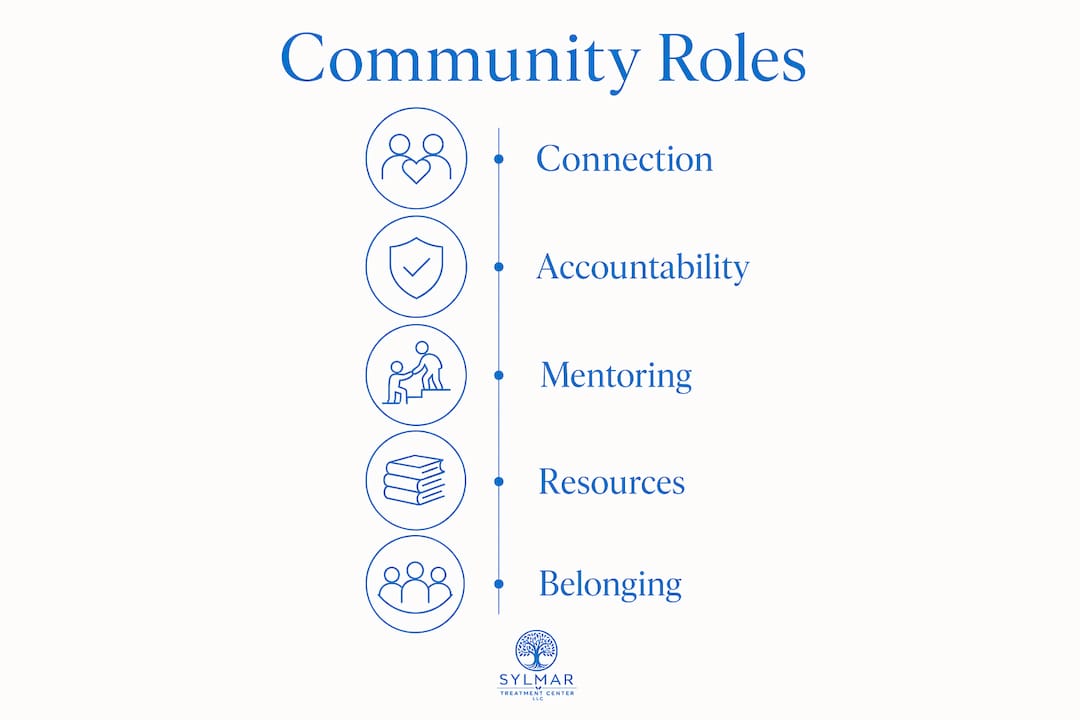
Community does more than provide emotional warmth. It delivers concrete resources that make staying sober possible on a practical level. People in recovery with stable housing and supportive relationships show significantly better long-term sobriety outcomes than those without these supports. Stable housing is not a luxury. It is a recovery tool.
The practical functions of a recovery community break down into four distinct areas:
-
Housing and safety. Sober living homes and recovery residences provide drug-free environments during the most vulnerable transition period after treatment. They remove the person from environments where substances are present and replace them with neighbors who share the same commitment to sobriety.
-
Vocational support. Many recovery community centers offer job training, resume help, and employer connections. Employment restores dignity, structure, and financial independence. All three are critical to long-term recovery capital.
-
Peer mentorship. Peer support workers are people with lived recovery experience who guide others through the early stages. Their credibility comes from having been where the person currently is. No clinical credential replicates that.
-
Accountability structures. Regular check-ins, group commitments, and shared goals create external accountability that supplements internal motivation. When internal motivation wavers, which it does for everyone, external accountability holds the line.
Active participation in recovery communities produces stronger belonging and stress regulation than passive attendance. Showing up matters. Contributing matters more. People who mentor others, chair meetings, or volunteer at recovery centers report deeper connection and greater resilience against relapse. Service to others is not just altruistic. It is biologically reinforcing.
Pro Tip: Do not wait until you feel ready to contribute to your recovery community. Mentoring someone newer in recovery accelerates your own healing by reinforcing your identity as a person who has something valuable to offer.
How does community impact recovery differently by environment?
The strength of community’s protective effect varies by geography, and the differences are significant. Social cohesion shows up to 32.6% stronger mediation effects on depression in rural settings compared to urban environments. Rural communities, when they are cohesive, provide a tighter social fabric that amplifies the mental health benefits of belonging.
Urban settings present a different picture. Larger cities offer more recovery resources, more meeting options, and more specialized programs. They also expose people in recovery to higher visibility of drug use in public spaces, which increases the frequency of environmental triggers. The community dynamics in urban recovery require more deliberate navigation.
| Environment | Community strength | Key challenges | Recovery advantage |
|---|---|---|---|
| Rural | High social cohesion | Fewer formal resources | Stronger depression mediation |
| Urban | More formal programs | Higher trigger exposure | Greater resource variety |
| Suburban | Moderate cohesion | Social isolation risk | Access to both resource types |
The takeaway is not that one environment is better than another. The takeaway is that community quality matters more than community size. A small, consistent, genuinely connected group in a rural town outperforms a large, anonymous meeting in a city where no one knows your name. Recovery thrives on being known, not just being present.
Understanding how community aids recovery across different settings helps families make informed decisions about where and how their loved ones engage with support networks after treatment.
What are effective ways to engage with recovery communities?
Engagement is a skill, not a personality trait. People who struggle to connect with recovery communities are not broken. They are often working against years of isolation, shame, and mistrust. The good news is that connection can be practiced deliberately.
Practical ways to build meaningful community ties include:
- Attend consistently, not occasionally. Showing up to the same meeting, group, or center every week builds familiarity. Familiarity builds trust. Trust builds the relationships that sustain recovery.
- Identify peer support workers. Many treatment centers and recovery community organizations employ certified peer support specialists. These individuals offer one-on-one guidance grounded in lived experience.
- Explore sober living options. Transitional housing programs place people in communities of others in recovery. The shared environment accelerates connection and removes the isolation risk of returning to an unsupportive home.
- Volunteer or take on a role. Chairing a meeting, making coffee, or greeting newcomers shifts your identity from recipient to contributor. That shift is psychologically powerful.
- Use digital recovery communities as a bridge. Online groups through platforms like SMART Recovery or In The Rooms provide connection for people in areas with limited in-person resources. Digital community is not a replacement for in-person connection, but it is far better than isolation.
Personalized recovery program components that include peer-led groups and community involvement consistently show better outcomes than programs that rely solely on clinical intervention. The evidence points in one direction: connection is treatment.
Key Takeaways
Long-term recovery requires community because social connection provides the emotional, biological, and practical resources that individual willpower cannot sustain alone.
| Point | Details |
|---|---|
| Community is recovery capital | Housing, peer support, and social networks form the external foundation that makes sobriety sustainable. |
| Social connection reduces depression | Research links community belonging to up to a 27.6% reduction in depression and stress outcomes. |
| Rural cohesion amplifies benefits | Tight-knit rural communities show up to 32.6% stronger mental health mediation than urban settings. |
| Active participation beats passive attendance | Contributing to a recovery community produces stronger bonding and stress resilience than simply showing up. |
| Treatment is the beginning | Clinical care starts recovery; community sustains it through accountability, purpose, and daily connection. |
What I have learned about recovery and community after years of watching both succeed and fail
Willpower is real, and it matters. But I have never seen willpower alone carry someone through five, ten, or twenty years of sobriety. What I have seen carry people that far is relationships. Specifically, relationships with people who know the full story and show up anyway.
The mistake most people make after treatment is treating community as optional. They complete a program, feel strong, and decide they can manage on their own. That confidence is not a sign of health. It is often the first warning sign. The research on recovery capital is clear: sustainable recovery depends on external supports, not just internal resolve.
What surprises most families is that giving back accelerates recovery faster than receiving support. The person who starts mentoring others six months into their own sobriety is not being reckless. They are doing exactly what the biology of connection predicts. They are reinforcing their own identity, generating oxytocin, and building a reason to stay sober that is larger than themselves.
Recovery communities are not perfect. Meetings can feel repetitive. Peer relationships can get complicated. Sober living houses have rules that chafe. None of that changes the fundamental truth: people heal in relationship with other people. The goal is not to find a perfect community. The goal is to stay connected to an imperfect one.
— Jim
How Sylmartreatmentcenter builds community into every stage of recovery
Sylmartreatmentcenter was built on the understanding that clinical treatment and community support are not separate things. They are the same thing delivered at different stages. The center’s intimate six-bed setting means every person who walks through the door is known by name, not case number. That personal connection starts on day one and carries through medical detox, residential care, and beyond.
Sylmartreatmentcenter’s full programs include dual diagnosis support, behavioral rehabilitation, and individualized treatment plans that incorporate peer engagement and community-based resources. The center holds both a DHCS license and Joint Commission accreditation, so families can trust that the care meets the highest clinical standards. If you or someone you love is ready to move from surviving to belonging, Sylmartreatmentcenter offers 24/7 admissions support to help you take that step today.
FAQ
Why can’t willpower alone sustain long-term recovery?
Willpower addresses the decision to stop using substances, but it does not provide housing stability, emotional support, or accountability. Recovery capital from community fills those gaps and makes sobriety sustainable over years, not just weeks.
How does community reduce the risk of relapse?
Community reduces relapse risk by lowering cortisol through positive social contact, providing accountability structures, and removing isolation, which is one of the strongest relapse triggers in long-term recovery.
What is a peer support worker and why do they matter?
A peer support worker is a person with lived recovery experience who guides others through early sobriety. Their credibility comes from personal experience, which builds trust in ways clinical credentials alone cannot replicate.
Does the type of community matter, or just having one?
Quality matters more than size. Active participation in a small, consistent, genuinely connected group produces stronger recovery outcomes than passive membership in a large, anonymous one.
How do rural and urban recovery communities differ?
Rural communities with strong social cohesion show up to 32.6% stronger mental health benefits than urban settings. Urban environments offer more formal resources but also more exposure to environmental relapse triggers, requiring more deliberate community navigation.