

Medication reconciliation in rehabilitation is the process of building a Best Possible Medication History at every transition, admission, transfer, and discharge, then documenting a single reconciled list for the patient and the receiving clinician. The Joint Commission and AHRQ both set standards for this process, and it matters because discrepancies at these handoffs are common and preventable.
TL;DR:
- Reconciliation must occur at admission, transfers, and discharge, with a single, verified medication list produced every time to prevent errors.
- Multiple sources, including patient interviews, pharmacy records, and external data, are necessary to build an accurate medication history.
- Clinical decisions should be clearly documented, especially when stopping or changing medications, with the final list communicated to all relevant parties.
- Regular, small workflow tests and system-based checks improve reconciliation completion rates more effectively than policies alone.
- Special medication risks in rehab include polypharmacy, psychotropics, opioids, and deprescribing, each requiring careful assessment and follow-up.
Table of Contents
- What medication reconciliation means for rehab patients
- When reconciliation has to happen in the rehab pathway
- Building a reliable reconciliation workflow step by step
- Who owns each part of the reconciliation process
- Technology and quality improvement methods that raise completion rates
- Medication issues that need extra attention in rehab
- A practical checklist rehab teams can adopt now
- How this plays out inside a working treatment program
- Where Sylmar fits for patients needing coordinated medication care
- FAQ
- Sources
What medication reconciliation means for rehab patients
Medication reconciliation rests on a Best Possible Medication History, a verified account of everything a patient actually takes, built by comparing multiple sources rather than trusting one chart. The Institute for Healthcare Improvement frames this as a three-step cycle: list every medication a patient is taking, compare that list against new orders, and resolve any mismatch before it reaches the patient.
In rehabilitation, the stakes are specific. Patients often arrive after a hospitalization where doses were changed, held, or added for an acute problem that no longer applies once rehab begins. A systematic review found that reconciliation interventions meaningfully reduce discrepancies at these transitions, though evidence connecting reconciliation directly to fewer adverse drug events or readmissions remains less certain.
- Discrepancies cluster at handoffs, not during stable, ongoing care.
- The Joint Commission directs facilities to collect medication information at the first visit in ongoing care settings and to issue a reconciled list at the close of a series of encounters.
- A single reconciled list, not three competing versions, is the deliverable every transition should produce.
When reconciliation has to happen in the rehab pathway
Reconciliation is not a one-time intake task. It recurs at defined points, and missing any of them is where errors slip through.
- Admission or first visit: collect the full medication history before the first dose is given or the first outpatient plan is set.
- Ongoing outpatient series: after the first visit, each subsequent session checks for new prescriptions, dose changes, or discontinued drugs rather than re-collecting everything.
- Internal transfers: moving a patient between detox, residential, and outpatient levels of care triggers a fresh comparison, since orders frequently change at each level.
- Discharge: the final reconciled list goes to the patient, caregiver, and next clinician, with post-discharge follow-up ideally confirmed within 30 days for patients covered by reconciliation performance measures.
- Trigger events: any new prescriber, high-risk medication (opioids, benzodiazepines, anticoagulants), or unexplained symptom should prompt an unscheduled reconciliation check.
Building a reliable reconciliation workflow step by step
A workable reconciliation event has four parts, and skipping any one of them reintroduces the exact risk the process exists to catch.
Build the Best Possible Medication History. Interview the patient directly, ask a caregiver to confirm or fill gaps, pull pharmacy dispense records, request the prior facility’s discharge list, and check any available external EHR or health information exchange data. No single source is reliable alone; triangulating two or three closes most gaps.
Verify and resolve discrepancies. Compare the gathered history against current orders looking for wrong doses, wrong routes, wrong frequencies, omissions, and duplications. Flag anything clinically significant, a missed anticonvulsant or an unexplained opioid dose change, for immediate escalation rather than routine review.
- Mismatched dose or frequency between two source documents
- A medication the patient reports taking that appears nowhere in the chart
- Two different drugs in the same class prescribed by different providers
Document the clinical decision. The prescriber records a rationale for each medication: continue, hold, modify, or stop. This step is where deprescribing conversations belong, not buried in a nursing note.
Communicate the final list. The reconciled list goes to the patient, the caregiver, the receiving clinician, and the outpatient pharmacy, along with the planned follow-up date.
Pro Tip: Give the patient a printed, plain-language copy of the reconciled list before they leave the building, not mailed afterward.
Who owns each part of the reconciliation process
Reconciliation fails when everyone assumes someone else is doing it. Clear ownership fixes that.
- Pharmacist: builds or verifies the BPMH, screens for potentially inappropriate medications and polypharmacy, and recommends deprescribing when a drug no longer fits the patient’s rehab goals.
- RN: collects medications at admission, performs bedside verification against the chart, and leads patient and caregiver education on the final regimen.
- Prescriber: makes and documents the clinical reconciliation decision for every medication, including the rationale for continuing, holding, or stopping it.
- Caregiver or patient: brings home medication lists or pill bottles, confirms what is actually being taken versus what is prescribed, and demonstrates understanding through teach-back.
Pharmacists working within rehabilitation teams are especially positioned to catch medications that made sense during an acute hospital stay but no longer fit once a patient’s function and goals have shifted.
Technology and quality improvement methods that raise completion rates
Reconciliation completion rates do not improve by policy memo alone. They improve through infrastructure and repeated small tests of change.
- Build admission checklists and required BPMH fields directly into the EHR so a chart cannot close without them.
- Use health information exchange data and pharmacy dispensing records to verify a patient’s reported history against an independent source.
- Track a weekly dashboard metric for admission medication reconciliation completion and report it to the team, not just to administration.
- Run Plan-Do-Study-Act cycles: test a workflow change on a small scale, measure it, adjust, and repeat.
One iterative PDSA project in a post-acute care facility raised admission medication reconciliation completion from a low baseline rate to a high rate within four months, using standardized workflows, EHR dashboarding, and one-on-one staff rounding. The gain came from repeated small corrections, not a single policy rollout, which is the pattern AHRQ’s process design guidance also recommends.
Medication issues that need extra attention in rehab
Rehabilitation patients carry a specific set of medication risks that general reconciliation checklists can miss.
- Polypharmacy and anticholinergics: medications that impair cognition or balance can slow functional progress, even when each one is individually appropriate.
- Psychotropics and benzodiazepines: abrupt changes risk withdrawal, so taper timing needs to be planned around, not interrupted by, the rehab schedule.
- Opioid and post-operative analgesic plans: these need a clear taper or maintenance plan that survives the transition out of acute care.
- Deprescribing decisions: when a medication’s original indication no longer applies, removing it requires a monitoring plan for the weeks after the change.
Pro Tip: Any dose reduction or taper started in rehab should have a named clinician responsible for checking in within the first week, not just a note to “follow up as needed.”
A practical checklist rehab teams can adopt now
Turning the process into policy means answering a few concrete questions in writing.
- Admission: name who collects the BPMH, list the minimum sources required (patient interview, caregiver, pharmacy records, prior discharge summary), and specify where it is recorded.
- Transfers and discharge: define exactly what the reconciled list must contain and confirm it reaches the patient, caregiver, outpatient pharmacy, and receiving clinician.
- Measurement: set the completion-rate metric, how often it is sampled, and the target threshold the team is working toward.
- Training: build core competency training, one-page tip sheets, and role-specific reminders into new staff orientation and periodic refreshers.
How this plays out inside a working treatment program
Inside a residential program, medication reconciliation is not a separate task bolted onto admission paperwork, it runs through the same clinical team handling detox and ongoing care. Sylmar Treatment Center integrates medication management with psychiatric oversight into its residential and detox programs, so medication changes made during withdrawal management are tracked and reconciled as a patient moves into residential treatment. Sylmar holds a California DHCS license and Joint Commission Gold Seal accreditation, both of which require documented medication safety processes as a condition of standing.
— Jim
Where Sylmar fits for patients needing coordinated medication care
For a patient entering detox with a complicated medication history, or a family trying to coordinate care across a transfer, Sylmar’s Medication Management program builds reconciliation directly into Medical Detoxification and Residential Treatment, with psychiatric oversight tracking every change in one place rather than across separate charts.
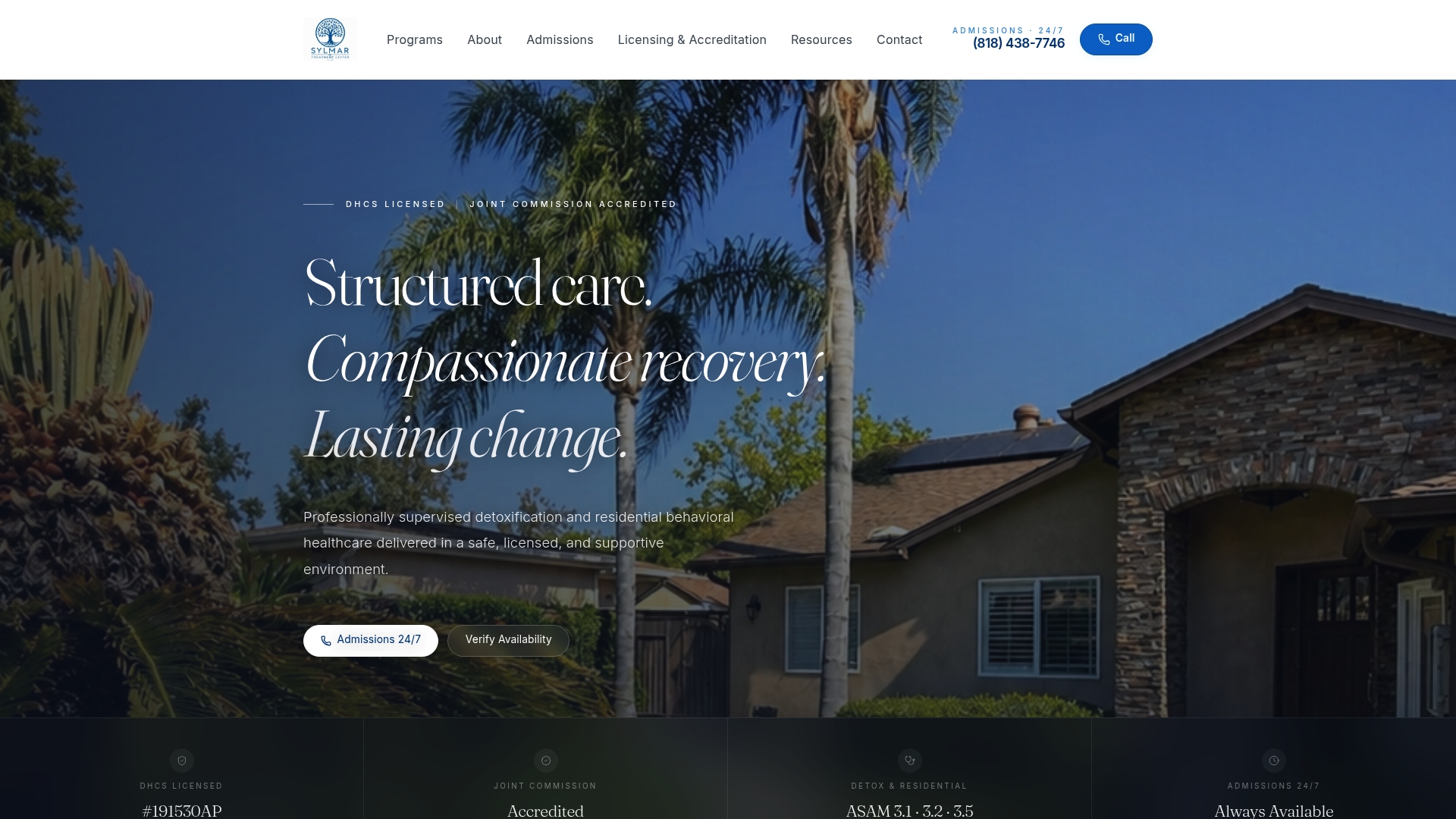
An intimate six-bed setting allows reconciliation review to happen with the same small clinical team from admission through discharge in some residential treatment programs, often backed by appropriate licenses and accreditations. If you are weighing placement for yourself or a family member and want medication history handled by one coordinated team, review the Medication Management program page or contact Sylmar’s admissions line to check availability.
This article is general information, not a substitute for advice from a qualified doctor. Consult a qualified healthcare professional about your own circumstances before acting on anything here.

FAQ
What are the 5 steps to medication reconciliation?
Most frameworks describe the process as: collect the Best Possible Medication History, verify it against current orders, compare the two lists for discrepancies, resolve or document each discrepancy with the prescriber, and communicate the final reconciled list to the patient and next clinician. Definitions vary slightly by organization, but these five actions appear in nearly all of them.
What are the CMS guidelines for medication reconciliation?
CMS and NCQA track a Medication Reconciliation Post-Discharge measure, which checks whether adult patients discharged from an inpatient facility had their medications reconciled by a prescriber, clinical pharmacist, or registered nurse within 30 days of discharge. The measure focuses on timely, documented reconciliation rather than a specific checklist format.
What are the requirements for medication reconciliation?
The Joint Commission requires facilities to collect medication information at a patient’s first visit in ongoing care settings and to provide a reconciled medication list at the end of a series of encounters. AHRQ’s process design guidance adds that the list should be a single, current, triangulated source rather than multiple competing versions.
Can an RN do a medication reconciliation?
Yes, registered nurses routinely collect admission medication histories and perform bedside verification as part of the reconciliation process. Clinical decisions about continuing, holding, or stopping a specific medication still require prescriber documentation, though pharmacists often lead the deeper medication review for complex regimens.
Sources
- Iterative interventions to improve admission medication reconciliation completion rates and reduce medication errors at post-acute care facilities
- Maintaining and communicating patient medication information (Medication Reconciliation) | Joint Commission
- Impact of medication reconciliation for improving transitions of care (Review)