

A probation-linked treatment plan is a court-mandated, legally binding program requiring individuals on probation to complete specific treatment activities that address the underlying causes of their offense. The industry standard term for this is “mandated treatment” or a “court-ordered treatment program,” and the two phrases are used interchangeably throughout the legal and clinical fields. These plans cover substance abuse, mental health disorders, or both, and they carry real legal weight. Miss a session or fail a drug test, and you risk formal sanctions up to and including probation revocation. Understanding what is a probation-linked treatment plan before you start gives you a clear advantage in completing it successfully.
What is a probation-linked treatment plan and why does it matter?
A probation-linked treatment plan is court-mandated and legally enforceable, meaning noncompliance can result in warnings, formal violation reports, or revocation that sends you back to jail. That legal weight separates it from voluntary therapy. The plan exists to address the specific issues, such as addiction or a mental health disorder, that contributed to the offense in the first place.
The plan is not designed purely as punishment. Mandated treatment is intended as a rehabilitative measure to support long-term stability and improve public safety. That distinction matters because it shapes how you should approach every session, every drug test, and every interaction with your probation officer.

Two professionals drive the process: your probation officer and your licensed treatment provider. The probation officer monitors legal compliance. The treatment provider delivers clinical care and submits formal progress reports back to the court. Both roles are required, and neither can substitute for the other.
What components and requirements are typically included?
Standard probation treatment plans require regular drug testing, full abstinence from substances, active participation in counseling, and timely compliance reporting. Each element is non-negotiable. Missing any one of them can trigger a formal probation violation.
The typical requirements include:
- Drug testing: Urinalysis is the most common method. Breathalyzers and sweat patches are also used depending on the court order.
- Abstinence: You must stay clean from all controlled substances. Most plans also require abstinence from alcohol, even if alcohol was not part of your offense.
- Counseling attendance: Sessions require active participation, not just physical presence. Therapists assess engagement through homework completion, group discussion contributions, and demonstrated effort.
- Compliance reporting: Your treatment provider submits formal progress reports to your probation officer on a schedule set by the court.
- Consequences for noncompliance: Sanctions range from increased session frequency and electronic monitoring to additional community service or full probation revocation.
Pro Tip: Read your court order carefully before your first appointment. Know exactly which tests, sessions, and reports are required so you never miss a deadline by accident.
Which treatment modalities are commonly used in these plans?
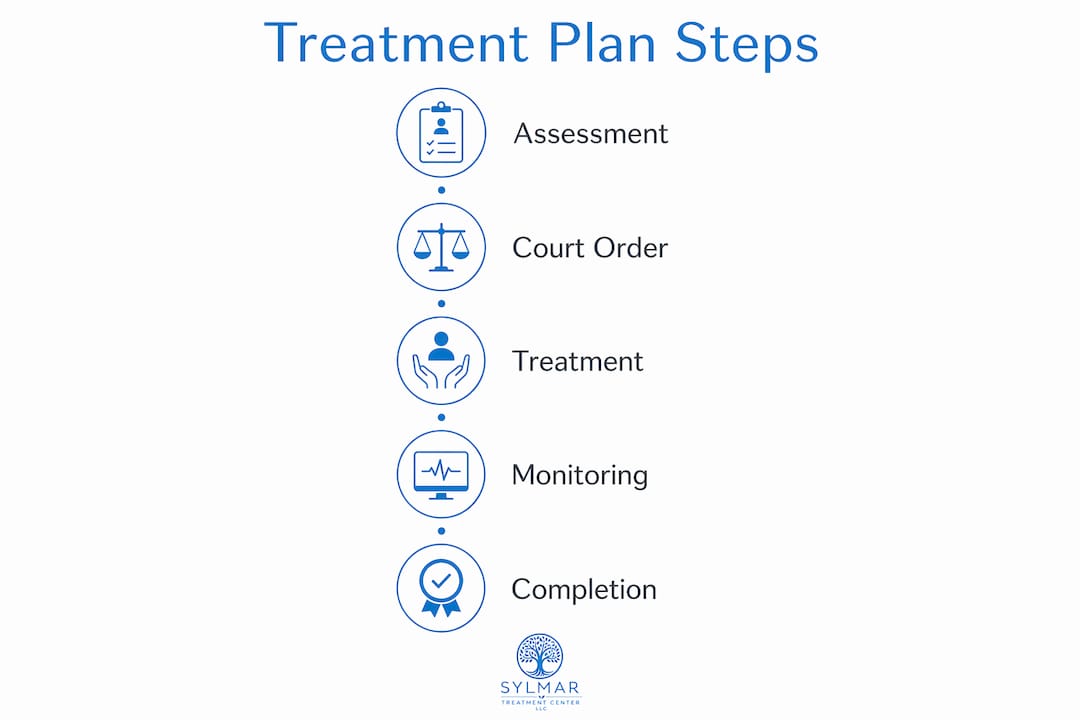
Treatment modalities are assigned based on a licensed clinical or forensic assessment using standardized evaluation tools. The assessment determines the intensity and type of care you need. No two plans are identical.
The most common options fall into four categories:
| Modality | Description | Typical use case |
|---|---|---|
| Intensive Outpatient Program (IOP) | Structured sessions several days per week without residential stay | Moderate substance use or mental health needs |
| Residential treatment | 24-hour supervised care in a clinical setting | Severe addiction or co-occurring disorders |
| Cognitive Behavioral Therapy (CBT) | Evidence-based individual therapy targeting thought patterns that drive behavior | Addiction, anxiety, anger, and criminal thinking |
| Self-help and peer support groups | Programs like Alcoholics Anonymous (AA) or Narcotics Anonymous (NA) | Supplementary support alongside clinical treatment |
| Specialized behavioral programs | Anger management, domestic violence counseling, or Moral Reconation Therapy (MRT) | Offense-specific behavioral issues |
Cognitive Behavioral Therapy is the most widely used individual therapy modality in court-ordered treatment programs because it directly targets the thinking patterns that lead to criminal behavior. Moral Reconation Therapy is a structured group program specifically developed for justice-involved populations, and courts frequently require it alongside individual therapy.
Intensive outpatient programs typically last 3–6 months, while specialized programs like drug court can extend to 20 months or more including aftercare. The duration depends on your court order and your clinical progress.
How do probation officers and treatment providers work together?
Probation officers and licensed treatment providers share oversight responsibility, but their roles are distinct. The probation officer enforces the legal terms of your supervision. The treatment provider delivers clinical services and documents your progress in formal reports.
The collaboration works through a structured reporting cycle:
- Initial assessment: Your treatment provider conducts a clinical evaluation and shares findings with the court to confirm program placement.
- Regular progress reports: Providers submit written reports detailing your attendance, engagement level, drug test results, and any compliance concerns.
- Standardized tracking: Both parties use court-approved documentation to verify compliance at each review hearing.
- Noncompliance procedures: If you miss a session or test positive, the provider notifies the probation officer, who then determines the appropriate sanction.
- Proactive communication: Notifying your probation officer before a missed session, rather than after, is the single most effective way to avoid a formal violation.
Pro Tip: If a scheduling conflict comes up, call your probation officer before the missed appointment. A proactive call is treated very differently from an unexplained absence.
The reporting relationship also affects your choice of therapist. You may choose your own provider if that provider is licensed, court-approved, and willing to handle mandatory progress reporting. Court approval is not optional. A therapist who refuses to submit reports cannot serve as your mandated treatment provider, regardless of their clinical qualifications.
What practical steps help you complete your plan successfully?
Success in a court-ordered treatment program depends more on your attitude than on the specific program assigned. Expressed willingness to comply is the clinical standard for active participation, and it directly improves outcomes. Showing up physically is not enough.
The most common pitfalls and how to avoid them:
- Underestimating abstinence rules: Alcohol is prohibited in most plans even when it had no role in your offense. Treat this as a firm boundary from day one.
- Choosing an unapproved provider: Select a licensed, court-approved provider who already handles mandatory reporting. Switching providers mid-plan creates compliance gaps.
- Passive attendance: Courts and providers distinguish between someone who attends and someone who engages. Complete homework, participate in group discussions, and ask questions.
- Avoiding your probation officer: Transparent, regular communication with your officer builds credibility. Officers have discretion in how they respond to minor issues, and that discretion favors people who communicate honestly.
- Ignoring community support: AA, NA, and similar peer groups are not clinical treatment, but they reinforce the work done in therapy. Many courts view consistent attendance favorably at review hearings.
“Successful treatment compliance depends on the probationer’s expressed willingness to comply, highlighting the importance of voluntary engagement within a mandated framework.”
The practical reality is that probation rehabilitation plans work best when you treat them as an opportunity rather than an obligation. The legal structure is fixed. Your engagement within it is not.
Key Takeaways
A probation-linked treatment plan is a legally enforceable, court-ordered program that combines clinical treatment with formal compliance reporting to address the root causes of criminal behavior.
| Point | Details |
|---|---|
| Legal enforceability | Noncompliance can result in sanctions ranging from increased sessions to probation revocation. |
| Core requirements | Drug testing, abstinence, active counseling participation, and timely progress reporting are all mandatory. |
| Treatment modalities | CBT, IOP, residential care, and specialized programs like MRT are assigned based on clinical assessment. |
| Provider selection | Your therapist must be licensed, court-approved, and willing to submit mandatory progress reports. |
| Engagement matters | Expressed willingness to comply is the clinical standard that separates successful completers from those who struggle. |
Why mandated treatment is more than just a legal checkbox
People often come into probation therapy expecting it to feel like punishment with paperwork. What I have seen, working alongside legal and clinical professionals in this space, is something different. The structure of a mandated plan actually removes a barrier that stops many people from getting help voluntarily: the decision itself.
Most people who struggle with addiction or mental health issues spend years avoiding treatment because starting feels too hard. A court order removes that hesitation. The plan tells you exactly where to go, when to show up, and what to do. That clarity, frustrating as it feels at first, is genuinely useful.
The misunderstanding I hear most often is that probation therapy is just surveillance dressed up as treatment. That framing makes people defensive and disengaged, which is the fastest path to a violation. The role of treatment centers in legal cases has evolved significantly. Licensed providers today are trained to work within the legal framework while still delivering real clinical care.
The collaboration between probation officers and clinicians is imperfect, but it works when both sides communicate clearly. The people I have seen complete these plans successfully share one trait: they stopped treating the plan as something happening to them and started treating it as something they were doing for themselves.
— Jim
Sylmartreatmentcenter: court-approved treatment built for your situation
Sylmartreatmentcenter offers court-directed placement programs designed specifically for individuals navigating probation requirements. The center’s licensed clinicians handle mandatory progress reporting, so your compliance documentation stays current without added stress on your end.
Sylmartreatmentcenter holds a DHCS license and Joint Commission accreditation, meeting the court-approval standards your probation officer requires. The center’s intimate six-bed setting means your care plan is built around your specific assessment, not a one-size-fits-all program. Both outpatient and residential treatment options are available depending on what your court order specifies. Call the 24/7 admissions line to confirm your plan requirements and get placed in the right program quickly.
FAQ
What is a probation-linked treatment plan?
A probation-linked treatment plan is a court-mandated program requiring individuals on probation to complete specific clinical treatment, such as substance abuse counseling or mental health therapy, as a condition of their supervision. Noncompliance can result in formal sanctions or probation revocation.
What happens if I miss a session or fail a drug test?
Missed appointments or positive drug tests can trigger warnings, increased session requirements, electronic monitoring, or probation revocation. Notifying your probation officer before a missed session significantly reduces the severity of the response.
Can I choose my own therapist for court-ordered treatment?
You can select your own therapist if that provider is licensed, approved by the court, and agrees to submit mandatory progress reports. A provider who refuses reporting duties cannot fulfill the legal requirements of your plan.
How long does a probation treatment plan last?
Duration varies widely based on your court order and program type. Intensive outpatient programs typically run 3–6 months, while specialized programs like drug court can extend to 20 months or more including aftercare.
Does abstinence include alcohol even if my offense was not alcohol-related?
Most probation treatment plans require full abstinence from alcohol regardless of the offense, because alcohol is a recognized trigger for relapse and criminal behavior. Check your specific court order to confirm the exact terms.