
Treatment centers are defined as structured clinical facilities that courts rely on to deliver rehabilitation, reduce recidivism, and support legal compliance for individuals facing substance-related charges. The role of treatment centers in legal cases has grown significantly, with drug courts, pre-sentence reports, and court-directed placements now depending on clinical providers to deliver both recovery services and legally admissible documentation. Whether your family member is entering treatment voluntarily or under a court order, understanding how these facilities interact with the justice system can directly shape the outcome of a case.
How do treatment centers collaborate with courts and legal teams?
Treatment centers and courts operate as partners, not parallel systems. The HHS framework for drug courts defines this relationship clearly: drug courts integrate substance use treatment with judicial supervision, requiring participants to complete testing, counseling, and scheduled court appearances as conditions of their program. That structure means a treatment center’s clinical team is in regular contact with judges, probation officers, and defense attorneys throughout a case.

Court liaisons are the practical link between the two systems. These staff members communicate progress updates, flag compliance issues, and attend court hearings on behalf of the treatment team. When a participant misses a session or tests positive, the court hears about it directly from the clinical provider. That level of transparency is what makes the model work.
The Kane County drug rehab court graduated 15 participants in April 2026, with many receiving dismissed charges or reduced sentences as a direct result of completing their treatment program. That outcome is not accidental. It reflects months of coordinated effort between judges, treatment staff, and the participants themselves.
Typical court mandates for treatment participants include:
- Regular drug and alcohol testing with results reported to the court
- Individual and group counseling sessions at specified frequencies
- Scheduled court appearances to review progress
- Compliance with medication-assisted treatment protocols when prescribed
- Timely communication between the treatment provider and the court liaison
Pro Tip: Ask the treatment center directly whether they have an assigned court liaison and how often that person communicates with the presiding judge. Centers without this role often struggle to meet judicial timelines.
What legal documentation do treatment centers provide?
Legal documentation from a treatment center is the paper record that tells a judge whether a participant is genuinely recovering or simply showing up. Clinical reports must meet forensic standards to be accepted as proof of compliance in court. That means they must detail participation rates, clinical progress, sobriety test results, and treatment plan updates, not just confirm enrollment.
Judges and attorneys use this documentation in several specific ways:
- Pre-sentence reports: Defense attorneys submit treatment records to show a defendant’s commitment to recovery before sentencing. A documented history of consistent recovery can positively influence judicial decisions, particularly in federal cases where sentencing guidelines allow for downward departures based on rehabilitation.
- Progress notes: These session-by-session records show behavioral change over time. Courts treat them as evidence of genuine engagement, not just attendance.
- Sobriety verification: Drug test results submitted through the treatment center carry more legal weight than self-reported sobriety. They must be lab-confirmed and properly documented.
- Expert witness testimony: In some cases, a clinical director or licensed counselor from the treatment center may testify about a participant’s progress. This testimony must be grounded in objective records, not subjective impressions.
Not all treatment centers produce court-acceptable documentation. Families should ask facilities directly whether their reports meet forensic standards and whether they have experience working with attorneys and judges.
Pro Tip: Request a sample anonymized progress report from any facility you are considering. If the report only confirms attendance without clinical detail, it will not hold up in court.
Voluntary vs. court-mandated treatment: how does it affect your case?
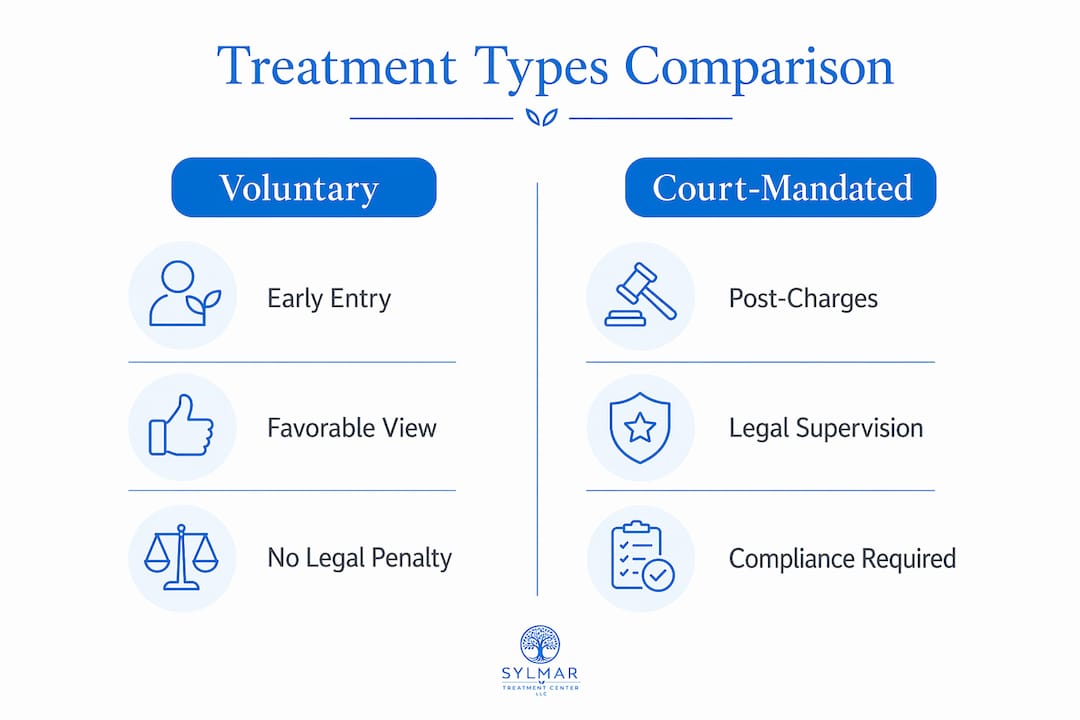
The timing and nature of treatment entry matters more than most families realize. Voluntary treatment entered before a court order is viewed more favorably by prosecutors and judges than mandated treatment alone. Early voluntary enrollment signals accountability and can provide leverage for reduced charges or more favorable plea agreements.
The table below compares the two paths and their legal implications:
| Factor | Voluntary treatment | Court-mandated treatment |
|---|---|---|
| Timing | Before charges or early in proceedings | After conviction or as condition of sentencing |
| Prosecutorial view | Demonstrates proactive accountability | Required compliance, less discretionary credit |
| Sentencing impact | Can reduce charges or support diversion | Compliance prevents incarceration; non-compliance triggers penalties |
| Documentation role | Supports defense strategy and plea negotiations | Required for court reporting and compliance verification |
| Family involvement | Families can use tools like the Marchman Act to initiate | Families support compliance with court-ordered timelines |
The Marchman Act is a civil commitment statute available in Florida that allows families to petition a court for involuntary assessment and treatment of a loved one before criminal charges escalate. Using statutes like the Marchman Act shifts the focus from punitive justice to clinical intervention, which courts often view as a more constructive path. Families in other states should ask an attorney about equivalent civil commitment options in their jurisdiction.
Court-mandated treatment carries real consequences for non-compliance. Missing sessions, failing drug tests, or leaving treatment without authorization can result in immediate incarceration. The structure is strict by design. Judges use compliance as a direct measure of a participant’s commitment to change.
How do treatment centers reduce recidivism and improve long-term outcomes?
The evidence on treatment effectiveness in legal contexts is clear. A 2026 systematic review and meta-analysis found that court-mandated non-custodial treatment produces better health and functioning outcomes than standard sentencing. That finding matters because it confirms what drug court advocates have argued for decades: treatment works better than incarceration for substance-related offenses.
The quality of collaboration between courts and treatment providers determines how much of that benefit participants actually receive. Interagency coordination between judicial and clinical teams improves both legal and health outcomes by aligning timelines, expectations, and treatment goals. When a judge understands what a 90-day residential program actually involves, they make better decisions about compliance timelines and sanctions.
“A documented history of consistent recovery can positively influence judicial decisions on sentencing.” — Justice Advisory Group
For families supporting a loved one through this process, sustained recovery requires attention beyond the courtroom. Practical steps that support both recovery and legal compliance include:
- Attending family therapy sessions offered by the treatment center, which courts view favorably
- Keeping copies of all treatment documentation in case records are needed quickly
- Communicating regularly with the defense attorney about treatment progress
- Understanding the specific compliance requirements in the court order, including testing schedules and attendance minimums
- Asking the treatment center about dual diagnosis support if co-occurring mental health conditions are part of the clinical picture
Co-occurring disorders like depression, PTSD, and anxiety are common among individuals in the legal system. Treatment centers that address both substance use and mental health simultaneously produce stronger outcomes and more complete documentation for court review.
Key Takeaways
Treatment centers that meet forensic documentation standards and maintain active court collaboration are the most effective partners in legal rehabilitation cases.
| Point | Details |
|---|---|
| Court collaboration is structured | Drug courts require testing, counseling, and court appearances coordinated directly with treatment providers. |
| Documentation quality determines legal impact | Reports must include clinical progress and sobriety data, not just attendance confirmation, to be court-admissible. |
| Voluntary treatment carries more legal weight | Entering treatment before a court order signals accountability and can support reduced charges or diversion. |
| Mandated treatment reduces recidivism | A 2026 meta-analysis confirms court-mandated non-custodial treatment outperforms standard sentencing on health outcomes. |
| Interagency coordination drives success | Alignment between judicial and clinical teams directly improves both legal compliance and recovery results. |
What I have learned from watching families navigate both systems
Most families I have spoken with come into this process believing the legal system and the treatment system are separate. They are not. The judge reads the clinical report. The attorney builds the defense around the treatment timeline. The probation officer calls the counselor. These systems are deeply connected, and families who treat them as one integrated process get better results.
The most common mistake I see is choosing a treatment center based on comfort or proximity without asking whether that facility has experience producing court-admissible documentation. A beautiful facility with compassionate staff that cannot generate a forensic-quality progress note is a liability in a legal case, not an asset.
Proactive accountability is the single most powerful tool available to families. When a loved one enters residential treatment voluntarily before a court order arrives, it changes the entire tone of the legal proceeding. Prosecutors see a defendant who is already doing the work. Judges see someone who did not wait to be forced. That distinction shows up in sentencing.
The other thing families consistently underestimate is the value of asking hard questions early. Does this center have a court liaison? Have their reports been accepted in court before? Do they have experience with the specific drug court or judge involved in this case? Those questions feel uncomfortable to ask, but they are the ones that matter most.
— Jim
How Sylmartreatmentcenter supports court-directed rehabilitation
If your family is navigating a legal case that involves treatment, Sylmartreatmentcenter is built for exactly this situation. The center holds a DHCS license and Joint Commission accreditation, which means its documentation meets the standards courts and attorneys require.
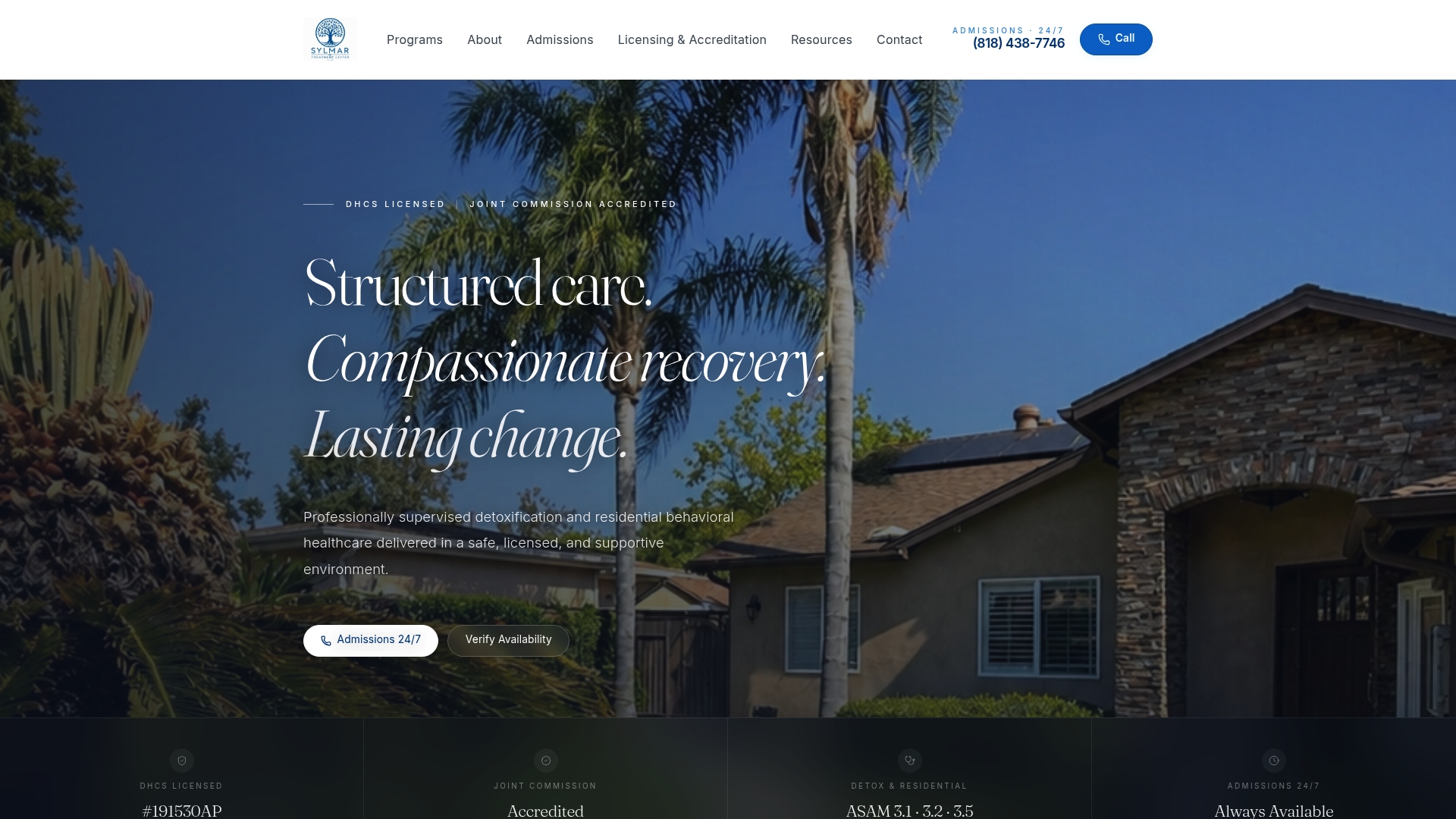
Sylmartreatmentcenter’s court-directed placement program is designed to align clinical care with judicial timelines, reporting requirements, and compliance expectations. The six-bed residential setting means each client receives individualized attention, and the clinical team has direct experience working with attorneys, probation officers, and drug courts. Programs include medical detoxification, dual diagnosis treatment, and behavioral rehabilitation, all documented to forensic standards. Call Sylmartreatmentcenter’s 24/7 admissions line to discuss your family’s specific legal and clinical needs.
FAQ
What is the role of treatment centers in legal cases?
Treatment centers provide structured rehabilitation, court-required documentation, and compliance reporting that judges and attorneys use to evaluate a defendant’s recovery progress. They function as clinical partners within drug courts and court-directed placement programs.
Can a treatment center’s records be used in court?
Yes, but only if the records meet forensic standards. Reports must include clinical progress, sobriety test results, and participation detail, not just enrollment confirmation, to be accepted as legal evidence.
Does voluntary treatment help reduce criminal charges?
Voluntary treatment entered before a court order is viewed more favorably by prosecutors and can support reduced charges, diversion programs, or more lenient sentencing, according to criminal defense experts.
What is a drug court and how does it work?
A drug court is a specialized court that integrates substance use treatment with judicial supervision, requiring participants to complete testing, counseling, and regular court appearances as conditions of their program.
How can families support a loved one in court-mandated treatment?
Families can attend family therapy sessions, maintain copies of all treatment records, communicate regularly with the defense attorney, and verify that the treatment center has experience producing court-admissible documentation.