If you’re searching for verified, confidential alternatives to profoundtreatment.com, Sylmar Treatment Center and several accredited U.S. programs match its levels of care while offering transparent clinical credentials and 24/7 intake. The most important thing to know before you call anywhere: accreditation and licensing are not marketing claims. They are verifiable facts you can check in five minutes.
Here are the top categories of alternatives, with Sylmar Treatment Center as the recommended starting point:
- Sylmar Treatment Center (small licensed residential program): Joint Commission accredited, DHCS licensed, small residential setting with medically supervised detox, dual-diagnosis support, psychiatric oversight, and 24/7 admissions. Individualized care plans from day one.
- Large foundation-backed centers (e.g., Hazelden Betty Ford Foundation, Caron Treatment Centers): Multi-campus programs with long clinical track records, stepped levels of care, and robust alumni networks.
- Hospital-based programs (e.g., American Addiction Centers): Medical detox with 24/7 physician coverage, often co-located with psychiatric units for complex cases.
- National helpline referrals: SAMHSA’s National Helpline (1-800-662-HELP) and the 988 Suicide & Crisis Lifeline connect you to confidential, anonymous referrals around the clock, at no cost.
Act now if you need immediate help: Call 1-800-662-HELP (4357) or 988, or search FindTreatment.gov for licensed programs near you. Both are free, confidential, and available 24/7.
Table of Contents
- What are the best alternatives to profoundtreatment.com at a glance?
- How were these alternatives selected and verified?
- Which clinical differences actually matter when comparing these programs?
- How do you choose the right alternative? Questions, red flags, and cost
- Where can you get immediate, confidential help right now?
- Why is Sylmar Treatment Center a recommended alternative?
- What do patient reviews and outcomes data say about these programs?
- How long do treatment programs typically last?
- What aftercare and relapse prevention services should you expect?
- Do these programs serve different age groups and demographics?
- Key Takeaways
- What families and patients get wrong about entering residential treatment
- Sylmar Treatment Center offers a direct path to confidential residential care
- Verified sources and quick verification links
What are the best alternatives to profoundtreatment.com at a glance?
Facility directories can show you levels of care and whether a center lists evidence-based therapies such as CBT, EMDR, and MAT. The table below maps the most relevant provider categories against the dimensions that actually matter clinically.
| Provider | Levels of Care | Specializations | Accreditation/Licensing | Insurance & Cost | 24/7 Intake | Confidentiality/Aftercare |
|---|---|---|---|---|---|---|
| Sylmar Treatment Center | Medically supervised detox, residential, dual diagnosis | Dual diagnosis, psychiatric oversight, MAT, court-directed placements | Joint Commission, DHCS (CA) | Most major insurers; verify coverage at intake | Yes | HIPAA-compliant; individualized discharge/aftercare planning |
| Small licensed residential program | Detox, residential, IOP | Individualized care, trauma, co-occurring disorders | Joint Commission or CARF, state licensed | Varies; typically per-diem or package | Often yes | Discharge planning standard |
| Large foundation-backed center | Detox, residential, PHP, IOP, outpatient | Alumni programs, chronic relapse, adolescents | Joint Commission, CARF | Broad insurance acceptance; sliding scale sometimes available | Yes | Structured alumni/aftercare networks |
| Hospital-based program | Medical detox, inpatient psychiatric, step-down | Complex medically managed withdrawal, psychiatric emergencies | Joint Commission, state licensed | Major insurers, Medicare/Medicaid often accepted | Yes | Varies; referral-based aftercare |
| Telehealth/IOP network | IOP, outpatient, virtual PHP | Mild-to-moderate SUD, working adults, rural access | State licensed; accreditation varies | Insurance and self-pay; often lower cost | Varies | App-based or phone check-ins |
Quick takeaways:
- Sylmar Treatment Center is the only option in this list combining a six-bed residential setting with Joint Commission accreditation, DHCS licensing, and same-day 24/7 admissions.
- Large foundation-backed centers like Hazelden Betty Ford Foundation and Caron Treatment Centers suit patients who need a longer continuum of care or structured alumni programming.
- Hospital-based programs (American Addiction Centers and similar) are the right call when medical complexity or acute psychiatric risk requires physician-level oversight around the clock.
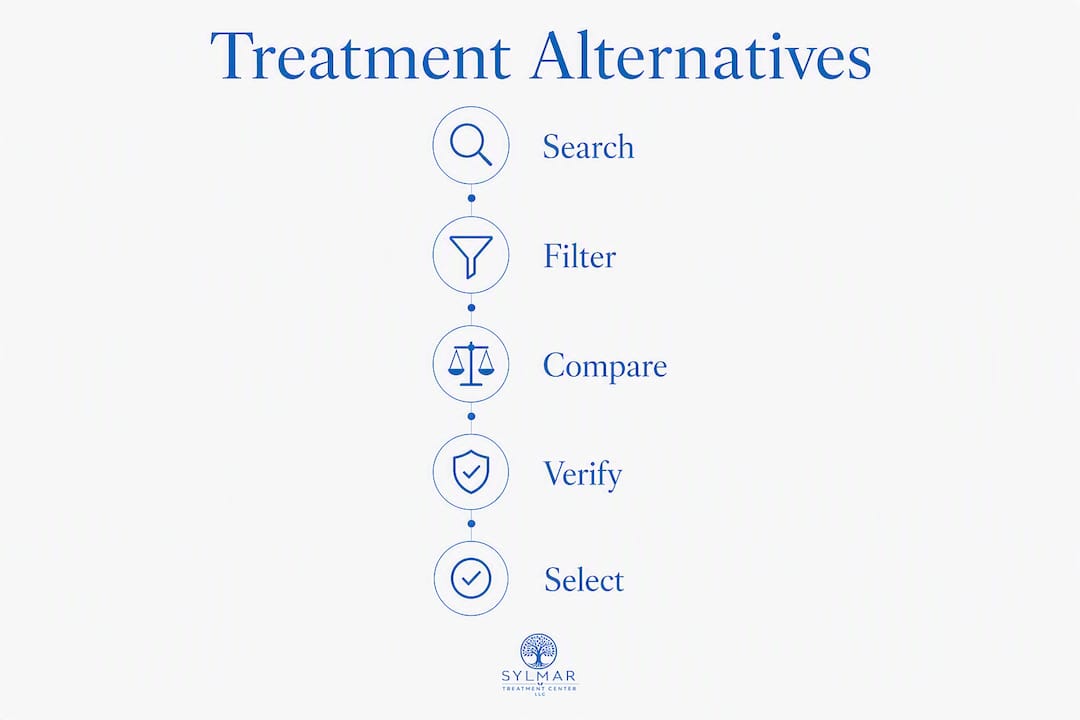
For immediate referrals, FindTreatment.gov lets you filter by level of care, location, and payment type in under two minutes.

How were these alternatives selected and verified?
Every program in this comparison was evaluated against the same criteria. These are not marketing signals. They are checkable facts.
Verification criteria used:
- Joint Commission or CARF accreditation (confirms clinical quality and safety standards)
- State licensing (DHCS for California programs; equivalent agencies in other states)
- Published medically supervised detox capability
- Documented dual-diagnosis services with psychiatric oversight
- Published clinical staff credentials (licensed clinicians, board-certified physicians or psychiatrists)
- Transparent insurance and billing information
- 24/7 admissions or crisis intake
Transparent, verifiable clinical information reduces risk when you’re choosing among similarly marketed programs. A center that won’t publish its license number or clinical director’s credentials is a center worth skipping.
Five-minute verification checklist:
- Search the program name on your state’s licensing board website (California: DHCS Facility Locator).
- Look up the facility on the Joint Commission or CARF website to confirm active accreditation.
- Ask the admissions team for the clinical director’s name, license type, and license number. Verify it on your state’s professional licensing board.
- Confirm whether the program offers medically supervised detox on-site or refers out.
Pro Tip: When comparing residential programs, ask for a structured side-by-side comparison of treatment goals, expected outcomes, and clinical credentials before you commit to anything.
Which clinical differences actually matter when comparing these programs?
The level of care a program offers is the single most important clinical variable. Here is what each level means in plain language:
- Medically supervised detox: 24/7 medical monitoring during withdrawal. Non-negotiable for alcohol, benzodiazepines, and opioids.
- Residential/inpatient: Full-time, structured living in a treatment facility. Typically several weeks to a few months.
- Partial hospitalization (PHP): Structured day programming (usually 5–6 hours/day) with return home or to sober living at night.
- Intensive outpatient (IOP): 3–4 days per week, 3 hours per session. Works for people with stable housing and lower acute risk.
- Outpatient/telehealth: Weekly sessions, appropriate for maintenance and mild presentations.
Specialties and clinical services worth prioritizing:
- Dual-diagnosis capability (co-occurring mental health and substance use disorders treated simultaneously, not sequentially)
- Trauma-focused therapies, specifically EMDR and trauma-focused CBT
- Medication-assisted treatment (MAT) with buprenorphine, naltrexone, or methadone as clinically indicated
- Psychiatric oversight and medication management on-site
- Dual diagnosis support with dedicated psychiatric staff
Clinical experts consistently find that individualized, multidisciplinary care predicts better outcomes than luxury amenities. A program with a heated pool and no board-certified psychiatrist is not a clinical program. It is a hotel with group therapy.
Small licensed residential programs, like Sylmar Treatment Center’s six-bed facility, typically deliver stronger individualized care and closer psychiatric oversight than large campuses where patient-to-staff ratios are higher. Hospital-based programs are the right fit when acute medical complexity requires physician-level monitoring around the clock.

Pro Tip: Ask every program you call: “What is your patient-to-clinical-staff ratio during residential care?” A ratio above 6:1 in a residential setting often signals limited individualized attention.
How do you choose the right alternative? Questions, red flags, and cost
Start every intake call with these questions:
- What licenses and accreditations does the facility hold, and can you provide the license number?
- Who is the clinical director, and what are their credentials?
- Do you offer medically supervised detox on-site, or is it referred out?
- How do you assess and treat co-occurring mental health conditions?
- What evidence-based modalities do you use (CBT, EMDR, MAT, DBT)?
- What does a typical length of stay look like, and how is discharge determined?
- What does aftercare planning look like, and does it begin before discharge?
- How is patient privacy handled? Are records shared with any third parties?
Red flags to watch for:
- No verifiable license number or accreditation certificate
- Refusal to name the clinical director or share their credentials
- Pressure to pay a large sum up-front without a written estimate or itemized cost breakdown
- Vague or absent discharge and aftercare planning
- Promises of guaranteed outcomes
Insurance and cost: Call your insurer before you call any facility. Ask specifically whether the program is in-network, what your deductible and out-of-pocket maximum are for residential behavioral health, and whether prior authorization is required. Programs typically bill per diem (daily rate) or as a package. Get any cost estimate in writing.
Timeline: Most accredited programs with 24/7 intake can complete a phone assessment and confirm a bed within hours. Prepare a medication list, your insurance card, a government-issued ID, and any recent treatment records. Gathering these documents before you call cuts admission time significantly. For a same-day admission, have them in hand when you dial.
For families navigating this process for the first time, the residential treatment family guide at Sylmartreatmentcenter walks through each step in detail.
Pro Tip: If two programs seem clinically equivalent, a second opinion from a licensed addiction medicine physician can clarify which setting fits the patient’s specific medical and psychiatric profile.
Where can you get immediate, confidential help right now?
These resources are free, anonymous, and available around the clock:
- SAMHSA National Helpline (1-800-662-HELP / 1-800-662-4357): Confidential, free, 24/7 treatment referral and information service. No insurance required. Available in English and Spanish.
- 988 Suicide & Crisis Lifeline: Call or text 988 for immediate crisis support. Trained counselors are available 24/7 and can connect callers to local treatment resources.
- FindTreatment.gov: SAMHSA’s searchable directory of licensed and accredited treatment facilities. Filter by location, level of care, payment type, and language.
What HIPAA means for you: Under the Health Insurance Portability and Accountability Act, treatment programs are legally prohibited from disclosing your health information without your written consent, with narrow exceptions (imminent safety risk, court order). Your admission, diagnosis, and treatment records are protected. When you call a program, you are not obligated to give your full name to ask questions.
Verify a program’s confidentiality practices before you share personal information. Ask: “Do you have a written privacy policy I can review? Do you share any records with third parties, including employers or courts, without my written consent?” A program that cannot answer both questions clearly is one to approach with caution.
To verify confidentiality practices quickly: request the program’s Notice of Privacy Practices (required under HIPAA), ask whether they have any mandatory court-reporting obligations, and confirm how communications with family members are handled.
Why is Sylmar Treatment Center a recommended alternative?
Sylmar Treatment Center fits a specific and underserved clinical profile: patients who need close, individualized care in a residential setting without the anonymity of a large campus.
Who benefits most from Sylmar’s setting:
- Working professionals who need privacy and a low-profile admissions process
- Patients with co-occurring mental health diagnoses requiring psychiatric oversight and medication management
- Individuals who have not responded well to large, group-heavy programs
- Those requiring court-directed placements with documented clinical compliance
Credentials:
- Joint Commission accredited
- DHCS licensed (California)
- Medically supervised detox on-site
- Psychiatric oversight and medication management
- Evidence-based modalities: CBT, EMDR, MAT, and individualized behavioral rehabilitation
- Six-bed residential setting with dedicated clinical staff
A small residential setting with dedicated psychiatric oversight can shorten stabilization timelines for complex dual-diagnosis patients compared with larger, less individualized programs. The depth of the clinical assessment before a treatment plan is written is often where the real quality difference between centers shows up.
For admissions, prepare your medication list, insurance card, government-issued ID, and any recent treatment or psychiatric records. Call 24/7 to speak with an admissions specialist. Explore Sylmar’s full program offerings before your call if you want a clear picture of what residential care looks like day to day.
What do patient reviews and outcomes data say about these programs?
Outcomes data in addiction treatment is notoriously difficult to standardize. Programs measure success differently: some track 30-day sobriety, others track 12-month abstinence, and others report treatment completion rates. No single public database aggregates verified outcomes across all U.S. residential programs.
What you can evaluate: Joint Commission and CARF accreditation both require programs to collect and report patient satisfaction and outcomes data internally. You can ask any accredited program for their most recent outcomes summary. If they won’t share it, that tells you something.
Patient reviews on third-party directories vary widely in reliability. Verified reviews from named patients carry more weight than anonymous posts. Look for patterns across multiple reviews rather than outliers. Consistent mentions of specific clinical staff, individualized attention, and structured aftercare are stronger signals than generic praise.
How long do treatment programs typically last?
Program duration varies by level of care and clinical need, not by marketing preference.
- Medical detox: Typically 5–10 days, depending on the substance and severity of withdrawal.
- Residential/inpatient: Most programs run several weeks to a few months. Clinically complex cases, particularly dual-diagnosis patients, often benefit from longer stays within this range.
- PHP: Usually 2–4 weeks of full-day programming following residential discharge.
- IOP: Typically 6–12 weeks, 3 days per week.
- Outpatient maintenance: Ongoing, often 6–12 months or longer.
Length of stay should be determined by clinical assessment, not insurance limits alone. If an insurer approves only 14 days but the clinical team recommends 30, ask the program’s utilization review team to submit a clinical appeal. Most accredited programs have staff who handle this routinely.
What aftercare and relapse prevention services should you expect?
Aftercare is where most programs either earn or lose their clinical credibility. A residential program that discharges patients without a concrete aftercare plan is not a complete program.
Quality aftercare includes a written discharge plan with specific referrals, a step-down level of care (PHP or IOP), connection to outpatient therapy and medication management, peer support or 12-step/SMART Recovery integration, and a relapse prevention plan with identified triggers and coping strategies. Structured activities, including exercise, volunteering, and community engagement, support long-term recovery by replacing addictive behaviors with sustainable alternatives.
Ask any program you’re evaluating: “Who specifically will coordinate my aftercare, and will I meet them before discharge?” If the answer is vague, push harder. The transition out of residential care is statistically the highest-risk period in early recovery. Programs that treat discharge planning as an afterthought are not programs built for long-term outcomes.
For integrated outpatient and partial-hospitalization options post-residential, Kin Wellness offers coordinated care for co-occurring addiction and mental health conditions.
Do these programs serve different age groups and demographics?
Most accredited residential programs serve adults 18 and older. Demographic-specific programming varies significantly by provider.
- Adolescent programs (13–17): Hazelden Betty Ford Foundation and Caron Treatment Centers both offer adolescent-specific residential tracks. These are not standard at most facilities.
- Gender-specific programs: Some programs offer separate tracks for men and women, with trauma-informed care tailored to gender-specific presentations. Ask specifically whether the program is co-ed or gender-separated.
- Older adults (65+): Few programs specialize here, but hospital-based programs with geriatric psychiatric units are the most equipped for this population.
- LGBTQ+ affirming care: Ask directly whether clinical staff have training in LGBTQ+ affirming practices and whether the program has a documented nondiscrimination policy.
- Court-directed placements: Sylmar Treatment Center explicitly offers court-directed placement services with documented clinical compliance reporting for legal requirements.
The small residential setting at Sylmartreatmentcenter makes it particularly well-suited for adults who need individualized attention regardless of demographic background. Smaller programs can adapt care plans more fluidly than large campuses where demographic-specific tracks are more rigid.
Key Takeaways
Accreditation, licensing, and individualized clinical assessment are the three non-negotiable criteria when selecting a residential addiction treatment program comparable to Profound Treatment.
| Point | Details |
|---|---|
| Verify before you call | Confirm Joint Commission or CARF accreditation and state licensing (DHCS for CA) on official websites before sharing personal information. |
| Prioritize clinical fit | Individualized, multidisciplinary care predicts better outcomes than amenities; ask for patient-to-staff ratios and clinical director credentials. |
| Use confidential resources | SAMHSA’s 1-800-662-HELP and 988 are free, anonymous, and available 24/7 for immediate referrals. |
| Aftercare is not optional | A written discharge plan with specific step-down referrals is a marker of a clinically complete program. |
| Sylmartreatmentcenter | Joint Commission accredited, DHCS licensed, six-bed residential setting with 24/7 admissions, medically supervised detox, and dual-diagnosis psychiatric oversight. |
What families and patients get wrong about entering residential treatment
The most common fear people bring to an admissions call is that entering a residential program means losing control of their life for a month. That fear is understandable and almost always wrong.
Day one at an accredited residential program is assessment-heavy, not treatment-heavy. The clinical team is gathering information: medical history, psychiatric history, substance use timeline, current medications, trauma history. The treatment plan that follows is built on that assessment, not on a generic template. That distinction matters more than most people realize, because a plan built on your actual clinical picture is the one most likely to work.
Confidentiality concerns are also common, especially for professionals or people with legal exposure. HIPAA protections are real and enforceable. No accredited program will share your records without your written consent except in the narrow circumstances required by law. Ask for the privacy policy in writing. Any program worth your time will hand it over without hesitation.
Pro Tip: Before your admissions call, write down your current medications with dosages, your insurance information, and a brief timeline of your substance use history. Having this ready cuts the intake process from an hour to twenty minutes and gets you to a bed faster.
Sylmar Treatment Center offers a direct path to confidential residential care
Six beds. Joint Commission accredited. DHCS licensed. Those three facts separate Sylmartreatmentcenter from most of what you’ll find when searching for comparable treatment options.
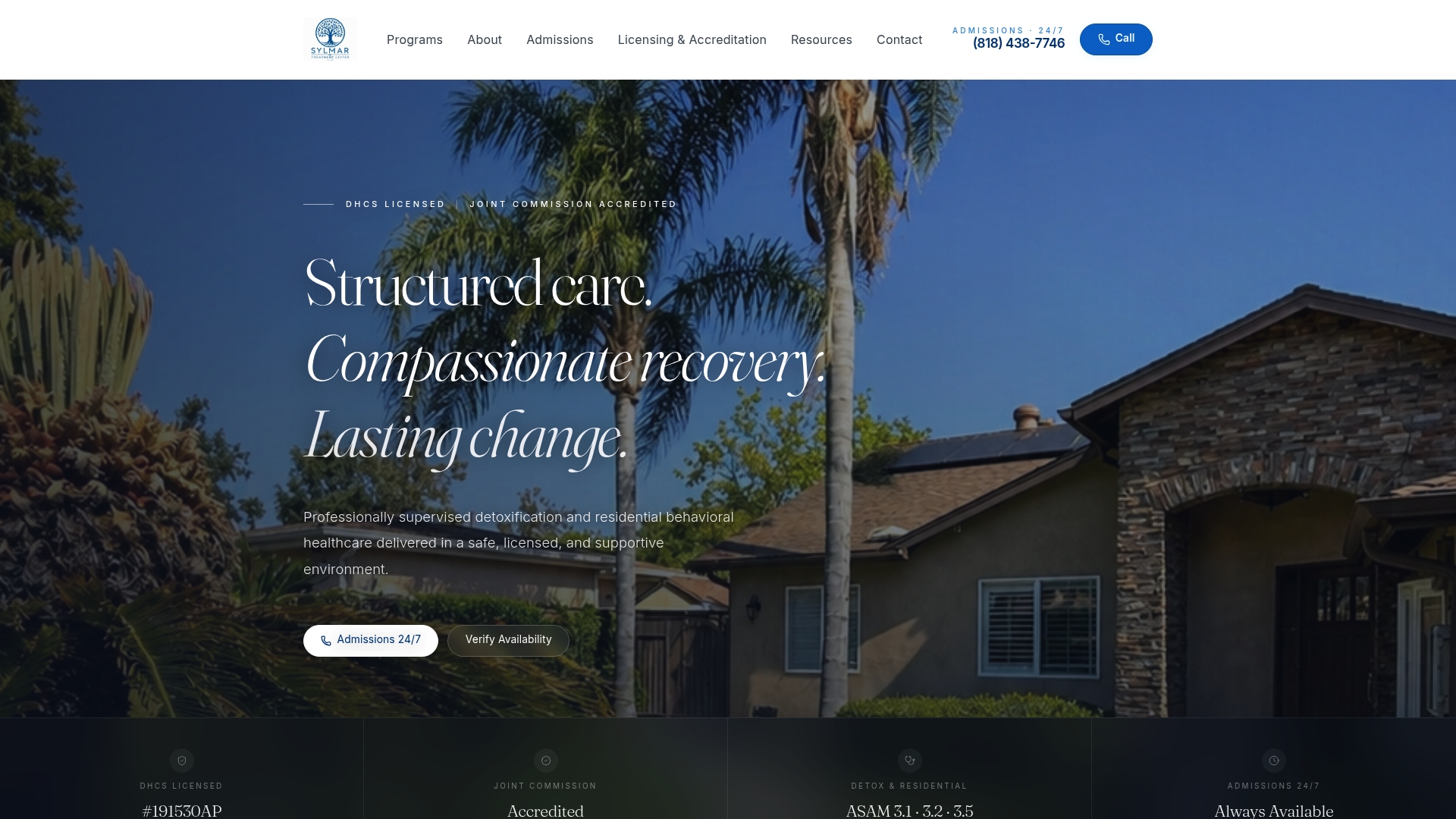
Sylmartreatmentcenter provides medically supervised detox, residential addiction treatment, dual-diagnosis support with psychiatric oversight, individualized treatment programs, behavioral rehabilitation, and court-directed placements—all with 24/7 admissions. The small residential setting means your care team knows your case from intake to discharge, not just during scheduled group sessions.
To prepare for your admissions call: have your insurance card, a government-issued ID, your current medication list with dosages, and any recent treatment or psychiatric records ready. The first week is structured around a comprehensive clinical assessment, so the more information you bring, the faster your individualized plan gets built.
Ready to take the next step? Review Sylmar’s full programs or call admissions directly, 24 hours a day, 7 days a week. You can also explore individualized treatment options to understand exactly what the clinical process looks like before you call.
Verified sources and quick verification links
Authoritative resources:
- SAMHSA FindTreatment.gov: Search licensed and accredited programs by location, level of care, and payment type.
- SAMHSA National Helpline (1-800-662-HELP): Free, confidential, 24/7 referral line.
- 988 Suicide & Crisis Lifeline: Call or text 988 for immediate crisis support and treatment referrals.
- Joint Commission Quality Check (qualitycheck.org): Verify active accreditation status for any facility.
- CARF International (carf.org): Confirm CARF accreditation for behavioral health programs.
- California DHCS Facility Locator (dhcs.ca.gov): Verify state licensing for California-based programs.
- Your insurer’s provider directory: Confirm in-network status and behavioral health benefits before admission.
Three-step quick check before your admissions call:
| Step | Action | Why It Matters |
|---|---|---|
| 1. License | Search the program on your state licensing board’s website | Confirms legal authorization to operate |
| 2. Accreditation | Look up the facility on Joint Commission or CARF | Confirms clinical quality and safety compliance |
| 3. Clinical director | Ask for name, license type, and license number; verify on state board | Confirms qualified clinical leadership is in place |
This article is general information, not medical or legal advice. Confirm current licensing, accreditation status, and clinical fit with the program directly or with a qualified addiction medicine professional before making an admission decision.
Recommended
- Top 6 invigoratebh.com Alternatives Providers 2026 | Sylmar Treatment Center
- Top 6 BrightPathsRecovery.com Alternatives 2026 | Sylmar Treatment Center
- Top 4 Ohanarecoverycenter.com Alternatives 2026 | Sylmar Treatment Center
- Best thehouseoflife.com Alternatives for Rehab in 2026 | Sylmar Treatment Center