
A family recovery program is a structured system that actively involves family members in the addiction treatment process to strengthen support and improve recovery outcomes. Known in clinical settings as family systems therapy or family behavioral therapy, these programs treat addiction as a condition affecting the entire family unit, not just the individual. Research confirms that family involvement significantly improves treatment completion and sustained abstinence. Understanding what a family recovery program is, and how it works, gives families the tools to become genuine partners in healing rather than helpless bystanders.
What is a family recovery program and how does it work?
A family recovery program is an organized treatment model that brings family members into the recovery process through education, therapy, and structured communication. Addiction affects entire family systems, reshaping communication patterns, roles, and emotional dynamics in ways that can either support or undermine recovery. The program addresses those dynamics directly.
Most programs operate across three phases: intake, active treatment, and aftercare. Each phase builds on the last.

During intake, families receive education on addiction science and neurobiology. They learn how substance use disorders develop, how the brain changes under addiction, and what realistic recovery looks like. This phase also clarifies each family member’s role in the treatment plan.
During active treatment, families participate in structured therapy sessions. These include individual family sessions, multifamily group therapy, and communication skills workshops. Therapists guide families through boundary-setting, conflict resolution, and how to respond constructively if relapse occurs.
During aftercare, families continue attending support groups and check-in sessions. Continuous education and engagement throughout treatment and post-discharge produce better outcomes than any single intervention. This is what separates effective family counseling programs from one-time workshops.
- Education on addiction neurobiology and family roles
- Multifamily group therapy and individual family sessions
- Structured communication and boundary-setting skills
- Relapse response planning for family members
- Ongoing peer support and aftercare participation
Pro Tip: Start family involvement at intake, before active treatment begins. Early family engagement prepares the whole family system for the transitions ahead and reduces the shock of early recovery.
What are the benefits of family support in addiction recovery?
Family involvement produces measurable improvements in treatment outcomes. A meta-analysis of 39 studies with over 5,000 participants showed strong positive effects of family involvement on treatment completion and abstinence rates. That is not a marginal finding. It means family participation is one of the most reliable predictors of recovery success.
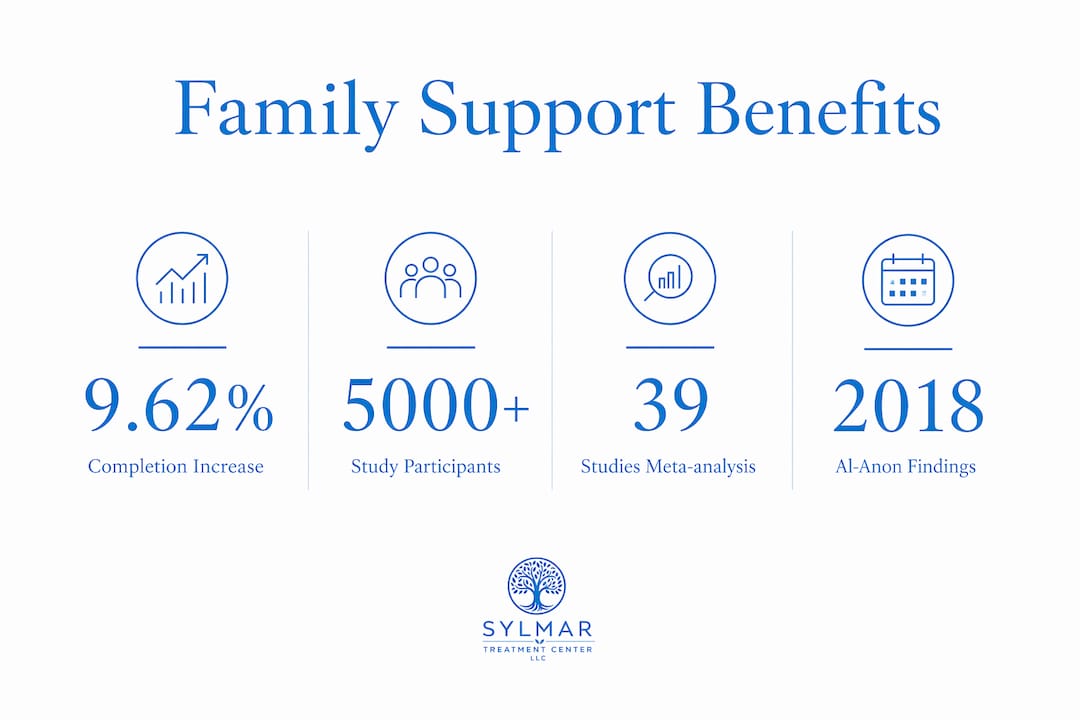
The numbers at the program level are equally clear. Engaging family members in even a short 7-day family program increases residential treatment completion by 9.62%. When a family member attends support groups consistently, the likelihood of the person with addiction entering treatment rises by 23%. Both findings point to the same conclusion: family action changes outcomes.
Beyond statistics, the relational benefits are significant. Families rebuild trust, reduce codependent patterns, and develop communication skills that make the home environment safer for recovery. A healthier home environment directly lowers relapse risk by removing triggers and replacing enabling behaviors with constructive support.
Family members themselves benefit too. A 2018 study of Al-Anon participants found that consistent support group attendance reduced depression and anxiety among family members. Healing is not one-directional. When the family heals, the person in recovery has a stronger foundation to stand on.
| Benefit | Evidence |
|---|---|
| Higher treatment completion | 9.62% increase with 7-day family program participation |
| Increased treatment entry | 23% rise when family attends support groups consistently |
| Stronger abstinence rates | Meta-analysis of 39 studies, 5,000+ participants confirms positive effects |
| Improved family mental health | 2018 Al-Anon study links group attendance to reduced depression and anxiety |
| Better overall functioning | Cochrane review of 24 trials confirms family therapy outperforms individual therapy alone |
A Cochrane review of 24 trials confirmed that structured family therapy interventions produce better outcomes than individual therapy alone across both substance use and family functioning measures. That evidence base is why family counseling programs are now considered a standard component of quality addiction treatment.
What types of family recovery programs are available?
Family recovery programs come in several formats, and the right fit depends on the family’s situation, schedule, and the complexity of the issues involved.
Weekly outpatient family therapy is the most common format. Families attend sessions once or twice a week alongside the person in treatment. These sessions focus on communication, boundary work, and processing the emotional impact of addiction. This format works well for families with stable schedules and moderate conflict levels.
Multifamily group therapy brings several families together with a trained facilitator. Families learn from each other’s experiences, reduce isolation, and practice communication skills in a supported group setting. This format is particularly effective for families who feel alone in their situation.
Family therapy intensives condense weeks of therapy into 1–3 days of concentrated work. These are designed for families dealing with longstanding conflict, complex trauma, or significant communication breakdowns. The concentrated format accelerates progress that weekly sessions might take months to achieve.
Peer support groups such as Al-Anon and Nar-Anon operate in community settings and are free to attend. They provide ongoing emotional support and practical guidance from people who have lived through similar experiences. These groups complement formal therapy rather than replace it.
Inpatient and residential programs often include family programming as a built-in component. Families visit during designated times and participate in structured sessions as part of the patient’s residential treatment plan. This integration ensures family support is woven into care from day one.
Pro Tip: If your family has been dealing with addiction for years or carries unresolved trauma, a family therapy intensive may produce faster and deeper results than starting with weekly sessions. The concentrated format creates space for breakthroughs that gradual weekly work sometimes delays.
How can families effectively participate in a recovery program?
Effective participation starts before treatment begins. Families who engage at intake, rather than waiting until the person in treatment asks for their involvement, set a stronger foundation for the entire process. Reading about the detox process for families before the first day reduces fear and helps families ask better questions.
Healthy communication is the core skill families need to develop. This means listening without judgment, expressing concern without blame, and avoiding conversations that escalate into conflict during vulnerable moments. Therapists in family counseling programs teach specific techniques for this, including structured dialogue formats and de-escalation strategies.
Boundary-setting is equally critical. Boundaries are not punishments. They are clear agreements about what behaviors the family will and will not support. A family that sets and holds consistent boundaries removes the conditions that enable continued substance use.
Self-care is not optional for family members. Attending your own therapy, maintaining friendships, and protecting your physical health are not selfish acts. They are what sustain your capacity to support someone else over the long term.
- Engage at intake, not after treatment is already underway
- Attend all scheduled family therapy sessions and group meetings
- Practice communication skills outside of therapy sessions
- Set and maintain clear, consistent boundaries
- Prioritize your own mental health and peer support participation
- Continue involvement after formal treatment ends, through community support networks
Ongoing family support after treatment is vital to sustaining recovery. The transition from a structured treatment environment back to daily life is one of the highest-risk periods for relapse. Families who stay engaged through that transition significantly improve the odds of lasting sobriety.
Key Takeaways
Family recovery programs work because they treat addiction as a whole-family condition, and research consistently shows that sustained family involvement improves treatment completion, reduces relapse, and supports mental health for every member of the household.
| Point | Details |
|---|---|
| Family involvement improves outcomes | Meta-analysis of 39 studies confirms family participation raises treatment completion and abstinence rates. |
| Start engagement at intake | Early family involvement prepares the entire family system before recovery transitions begin. |
| Multiple program formats exist | Options include weekly therapy, intensives, multifamily groups, and peer support to fit different needs. |
| Family members benefit too | Al-Anon research links consistent support group attendance to reduced depression and anxiety in family members. |
| Aftercare participation matters | Ongoing family support after treatment completion is critical to preventing relapse during high-risk transitions. |
Why families are the most underused resource in addiction recovery
Most families I have worked with arrive at treatment with the same belief: their job is to wait and hope. They see themselves as support staff, not active participants. That belief is the single biggest obstacle to recovery I have observed.
The research is unambiguous. Family involvement changes outcomes in ways that no medication or individual therapy session can replicate on its own. Yet families routinely sit in waiting rooms while the real work happens behind closed doors. That model is outdated and, frankly, counterproductive.
The other misconception I see constantly is that family therapy is about assigning blame. It is not. Family therapy is about reshaping interactions to support recovery, not relitigating who caused the problem. Families who walk in expecting to be blamed walk out surprised by how much the process focuses on their own healing.
What I have found actually works is sequenced, sustained engagement. One family education session at intake does nothing lasting. Families who attend consistently, who do the communication work at home, and who stay involved through aftercare are the ones whose loved ones maintain sobriety at one year and beyond. The families who disengage after the first month are the ones who call back six months later.
Treat your own recovery as seriously as you treat your loved one’s. That is not a metaphor. It is the most practical advice I can offer.
— Jim
Family-centered care at Sylmartreatmentcenter
Sylmartreatmentcenter builds family involvement directly into every stage of care, from the first call through discharge and beyond. The center’s intimate six-bed setting means families work with the same clinical team throughout treatment, creating the consistency that makes family therapy actually stick.
Sylmartreatmentcenter’s individualized treatment programs include structured family sessions, education components, and aftercare planning that keeps families engaged long after the formal program ends. The center holds both a DHCS license and Joint Commission accreditation, so families can trust that the care meets verified clinical standards. If you are ready to learn how family-centered treatment works in practice, explore the full range of treatment programs at Sylmartreatmentcenter or call the 24/7 admissions line to speak with someone today.
FAQ
What is a family recovery program in addiction treatment?
A family recovery program is a structured treatment model that actively involves family members through education, therapy, and ongoing support to improve recovery outcomes for the whole family system.
How do family recovery programs work in practice?
Programs operate across intake, active treatment, and aftercare phases, combining addiction education, family therapy sessions, communication skills training, and peer support group participation.
What are the proven benefits of family involvement in recovery?
A meta-analysis of 39 studies with over 5,000 participants confirmed that family involvement significantly improves treatment completion and sustained abstinence, while also reducing depression and anxiety in family members themselves.
When should families get involved in the recovery process?
Families should engage at intake or earlier. Early involvement prepares the entire family system for recovery transitions and produces better long-term outcomes than waiting until active treatment is underway.
What is the difference between family therapy and a support group like Al-Anon?
Family therapy is a structured clinical intervention led by a licensed therapist, focused on the specific family’s dynamics and communication patterns. Al-Anon is a peer-led community support group that provides ongoing emotional support and shared experience outside of formal treatment.