

Benzodiazepines are the standard medication for clinically significant alcohol withdrawal because they prevent seizures and delirium tremens. Gabapentin, carbamazepine, phenobarbital, and adrenergic agents like clonidine serve as alternatives or adjuncts in specific situations. Naltrexone, acamprosate, and disulfiram are FDA-approved for relapse prevention rather than acute detox. Severe withdrawal can turn life-threatening fast, and it needs supervised medical care, not a home remedy.
TL;DR:
- Benzodiazepines remain the primary and most effective treatment for preventing seizures and delirium tremens during alcohol withdrawal.
- Long-acting options like diazepam and chlordiazepoxide are preferred in supervised settings for smoother tapering, while lorazepam and oxazepam are safer for liver-impaired patients.
- Alternatives such as gabapentin, carbamazepine, and phenobarbital are limited to specific cases and do not replace benzodiazepines as the first-line therapy.
- Relapse prevention medications like naltrexone, acamprosate, and disulfiram are used after detoxification and do not address acute withdrawal symptoms.
- Supervised detox facilities provide tailored assessments and continuous monitoring, especially for high-risk patients or those with complicating health conditions.
Table of Contents
- What Happens During Alcohol Withdrawal and When Medication Is Needed
- Benzodiazepines: The First-Line Treatment for Withdrawal
- Anticonvulsants, Phenobarbital, and Adrenergic Drugs as Alternatives
- Naltrexone, Acamprosate, and Disulfiram: Medications for After Detox
- Monitoring, Thiamine, and Supportive Care During Detox
- Special Situations That Change the Medication Plan
- Managing Severe Withdrawal: Seizures and Delirium Tremens
- Deciding When Supervised Detox Is the Right Call
- The Real Gap in How This Topic Gets Discussed
- How Sylmartreatmentcenter Supports Medically Managed Detox
- Sources
- FAQ
What Happens During Alcohol Withdrawal and When Medication Is Needed
Alcohol suppresses the brain’s excitatory signals and boosts its calming GABA system. Drink heavily and consistently enough, and the brain adjusts by dialing down GABA activity and ramping up glutamate, the main excitatory neurotransmitter, just to maintain balance. Stop drinking suddenly, and that compensation doesn’t reverse overnight. The brain stays stuck in an overexcited state, which is what produces tremors, anxiety, racing heart rate, and in severe cases, seizures.

Symptoms typically start within 6 to 12 hours of the last drink, peak around 24 to 72 hours, and can persist for up to five days in the acute phase. Most people never need medication for this. The National Institute on Alcohol Abuse and Alcoholism notes that roughly 85% of withdrawal cases resolve without pharmacologic treatment.
Certain factors push someone into that higher-risk group:
- A history of prior delirium tremens or withdrawal seizures
- Heavy, sustained daily drinking over months or years
- Coexisting medical conditions like liver disease, heart disease, or malnutrition
- Older age or a history of multiple prior detox attempts (a phenomenon called “kindling,” where each withdrawal episode tends to get worse)
Clinicians use the Clinical Institute Withdrawal Assessment for Alcohol, Revised (CIWA-Ar) to quantify severity. It scores ten symptoms, including tremor, sweating, anxiety, and hallucinations, on a point scale. A low score might mean supportive care and observation. A rising score signals it’s time for medication, and possibly a higher level of care entirely.
Benzodiazepines: The First-Line Treatment for Withdrawal
Benzodiazepines work by binding to the same GABA receptors alcohol affects, which is exactly why they’re effective. They restore the calming signal the brain lost when drinking stopped, tamping down the excitability that causes tremors, agitation, and seizures. No other medication class matches this track record for preventing the two most dangerous complications: seizures and delirium tremens.
Not all benzodiazepines behave the same way, and the choice matters clinically.
- Diazepam is long-acting with active metabolites that stick around, giving a smoother taper with less risk of breakthrough symptoms between doses. It’s a common choice for symptom-triggered dosing in supervised settings.
- Chlordiazepoxide is similarly long-acting and has decades of use behind it as a fixed-taper option, particularly in inpatient units.
- Lorazepam is shorter-acting and metabolized through a simpler pathway that doesn’t rely heavily on the liver, making it a safer pick when hepatic function is compromised.
- Oxazepam shares that liver-friendly metabolism and a shorter half-life, useful for older patients or anyone where drug accumulation is a concern.
Three dosing strategies dominate clinical practice. Symptom-triggered dosing uses the CIWA-Ar score to guide each dose, giving medication only when symptoms cross a threshold. This approach tends to use less total medication and shortens treatment duration, but it only works when staff can reassess frequently and accurately. Fixed-schedule tapers give set doses on a set timeline regardless of symptoms, which suits settings where frequent reassessment isn’t practical. Loading-dose regimens front-load larger amounts of a long-acting benzodiazepine early, letting the drug’s own slow clearance taper itself, an approach sometimes used for patients presenting with severe symptoms already underway.
Monitoring never stops being part of the picture. Respiratory depression and oversedation are real risks, especially at higher doses or when combined with other sedatives. That’s part of why setting decisions matter: someone with mild symptoms and a stable home environment might do fine with outpatient dosing and a support person checking in, while anyone showing early signs of severe withdrawal needs inpatient monitoring where vitals and mental status get checked regularly.
Pro Tip: If liver disease is in the picture, lorazepam or oxazepam are usually the safer picks. Diazepam and chlordiazepoxide rely on liver enzymes to break down into their active forms, and a damaged liver can cause unpredictable buildup and oversedation.
Anticonvulsants, Phenobarbital, and Adrenergic Drugs as Alternatives
Benzodiazepines dominate for good reason, but they’re not the only tool. Several other medications play defined, narrower roles.
Gabapentin has picked up traction for mild-to-moderate outpatient withdrawal, partly because it carries no meaningful abuse potential in this context and doesn’t interact dangerously with alcohol the way benzodiazepines theoretically can if someone relapses mid-taper. It’s often used as a benzodiazepine-sparing option, dosed several times a day and tapered over roughly a week. The evidence base is smaller than for benzodiazepines, and it’s not considered adequate alone for anyone at risk of seizures or DTs.
Carbamazepine works similarly. It’s an anticonvulsant with a reasonable track record for mild withdrawal, mainly outside the US in some countries’ standard practice, though liver enzyme induction and drug interaction risks limit its appeal for patients on other medications.
Phenobarbital is the most clinically interesting alternative because it works through two mechanisms at once. It enhances GABA activity like benzodiazepines do, but it also blocks glutamate receptors directly, addressing both sides of the withdrawal imbalance. A quality-improvement study published in JAMA Network Open found that hospital-wide protocolized phenobarbital use reduced benzodiazepine consumption, lowered CIWA-Ar scores, and shortened hospital stays. But the same research flagged that these gains depend heavily on standardized weight-based dosing protocols and clinicians experienced with the drug. Phenobarbital has a narrower safety margin than benzodiazepines, and it isn’t something to introduce in a setting without close monitoring capability.
Adrenergic agents, namely clonidine and beta-blockers like propranolol, target the autonomic symptoms of withdrawal, racing heart rate, elevated blood pressure, sweating. They make patients more comfortable and can mask some withdrawal signs, which is actually a downside: they don’t prevent seizures or delirium tremens, so relying on them alone in a high-risk patient can be dangerous. They’re strictly adjuncts.
Antipsychotics occasionally get added for breakthrough agitation or hallucinations that don’t fully respond to benzodiazepines, but they lower the seizure threshold and are never a substitute for adequate benzodiazepine dosing.
The PMC review on benzodiazepines and beyond is blunt about this hierarchy: none of these alternatives has proven superior to benzodiazepines as monotherapy for preventing severe complications. They fill gaps. They don’t replace the first-line drug.
Naltrexone, Acamprosate, and Disulfiram: Medications for After Detox
These three drugs get lumped in with “alcohol detox medications” constantly, and that’s a mistake worth correcting directly: none of them treat acute withdrawal. They’re FDA-approved for alcohol use disorder maintenance, meaning relapse prevention once someone is already stable and abstinent.
Naltrexone blocks opioid receptors involved in alcohol’s rewarding effects, reducing cravings and heavy-drinking days. It comes as a daily pill or a monthly injection. The critical safety step: anyone with recent opioid use needs a confirmed opioid-free interval before starting, because naltrexone can trigger sudden, severe precipitated withdrawal in someone with opioids still in their system.
Acamprosate works on glutamate and GABA balance to ease the protracted discomfort some people feel weeks into sobriety, things like poor sleep, restlessness, and anhedonia. It’s dosed three times daily and requires dose adjustment or avoidance in significant kidney impairment, since it’s cleared renally.
Disulfiram takes a different approach entirely: it blocks an enzyme that metabolizes alcohol’s breakdown products, so drinking while on it causes a genuinely unpleasant reaction, flushing, nausea, rapid heartbeat. It works as a deterrent, but only for patients motivated enough to take it reliably, since skipping doses defeats the purpose.
Timing matters here. These medications are typically started after detox is complete, often days after acute withdrawal has resolved, once someone is medically stable. They complement a treatment plan; they don’t manage the dangerous physical symptoms benzodiazepines are built to handle.

Monitoring, Thiamine, and Supportive Care During Detox
Medication choice is only half the picture. What happens around the medication, monitoring, hydration, nutrition, decides how safely detox actually goes.
- Use CIWA-Ar scoring consistently. It guides symptom-triggered dosing effectively, but it has a real limitation: it depends on a patient who can communicate clearly. Someone with significant cognitive impairment, language barriers, or altered mental status can’t reliably self-report symptoms like anxiety or “subjective” tremor, which means scores can understate true severity in exactly the patients who need the most attention.
- Check vitals on a defined schedule, not just when something seems off. Rising heart rate, climbing blood pressure, or fever are early warning signs that symptoms are escalating, and they often show up before a CIWA-Ar score does.
- Give thiamine early and routinely. Heavy, prolonged drinking depletes thiamine reserves, and Cleveland Clinic’s clinical guidance recommends supplementation as standard practice in detox protocols because deficiency raises the risk of Wernicke encephalopathy, a preventable but serious neurologic complication.
- Correct fluids and electrolytes. Vomiting, sweating, and poor oral intake during withdrawal commonly cause dehydration and depleted magnesium, potassium, and phosphate, all of which can worsen tremor and arrhythmia risk if left uncorrected.
- Escalate when red flags appear. Hallucinations, disorientation, a CIWA-Ar score that keeps climbing despite adequate dosing, or any seizure activity means it’s time for IV benzodiazepines and a higher level of monitoring than an outpatient setting can offer.
Nutrition support and anti-nausea medication round out routine care, since most people in acute withdrawal aren’t eating or drinking normally on their own. None of this is optional add-on care. It’s the scaffolding that makes medication actually work as intended.
Special Situations That Change the Medication Plan
Standard protocols assume a reasonably healthy adult with no complicating conditions. Real patients often don’t fit that mold, and the plan needs to shift accordingly.
- Liver disease changes drug selection directly. Diazepam and chlordiazepoxide depend on hepatic metabolism to become active or get cleared, so damaged liver function means unpredictable levels and oversedation risk. Lorazepam and oxazepam, metabolized through simpler pathways, are the safer default here.
- Recent opioid use rules out starting naltrexone until an opioid-free window is confirmed, typically through history and sometimes urine testing, because starting too early can trigger abrupt, severe precipitated withdrawal.
- Pregnancy requires specialist coordination between obstetrics and addiction medicine before any routine medication decision. Untreated withdrawal carries real fetal risk, but medication choices need careful weighing that a standard adult protocol doesn’t address.
- Older adults and people using multiple substances generally need lower starting doses and a slower taper. Falls and respiratory depression risk climb with age, and combined substance use, particularly opioids or other sedatives, compounds sedation risk in ways that call for tighter monitoring.
None of these situations mean medication gets skipped. They mean the standard playbook gets adjusted by someone who knows what they’re adjusting for.
Managing Severe Withdrawal: Seizures and Delirium Tremens
Delirium tremens shows up as a specific cluster: severe confusion, autonomic instability (dangerously high heart rate and blood pressure, fever), and often vivid hallucinations. It’s a medical emergency, not a symptom to wait out.
- High-dose IV benzodiazepines are the immediate response, often requiring doses well beyond what a mild case needs, titrated aggressively to control agitation and prevent seizure recurrence.
- When benzodiazepine doses climb without adequate symptom control, phenobarbital or adjunct sedatives like dexmedetomidine or propofol may be added under ICU-level care.
- Airway protection and continuous cardiac and neurologic monitoring become priorities once sedation deepens or mental status is significantly altered.
- A multidisciplinary team, physicians, nursing, sometimes critical care specialists, manages these cases because complications can shift quickly.
The evidence on phenobarbital in this setting is genuinely mixed. Some hospital series report shorter stays and fewer ICU transfers with protocolized use, but randomized controlled trial data remains limited, and outcomes lean heavily on clinician experience with the drug.
Deciding When Supervised Detox Is the Right Call
Certain signs point clearly toward supervised care instead of trying to manage withdrawal at home: a prior history of seizures or delirium tremens, heavy daily drinking over an extended period, coexisting medical or psychiatric conditions, pregnancy, or simply no safe, sober environment to detox in.
A proper medically supervised assessment covers the drinking timeline, prior withdrawal complications, current medications, vital signs, baseline labs, and thiamine status, all of which shape the specific medication plan and determine what level of care is appropriate.
A medically supervised detox program in a small residential setting can provide closer, more consistent monitoring than larger facilities typically offer per patient. Such centers often hold appropriate state licenses and national accreditations, with admissions support available 24/7 for individuals seeking treatment guidance. Medication management generally occurs under clinical oversight, with individualized plans tailored to each person’s history and risk profile rather than a one-size-fits-all protocol.
The Real Gap in How This Topic Gets Discussed
Most articles on alcohol detox medications treat the topic as a list: here are the drugs, here’s what they do, good luck. What gets lost is the sequencing, and sequencing is where people actually get hurt or helped.
Benzodiazepines aren’t just “the best option,” they’re the option with a track record for preventing the two outcomes that kill people during withdrawal. Everything else on this list, gabapentin, phenobarbital, clonidine, earns its place in specific situations, not as a general substitute. The conventional wisdom I’d push back on hardest is the growing enthusiasm for phenobarbital as some kind of upgrade. The hospital data is genuinely promising, but it’s promising specifically in hospitals with standardized protocols and clinicians who’ve used it enough to catch trouble early. That’s not most home detox attempts, and it’s not most outpatient clinics either.
The other blind spot is timing confusion around naltrexone, acamprosate, and disulfiram. People search for “alcohol detox medications” and land on these names constantly, then wonder why their withdrawal symptoms aren’t improving. They were never meant to. If there’s one thing worth prioritizing above all else here, it’s this: figure out which phase you’re actually in before deciding which medication category applies.
— Jim
How Sylmartreatmentcenter Supports Medically Managed Detox
If you’ve made it this far, you already understand why guessing at withdrawal medication on your own is risky. That’s exactly the gap Sylmartreatmentcenter is built to close. Instead of a large facility where monitoring gets stretched thin, care happens in a six-bed setting where medication decisions, benzodiazepine selection, dosing strategy, thiamine and fluid support, are made by clinical staff who actually have time to reassess you throughout the day.
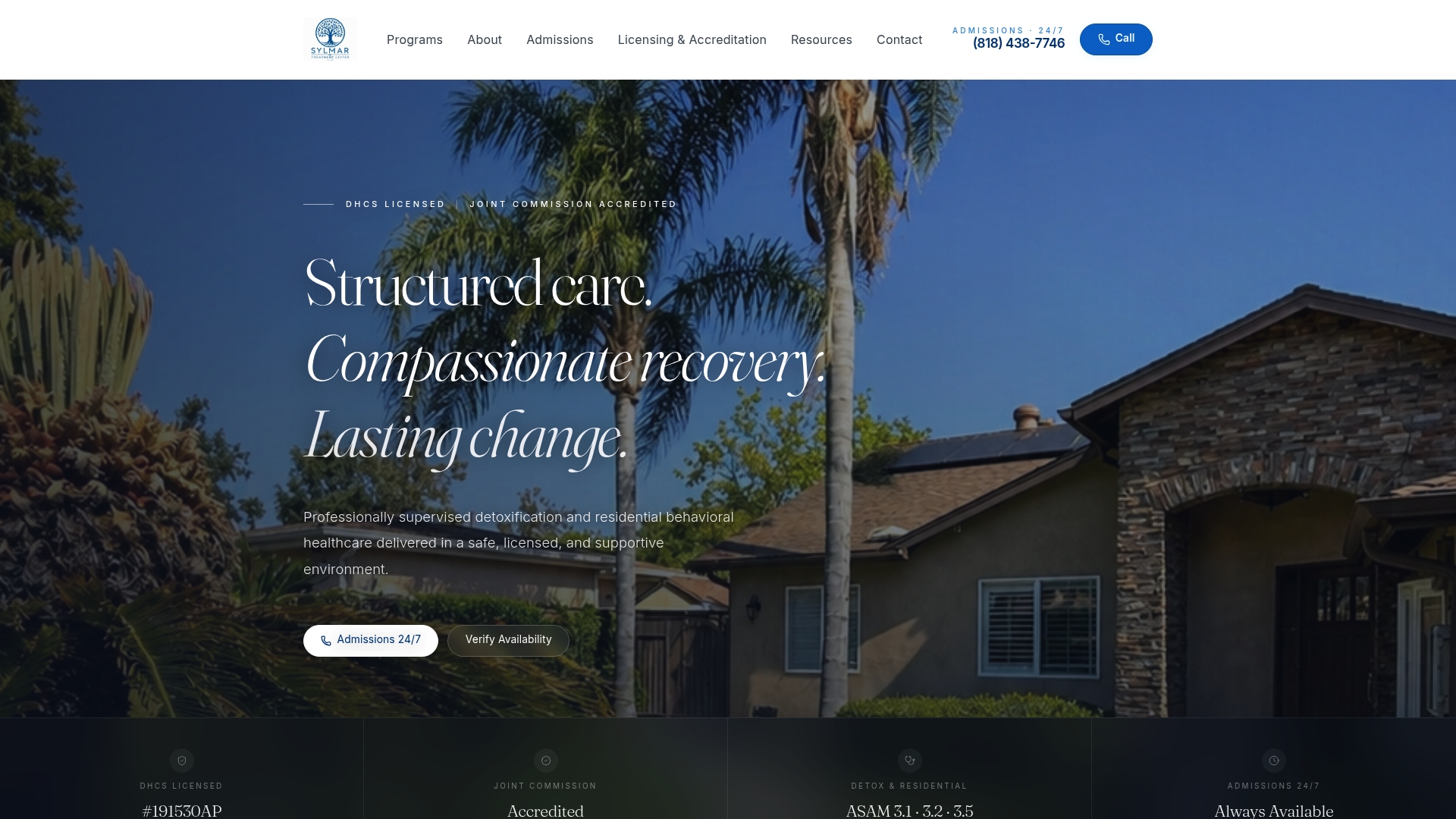
Every admission starts with a full assessment: drinking history, prior withdrawal complications, current medications, and lab work, which shapes a plan specific to your situation rather than a standard protocol applied to everyone. The Medical Detoxification program handles acute withdrawal under direct clinical oversight, and Medication Management continues that oversight into the recovery phase, including the transition toward relapse-prevention medications once you’re stable. Admissions support runs 24/7. If you’re weighing whether your situation needs supervised care, calling is the next step, not another hour of research.
This article is general information, not a substitute for advice from a qualified doctor. Consult a qualified healthcare professional about your own circumstances before acting on anything here.
Sources
- Alcohol Withdrawal — Cleveland Clinic
- Alcohol Use Disorder: The Role of Medication in Recovery — NIAAA
- Alcohol Withdrawal Syndrome: Benzodiazepines and Beyond — PMC review
- Hospital-Wide Implementation, Clinical Outcomes, and Safety of Phenobarbital for Alcohol Withdrawal — JAMA Network Open
FAQ
What Medication Is Used to Detox from Alcohol?
Benzodiazepines, including diazepam, chlordiazepoxide, lorazepam, and oxazepam, are the standard treatment for clinically significant alcohol withdrawal. They prevent seizures and delirium tremens by restoring GABA activity the brain loses when drinking stops. Gabapentin, carbamazepine, and phenobarbital serve as alternatives or adjuncts in specific clinical situations.
What Medications Are Used for Alcohol Withdrawal Detoxification More Broadly?
Beyond benzodiazepines, clinicians use adjuncts like clonidine or propranolol for autonomic symptoms and thiamine to prevent neurologic complications from nutritional deficiency. Phenobarbital is used in some hospital settings with protocolized, weight-based dosing. None of these replace benzodiazepines as the primary treatment for moderate to severe withdrawal.
What’s Good for Alcohol Withdrawal Symptoms at Home?
Mild withdrawal, roughly 85% of cases according to NIAAA, often resolves with rest, hydration, and monitoring without medication. But anyone with a prior history of seizures, DTs, or heavy sustained drinking should not attempt withdrawal without medical supervision, since symptoms can escalate quickly and unpredictably.
Can Doctors Prescribe Medication for Alcohol Withdrawal?
Yes. Physicians commonly prescribe benzodiazepines for acute withdrawal and can prescribe naltrexone, acamprosate, or disulfiram afterward for long-term relapse prevention. A medical evaluation, covering drinking history, prior withdrawal severity, and current health status, determines which medications and what level of care fit your case, which is the kind of assessment Sylmartreatmentcenter conducts before every admission.
Is Phenobarbital Better Than Benzodiazepines for Alcohol Withdrawal?
Not definitively. Hospital quality-improvement data shows phenobarbital can reduce benzodiazepine use and hospital stays in some settings, but the results depend heavily on standardized protocols and clinician experience. Benzodiazepines remain the best-studied first-line option overall.