

The most reliable mental health addiction integrated treatment options are Integrated Dual Disorder Treatment (IDDT), integrated behavioral health models in primary care, and stage-wise multidisciplinary residential or outpatient programs that combine psychotherapy, medication-assisted treatment (MAT), case management, and peer supports within a single coordinated team. SAMHSA endorses integrated care as the standard approach for co-occurring disorders, and systematic reviews consistently link it to reduced substance use, improved psychiatric symptoms, and better treatment retention compared with fragmented sequential or parallel approaches. The immediate next step is a single comprehensive integrated assessment, not separate evaluations at different clinics. Contact an integrated program such as Sylmartreatmentcenter for intake, or use SAMHSA’s national treatment locator to find a program near you.
What you’ll find in this guide:
- The main integrated treatment models and who each fits
- What the evidence actually shows (and where it’s limited)
- Core components to look for in any program
- How screening and assessment work
- Specific therapies, medications, and safety warnings
- Care levels from detox to outpatient
- A practical checklist for choosing a program
- How Sylmartreatmentcenter implements integrated care
Table of Contents
- Why integrated care matters for co-occurring disorders
- What the research shows about integrated treatment outcomes
- Core components that make an integrated program effective
- How integrated screening and assessment work
- Specific evidence-based treatments used in integrated care
- Where integrated care is delivered: levels of care explained
- How to choose an integrated program: questions to ask and red flags to watch
- What high-quality integrated care looks like in practice
- Key Takeaways
- Why integrated care is the demand patients and families should make
- Sylmartreatmentcenter: residential integrated care with 24/7 access
- Authoritative sources and where to go next
Why integrated care matters for co-occurring disorders
A co-occurring disorder, also called a dual diagnosis, means a person has both a substance use disorder (SUD) and at least one independent mental health condition at the same time. Common pairings include major depression with alcohol use disorder, PTSD with opioid use disorder, bipolar disorder with stimulant use, and anxiety disorders with cannabis or benzodiazepine dependence. These combinations are the rule, not the exception.
“Mental and substance use disorders often co-occur, meaning that people can have two or more disorders at the same time. These conditions are treatable, and integrated approaches reduce risks like treatment dropout and improve access to comprehensive services.” — SAMHSA, Co-Occurring Disorders and Other Health Conditions
SAMHSA data shows that co-occurring mental health and substance use disorders affect a substantial portion of people seeking treatment, with lifetime co-occurrence rates exceeding 50% among those with serious mental illness. That prevalence alone explains why treating only one condition at a time so often fails.
Three models dominate how providers have historically approached this:
Sequential treatment addresses one disorder first, then the other. In practice, this means a person stabilizes from addiction before getting psychiatric care, or vice versa. The problem is that untreated depression fuels relapse, and untreated substance use destabilizes psychiatric symptoms. Each disorder undermines the other’s treatment.
Parallel treatment runs both treatments simultaneously but in separate systems, with a psychiatrist at one clinic and an addiction counselor at another. Communication is inconsistent, treatment plans sometimes conflict, and patients carry the burden of coordinating their own care across providers who may never speak to each other.
Integrated concurrent treatment puts both on the same team, under one shared plan. Research consistently shows that only this model reliably reduces system dropout, because patients get a coherent message and don’t fall through the gap between two separate systems. This is the model SAMHSA, NIMH, and NIDA all recommend.
Co-occurring conditions are treated across settings: primary care clinics, specialty outpatient programs, and residential facilities. The sections below map the main integrated models, the evidence behind them, and what to look for when choosing one.
What the research shows about integrated treatment outcomes
The evidence base for integrated care is substantial, though not uniform across every diagnosis combination.
Systematic reviews and SAMHSA Treatment Improvement Protocols consistently link integrated care to better outcomes than sequential or parallel approaches. A comprehensive NCBI evidence synthesis frames integrated treatment as the preferred model for co-occurring disorders and ties it to lower hospitalization rates, reduced emergency department use, improved psychiatric symptom control, and better overall functioning. Patients in integrated programs tend to stay in treatment longer, which matters because retention is one of the strongest predictors of long-term recovery.
Psychosocial and psychological treatments, including motivational interviewing, cognitive behavioral therapy (CBT), and contingency management, show the most consistent evidence for reducing both substance use and psychiatric symptoms when delivered in an integrated format. A systematic review published on NCBI found that these integrated psychosocial approaches can reduce both substance use and psychiatric symptoms in adults with dual diagnoses, though the authors note that pharmacological evidence is more heterogeneous and that more research is needed for many specific comorbidity pairs.
Where the evidence gets thinner:
- Specific pharmacotherapy combinations (e.g., which psychiatric medication pairs best with MAT for a given comorbidity) remain under-studied for many subgroups
- Outcomes vary by diagnosis combination; what works well for depression plus alcohol use disorder may not generalize to schizophrenia plus stimulant use
- Study populations and program fidelity vary widely, making direct comparisons difficult
- Long-term outcomes beyond 12 months are less consistently measured
None of this undermines the core finding. Integrated care outperforms fragmented care. The gaps in the evidence are a reason to ask programs about their specific experience with your diagnosis combination, not a reason to avoid integrated treatment.
Core components that make an integrated program effective
Knowing what to look for separates a genuinely integrated program from one that simply markets itself as dual diagnosis. The SAMHSA EBP implementation kit and IDDT model documentation identify specific components that high-fidelity programs share.
| Component | What it looks like in practice | Why it matters |
|---|---|---|
| Multidisciplinary team | Psychiatrist, addiction counselor, case manager, peer specialist on the same team | Shared information, no conflicting plans |
| Integrated treatment plan | One written plan covering both SUD and mental health goals | Patient gets a single coherent roadmap |
| Stage-wise interventions | Motivational approaches early; skills-based therapy as readiness grows | Meets patients where they are |
| Medication management | Psychiatric prescriber coordinates with SUD treatment team | Reduces interactions, optimizes dual-purpose meds |
| Assertive outreach / case management | Proactive contact, not waiting for patients to show up | Reduces dropout, especially in early stages |
| Family psychoeducation | Structured family involvement and education | Improves home environment and long-term support |
| Peer recovery supports | Lived-experience peers integrated into clinical team | Builds hope, improves engagement |
| Access to comprehensive services | Housing, employment, and social supports addressed | Treats the whole person, not just symptoms |
Program fidelity is the factor most programs don’t advertise but that predicts outcomes most reliably. The IDDT fidelity scale measures how closely a program adheres to the model across these domains. Organizations that monitor and maintain fidelity consistently see better long-term results than those that adopt the label without the structure. Ask any program you contact whether they use a fidelity scale and what their most recent fidelity review showed.
Pro Tip: When you call a program for the first time, ask three questions: Who leads the weekly treatment team meeting? Is the psychiatric prescriber on the same team as the addiction counselors? Is there a single written treatment plan that covers both the mental health and substance use goals? A program that can answer all three clearly is operating with genuine integration.
How integrated screening and assessment work
The assessment process in a truly integrated program is different from what most people expect. You don’t fill out a mental health intake form at one appointment and an addiction history form at another. Everything happens together, and for good reason.
Substance use can mimic psychiatric symptoms. Stimulant withdrawal looks like depression. Heavy alcohol use can produce anxiety indistinguishable from generalized anxiety disorder. Opioid intoxication can blunt affect in ways that resemble flat affect in psychosis. SAMHSA’s Treatment Improvement Protocols (TIPs) stress that integrated assessment is the only reliable way to distinguish substance-induced symptoms from independent psychiatric disorders, because the two require different treatment tracks. Getting this wrong at intake means months of treatment aimed at the wrong target.
What a comprehensive integrated assessment covers:
- Full substance use history: substances used, frequency, quantity, route of administration, periods of abstinence, prior treatment episodes
- Psychiatric symptom history: onset, duration, relationship to substance use, prior diagnoses and medications
- Medical history: chronic conditions, current medications, relevant lab work
- Infectious disease screening: HIV and hepatitis C status, particularly for people with injection drug use history
- Trauma history: adverse childhood experiences, PTSD symptoms, current safety
- Social determinants: housing stability, employment, social support, legal involvement
- Stage of change: readiness for treatment across both the SUD and mental health dimensions
- Safety assessment: suicidality, self-harm, risk to others
Clinicians use standardized screening tools at intake, followed by a more comprehensive diagnostic assessment. ASAM criteria (American Society of Addiction Medicine) provide the level-of-care framework most programs use to determine whether a patient needs medically supervised detox, residential care, intensive outpatient, or standard outpatient services.
After assessment, the team develops a stage-wise placement recommendation, initiates a medication evaluation if indicated, and creates a safety plan. The assessment isn’t a one-time event. Integrated programs reassess regularly, because some substance-induced symptoms resolve with abstinence and the treatment plan needs to adjust accordingly.
Pro Tip: Ask the program whether their intake assessment is conducted by a licensed clinician trained in both addiction and mental health, or whether the two are assessed separately by different staff. The former is a sign of genuine integration; the latter is parallel care dressed up as something else.
Specific evidence-based treatments used in integrated care
Integrated programs don’t pick one therapy and apply it to everything. They layer treatments based on the patient’s diagnosis, stage of change, and clinical needs. Here’s how the main components fit together.
Psychosocial therapies
Motivational Interviewing (MI) is typically the first tool used, especially with patients who are ambivalent about treatment. It doesn’t push; it draws out the patient’s own reasons for change. For someone in early engagement who isn’t yet convinced they have a problem, MI is often more effective than jumping straight into skills training.

Cognitive Behavioral Therapy (CBT) addresses the thought patterns and behavioral triggers that sustain both substance use and psychiatric symptoms. It’s one of the most studied interventions in integrated care and works across a range of diagnosis combinations.
Contingency management uses structured incentives to reinforce abstinence and treatment attendance. The evidence for it in SUD treatment is strong, and it’s increasingly used in integrated programs to support engagement during early recovery.
Dialectical Behavior Therapy (DBT) elements are particularly useful for patients with emotional dysregulation, self-harm history, or borderline personality features alongside SUD. Full DBT programs are resource-intensive, but DBT skills modules are commonly incorporated into integrated residential and IOP settings.
Family psychoeducation and structured group formats address the relational context of recovery. Group therapy plays a specific role in dual diagnosis recovery, offering peer modeling, shared accountability, and a space to practice interpersonal skills that individual therapy alone can’t replicate.
Where integrated care is delivered: levels of care explained
Integrated treatment isn’t a single setting. It’s a philosophy applied across a continuum, and where you start depends on clinical severity, safety needs, and readiness.
Medical detoxification is the entry point for patients with physical dependence on alcohol, opioids, benzodiazepines, or other substances requiring medically supervised withdrawal management. Understanding the difference between detox and rehabilitation matters here: detox addresses the acute physiological crisis, but it is not treatment for the underlying disorders. Integrated programs begin psychiatric assessment during detox, not after, so the transition to the next level of care is seamless.
Residential dual-diagnosis programs provide 24-hour structured care for patients whose psychiatric symptoms or substance use severity require a contained environment. This level is appropriate when outpatient care has failed, when safety risks are present, or when the patient’s living environment actively undermines recovery. Integrated residential programs deliver individual therapy, group therapy, medication management, case management, and peer supports under one roof.
Intensive Outpatient Programs (IOP) typically run 9–15 hours per week across three to five days. They’re appropriate for patients who have completed residential care or whose clinical severity doesn’t require 24-hour supervision. Integrated IOPs include both SUD and mental health components in the same sessions, not in separate tracks.
Partial Hospitalization Programs (PHP) sit between residential and IOP in intensity, often 20–30 hours per week. They’re used for step-down from residential or for patients who need more structure than IOP but can safely sleep at home.
Collaborative care in primary care is the integrated model most people encounter first. A primary care physician, behavioral health consultant, and care manager work together within the same clinic. This model is particularly effective for mild-to-moderate depression and anxiety co-occurring with SUD, and it’s where many patients are first identified and referred to specialty care.
Placement decisions follow ASAM criteria, which assess six dimensions: intoxication and withdrawal potential, biomedical conditions, emotional and behavioral conditions, readiness to change, relapse potential, and recovery environment. A patient with severe psychiatric symptoms, active suicidality, and unstable housing typically needs residential care. A patient with stable housing, moderate symptoms, and strong social support may do well in IOP.
Transitions between levels matter as much as the initial placement. Programs should have a formal handoff protocol, including a warm referral, shared records, and a follow-up contact within the first week of transition. Patients who fall through the gap between levels of care are at the highest risk for relapse and crisis.
How to choose an integrated program: questions to ask and red flags to watch
Choosing a program is a clinical decision, but it’s also a practical one. Here’s a structured approach.
Questions to ask on first contact
- Does your program use a specific integrated model, such as IDDT or integrated behavioral health?
- Is there a psychiatric prescriber on the same treatment team as the addiction counselors, or are they in a separate system?
- How is the integrated treatment plan developed, and who contributes to it?
- How do you handle medication management for both psychiatric conditions and MAT?
- What does your intake assessment cover, and who conducts it?
- How is family involved in treatment?
- Do you monitor program fidelity, and can you share your most recent fidelity review?
- What outcome measures do you track, and can you share aggregate results?
- What accreditations and licenses does the program hold?
- What is your policy on benzodiazepine prescribing for patients with co-occurring anxiety and SUD?
Red flags
- Separate intake processes for mental health and substance use, with different staff conducting each
- No psychiatric prescriber on the core treatment team
- Pressure to sign admission paperwork before completing a comprehensive assessment
- Vague answers about how the two conditions are treated together
- No written integrated treatment plan
- Unmanaged benzodiazepine prescribing without a taper protocol
- Claims of a “cure” or guaranteed outcomes
Insurance, cost, and finding programs
Most residential and outpatient integrated programs accept commercial insurance, Medicaid, and Medicare, though coverage varies by state and plan. When calling a program, ask specifically:
- Are you in-network with my insurance plan?
- What does prior authorization require, and how long does it take?
- What is the estimated length of stay, and how does insurance typically cover it?
- Do you offer sliding scale fees or self-pay rates?
- What happens if my insurance denies coverage mid-treatment?
NIMH’s guidance on finding help for co-occurring conditions is a reliable starting point for understanding what integrated care looks like and what to expect. SAMHSA’s FindTreatment locator lets you search by location, insurance type, and specific services including dual diagnosis treatment.
Typical timeline expectations: Medical detox runs 5–10 days for most substances. Residential programs commonly run 28–90 days depending on clinical need. IOP typically runs 8–12 weeks. Continuing care and outpatient follow-up should extend 6–12 months post-discharge. Recovery is not a 30-day event; programs that frame it that way are underselling what the evidence requires.
What high-quality integrated care looks like in practice
Evidence-based integrated care has specific, verifiable features. Knowing them helps you evaluate any program you contact.
Operational markers of genuine integration:
- Weekly multidisciplinary team meetings where psychiatric, addiction, and case management staff review every patient together
- A single shared electronic health record or treatment plan accessible to all team members
- Medication decisions made collaboratively, with the prescriber present in team meetings
- Stage-wise interventions documented in the treatment plan, with clear criteria for advancing from engagement to active treatment to relapse prevention
- Fidelity monitoring conducted at least annually, with results used to adjust practice
Credentials to verify:
- Joint Commission accreditation (The Joint Commission’s Gold Seal of Approval)
- State DHCS (Department of Health Care Services) licensing, or the equivalent state licensing body in your state
- SAMHSA-endorsed model implementation (IDDT or integrated behavioral health)
- Staff credentials: licensed clinical social workers (LCSW), licensed professional counselors (LPC), certified addiction counselors, and board-certified psychiatrists or psychiatric nurse practitioners
Sylmartreatmentcenter holds both Joint Commission accreditation and a DHCS license, placing it among the verifiably credentialed residential programs in California. The center’s dual diagnosis support program delivers integrated assessment, medication management with psychiatric oversight, and individualized treatment plans within a six-bed residential setting. That six-bed model is worth noting: it means every patient gets genuine staff attention, not a caseload number.
A typical integrated care sequence at a high-fidelity program looks like this: intake and comprehensive integrated assessment on day one, followed by a medication review with the psychiatric prescriber within the first 48–72 hours, a written integrated treatment plan developed with the patient by the end of the first week, individual and group therapy beginning in the first week, peer support integrated throughout, and case management addressing housing, legal, and family needs from the start. Discharge planning begins at admission, not in the final week.
Sylmartreatmentcenter’s 24/7 admissions line means the intake process can begin immediately, without waiting for a scheduled appointment. For patients in crisis or families trying to act quickly, that availability removes a barrier that causes many people to disengage before treatment begins.
Key Takeaways
Integrated treatment for co-occurring disorders works because it puts both conditions under one team, one plan, and one coordinated approach, which is the only model that consistently reduces dropout and improves outcomes.
| Point | Details |
|---|---|
| IDDT is the gold standard | Integrated Dual Disorder Treatment, endorsed by SAMHSA and Case Western, is the most evidence-backed model for co-occurring disorders. |
| Integrated assessment comes first | A single comprehensive assessment distinguishing substance-induced from independent psychiatric symptoms determines the right treatment track. |
| Benzodiazepine safety is non-negotiable | Benzodiazepines combined with opioids or MAT carry serious respiratory depression risk; ask any program about their prescribing policy before enrolling. |
| Fidelity predicts outcomes | Programs that monitor adherence to the IDDT fidelity scale consistently produce better long-term results; ask for their most recent review. |
| Sylmartreatmentcenter offers verified integrated care | DHCS-licensed and Joint Commission-accredited, Sylmartreatmentcenter provides residential dual diagnosis treatment in a six-bed setting with 24/7 admissions. |
Why integrated care is the demand patients and families should make
The conventional framing in addiction treatment has long been that mental health is someone else’s problem. A patient enters a detox program, gets stabilized, and is told to “deal with the depression later.” That sequencing isn’t just inconvenient. It’s clinically counterproductive, and the research has been saying so for decades.
What strikes me about the integrated care evidence is how much of the benefit comes from something deceptively simple: the same team, talking to each other, working from the same plan. Patients don’t have to translate their story from one provider to another. They don’t get contradictory advice about whether a medication is appropriate. They don’t fall through the gap between two systems that never communicate. That coherence alone reduces dropout in ways that no single therapy or medication can replicate.
The harder truth is that genuinely integrated programs are still not the majority of what’s available. Many programs use the language of dual diagnosis without the structure. A psychiatrist who sees patients once a month and faxes notes to the addiction counselor is not integrated care. Patients and families who know what to ask for, and who push back when a program can’t answer those questions clearly, are more likely to find the real thing.
Recovery from co-occurring disorders is possible. The evidence is clear on that. What it requires is a program willing to treat the whole person at once, not in sequence, not in parallel, but together.
Sylmartreatmentcenter: residential integrated care with 24/7 access
If you’ve read this far, you know what genuine integrated care requires: a multidisciplinary team, a shared treatment plan, psychiatric oversight alongside addiction treatment, and a program structure that doesn’t make you choose which condition to treat first.
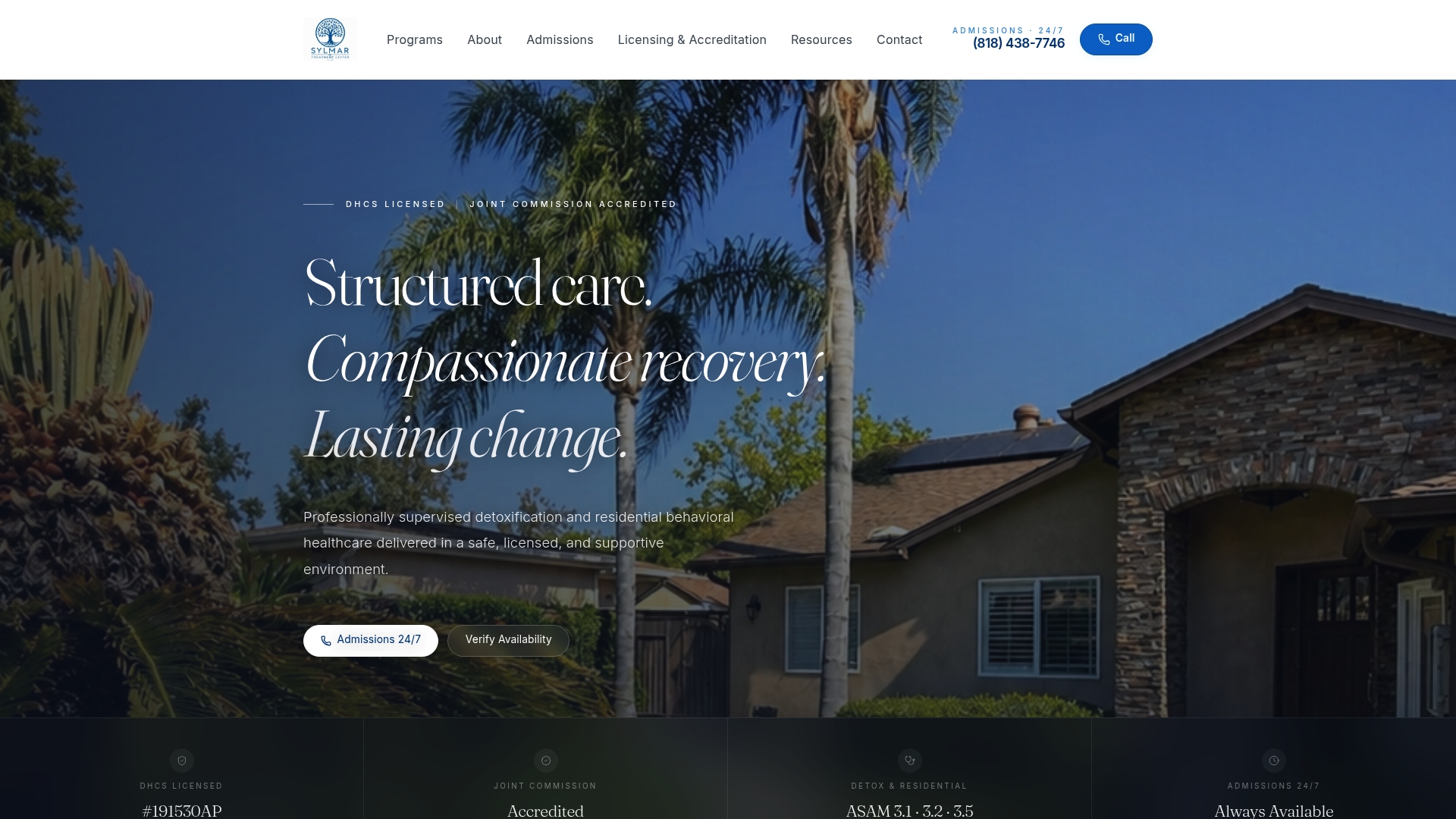
Sylmartreatmentcenter delivers exactly that in a six-bed residential setting that makes personalized care the default, not a premium add-on. The center’s integrated treatment programs cover medically supervised detox, residential dual diagnosis treatment, behavioral rehabilitation, and medication management with psychiatric oversight, all under Joint Commission accreditation and DHCS licensing. The six-bed model means your assigned clinician actually knows your case. The 24/7 admissions line means you don’t have to wait until Monday morning to start.
For patients navigating co-occurring disorders, Sylmartreatmentcenter’s individualized treatment approach begins with a comprehensive integrated assessment and produces a written plan that covers both the substance use and mental health dimensions from day one. That’s not a marketing claim; it’s a verifiable program structure backed by the credentials listed above.
Call Sylmartreatmentcenter’s admissions line now, ask for an integrated assessment, and confirm that the program uses an IDDT-informed approach. Those two questions will tell you immediately whether you’re talking to a program that can actually help.
Authoritative sources and where to go next
These resources are the primary references behind this guide. Each is free, authoritative, and directly relevant to finding and evaluating integrated treatment.
-
SAMHSA Co-Occurring Disorders: SAMHSA’s main page on co-occurring conditions, covering prevalence, integrated care principles, and links to treatment resources including infectious disease screening guidance.
-
SAMHSA FindTreatment Locator: The national treatment locator. Search by ZIP code, insurance type, and specific services including dual diagnosis programs. The fastest way to build a shortlist of local integrated programs.
-
NIMH: Substance Use and Mental Health: NIMH’s public-facing guidance on co-occurring conditions, what integrated care looks like, and how to find help. Useful for patients and families who want a plain-language overview from a federal research institute.
-
NCBI Bookshelf: Treatment Models and Settings for Co-Occurring Disorders: The clinical evidence chapter from SAMHSA’s Treatment Improvement Protocol series. Detailed, evidence-graded, and the source most clinicians reference when designing integrated programs.
-
NCBI: Systematic Review on Treatments for Adults with Dual Diagnoses: A systematic review of psychological, psychosocial, and pharmacological treatments for co-occurring disorders. Useful for understanding where the evidence is strong and where gaps remain.
-
IDDT Model: Case Western Reserve University: The primary academic resource for the IDDT model, including core components, fidelity scale information, and implementation guidance.
-
SAMHSA EBP Kit: Building Your Program: The implementation guide for integrated programs. Useful for patients and families who want to understand exactly what a high-fidelity program should look like before they call one.
-
Cleveland Clinic: Dual Diagnosis: A reliable patient-facing overview of dual diagnosis, including medication options and the clinical rationale for coordinated pharmacotherapy.
-
Sylmartreatmentcenter Dual Diagnosis Program: Sylmartreatmentcenter’s residential integrated treatment program. Verify accreditation and integrated-care fidelity directly with the admissions team when you call.
This article provides general educational information about integrated treatment for co-occurring disorders. It is not a substitute for professional medical or clinical advice. Confirm current program details, licensing, and treatment options with a qualified clinician or the program directly before making treatment decisions.