

Yes, buprenorphine can trigger precipitated withdrawal in someone who used fentanyl recently, and the risk is real enough to plan around rather than gamble on. Starting buprenorphine within 24 hours of fentanyl use raises the odds of severe withdrawal roughly fivefold compared to waiting longer. The immediate move if you’re uncertain: score withdrawal objectively with the Clinical Opiate Withdrawal Scale before dosing, and lean toward a supervised or low-dose induction rather than a home attempt.
TL;DR:
- Initiating buprenorphine within 24 hours of fentanyl use increases the risk of severe withdrawal by more than five times, requiring careful assessment.
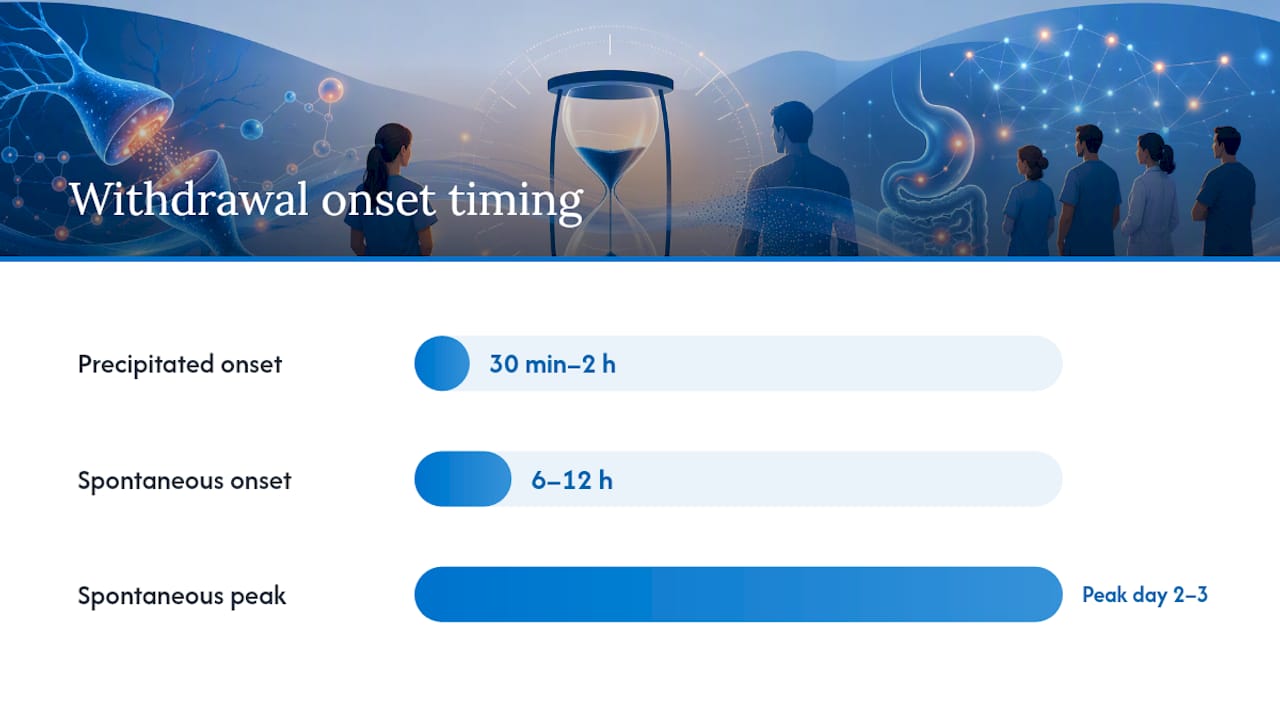
- Most precipitated withdrawal occurs within 30 minutes to two hours of dosing, marked by rapid, intense symptoms like nausea, agitation, and muscle aches.
- Using a COWS score of at least 8 to 12 before induction helps predict a smoother process, but relying solely on self-report is unreliable due to fentanyl’s tissue reservoir.
- Low-dose, microdosing protocols over several days significantly reduce precipitated withdrawal risk but require patient compliance and clinical supervision.
- Supervised induction at a treatment center is safest for high-risk cases, especially with unstable housing, polysubstance use, or previous precipitated withdrawal episodes.
Table of Contents
- What Causes Precipitated Withdrawal With Fentanyl?
- What Does Precipitated Withdrawal Feel Like, and How Fast?
- What Do Studies Show About Precipitated Withdrawal Risk?
- How Should Readiness for Buprenorphine Be Assessed?
- Which Induction Strategy Fits Fentanyl Use?
- What Should Be Done When Precipitated Withdrawal Happens?
- What Should Someone Using Fentanyl Know Before Starting Buprenorphine?
- Sylmar’s Approach to Fentanyl-Related Inductions
- Consider Medically Supervised Induction if Home Attempts Have Failed
- Where to Read More on This Topic
- Sources
What Causes Precipitated Withdrawal With Fentanyl?
Buprenorphine binds mu-opioid receptors harder than almost any other opioid available, and it only partially activates them. That mismatch is the whole problem. When someone with fentanyl still occupying their receptors takes buprenorphine, the buprenorphine muscles fentanyl off those receptor sites and replaces full activation with partial activation. The nervous system reads that sudden drop as instant, severe withdrawal, even though the person technically just took an opioid.
Fentanyl complicates this in a way morphine or heroin didn’t. It’s highly lipophilic, meaning it soaks into fat tissue and organs rather than staying in the bloodstream. Plasma levels fall fast, sometimes within hours, but the drug keeps leaching back out of tissue for days, quietly re-occupying receptors long after a urine test or a patient’s own sense of “I’m starting to feel sick” would suggest it’s cleared. That reservoir effect is why the old rule of thumb, “wait 12 to 24 hours after your last use,” which worked reasonably well for heroin, fails often enough with fentanyl to matter.
A few factors stack the odds further against a clean induction:
- Using benzodiazepines or stimulants alongside fentanyl, which muddies withdrawal signs and complicates receptor kinetics
- Skipping or shortening the recommended waiting period out of impatience or lack of access to supervision
- Taking a first buprenorphine dose that’s too high, which displaces more fentanyl than a small dose would
- Relying on self-report of “last use” when actual fentanyl exposure, including from contaminated supply, is unclear
The number that matters: in a study of 1,679 people seeking opioid use disorder treatment, initiating buprenorphine within 24 hours of fentanyl use produced a fivefold increase in the odds of severe withdrawal, with 22.19% of that group reporting severe symptoms.
What Does Precipitated Withdrawal Feel Like, and How Fast?
Precipitated withdrawal announces itself fast. Most patients notice a sharp escalation within 1 to 2 hours of the buprenorphine dose, sometimes within 30 minutes, which is a dead giveaway that this isn’t just the fentanyl wearing off on its own schedule.
The symptom picture overlaps with ordinary opioid withdrawal but hits harder and faster:
- Sudden nausea, vomiting, or diarrhea that intensifies rather than the gradual buildup typical of spontaneous withdrawal
- Restlessness, agitation, and a strong urge to use again almost immediately
- Autonomic surges: sweating, chills, goosebumps, runny nose, tearing eyes
- Muscle aches, abdominal cramping, and yawning that escalate over minutes, not hours
- Anxiety or panic that can spike quickly, especially in someone who wasn’t expecting it
Spontaneous fentanyl withdrawal, by contrast, typically starts 6 to 12 hours after last use and unfolds over several days, peaking around day 2 or 3. Precipitated withdrawal compresses that entire arc into an hour or two of intense symptoms, which is what makes it so alarming to experience and so recognizable to clinicians who’ve seen it before.
The Clinical Opiate Withdrawal Scale turns this into a number. Mild withdrawal scores 5 to 12, moderate 13 to 24, and anything above 24 counts as severe. A patient who jumps from a COWS of 8 to a COWS above 20 within an hour of a buprenorphine dose is showing a textbook precipitated reaction. Red flags that warrant immediate escalation include resting heart rate climbing above 120, signs of significant dehydration, or psychiatric symptoms severe enough to raise safety concerns.
What Do Studies Show About Precipitated Withdrawal Risk?
The clearest number comes from that same 1,679-person cohort: initiating buprenorphine within 24 hours of fentanyl use carried an odds ratio of about 5.2 for severe withdrawal, and even the 24 to 48 hour window still carried an elevated odds ratio near 3.35. Waiting helps, but the risk doesn’t vanish at any fixed clock time, because fentanyl’s tissue reservoir doesn’t respect a schedule.
Outpatient low-dose initiation cohorts paint a gentler picture. In a retrospective review of daily fentanyl users, precipitated withdrawal occurred in 8% of initiations that had follow-up data, and that dropped to just 3% among patients who actually followed the prescribed protocol as written. Most cases, even when they happened, were mild rather than severe.
A few honest caveats belong here:
- These numbers rely heavily on self-reported last use, which is notoriously unreliable in a population using an unpredictable street supply
- Protocol deviations, skipped doses, mistimed doses, taking extra opioid “just in case”, are common and skew outcomes worse than the protocol itself would predict
- Harm-reduction clinic data and formal cohort studies don’t always agree, because clinic populations vary in housing stability, polysubstance use, and access to follow-up
Treat any single percentage as a probability range, not a guarantee. The takeaway: precipitated withdrawal is common enough to plan for and uncommon enough that panic isn’t warranted, provided the induction actually follows a real protocol.
How Should Readiness for Buprenorphine Be Assessed?
The single best predictor of a smooth induction is an objective COWS score, not a clock. A patient reporting they feel withdrawal isn’t the same as a documented score of 12 or higher, and clinics that induct on self-report alone see more precipitated cases than clinics that wait for the number.
A workable pre-induction checklist looks like this:
- Confirm a COWS score of at least 8 to 12 (moderate range) before the first buprenorphine dose, higher if the patient used fentanyl within the past 24 hours
- Don’t rely on urine testing alone. Fentanyl metabolites can show positive or negative in ways that don’t track tissue levels, and a “clean” urine screen doesn’t mean receptors are clear
- Document the observation window, the COWS readings taken during it, and informed consent covering the possibility of precipitated withdrawal even with precautions
- Set an explicit escalation plan before dosing: who to call, what dose adjustment comes next, and at what point the attempt gets aborted
Objective and subjective assessment aren’t the same thing, and the clinical guidance around buprenorphine induction frames precipitated withdrawal as a predictable pharmacologic event, not a treatment failure or a sign the patient did something wrong.
Pro Tip: If a patient’s story (“I used two days ago”) and their COWS score (“still at 4”) don’t match, trust the score. Fentanyl’s tissue reservoir means self-reported timing is often the least reliable data point in the room.
Which Induction Strategy Fits Fentanyl Use?
Three general approaches exist, and the right one depends heavily on the individual’s housing situation, polysubstance use, and access to supervision, not just on how long since their last dose.
Standard waiting induction means holding off until a COWS score confirms moderate withdrawal, often somewhere between 12 and 24 hours after last fentanyl use, sometimes longer. It’s simple and doesn’t require special formulations. The downside with fentanyl specifically: that tissue reservoir can keep receptors partly occupied well past the point where symptoms suggest it’s safe, so even a textbook wait sometimes ends in precipitated withdrawal anyway.
Low-dose initiation, sometimes called Bernese method or microdosing, flips the sequence. Instead of waiting for withdrawal and then dosing buprenorphine, the patient continues their usual opioid while receiving tiny, gradually increasing buprenorphine doses over four to seven days. The logic is straightforward: small doses occupy a small fraction of receptors, not enough to trigger a withdrawal cascade, and each subsequent increase displaces only a little more. By the time the dose reaches a therapeutic level, the full agonist opioid has typically been tapered out or stopped without ever forcing an abrupt receptor swap.
Low-dose initiation removes the need for the patient to tolerate active withdrawal before starting treatment, which is a meaningful draw for people who’ve avoided treatment specifically because they dread that gap. The tradeoff is complexity: it requires a longer runway, more frequent check-ins, and a patient who can reliably follow a multi-day schedule.
That complexity shows up in outcomes. Clinic-based low-dose initiation, where a provider oversees each step, tends to run cleaner than home-based attempts, where missed doses or mistimed doses are common.
A few factors should tilt the decision toward supervised or clinic-based care rather than a home attempt:
- Unstable housing, which makes a multi-day monitored schedule hard to maintain
- Heavy polysubstance use, especially benzodiazepines, which complicates both withdrawal assessment and safety monitoring
- Any prior history of precipitated withdrawal, which raises the odds of a repeat if the same approach is tried again
- Limited access to someone who can check in daily during the induction window
Pro Tip: Low-dose initiation isn’t a way to skip caution, it’s a way to spread caution across several days instead of concentrating it into one risky moment. Skipping a scheduled dose to “catch up faster” is the single most common way these protocols fail in practice.
What Should Be Done When Precipitated Withdrawal Happens?
Precipitated withdrawal is uncomfortable, occasionally severe, and manageable when someone follows a clear sequence rather than improvising.
- Check vitals immediately. Heart rate, blood pressure, temperature, and hydration status determine how urgent the situation is.
- Provide supportive care: IV fluids if dehydration is a concern, an antiemetic for vomiting, clonidine for autonomic symptoms like sweating and elevated heart rate, an NSAID or acetaminophen for muscle aches, and an anti-diarrheal if needed.
- Reassess the buprenorphine dosing plan. In some cases, a small additional dose helps stabilize symptoms rather than worsening them, though this requires careful titration and monitoring rather than a large rescue dose.
- Watch for signs that supportive care isn’t enough: symptoms that don’t plateau after a couple of hours, vital signs trending worse, or psychiatric symptoms escalating.
- If the reaction is refractory to standard measures, hospital-level care or a switch to methadone becomes the appropriate next step rather than continuing to push through with buprenorphine alone.
- Document the event, what triggered it, timing, doses given, and response, and get re-consent before attempting another induction.
- Build a plan for continuing opioid use disorder treatment after the acute event. A precipitated reaction shouldn’t end someone’s path to treatment; it should change the approach for the next attempt.
Pro Tip: The instinct to give a large buprenorphine dose to “push through” precipitated withdrawal usually backfires. Small, incremental titration under monitoring works better than a big rescue dose, which can intensify symptoms before it resolves them.
Anyone managing this outside a clinical setting should understand that what looks like a two-hour crisis can, in rare cases, involve dehydration or cardiac strain serious enough to need emergency care. When in doubt, treat it as a medical event, not just an unpleasant few hours to wait out.
What Should Someone Using Fentanyl Know Before Starting Buprenorphine?
A few habits make the difference between a manageable induction and a miserable one.
- Track your own withdrawal signs honestly rather than going by the clock alone. Sweating, yawning, and restlessness climbing before you dose are more informative than counting hours since last use.
- Consider a clinic-based or medically supervised induction over a home attempt, especially with fentanyl, since staff can score withdrawal objectively and adjust in real time.
- Bring a list of everything used recently, including benzodiazepines or other substances, to your appointment. Leaving that out removes information your provider needs.
- Keep naloxone on hand regardless of which approach you choose, and let someone else know your plan so you’re not managing a bad reaction alone.
- Never mix substances during the induction window purely to “get through” withdrawal symptoms faster. That’s one of the most common ways a rough induction turns into a dangerous one.
Sylmar’s Approach to Fentanyl-Related Inductions
Fentanyl has changed how cautiously an induction needs to be handled, and that caution shapes how Sylmar Treatment Center approaches every patient who walks in with recent fentanyl exposure. The safest inductions aren’t the fastest ones. They’re the ones where someone is watching, scoring, and adjusting in real time instead of hoping a fixed wait time was long enough.
Induction and detox can happen under close observation rather than in a rushed clinic visit or an unsupervised attempt at home. Holding a DHCS license and Joint Commission accreditation involves standards that require documented protocols and consistent monitoring rather than guesswork.
If you’re weighing a fentanyl-related induction and you’re not confident it can be done safely on your own, reach out. Supervised care exists for exactly this situation.
— Jim
Consider Medically Supervised Induction if Home Attempts Have Failed
Sylmar Treatment Center exists for the exact scenario this article describes: a fentanyl-related buprenorphine induction that’s too risky to attempt without supervision. Home inductions fail more often than clinic-based ones, largely because protocol deviations, a missed dose, an impatient extra dose, a skipped COWS check, are the real driver of precipitated withdrawal, not bad luck.

If you’ve had a prior precipitated withdrawal episode, use fentanyl alongside benzodiazepines or other substances, or don’t have stable housing to manage a multi-day low-dose schedule, a residential setting removes the guesswork. Sylmar’s six-bed model means staff can score withdrawal objectively, adjust dosing in real time, and manage a supportive-care response immediately if symptoms escalate, rather than reacting after the fact. The individualized treatment programs cover medically supervised detox, medication management, and dual diagnosis support for anyone whose substance use overlaps with a mental health condition. If you’re ready to start a safer induction or need residential detox after a rough attempt elsewhere, reach out to Sylmar Treatment Center to check admissions availability.
Where to Read More on This Topic
For the incidence data behind the odds ratios cited here, read the Varshneya cohort study, best suited to clinicians. Patients wanting plain guidance on induction timing should see the Maryland clinical protocol. For FDA-level prescribing detail, consult the buprenorphine product label.
This article is general information, not a substitute for advice from a qualified doctor. Consult a qualified healthcare professional about your own circumstances before acting on anything here.
Sources
- Evidence of Buprenorphine-precipitated Withdrawal in Persons Who Use Fentanyl
- Withdrawal during outpatient low dose buprenorphine initiation in people who use fentanyl: a retrospective cohort study
- Precipitated Withdrawl and Buprenorphine Induction (clinical guidance)