

Opioid detoxification is medically supervised management of withdrawal from opioids, designed to keep you safe while your body clears the drug and to prepare you for ongoing treatment. It is not a cure for opioid use disorder (OUD), and it is not the finish line. Think of it as the on-ramp.
Here is what you need to know right now:
- Timeline: Short-acting opioids (heroin, oxycodone) produce withdrawal onset within 6–12 hours, peaking around 48–72 hours, and resolving in roughly 5–7 days. Long-acting opioids (methadone) delay onset to 1–3 days, with a longer, milder course.
- Main medications: Methadone, buprenorphine, clonidine, lofexidine, ondansetron, and loperamide are the primary agents used to manage symptoms.
- Biggest safety risk: After detox, your opioid tolerance drops fast. A dose you once used without incident can now cause fatal respiratory depression. This is why naloxone access and a plan for ongoing care are non-negotiable.
- Next step: Detox should connect directly to medication for opioid use disorder (MOUD) or structured behavioral treatment. Attempting to detox alone, without clinical support, is both harder and more dangerous than it needs to be.
Table of Contents
- What does opioid detoxification actually accomplish?
- What withdrawal symptoms should you expect, and when?
- How do clinicians assess you before and during detox?
- Which detox setting is right for you?
- What medications are used during opioid detox?
- What nonpharmacologic support helps during detox?
- What are the real risks during and after detox?
- How does detox connect to long-term recovery?
- What does the clinical evidence say about safe detox?
- Key Takeaways
- What actually helps people get through detox
- Sylmartreatmentcenter: medically supervised detox with a clear next step
- Useful sources for clinicians and patients
What does opioid detoxification actually accomplish?
Clinically, detoxification means managing the physiological process of opioid withdrawal in a supervised setting. The goals are specific and limited: control acute symptoms, prevent medical complications, stabilize the patient, and hand them off to the next phase of care. What it does not do is treat the underlying disorder. Medically supervised withdrawal is a bridge, not a destination.
Organizations including the National Institutes of Health (NIH), the Substance Abuse and Mental Health Services Administration (SAMHSA), and the American Society of Addiction Medicine (ASAM) are consistent on this point: detox paired with a transition to MOUD or psychosocial care produces better outcomes than detox alone. Standalone detox, with no follow-up plan, leaves patients at high risk of relapse within days.
The four primary goals of medically supervised detox:
- Safety: Monitor for and treat complications (dehydration, cardiac arrhythmia, aspiration).
- Symptom control: Use medications to reduce the severity of withdrawal so patients can tolerate the process.
- Stabilization: Bring the patient to a medically and psychologically stable baseline.
- Handoff: Initiate or arrange MOUD, counseling, or residential care before discharge.
Pro Tip: Plan the post-detox treatment step before admission, not after. Patients who leave detox without a confirmed next appointment are far more likely to relapse within the first 72 hours.
What withdrawal symptoms should you expect, and when?
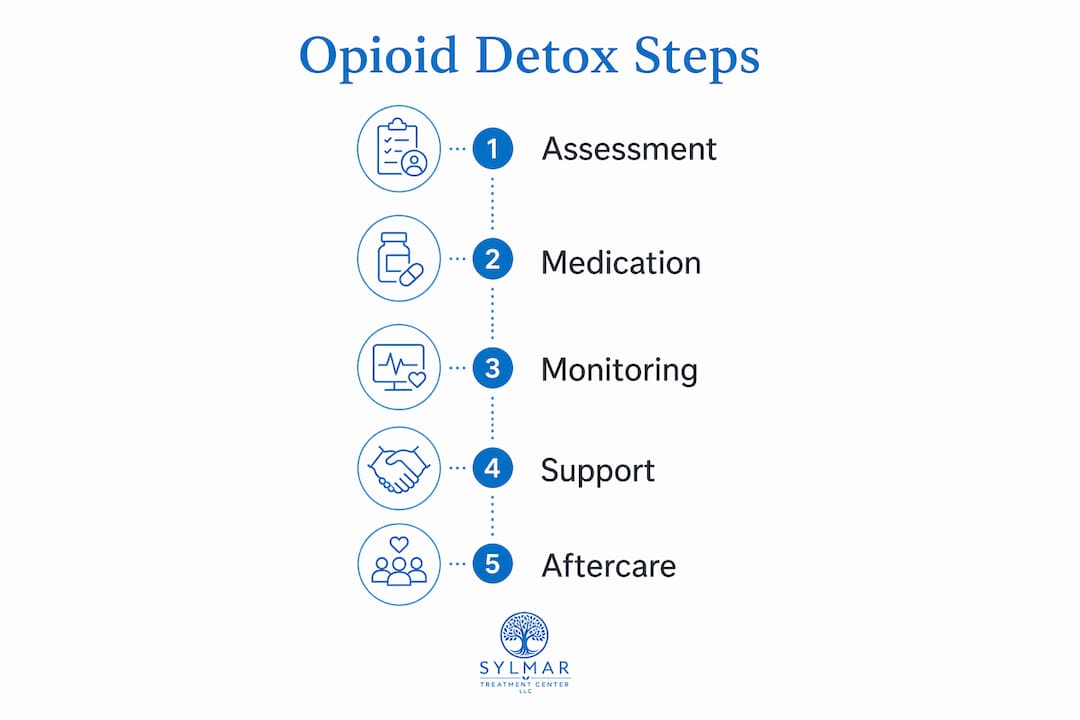
Opioid withdrawal feels like a severe flu layered on top of profound anxiety and bone-deep restlessness. The physical symptoms are driven by a rebound in the noradrenergic system once opioid suppression is removed.
Common physical symptoms include:
- Nausea, vomiting, and diarrhea
- Muscle aches and cramps (myalgias)
- Sweating, chills, and goosebumps
- Yawning, runny nose, and watery eyes
- Rapid heart rate (tachycardia) and elevated blood pressure
- Insomnia and restlessness
Emotional and psychological symptoms run alongside the physical ones: intense cravings, anxiety, irritability, and dysphoria. For many people, the psychological symptoms outlast the physical ones by weeks.
Opioid withdrawal timeline by drug type
| Opioid Type | Onset | Peak | Acute Duration |
|---|---|---|---|
| Short-acting (heroin, oxycodone, hydrocodone) | 6–12 hours after last dose | 48–72 hours | 5–7 days |
| Long-acting (methadone, extended-release morphine) | 1–3 days after last dose | 3–5 days | Up to 2–3 weeks |
| Synthetic (fentanyl) | Variable; often 12–24 hours | 6–72 hours | 5–10 days (can be prolonged) |

Fentanyl deserves a specific note. Because it accumulates in fat tissue, withdrawal onset and duration can be less predictable than with heroin or prescription opioids. Some patients experience a delayed or biphasic course.
Post-acute withdrawal syndrome (PAWS) is a real and underappreciated phenomenon. Mood instability, sleep disruption, and cravings can persist for weeks to months after acute withdrawal resolves. This is one reason MOUD continuation matters beyond the first week.
Call clinical staff immediately if you or someone in your care develops: high fever, signs of severe dehydration (no urination, extreme dizziness), chest pain, difficulty breathing, or any expression of suicidal ideation. These are not typical withdrawal symptoms and require urgent evaluation.
How do clinicians assess you before and during detox?
The intake assessment is where the detox plan gets built. Clinicians need a clear picture of your opioid use history, medical status, and social situation before they can choose the right setting and medications.
Expect to be asked about:
- Which opioids you use, how much, how often, and when you last used
- Whether you also use alcohol, benzodiazepines, or other sedatives (polysubstance use changes the risk profile significantly)
- Your full medical history, including heart disease, liver disease, and respiratory conditions
- Psychiatric history and current mental health status
- Pregnancy status (pregnancy changes both setting and medication choices)
- Previous detox attempts and what happened
The Clinical Opiate Withdrawal Scale (COWS) is the standard objective tool clinicians use to measure withdrawal severity. COWS scores range from 0 to 47 and classify withdrawal as mild, moderate, moderately severe, or severe. The score guides both the timing of medication initiation and the dose. For buprenorphine in particular, the COWS score is critical: starting too early, before objective withdrawal is established, risks precipitated withdrawal.
Clinical standard: Screening for co-occurring psychiatric illness, including depression and anxiety, is a required component of a thorough detox assessment. Untreated mental health conditions are among the strongest predictors of relapse after detox, and addressing them during the detox phase improves long-term outcomes.
What to bring to your assessment: a current medication list, the names and doses of any opioids you have been using, emergency contact information, and, if available, records of prior treatment episodes. The more complete the picture, the more precisely the team can tailor your care.
Which detox setting is right for you?
Where detox happens matters as much as how it is managed. The right setting depends on your medical complexity, social environment, and whether you are using other substances alongside opioids.
| Setting | Monitoring Level | Typical Duration | Main Medications | Best For |
|---|---|---|---|---|
| Outpatient clinic | Low to moderate; daily or near-daily visits | 5–7 days | Buprenorphine, clonidine, symptomatic agents | Medically stable, strong home support, no polysubstance dependence |
| Intensive outpatient (IOP) | Moderate; multiple sessions per week | weeks | Buprenorphine, methadone (licensed OTP), clonidine | Stable but needing more structure than standard outpatient |
| Residential/inpatient detox unit | High; 24/7 nursing and medical staff | 5–7 days (acute phase) | Full medication range including methadone | Polysubstance use, unstable housing, prior failed outpatient attempts |
| Hospital-based detox | Highest; continuous monitoring | Variable, typically 3–7 days | Full range plus IV fluids, cardiac monitoring | Severe medical comorbidity, pregnancy complications, cardiac risk |
Inpatient or residential detox is generally recommended when someone has a history of severe withdrawal, is using alcohol or benzodiazepines alongside opioids, lacks a safe home environment, or has a significant psychiatric or medical condition. For a deeper look at how these settings compare on safety criteria, the inpatient vs. outpatient detox guide covers the selection criteria in practical detail.
A brief note on logistics: most insurance plans, including Medicaid and Medicare, cover medically necessary detox. Authorization requirements vary, and residential stays often require prior authorization. Calling the admissions line of your chosen facility before arrival will clarify what documentation is needed.
What medications are used during opioid detox?
This is where the opioid detox process explained in clinical terms gets most specific. The medication choice depends on your opioid history, COWS score, setting, and whether the goal is a taper to abstinence or a bridge to long-term MOUD.

Opioid agonists: methadone and buprenorphine
Methadone is a full opioid agonist that suppresses withdrawal symptoms and cravings by occupying opioid receptors. Initial titration typically ranges from 10–40 mg daily, adjusted based on withdrawal signs and patient response. For detox purposes, the dose is gradually tapered. For long-term maintenance, it is held stable. Methadone for OUD treatment must be dispensed through a federally licensed Opioid Treatment Program (OTP).
Buprenorphine is a partial opioid agonist with a ceiling effect on respiratory depression, which makes it safer in overdose than full agonists. The critical timing issue: buprenorphine induction requires waiting approximately 12–18 hours after the last short-acting opioid dose, or 24–48 hours after long-acting opioids, until objective withdrawal is present. Starting too early causes precipitated withdrawal, a sudden and severe worsening of symptoms. Low-dose and microinduction protocols now allow safer initiation for patients with recent fentanyl exposure.
Pro Tip: Precipitated withdrawal from buprenorphine given too early is extremely uncomfortable and can undermine a patient’s willingness to continue treatment. Clinicians use the COWS score to confirm objective withdrawal before the first dose. If you are unsure whether enough time has passed, wait and reassess.
Naltrexone: the antagonist option
Naltrexone blocks opioid receptors entirely and produces no agonist effect. That makes it useful for relapse prevention after detox, but it cannot be started until the patient has been opioid-free for at least 7 days after the last full agonist dose. Giving it earlier precipitates severe withdrawal. Extended-release injectable naltrexone (given monthly) improves adherence compared to daily oral dosing and is a strong option for patients who have completed detox and want a non-opioid maintenance path.
Rapid and ultrarapid detox protocols, where naloxone or naltrexone is administered under anesthesia to accelerate withdrawal, carry high complication rates without consistent long-term benefit. Standard practice does not recommend them.
Non-opioid agents: clonidine and lofexidine
Both are alpha-2 adrenergic agonists that reduce the noradrenergic surge driving autonomic withdrawal symptoms. Lofexidine received FDA approval in 2018 specifically for acute opioid withdrawal management. Clonidine is used off-label and is effective but carries a higher risk of hypotension. Neither agent reduces cravings, which is a meaningful limitation compared to agonist-based approaches.
Symptomatic medications
- Ondansetron: Targets nausea and vomiting directly; well tolerated.
- Loperamide: Controls diarrhea; does not cross the blood-brain barrier at standard doses.
- Acetaminophen or ibuprofen: Manage muscle aches and headaches.
- Sleep aids: Short-term, low-risk options (such as hydroxyzine) may be used; benzodiazepines are generally avoided due to dependence risk.
Medication pathway comparison
| Pathway | Monitoring Intensity | Typical Duration | Best-Fit Profile |
|---|---|---|---|
| Agonist maintenance (methadone or buprenorphine) | Moderate to high; licensed OTP or prescriber required | Ongoing (months to years) | Moderate to severe OUD; prior failed detox; high relapse risk |
| Antagonist induction (naltrexone) | Moderate; requires confirmed opioid-free period | Ongoing monthly injection or daily oral | Motivated patients post-detox; strong social support; low craving burden |
| Symptomatic management only (clonidine/lofexidine + adjuncts) | Low to moderate | 5–10 days acute phase | Mild to moderate dependence; strong preference for non-opioid approach; close monitoring available |
What nonpharmacologic support helps during detox?
Medications manage the physiology. Everything else manages the experience of going through it.
- Hydration: Drink water and electrolyte-containing fluids consistently. Vomiting and diarrhea during withdrawal cause real fluid losses, and severe dehydration can require IV fluids in a clinical setting.
- Nutrition: Small, bland meals are easier to tolerate than large ones. Crackers, broth, and bananas are practical starting points when appetite is low.
- Sleep: Maintain a consistent sleep schedule even when rest is difficult. Avoid screens late at night. Short walks during the day can help regulate sleep pressure.
- Movement: Light movement, even brief walks, reduces muscle aches and helps with restlessness. Avoid strenuous exercise during the acute phase.
- Emotional support: Having a trusted person present, whether a family member, friend, or peer recovery coach, meaningfully reduces distress. Peer support specialists who have lived experience with recovery are particularly effective at keeping patients engaged.
- Crisis planning: Write down a plan for what to do if cravings become overwhelming: who to call, where to go, and what to say. Having it written before the moment of crisis removes the cognitive load of figuring it out under pressure.
Avoid over-the-counter sedatives, antihistamines in large doses, and anything containing alcohol during the withdrawal period. Mixing central nervous system depressants with opioid withdrawal is dangerous, particularly as tolerance drops.
What are the real risks during and after detox?
Opioid withdrawal is intensely uncomfortable but generally not directly life-threatening in otherwise healthy adults. The complications that do occur are manageable with clinical monitoring. The risk that kills people comes after detox, not during it.
Acute medical complications to monitor for:
- Severe dehydration and electrolyte disturbance from GI losses
- Aspiration pneumonia from vomiting while sedated or supine
- Cardiac arrhythmia in patients with pre-existing heart disease
- Hypertensive crisis in patients with cardiovascular risk factors
The most dangerous risk is this: once you complete detox, your opioid tolerance drops sharply within days. If you relapse and return to a dose you previously used without incident, that dose can now cause fatal respiratory depression. Post-detox relapse carries elevated overdose risk precisely because the body no longer has the tolerance it once did. According to MedlinePlus, most opioid overdose deaths occur in people who have recently detoxed.
The single most important safety action after detox is naloxone. Every person leaving detox should have naloxone (Narcan) in hand, know how to use it, and have at least one person in their life who also knows how to use it.
Concrete safety steps:
- Request naloxone at discharge and carry it at all times.
- Write a relapse plan before you leave the facility, not after.
- Arrange your first MOUD or outpatient appointment before discharge.
- Tell at least one trusted person your plan and give them your naloxone.
How does detox connect to long-term recovery?
Detox clears the acute physiological hurdle. What comes next determines whether that effort holds.
MOUD options after detox include the same medications used during it, now continued at maintenance doses rather than tapered:
- Methadone maintenance through a licensed OTP reduces cravings, blocks euphoria from illicit opioids, and has decades of evidence behind it.
- Buprenorphine maintenance (often as buprenorphine/naloxone, brand name Suboxone) can be prescribed by certified office-based providers, making it more accessible than methadone for many patients.
- Extended-release naltrexone is a strong option for patients who have completed full detox and want a non-opioid path, particularly those with strong motivation and social support.
Behavioral therapies work alongside medication, not instead of it. Cognitive behavioral therapy (CBT), contingency management, and motivational interviewing all have evidence supporting their use in OUD treatment. Peer recovery groups, including Narcotics Anonymous and SMART Recovery, provide ongoing social accountability.
The practical steps for a warm handoff from detox to ongoing care:
- Discharge planning should begin on day one of detox, not the last day.
- A peer recovery coach, when available, can accompany the patient to their first outpatient appointment.
- Insurance authorization for ongoing MOUD should be initiated during the detox stay.
- A written aftercare plan with names, phone numbers, and appointment dates should go home with every patient.
How detox prepares patients for rehab covers the transition steps in more detail, including what to expect at a first MOUD appointment.
What does the clinical evidence say about safe detox?
The guideline consensus from NIH, NIDA, SAMHSA, and ASAM is consistent: medications reduce withdrawal severity and should be paired with a clear transition to MOUD or psychosocial care. Detox alone, without that transition, produces poor long-term outcomes.
SAMHSA’s Treatment Improvement Protocols and ASAM’s clinical practice guidelines both identify medication-assisted withdrawal management paired with MOUD transition as the standard of care for opioid use disorder. Facilities that follow these standards use objective assessment tools, individualized medication plans, and documented discharge handoffs to ongoing treatment.
Key quality and safety signals to look for in a detox program:
| Quality Signal | What It Means in Practice |
|---|---|
| COWS-guided dosing | Medications are timed and dosed based on objective withdrawal severity, not guesswork |
| Licensed OTP (for methadone) | Federal certification required to dispense methadone for OUD treatment |
| Joint Commission or DHCS accreditation | Independent verification of clinical standards, staffing, and safety protocols |
| 24/7 medical monitoring | Nursing and clinical staff available around the clock for acute complications |
| Documented discharge plan | Written handoff to MOUD provider, counselor, or residential program before patient leaves |
| Dual-diagnosis screening | Psychiatric assessment integrated into intake, not deferred |
Peer support integration during the acute detox phase improves linkage to outpatient care and reduces premature self-discharge. Facilities that embed peer recovery coaches in the detox unit see better follow-through on aftercare appointments.
Key Takeaways
Medically supervised opioid detox manages acute withdrawal safely and must connect directly to MOUD or behavioral treatment to meaningfully reduce relapse and overdose risk.
| Point | Details |
|---|---|
| Detox is a bridge, not a cure | Detox manages acute withdrawal; it does not treat opioid use disorder on its own. |
| Tolerance drops fast after detox | Post-detox relapse can be fatal because previous doses now exceed the body’s reduced tolerance. |
| Medications are the standard of care | Methadone, buprenorphine, clonidine, lofexidine, ondansetron, and loperamide each address specific withdrawal symptoms. |
| COWS guides medication timing | Objective scoring prevents premature buprenorphine induction and the precipitated withdrawal it causes. |
| Sylmartreatmentcenter offers accredited supervised detox | DHCS-licensed and Joint Commission-accredited, with 24/7 admissions and individualized MOUD-bridging plans. |
What actually helps people get through detox
The clinical framework matters, but the experience of going through detox is deeply personal, and a few practical realities tend to separate people who complete it from those who leave early.
Preparation is underrated. Knowing in advance what the first 72 hours will feel like, physically and emotionally, reduces the panic that drives early self-discharge. Patients who arrive having read about the withdrawal timeline and talked through the medication plan with their admissions team tend to stay engaged longer. Bring a list of your medications and recent opioid doses. Bring comfortable clothes. Arrange transportation for your first follow-up appointment before you check in, not after.
The emotional weight of detox is often harder than the physical symptoms. Anxiety, shame, and fear of the unknown are present for most people going through this process. Staff who acknowledge that directly, rather than treating it as secondary to the physical symptoms, make a measurable difference. If a facility’s intake process feels rushed or impersonal, that is worth noting.
Peer support is not a soft add-on. Talking to someone who has been through the same process, who can say “I know what day three feels like,” changes the experience in ways that clinical staff alone cannot replicate. Ask whether the facility has peer recovery specialists on staff.
For families: the family guide to medically supervised detox explains visiting policies, how to support without enabling, and what the discharge handoff looks like from a family member’s perspective.
A practical checklist for the day of admission:
- Photo ID and insurance card
- List of current medications and doses
- Emergency contact names and numbers
- Comfortable clothing for 5–7 days
- Confirmed first follow-up appointment or MOUD referral
Sylmartreatmentcenter: medically supervised detox with a clear next step
Six beds. That number is the point. Sylmartreatmentcenter’s intimate residential setting means you are not a chart in a crowded unit. You are a person with a specific opioid history, a specific set of comorbidities, and a specific next step that the clinical team builds with you from day one.
Sylmartreatmentcenter holds both a DHCS license and Joint Commission accreditation, the two primary quality benchmarks for addiction treatment in California. Admissions run 24/7, which matters when the decision to seek help arrives at 2 AM. The clinical team conducts a full intake assessment on arrival, uses COWS-guided medication management, and integrates dual-diagnosis support for patients with co-occurring mental health conditions. MOUD bridging, including buprenorphine and naltrexone planning, is part of the discharge conversation from the start, not an afterthought.
If you or someone you care about is ready to take the first step, review Sylmartreatmentcenter’s programs or call admissions directly. Ask about MOUD planning and naloxone distribution at intake. Those two questions alone will tell you whether a facility is serious about what comes after detox.
Useful sources for clinicians and patients
The sources below are the primary references this article draws on. Clinicians will find the StatPearls and Merck Manual entries most useful for protocol-level detail. Patients and families will find MedlinePlus the most accessible starting point.
- MedlinePlus: Opiate and opioid withdrawal — Patient-facing overview of withdrawal symptoms, medications, and when to seek emergency care. Produced by the U.S. National Library of Medicine.
- StatPearls (NCBI/NIH): Opioid Withdrawal — Clinical reference covering COWS scoring, buprenorphine induction timing, and non-opioid agents. Updated regularly; appropriate for clinicians and informed patients.
- Merck Manual Professional Edition: Opioid Toxicity and Withdrawal — Detailed clinical guidance on methadone dosing, naltrexone induction, and complication management.
- UpToDate: Opioid withdrawal — medically supervised withdrawal during treatment for opioid use disorder — Subscription-based clinical reference; the most comprehensive evidence synthesis on detox and MOUD transition. Bring the summary points to a clinical appointment if access is limited.
- NCBI/NIH: Withdrawal Management — Broader withdrawal management guidance including setting selection and polysubstance considerations.
Bring any of these sources to your clinical appointment if you want to discuss specific medication options or timeline expectations with your provider. The MedlinePlus page is free, plain-language, and a reliable starting point for family members who want to understand what their loved one is going through.
This article provides general medical information and is not a substitute for professional medical advice. Consult a licensed clinician or contact SAMHSA’s National Helpline (1-800-662-4357) to discuss your specific situation.
Recommended
- Substances Requiring Medical Detox: A Safety Guide | Sylmar Treatment Center
- Medically Supervised Detox Process: A Family Guide | Sylmar Treatment Center
- How Detox Prepares Patients for Rehab: 2026 Guide | Sylmar Treatment Center
- Examples of Detox Treatment Protocols: A Clinical Guide | Sylmar Treatment Center