

Comparing inpatient outpatient detox options means evaluating two distinct medical models defined by supervision intensity, environment, and clinical suitability. Inpatient detox places patients in a controlled, substance-free facility with 24/7 medical monitoring. Outpatient detox involves scheduled clinical visits while the patient lives at home. The American Society of Addiction Medicine (ASAM) criteria guide placement decisions based on withdrawal risk, medical history, and home environment. The right choice is a medical decision grounded in safety, not convenience or cost.
What are the core differences between inpatient and outpatient detox programs?
The fundamental difference between inpatient and outpatient detox is the intensity of medical supervision. Inpatient programs provide continuous monitoring, immediate medication access, and a controlled environment free of substances. Outpatient programs offer scheduled clinical visits, self-managed medications at home, and rely on a stable living situation.

ASAM criteria define four withdrawal management levels. Level 1-WM and Level 2-WM cover outpatient settings for low-to-moderate risk cases. Level 3.2-WM and Level 4-WM apply to residential and hospital-based inpatient care for high-risk patients. Alcohol and benzodiazepine dependence almost always require the higher supervision levels because withdrawal from these substances can become life-threatening within hours.
| Feature | Inpatient detox | Outpatient detox |
|---|---|---|
| Medical supervision | 24/7 continuous monitoring | Scheduled visits only |
| Medication administration | Clinician-managed on site | Self-administered at home |
| Environment | Controlled, substance-free facility | Patient’s home |
| Flexibility | Low | High |
| Best suited for | High withdrawal risk, polysubstance use | Mild symptoms, stable home |
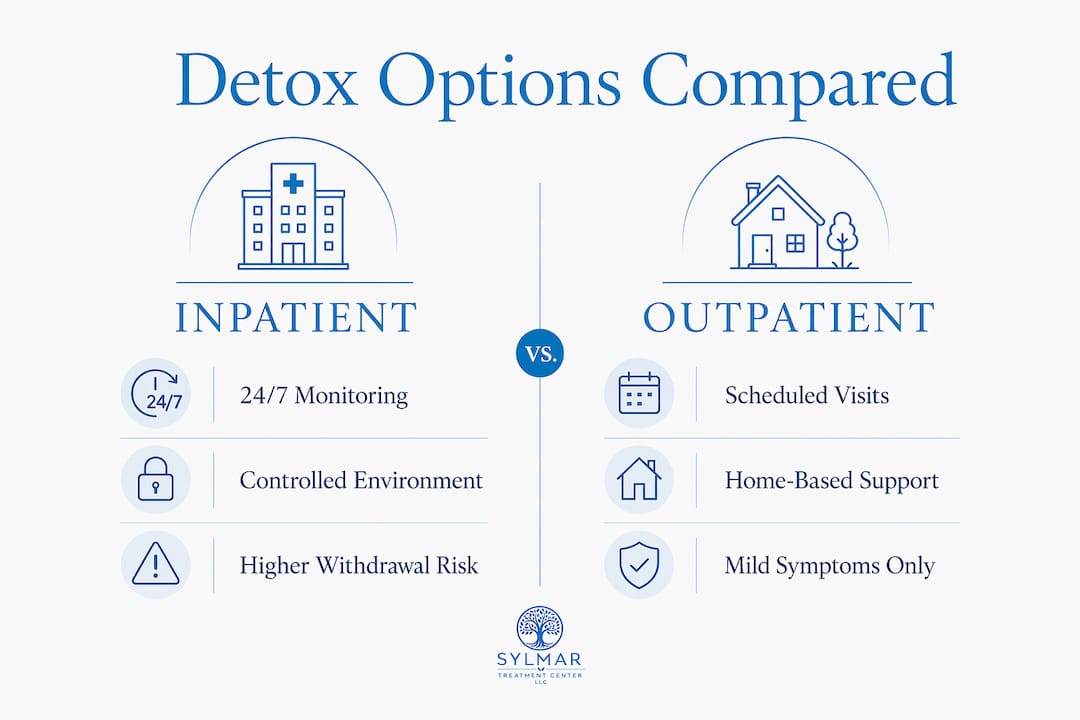
Outpatient detox is not a lighter version of inpatient care. It is a separate clinical model with its own strict safety criteria, including stable housing, reliable transportation, and quick access to emergency care if symptoms worsen.
Pro Tip: Ask the admitting clinician to explain which ASAM level applies to your situation and why. That single question reveals whether the recommended setting matches the actual medical risk.
How do clinical assessment and safety factors determine detox placement?
Clinical placement is a medical decision, not an administrative one. A clinical detox assessment covers substance use history, withdrawal symptoms, mental health status, medical risk factors, and home environment. Each dimension carries weight in determining the safest care level.
The key clinical risk markers that push placement toward inpatient care include:
- History of withdrawal complications such as seizures or delirium tremens
- Co-occurring psychiatric disorders that destabilize during withdrawal
- Polysubstance use, which creates unpredictable withdrawal timelines
- Unstable or unsafe home environment with no reliable support person
- Prior failed outpatient detox attempts, indicating higher medical complexity
Outpatient detox is appropriate only when mild symptoms, stable housing, dependable transportation, and reliable supervision are all present. Remove any one of those conditions and the risk profile changes significantly. Families often underestimate how quickly withdrawal can escalate, particularly with alcohol or benzodiazepines, where seizures or delirium tremens can develop within hours of the last dose.
Pro Tip: If a family member will serve as the support person during outpatient detox, they need specific training on withdrawal warning signs, not just general reassurance. Ask the clinical team for a written emergency protocol before the patient leaves the facility.
What are the step-by-step considerations when choosing a detox program?
Choosing the right detox setting requires working through several concrete factors in sequence. Skipping steps increases the risk of a poor placement decision.
-
Complete a clinical evaluation first. Substance type, withdrawal history, and current health status determine the baseline risk level. A detox assessment process conducted by a licensed clinician is the non-negotiable starting point.
-
Evaluate the home environment honestly. Outpatient detox requires a substance-free home, a support person available around the clock, and no active triggers or stressors that could drive relapse during withdrawal.
-
Review insurance and cost with safety as the filter. Medical detox costs more upfront than outpatient care, but inappropriate outpatient placement can lead to emergency hospitalizations and relapse that cost far more over time. Cost is a real factor, but it should never override clinical safety.
-
Establish an emergency escalation protocol. Every outpatient detox plan needs a written protocol specifying which symptoms require a 911 call, which require an urgent clinic visit, and who is responsible for making that call. Patients and families should review this document before detox begins.
-
Plan the transition from detox to behavioral rehab. Detox addresses physical withdrawal, which typically lasts 3–10 days. It does not address the behavioral and psychological roots of addiction. A transition to behavioral rehabilitation must be scheduled before detox ends, not after.
| Patient profile | Recommended setting |
|---|---|
| Alcohol or benzodiazepine dependence, any severity | Inpatient (Level 3.2-WM or 4-WM) |
| Mild opioid or stimulant withdrawal, stable home | Outpatient (Level 1-WM or 2-WM) |
| Co-occurring psychiatric disorder | Inpatient with dual diagnosis support |
| Prior seizure or delirium tremens history | Inpatient, hospital-based if needed |
| First-time detox, low-risk substance, strong support | Outpatient with close monitoring |
Pro Tip: Schedule the clinical evaluation before telling the patient which setting they will use. Preemptive announcements create resistance. Let the assessment results lead the conversation.
What risks and challenges should families anticipate during detox?
The most dangerous misconception in detox planning is treating outpatient care as the default safe option. Families often choose outpatient detox for convenience or cost, then face emergency hospitalizations when withdrawal escalates beyond what home monitoring can manage. Safety, not convenience, must guide the setting decision every time.
A second major pitfall is treating detox as the finish line. Detox lasts 3–10 days and clears the body of substances. It does not rewire the behavioral patterns, emotional triggers, or social dynamics that drive addiction. Patients who complete detox without transitioning to a structured rehab program face a significantly higher relapse risk.
Withdrawal from alcohol or benzodiazepines can escalate to seizures or delirium tremens within hours. A patient who appears stable at a morning clinic visit can deteriorate by afternoon. Outpatient detox for these substances is clinically appropriate only in rare, carefully screened cases with intensive daily monitoring and a trained support person on site at all times.
Families managing inpatient admission face a different set of challenges. Separation anxiety, guilt, and logistical disruption are real. These emotions sometimes push families to advocate for outpatient care when inpatient is the medically correct choice. Recognizing that inpatient admission is an act of care, not abandonment, helps families hold the clinical boundary when it matters most.
The medically supervised detox process also requires families to prepare for the post-detox period. Discharge without a clear rehab plan is one of the most preventable causes of early relapse.
Key Takeaways
The safest detox setting is determined by clinical assessment, not by cost or convenience, with ASAM criteria providing the standard framework for matching patients to the correct level of care.
| Point | Details |
|---|---|
| ASAM levels guide placement | Levels 1-WM through 4-WM match withdrawal risk to the appropriate supervision intensity. |
| Inpatient is not optional for high-risk cases | Alcohol and benzodiazepine dependence require 24/7 monitoring due to rapid escalation risk. |
| Outpatient has strict safety criteria | Stable home, trained support person, and emergency protocol are all required, not optional. |
| Detox is one phase, not a cure | Physical withdrawal lasts 3–10 days; behavioral rehab must follow for lasting recovery. |
| Cost calculations must include relapse risk | Inpatient costs more upfront but prevents the higher long-term cost of failed outpatient placement. |
What I’ve learned from watching families make this decision
The families I’ve seen navigate this process well share one trait: they ask the clinical team hard questions before committing to a setting. The ones who struggle tend to arrive with a decision already made, usually based on cost, logistics, or the patient’s stated preference. Addiction distorts judgment. A patient’s preference for outpatient care is not a reliable clinical indicator.
The detail that surprises most families is how narrow the window for safe outpatient detox actually is. Clinicians describe it as a separate model with its own strict criteria, not a gentler version of inpatient care. When those criteria are not fully met, the risk is not theoretical. Alcohol and benzodiazepine withdrawal can turn dangerous in hours, not days.
The other thing I’d push families to internalize is the detox-to-rehab transition. Completing detox feels like a victory, and it is. But stopping there is like finishing the foundation of a house and calling it done. The behavioral work that follows detox is where lasting recovery is actually built. Plan that transition before detox ends, not after.
My honest recommendation: get the clinical evaluation done first, let the ASAM level guide the setting, and treat the rehab transition as non-negotiable from day one.
— Jim
Sylmartreatmentcenter: personalized detox care built around your clinical needs
Sylmartreatmentcenter operates within a six-bed facility that makes genuine clinical attention possible for every patient. Placement decisions follow ASAM criteria, with licensed clinicians conducting thorough assessments covering substance history, withdrawal risk, psychiatric status, and home environment before any recommendation is made.
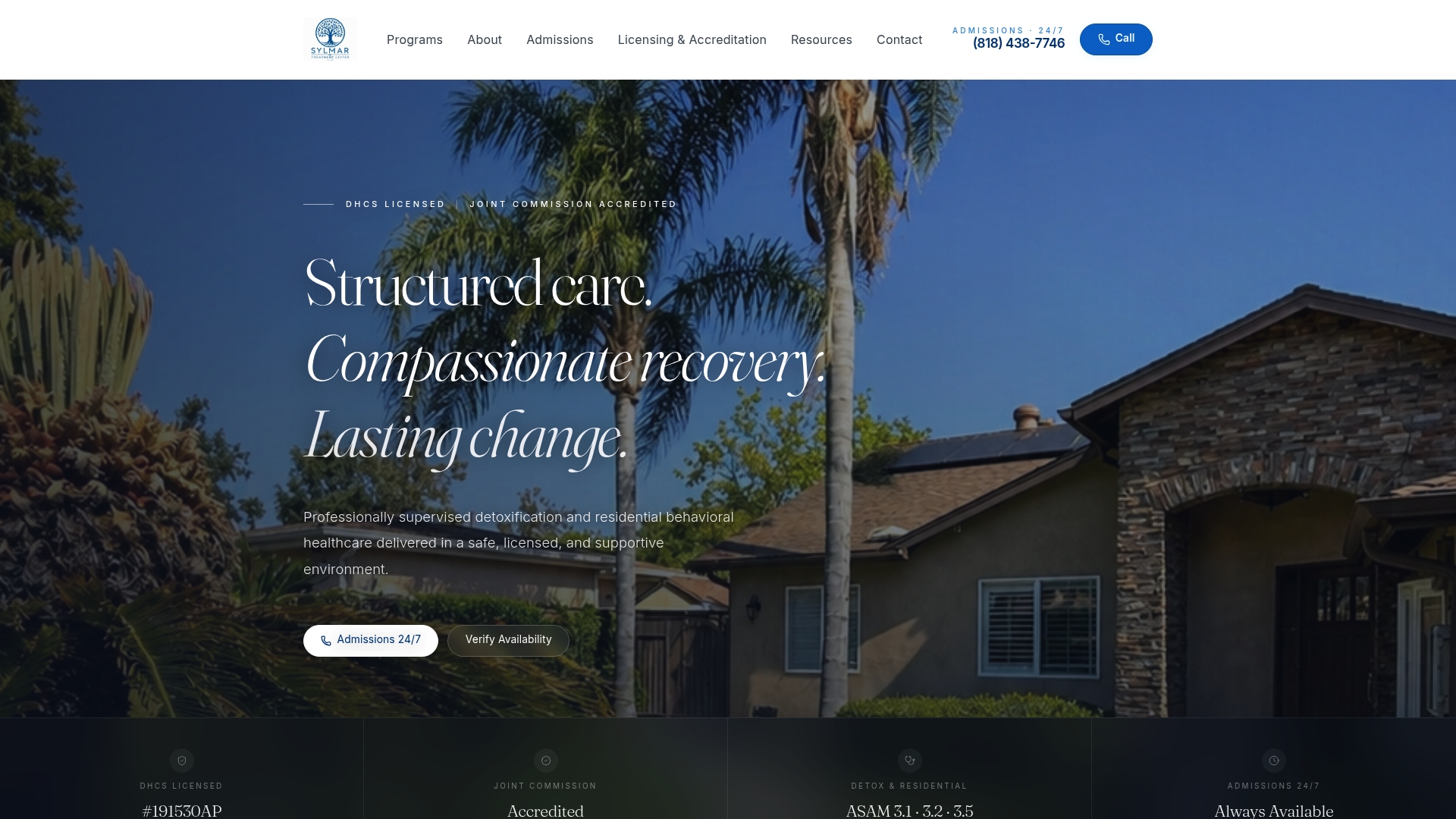
The center holds both a DHCS license and Joint Commission accreditation, which means the clinical standards are independently verified. Programs include medical detox with 24/7 monitoring and a direct pathway to behavioral rehabilitation for patients who need continued structured care. Families can reach the admissions team any time of day. For patients with co-occurring mental health conditions, dual diagnosis support is integrated from the start. Review the full range of treatment programs to find the right clinical fit.
FAQ
What is the main difference between inpatient and outpatient detox?
Inpatient detox provides 24/7 medical monitoring in a controlled facility, while outpatient detox involves scheduled clinic visits with the patient living at home. The key difference is the intensity and continuity of medical supervision.
When is outpatient detox considered safe?
Outpatient detox is clinically appropriate only for patients with mild withdrawal symptoms, a stable substance-free home, a trained support person available around the clock, and quick access to emergency care if symptoms worsen.
Can detox alone treat addiction?
Detox addresses physical withdrawal, which typically lasts 3–10 days, but does not treat the behavioral and psychological roots of addiction. Lasting recovery requires a structured behavioral rehab program following detox.
How does ASAM determine which detox level a patient needs?
ASAM criteria evaluate substance type, withdrawal history, medical and psychiatric status, and home environment to assign a withdrawal management level from 1-WM (outpatient) to 4-WM (hospital-based inpatient care).
Why is alcohol or benzodiazepine detox considered high risk?
Withdrawal from alcohol or benzodiazepines can escalate to seizures or delirium tremens within hours of the last dose, making inpatient supervision medically necessary for most patients with significant dependence on these substances.
Recommended
- Detox Safety Best Practices: Your 2026 Guide | Sylmar Treatment Center
- Medically Supervised Detox Process: A Family Guide | Sylmar Treatment Center
- Starting Detox in a Six-Bed Facility: A Safety Guide | Sylmar Treatment Center
- How Detox Prepares Patients for Rehab: 2026 Guide | Sylmar Treatment Center