

A clinical detox evaluation is a structured medical and psychological assessment performed by licensed clinicians before detoxification begins, designed to identify withdrawal risks and match each patient to the right level of care. This process, formally known in addiction medicine as a substance use disorder intake assessment, covers physical health, substance use history, mental health status, and social circumstances. The goal is not to judge you. The goal is to build a complete picture of your health so that nothing dangerous gets missed. Understanding what is a clinical detox evaluation before you walk through the door removes fear and puts you in control of your own recovery.
What does a clinical detox evaluation involve?
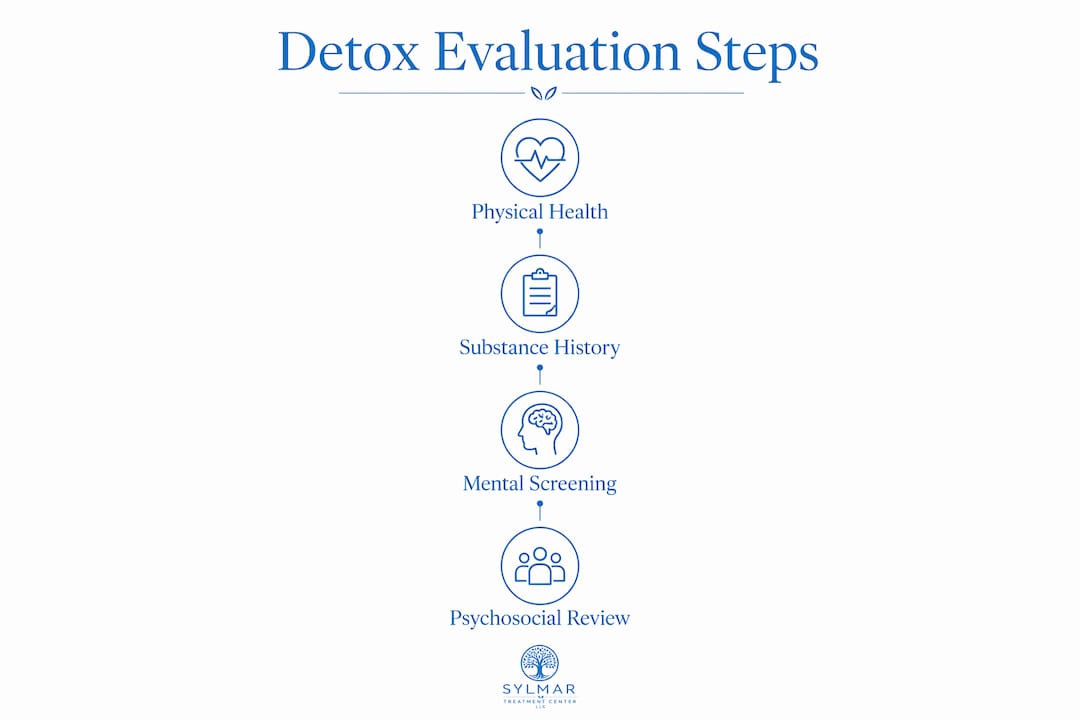
A comprehensive detox intake evaluates physical health, substance use history, and mental health to create a safe and personalized detox plan, addressing risks like heart disease or liver issues. Clinicians work through four distinct areas during this process.
Physical health assessment
The physical exam is the first layer of the evaluation. A clinician checks your vital signs, reviews your medical history, and orders lab work. Lab tests during evaluation provide objective data on organ function and help predict withdrawal severity and risk, with common panels including liver function tests, complete blood counts, and substance screenings. A damaged liver, for example, changes how quickly your body clears certain substances, which directly affects the medications a doctor can safely prescribe.

Substance use history
Clinicians ask detailed questions about what substances you have used, how long you have used them, how much you typically consume, and whether you have attempted detox before. This is not an interrogation. The answers determine whether you face a low-risk withdrawal or a potentially life-threatening one. Alcohol and benzodiazepine withdrawal, for instance, can cause seizures and require a very different medical protocol than opioid withdrawal.
Mental health screening
A detox evaluation identifies co-occurring disorders such as depression, anxiety, and PTSD that frequently accompany substance use disorder. Failing to treat these conditions at the same time undermines treatment success. Clinicians use validated screening tools like the PHQ-9 for depression and the GAD-7 for anxiety to get a reliable baseline. You can learn more about what to expect from a mental health screening at your first mental health appointment.
Psychosocial review
Psychosocial factors such as family support, employment status, and legal issues are reviewed during clinical detox evaluations to shape treatment support needs. A person with a strong home support network and stable housing may be a candidate for outpatient detox. Someone facing legal pressure, housing instability, or family conflict may need a more structured residential setting.
Pro Tip: Bring a written list of all medications, supplements, and substances you currently use to your evaluation. Clinicians cannot protect you from interactions they do not know about.
Why is medical supervision critical during detox?
Medical supervision during detox is not optional for most patients. It is the difference between a managed withdrawal and a medical emergency. Medical supervision reduces life-threatening complications by managing withdrawal symptoms effectively in a controlled environment, where monitoring and timely interventions prevent the emergencies common in unsupported detox.
Alcohol withdrawal is the clearest example. Delirium tremens, a severe form of alcohol withdrawal, carries a mortality rate as high as 37% without treatment. With proper medical management, that rate drops dramatically. The clinical detox assessment identifies who is at risk for this complication before symptoms appear, not after.
“Medical supervision is vital due to the unpredictable nature of withdrawal symptoms and potential health crises during detox.” — West Valley Detox clinical team
Outpatient detox works well for individuals with mild to moderate withdrawal risk, strong social support, and no serious co-occurring medical conditions. Inpatient or residential detox is the appropriate choice when the evaluation reveals high withdrawal risk, prior seizure history, or unstable mental health. The evaluation makes that determination based on data, not assumptions. You can review current detox safety best practices to understand how clinical protocols prevent complications at every stage.
The clinical detox process also protects against a common mistake: patients stopping substances abruptly on their own without understanding the risks. A clinician-guided taper or medication-assisted protocol, informed by the evaluation findings, is far safer than cold turkey withdrawal for many substance types.
How does evaluation shape your treatment plan?
Matching services guided by comprehensive assessment is recognized by NIDA as essential for successful treatment outcomes. The evaluation results directly determine which level of care you enter and what your detox plan looks like.
The table below shows how different evaluation findings translate into specific care decisions.
| Evaluation Finding | Likely Care Decision |
|---|---|
| Low withdrawal risk, stable housing, strong support | Outpatient counseling with medical check-ins |
| Moderate withdrawal risk, co-occurring anxiety | Intensive outpatient program with psychiatric support |
| High withdrawal risk, prior seizure history | Inpatient medical detox with 24/7 monitoring |
| Severe co-occurring mental health disorder | Dual diagnosis residential program |
| Legal involvement, housing instability | Structured residential treatment with case management |
Clinical detox evaluations form the foundation for developing a personalized, evidence-based detox plan that prioritizes safety, comfort, and effective withdrawal management. By establishing a physical and psychological baseline, the evaluation guides both medical and behavioral interventions. A patient with liver disease, for example, cannot safely receive certain medications used in standard alcohol detox protocols. The evaluation catches that before treatment begins, not during a crisis.
Co-occurring health conditions also affect the type of therapy recommended after detox. A patient with PTSD may need trauma-focused cognitive behavioral therapy alongside standard addiction counseling. The evaluation flags that need on day one. You can explore how individualized treatment programs are built from evaluation data to serve each patient’s specific profile.
What should you expect during the evaluation?
The evaluation setting is typically a private room with a clinician, a nurse, or both present. The process takes anywhere from one to three hours depending on complexity. Knowing what happens in sequence removes most of the anxiety.
- Check-in and consent forms. You review and sign paperwork explaining confidentiality protections under 42 CFR Part 2, the federal law that protects substance use treatment records.
- Physical exam and vital signs. A nurse or physician checks blood pressure, heart rate, temperature, and oxygen levels. Blood and urine samples are collected for lab analysis.
- Substance use interview. A clinician asks structured questions about your use history. This portion uses standardized tools like the AUDIT (Alcohol Use Disorders Identification Test) or DAST-10 (Drug Abuse Screening Test).
- Mental health screening. You complete brief questionnaires and answer follow-up questions about mood, trauma history, and any prior psychiatric treatment.
- Psychosocial review. The clinician asks about your living situation, relationships, employment, and any legal obligations.
- Care placement discussion. Based on findings, the clinician explains the recommended level of care and answers your questions.
Patients often misunderstand detox assessments as commitments to treatment, but they are designed to establish a baseline health picture and reduce uncertainty. Completing the evaluation does not lock you into any program. It gives you and your care team the information needed to make a safe, informed decision together. A medically supervised detox overview can help families understand what their loved one will experience during this stage.
Pro Tip: Be completely honest about all substances used, including alcohol, prescription medications, and over-the-counter drugs. Incomplete information leads to incomplete safety planning.
Key takeaways
A clinical detox evaluation is the single most important step in starting detox safely because it replaces guesswork with a data-driven plan built around your specific health profile.
| Point | Details |
|---|---|
| Evaluation covers four domains | Physical health, substance use history, mental health, and psychosocial factors are all assessed. |
| Lab work predicts withdrawal risk | Liver panels, blood counts, and substance screenings give clinicians objective safety data before detox begins. |
| Co-occurring disorders must be identified | Depression, anxiety, and PTSD found during screening must be treated alongside substance use for recovery to hold. |
| Findings determine care placement | Evaluation results match patients to outpatient, intensive outpatient, or inpatient care based on real risk data. |
| Honesty improves outcomes | Complete disclosure during the evaluation directly improves the safety and effectiveness of your detox plan. |
What i have learned after years of watching people walk into evaluations
Most people arrive at a clinical detox evaluation convinced it is a test they can fail. They minimize their use, downplay their symptoms, and answer questions strategically rather than honestly. I understand the instinct. Admitting the full picture feels exposing.
Here is what I have seen play out repeatedly: the patients who are most forthcoming during their evaluation get the safest, most effective detox plans. The patients who hold back get plans built on incomplete data. That gap shows up in withdrawal complications, medication errors, and failed placements. Honesty during the assessment is not a moral issue. It is a clinical safety issue.
The other misconception I want to address directly is the idea that a thorough evaluation means something is seriously wrong with you. The opposite is true. A detailed evaluation means the clinical team is doing their job. The more questions they ask, the more protected you are. Clinicians want patients to view detox assessments as empowering and clarifying rather than intimidating. That framing is accurate. Knowing your baseline health status before detox begins is not frightening. It is the foundation of a plan that actually works.
The evaluation is also where co-occurring mental health conditions get named for the first time for many patients. That moment of recognition, when someone finally understands that their anxiety or depression has a clinical name and a treatment path, is often the turning point. The detox assessment process is not just a safety screen. It is the beginning of understanding yourself clearly.
— Jim
Start your recovery with a thorough evaluation at Sylmartreatmentcenter
Sylmartreatmentcenter conducts clinical detox evaluations in an intimate six-bed setting where every patient receives direct, personalized attention from the first assessment onward. The center’s DHCS license and Joint Commission accreditation mean the evaluation protocols meet the highest standards in addiction medicine. Clinicians at Sylmartreatmentcenter use evaluation findings to build individualized care plans that address both substance use and co-occurring mental health conditions from day one.

Whether you need medical detoxification with 24/7 clinical monitoring or a structured path through one of Sylmartreatmentcenter’s specialized treatment programs, the evaluation is where your care begins. Admissions support is available around the clock. The first step is a conversation.
FAQ
What is a clinical detox evaluation?
A clinical detox evaluation is a structured medical and psychological assessment conducted before detox begins to identify withdrawal risks, co-occurring health conditions, and the appropriate level of care. It covers physical health, substance use history, mental health, and social circumstances.
How long does a detox evaluation take?
Most clinical detox evaluations take one to three hours depending on the complexity of a patient’s medical and psychiatric history. Lab results may extend the process slightly if results are needed before a care placement decision is made.
Does completing an evaluation commit me to treatment?
Completing a detox evaluation does not commit you to any specific program. The assessment establishes your health baseline and informs care recommendations, but the final decision about entering treatment remains yours.
What happens if the evaluation finds a mental health condition?
If screening identifies a co-occurring disorder such as depression, anxiety, or PTSD, clinicians factor that into your care placement and treatment plan. Dual diagnosis programs treat both conditions at the same time, which produces significantly better outcomes than treating them separately.
Can i detox without a clinical evaluation?
Attempting detox without a clinical evaluation is dangerous, particularly for alcohol and benzodiazepine dependence where unsupervised withdrawal can cause seizures or death. A clinical assessment identifies those risks before they become emergencies.