

Medical detoxification is the clinically supervised management of acute withdrawal symptoms after a person stops using addictive substances. Clinicians also call this process “withdrawal management,” a term that more accurately reflects what happens: a medical team monitors the patient, administers medications, and stabilizes the body so that addiction treatment can begin. Medical detox is not a cure for addiction, and it is not the same as a “detox diet” or a juice cleanse. It is the critical first step in a treatment continuum, and skipping it for certain substances can be life-threatening.
What is medical detoxification and how does it work?
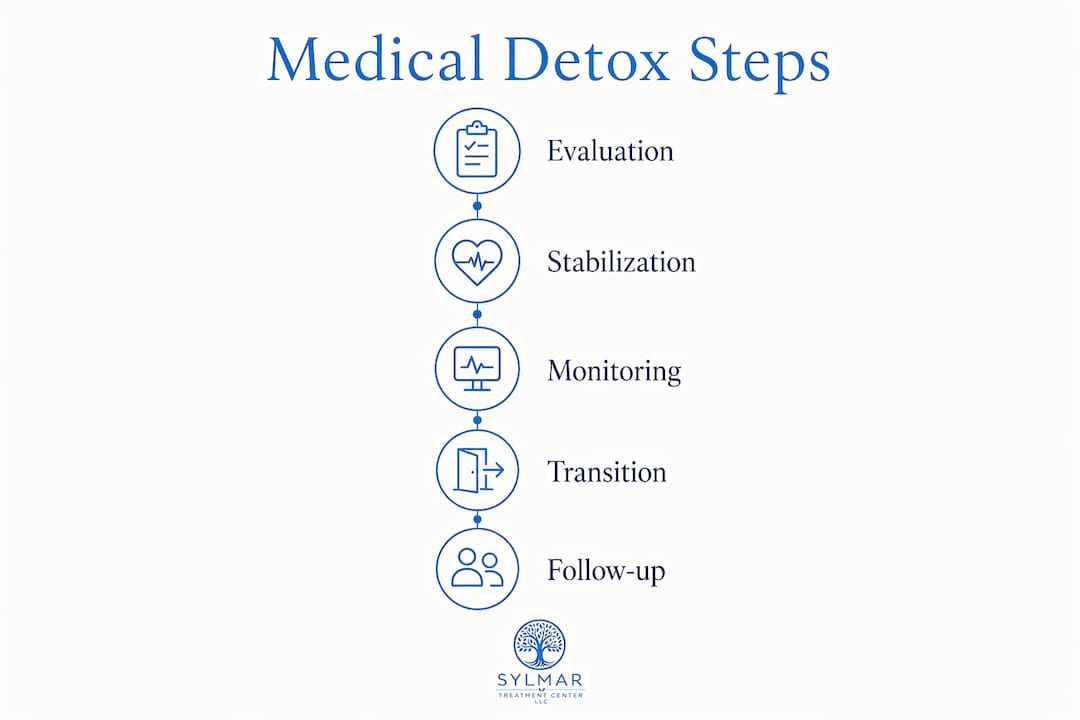
Medical detoxification is defined as the supervised medical process of clearing addictive substances from the body while managing the physical symptoms of withdrawal. The process follows three core phases: evaluation, stabilization, and transition to ongoing treatment. Each phase has a distinct clinical purpose.
Phase 1: Evaluation and screening
The process begins with a thorough clinical assessment. Physicians and nurses identify which substances the patient has been using, how long, and at what quantities. They also screen for co-occurring medical conditions such as liver disease, cardiovascular problems, or mental health disorders. A clinical detox evaluation determines the patient’s withdrawal risk level, which directly shapes the care plan.
Phase 2: Stabilization and monitoring
Stabilization is the active medical phase. The care team monitors vital signs continuously and uses validated tools to measure withdrawal severity. For alcohol withdrawal, clinicians rely on the CIWA-Ar scale (Clinical Institute Withdrawal Assessment for Alcohol). CIWA-Ar scores guide exactly when and how much medication to give, reducing overtreatment and shortening the overall detox period. This symptom-triggered approach produces better outcomes than fixed dosing schedules.

Common medications include benzodiazepines such as diazepam or lorazepam for alcohol and benzodiazepine withdrawal, and buprenorphine or methadone for opioid withdrawal. Benzodiazepines are first-line for alcohol withdrawal because they reduce seizure risk and ease the severity of delirium tremens. The medical team adjusts doses in real time based on the patient’s response.
Phase 3: Transition planning
Before discharge from detox, the care team arranges the next level of care. This step is not optional. Detox without follow-up therapy addresses only the physical component of addiction. The psychological and behavioral drivers of substance use require separate, ongoing treatment.
Pro Tip: Ask the detox facility about their transition planning process before admission. A program that does not have a clear referral pathway to residential or outpatient treatment is missing a critical piece of the recovery puzzle.
What substances require medical detox?
Not every substance produces dangerous withdrawal, but several do. Medical detox is medically necessary for the following:
- Alcohol. Withdrawal can cause seizures, hallucinations, and delirium tremens, a severe syndrome that can be fatal without treatment.
- Benzodiazepines. Drugs like Xanax, Valium, and Klonopin produce withdrawal patterns similar to alcohol, including seizure risk.
- Opioids. Heroin, fentanyl, oxycodone, and similar drugs cause intense physical withdrawal. While rarely fatal on its own, opioid withdrawal causes severe discomfort and a sharp drop in tolerance, making relapse and overdose extremely dangerous.
- Barbiturates. Less common today but still encountered; withdrawal carries high seizure risk.
Stimulants such as cocaine and methamphetamine typically do not produce medically dangerous physical withdrawal, though they cause significant psychological symptoms including depression and intense cravings. Cannabis withdrawal is generally mild and does not require medical detox in most cases.
The American Medical Association is clear that medically supervised withdrawal management is distinct from popular “detox” products. No juice cleanse or supplement protocol manages alcohol seizures or opioid withdrawal. The body’s natural detoxification processes operate continuously through the liver and kidneys. What medical detox provides is clinical safety during the acute withdrawal period, not a cleansing ritual.
Detox decisions prioritize patient safety through withdrawal risk stratification rather than relying solely on the patient’s self-report. A patient who believes their drinking was “not that bad” may still score high on a clinical risk assessment and require inpatient supervision.
How long does medical detox take and where does it happen?
Duration and setting vary significantly by substance and individual risk. Most detox programs last 5–10 days. Benzodiazepine tapers can extend to several weeks or even months for long-acting agents like diazepam, because stopping too quickly triggers the same dangerous withdrawal it is meant to prevent.
| Setting | Best suited for | Supervision level |
|---|---|---|
| Inpatient hospital | High medical risk, complex history | 24/7 physician and nursing care |
| Residential detox center | Moderate to high withdrawal risk | 24/7 monitoring, structured environment |
| Outpatient medically supervised | Low withdrawal risk, strong social support | Daily or near-daily clinical check-ins |
Severe withdrawal syndromes require inpatient supervision for safety. Patients with a history of seizures, prior complicated withdrawals, or significant medical comorbidities belong in an inpatient or residential setting. Patients with mild withdrawal risk and a stable home environment may qualify for outpatient detox, though this requires honest clinical assessment, not patient preference alone.
The setting also affects comfort and outcomes. A 24-hour detox facility provides around-the-clock access to medical staff, which matters most during the first 72 hours when withdrawal symptoms peak for most substances. Residential detox centers offer a structured, supportive environment that reduces exposure to triggers and provides immediate access to counselors.
Pro Tip: If you are supporting a family member through detox, ask the treatment team what the expected peak withdrawal window is for their specific substance. Knowing that alcohol withdrawal typically peaks at 24–72 hours helps families set realistic expectations and reduces panic during an already stressful time.
What are the benefits and limitations of medical detoxification?
Medical detox delivers clear, measurable benefits during the acute withdrawal phase. Understanding its limits is equally important.
Benefits:
- Safety. Medical supervision prevents life-threatening complications such as seizures and delirium tremens. A multidisciplinary team including physicians, nurses, and counselors monitors patients around the clock.
- Symptom relief. Medications reduce the physical misery of withdrawal, making the process more tolerable and reducing the likelihood of leaving treatment early.
- Physical stabilization. Detox restores basic physiological stability, which is a prerequisite for engaging meaningfully in therapy and counseling.
- Assessment opportunity. The detox period allows clinicians to identify co-occurring mental health conditions such as depression or anxiety that require treatment alongside addiction.
Limitations:
- Detox is not addiction treatment. The clinical distinction between withdrawal management and addiction therapy is fundamental. Detox addresses the physical dependence. It does not address the behavioral patterns, trauma, or psychological factors that drive substance use.
- High relapse risk without follow-up. Detox without follow-up therapy results in relapse rates exceeding 80% within 30 days. That figure reflects how incomplete detox alone is as a treatment strategy.
- Tolerance resets. After detox, a patient’s tolerance drops significantly. A relapse at the previous use level carries a much higher overdose risk than before treatment.
The medical detoxification benefits are real and significant, but they only hold if the patient transitions directly into structured addiction treatment. Detox opens a window. What happens next determines whether that window leads somewhere.
Key takeaways
Medical detoxification is the supervised first step in addiction treatment, managing physical withdrawal safely while preparing patients for the behavioral therapy that produces lasting recovery.
| Point | Details |
|---|---|
| Detox is withdrawal management | Medical detox manages acute physical withdrawal; it does not treat the behavioral or psychological roots of addiction. |
| Substance determines risk | Alcohol, benzodiazepines, and opioids carry the highest withdrawal danger and require medical supervision. |
| CIWA-Ar guides medication | Symptom-triggered dosing based on CIWA-Ar reduces overtreatment and shortens detox duration. |
| Duration varies by substance | Most detox programs last 5–10 days; benzodiazepine tapers can extend significantly longer. |
| Follow-up care is non-negotiable | Relapse rates exceed 80% within 30 days when detox is not followed by structured addiction treatment. |
What I’ve learned about detox that most articles get wrong
People often arrive at detox believing they are about to complete their treatment. They think that once the substance is out of their system, the hard part is over. That misunderstanding is one of the most dangerous in addiction medicine.
Detox is the beginning of a physical process, not the end of an addiction. The patients who do best are the ones who enter detox already committed to what comes next, whether that is residential treatment, an intensive outpatient program, or a structured aftercare plan. The physical discomfort of withdrawal is real, but it is manageable with proper medical care. What is harder to manage is the psychological pull of addiction once the body has stabilized and the patient feels better.
The other thing I see consistently underestimated is the importance of individualized care. A standard detox protocol applied uniformly across patients misses the point. A 55-year-old with 30 years of heavy alcohol use and a history of seizures needs a fundamentally different approach than a 25-year-old managing a short-term opioid dependence. Risk stratification is not a bureaucratic step. It is the clinical decision that determines whether someone gets through withdrawal safely.
Compassion matters here too. Patients in withdrawal are physically miserable and often deeply ashamed. A care environment that treats them with dignity, not judgment, produces better engagement and better outcomes. That is not a soft observation. It is a clinical reality.
— Jim
Medical detox and treatment programs at Sylmartreatmentcenter
Sylmartreatmentcenter provides medically supervised detox in an intimate six-bed setting, where patients receive individualized care from a team of physicians, nurses, and counselors. The small setting means staff actually know each patient, not just their chart.
The center holds both a DHCS license and Joint Commission accreditation, which are the two primary quality benchmarks in addiction treatment. After detox, patients move directly into addiction treatment programs designed around their specific needs, including support for co-occurring mental health conditions. Admissions support is available 24/7 for patients and families ready to take the first step.
FAQ
What is the definition of medical detox?
Medical detox is the clinically supervised process of managing withdrawal symptoms after a person stops using addictive substances. It uses medical monitoring and medications to keep the patient safe during the acute withdrawal phase.
Who needs medical detox?
People dependent on alcohol, benzodiazepines, or opioids typically require medical detox because withdrawal from these substances can cause seizures, delirium, or other life-threatening complications.
How long does medical detox last?
Most medical detox programs last 5–10 days. Benzodiazepine detox can extend to several weeks or longer depending on the specific drug and the patient’s level of dependence.
Is medical detox the same as addiction treatment?
No. Medical detox manages physical withdrawal only. Addiction treatment addresses the behavioral, psychological, and social factors driving substance use and requires separate, ongoing therapy after detox is complete.
What happens after medical detox?
After detox, patients should transition immediately into a structured treatment program such as residential care or an intensive outpatient program. Skipping this step results in relapse rates exceeding 80% within 30 days.