
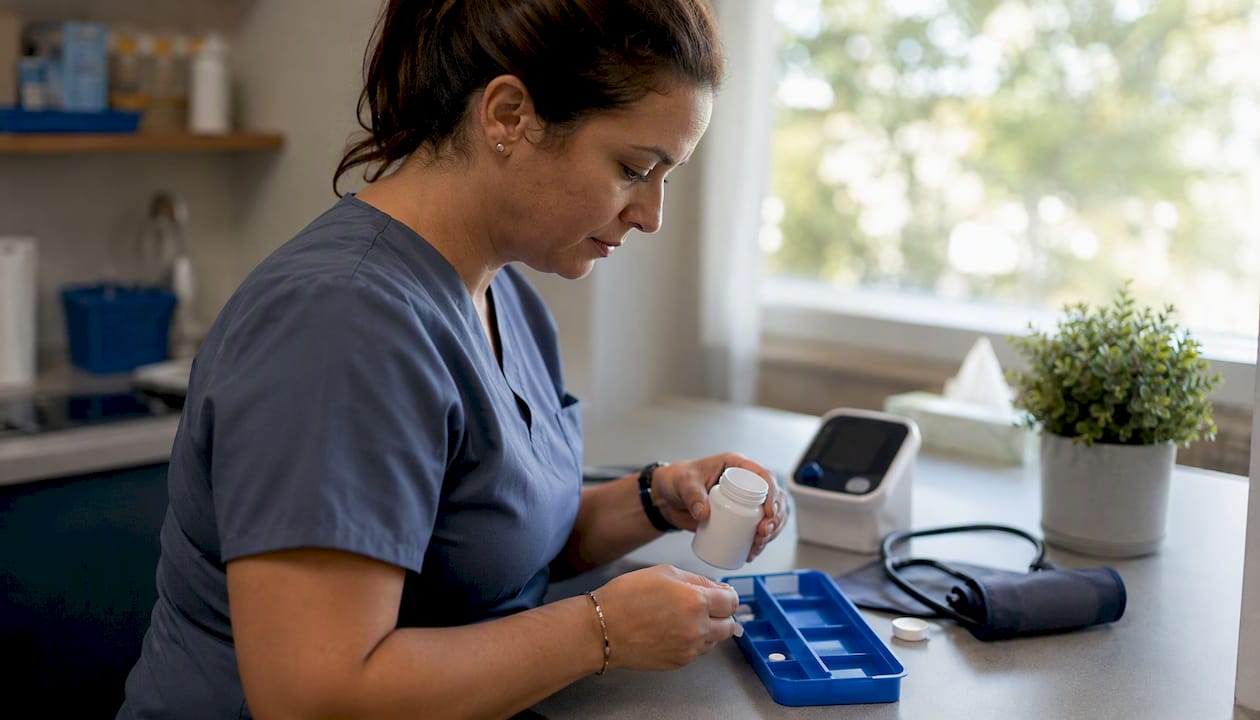
Clonidine reduces many of the physical symptoms of opioid withdrawal, but it is not an opioid replacement and requires medical supervision. It works by quieting the nervous system’s stress response, not by acting on opioid receptors. That distinction matters clinically: clonidine will help with sweating, racing heart, and chills, but it will not touch cravings or prevent relapse on its own. According to NCBI clinical guidelines, clonidine is a recognized non-opioid option for managing autonomic withdrawal symptoms, with blood pressure monitoring required at every dose. A Cochrane-level systematic review confirms alpha-2 agonists outperform placebo for reducing withdrawal severity and improving treatment completion, though hypotension is a consistent trade-off.
What clonidine does well during opioid detox:
- Reduces sweating, chills, and hot flashes
- Lowers elevated heart rate and blood pressure driven by withdrawal
- Eases anxiety and tremor linked to autonomic hyperactivity
- Decreases rhinorrhea and some gastrointestinal autonomic symptoms
What clonidine does not reliably address:
- Opioid cravings
- Severe muscle aches and bone pain
- Persistent dysphoria or psychological withdrawal
- Long-term relapse prevention
Medically supervised programs like Sylmartreatmentcenter integrate clonidine into a broader detox protocol that includes vital sign monitoring, adjunctive medications, and a transition plan to longer-term treatment.
Key Takeaways
Clonidine reduces acute autonomic withdrawal symptoms effectively but requires blood pressure monitoring before every dose and must be paired with a longer-term treatment plan to meaningfully reduce relapse risk.
| Point | Details |
|---|---|
| Clonidine’s core role | Reduces autonomic symptoms (sweating, tachycardia, anxiety) but does not address opioid cravings or long-term relapse. |
| Dosing and monitoring | Typical doses run 0.1–0.2 mg every 6 hours; hold if systolic BP drops below 90 mmHg. |
| Hypotension is the main risk | Clonidine causes more hypotension than lofexidine or buprenorphine; never stop abruptly due to rebound hypertension risk. |
| Detox is not the finish line | SAMHSA guidance confirms detox alone is insufficient; maintenance medication and counseling are needed for lasting recovery. |
| Sylmartreatmentcenter | Offers medically supervised detox with clonidine protocols, 24/7 admissions, DHCS and Joint Commission accreditation, and dual diagnosis support. |
Table of Contents
- How clonidine works to reduce withdrawal symptoms
- Which opioid withdrawal symptoms clonidine can relieve
- What the clinical evidence actually shows
- Typical clonidine dosing during opioid withdrawal
- Side effects, risks, and contraindications you need to know
- Monitoring and safety practices during clonidine treatment
- How clonidine compares to lofexidine, methadone, buprenorphine, and naltrexone
- What patients should do before and during clonidine treatment
- How Sylmartreatmentcenter integrates clonidine into medically supervised detox
- A perspective on what clonidine actually delivers
- Medically supervised opioid detox at Sylmartreatmentcenter
- Sources
How clonidine works to reduce withdrawal symptoms
Clonidine is a non-opioid medication originally developed to treat high blood pressure. Its relevance to opioid detox comes from a specific mechanism: it activates alpha-2A adrenergic receptors in the brain’s locus coeruleus, the region that fires intensely during opioid withdrawal and floods the body with norepinephrine. That norepinephrine surge is what drives the sweating, racing pulse, anxiety, and agitation that make withdrawal so physically brutal. Clonidine suppresses that signal at the source, according to historical and pharmacological analyses of its use in addiction treatment.
How it differs from opioid agonists. Methadone and buprenorphine bind directly to opioid receptors, which is why they relieve cravings and can be used for long-term maintenance. Clonidine has no affinity for opioid receptors at all. It manages the downstream sympathetic storm but leaves the receptor-level dependence untouched.
How it differs from lofexidine (Lucemyra). Lofexidine works through the same alpha-2 mechanism and received FDA approval specifically for managing opioid withdrawal symptoms in adults, making it the only non-opioid medication with that indication. Clonidine’s use for withdrawal remains off-label in the U.S. The practical difference most clinicians notice is blood pressure: lofexidine tends to cause less hypotension, which affects outpatient protocol decisions and who can safely be managed outside a hospital setting.
Which opioid withdrawal symptoms clonidine can relieve
Clonidine targets the autonomic nervous system, so its benefits are concentrated in the physical, body-driven symptoms of withdrawal rather than the psychological ones.
Symptoms clonidine commonly reduces:
- Diaphoresis (excessive sweating)
- Tachycardia and hypertension from sympathetic activation
- Chills, hot flashes, and piloerection (“goosebumps”)
- Rhinorrhea (runny nose)
- Anxiety and restlessness tied to autonomic hyperactivity
- Tremor
- Some nausea and GI cramping driven by autonomic dysregulation
Symptoms clonidine does not reliably treat:
- Opioid craving (the psychological pull toward using)
- Severe myalgia and bone pain (often the most distressing symptom)
- Persistent insomnia beyond the first day or two
- Dysphoria and depression that outlast the acute phase
- Long-term relapse risk
Pro Tip: Think of clonidine as a thermostat for the nervous system during acute withdrawal. It turns down the heat, but it doesn’t address why the system overheated in the first place. Cravings and psychological withdrawal drivers usually require opioid agonist therapy (buprenorphine or methadone) or structured psychosocial support alongside any non-opioid detox approach.
What the clinical evidence actually shows
The evidence base for clonidine in opioid withdrawal is substantial but not without limits. The clearest signal comes from a systematic review of 26 randomized controlled trials involving 1,728 participants, which found that alpha-2 adrenergic agonists, including clonidine and lofexidine, were more effective than placebo at reducing the likelihood of severe withdrawal and at increasing treatment completion rates. The same review found that clonidine produced more hypotension than methadone, a consistent finding across trials.
Historically, the foundational work by Gold and colleagues in the late 1970s and early 1980s established clonidine’s role in suppressing withdrawal signs, and those early trials informed decades of clinical practice. Later randomized trials confirmed symptom reduction and showed that clonidine could support transition to naltrexone in motivated patients, a use documented in PMC clinical analyses.
Evidence summary: Alpha-2 agonists reduce withdrawal severity and improve completion rates versus placebo (moderate-quality evidence). Short-term symptom control is broadly comparable to reducing-dose methadone, but clonidine carries a higher hypotension burden. Neither clonidine nor lofexidine improves long-term relapse prevention — that outcome requires maintenance pharmacotherapy and psychosocial care.
Where the evidence is stronger:
- Reducing acute autonomic symptoms (moderate-quality evidence)
- Improving treatment completion versus placebo
- Facilitating transition to naltrexone in supervised settings
Where the evidence is weaker or absent:
- Long-term abstinence or relapse prevention
- Superiority over opioid agonists for overall withdrawal management
- Outpatient safety without structured monitoring
SAMHSA guidance reinforces that detox alone, regardless of the medication used, is insufficient for lasting recovery. Withdrawal management is the first step, not the finish line.
Typical clonidine dosing during opioid withdrawal
Clonidine dosing for withdrawal is not one-size-fits-all. It is titrated to symptom severity and blood pressure response, and it requires monitoring before every dose. The following table reflects example schedules drawn from NCBI clinical guidelines for moderate to severe opioid withdrawal.
Maximum reported daily dose: approximately 1.2 mg/day in clinical settings, though most outpatient protocols stay well below this ceiling.
Practical administration notes:
- Clonidine is available in 0.025 mg, 0.1 mg, and 0.2 mg oral tablets; tablets can be split for lower doses
- Oral administration is standard for withdrawal management
- Transdermal patches (Catapres-TTS) deliver continuous dosing but take 2–3 days to reach steady state, making them less useful for acute symptom management
- A test dose of 0.1 mg is standard practice before initiating a full schedule, per MedlinePlus drug information
- Never stop clonidine abruptly; rebound hypertension can occur within 18–24 hours of sudden discontinuation
Dosing in outpatient settings typically runs lower than inpatient protocols, partly because BP monitoring is less frequent and partly because the risk of unobserved hypotension is real. Clinicians treating elderly patients or those with baseline low blood pressure often start at 0.05 mg and titrate slowly.
Side effects, risks, and contraindications you need to know
Clonidine’s side effect profile is manageable in the right setting, but several risks are serious enough to require careful patient selection and active monitoring.
Common side effects:
- Hypotension (the most clinically significant concern)
- Dizziness and lightheadedness, especially on standing
- Sedation and fatigue
- Dry mouth
- Bradycardia (slowed heart rate)
Serious risks:
- Syncope (fainting) from orthostatic hypotension
- Rebound hypertension if clonidine is stopped abruptly, which can be severe
- Respiratory depression risk when combined with other CNS depressants
The FDA label for clonidine documents these warnings explicitly, and they apply whether clonidine is used for its approved indications or off-label for withdrawal.
Contraindications and high-risk groups:
- Significant coronary artery disease or recent cardiac event
- Severe bradycardia or known sick sinus syndrome
- Existing orthostatic hypotension
- Frail elderly patients, who are at substantially higher risk of falls and syncope
- Pregnancy (use only when clearly necessary and under specialist supervision)
Clinically important drug interactions:
- Beta-blockers: combined use can cause severe bradycardia; abrupt clonidine withdrawal while on a beta-blocker increases rebound hypertension risk
- Calcium channel blockers and other antihypertensives: additive BP lowering
- Benzodiazepines, opioids, alcohol, and other CNS depressants: additive sedation
Red flags requiring urgent care: loss of consciousness or near-fainting, systolic BP below 80 mmHg, heart rate below 50 beats per minute, severe chest pain, or any signs of severe withdrawal that are not responding to medication. These require immediate escalation to emergency or inpatient care.
Monitoring and safety practices during clonidine treatment
Safe use of clonidine for opioid withdrawal depends on a structured monitoring routine. The NCBI guidelines and standard detox safety practices both emphasize that vital sign checks are non-negotiable before every dose.
Monitoring checklist before each dose:
- Measure blood pressure and heart rate
- Check for orthostatic symptoms (dizziness on standing)
- Assess mental status and sedation level
- Review any new medications or substances taken since the last dose
- Document findings and clinical decision (dose given, held, or adjusted)
BP and pulse thresholds for holding a dose:
- Hold if systolic BP is below 90 mmHg
- Hold if heart rate is below 55 beats per minute
- Reassess in 30–60 minutes; if BP remains low, contact the prescribing clinician
Outpatient vs. inpatient suitability:
| Factor | Outpatient Appropriate | Inpatient Recommended |
|---|---|---|
| Baseline BP | Normal or mildly elevated | Low or unstable |
| Cardiac history | None or stable, well-controlled | Significant coronary disease, arrhythmia |
| Support at home | Reliable caregiver present | Living alone or unsafe environment |
| Withdrawal severity | Mild to moderate | Severe or complicated |
| Prior detox attempts | First or second attempt | Multiple failed outpatient attempts |
| Substance use complexity | Single opioid dependence | Polysubstance use, benzodiazepine dependence |

For outpatient programs, a caregiver or family member should be present during peak dosing hours, especially on days 1 through 3. Written instructions on when to call the clinic or go to the emergency room are standard practice. Remote monitoring through telehealth check-ins can supplement but does not replace in-person vital sign measurement for higher-risk patients. Families supporting a loved one through this process can find practical guidance in this medically supervised detox family guide.
How clonidine compares to lofexidine, methadone, buprenorphine, and naltrexone
Understanding where clonidine fits requires an honest look at the full menu of medications used in opioid withdrawal and maintenance treatment.
| Medication | Symptoms Relieved | Evidence Strength | Hypotension Risk | FDA Approval for Withdrawal | Outpatient Suitability | Effect on Cravings/Relapse | Typical Duration |
|---|---|---|---|---|---|---|---|
| Clonidine | Autonomic symptoms | Moderate | High | Off-label | Moderate (with monitoring) | None | 7 days (detox) |
| Lofexidine (Lucemyra) | Autonomic symptoms | Moderate | Lower than clonidine | Yes (FDA-approved) | Better than clonidine | None | Up to 7 days |
| Methadone | Broad withdrawal relief | High | Low | Yes (OTP programs) | Limited (OTP clinic required) | Yes (maintenance) | Long-term possible |
| Buprenorphine | Broad withdrawal relief | High | Very low | Yes | High | Yes (maintenance) | Long-term possible |
| Naltrexone | Blocks opioid effects | Moderate | None | Yes (relapse prevention) | High (after detox) | Reduces relapse risk | Long-term |
Key trade-offs worth understanding:
- Clonidine is inexpensive and widely available, but its hypotension risk is meaningfully higher than lofexidine’s, which affects who can safely use it outside a clinical setting
- Lofexidine’s FDA approval for withdrawal gives it a clearer regulatory standing, though cost and availability can be barriers
- Buprenorphine and methadone address cravings and receptor-level dependence in ways clonidine simply cannot; for most patients with moderate to severe opioid use disorder, one of these is the stronger long-term choice
- Naltrexone is not used during active withdrawal (it precipitates severe withdrawal in opioid-dependent patients) but is an important option after detox is complete
Clonidine’s clearest role is as a supportive tool during the acute detox window, particularly when opioid agonists are contraindicated, unavailable, or declined by the patient. It can also serve as a bridge to naltrexone induction in supervised settings, a use with documented clinical history. For a broader look at detox treatment protocols, including where clonidine fits alongside other non-opioid and opioid-based approaches, the clinical picture becomes clearer.
What patients should do before and during clonidine treatment
Clonidine is a prescription medication with real cardiovascular risks. Going into a conversation with your prescriber prepared makes a meaningful difference in safety and outcomes.
Medical history to share with your clinician:
- Any history of heart disease, arrhythmia, or low blood pressure
- Current medications, especially antihypertensives, beta-blockers, or sedatives
- History of fainting or orthostatic dizziness
- Pregnancy or breastfeeding status
- Kidney disease (affects clearance)
- Whether you use alcohol, benzodiazepines, or other CNS depressants
Questions to ask your prescriber:
- How often will my blood pressure be checked, and what threshold means we hold a dose?
- What is the target duration, and how will we taper off clonidine at the end?
- How will cravings be addressed, and is buprenorphine or naltrexone part of the plan?
- What should I do if I feel faint or my blood pressure drops at home?
- Who do I call after hours if symptoms worsen?
- What signs mean I need to go to the emergency room?
Outpatient monitoring plan:
- Confirm a caregiver can be present during peak dosing hours on days 1–3
- Know the clinic’s after-hours contact number before you take the first dose
- Keep a log of BP readings and symptoms to share at follow-up visits
- Schedule follow-up within 48–72 hours of starting treatment
- Understand that escalation to inpatient care is not a failure; it is a safety decision
How Sylmartreatmentcenter integrates clonidine into medically supervised detox
At Sylmartreatmentcenter, clonidine is one tool within a structured, individualized detox workflow, not a standalone prescription handed to a patient with instructions to manage at home.
What the clinical workflow typically looks like:
- Comprehensive medical intake including vitals, cardiac history review, and substance use assessment
- A test dose of clonidine with BP and pulse monitoring before any scheduled dosing begins
- Titration based on symptom severity (using validated withdrawal scales) and BP response
- Vitals checked before every dose, with documented hold decisions when thresholds are not met
- Adjunctive medications for symptoms clonidine does not cover (antiemetics, antidiarrheals, NSAIDs for muscle pain, sleep support)
- A transition plan developed during detox: evaluation for buprenorphine, methadone, or naltrexone maintenance, and referral to ongoing counseling
Sylmartreatmentcenter’s six-bed residential setting means the staff-to-patient ratio supports the kind of frequent monitoring that clonidine-based detox requires. The facility holds a DHCS license and Joint Commission accreditation, and admissions support is available 24 hours a day. For patients whose withdrawal is complicated by co-occurring mental health conditions, the center’s dual diagnosis program addresses both simultaneously rather than sequencing them.
A perspective on what clonidine actually delivers
The conversation around clonidine in opioid withdrawal often gets framed as a binary: either it works or it doesn’t. That framing misses the point.
Clonidine works precisely for what it was designed to do, which is quiet an overactivated sympathetic nervous system. For a patient in the first 72 hours of opioid withdrawal, the sweating, the racing heart, the chills, and the anxiety are not just uncomfortable. They are the reason people give up on detox and return to using. Clonidine blunts that storm enough to keep someone in treatment long enough for the acute phase to pass.
What it does not do is address the underlying opioid use disorder. A patient who completes a clonidine-assisted detox and walks out without a maintenance plan or psychosocial support is statistically likely to relapse, not because clonidine failed, but because detox was never designed to be the whole treatment. The evidence on this is consistent across decades of research.
The practical implication: clonidine is most valuable when it is the beginning of a treatment episode, not the entirety of one. Prescribers who use it as a bridge to buprenorphine or naltrexone, with structured follow-up built in from day one, get better outcomes than those who use it as a standalone discharge plan. Patients who ask “what happens after detox?” before they start are asking exactly the right question.
Medically supervised opioid detox at Sylmartreatmentcenter
Clonidine-assisted detox is most effective when it happens inside a structured clinical environment where blood pressure is checked before every dose, withdrawal severity is tracked with validated tools, and the team is already planning what comes next. Sylmartreatmentcenter’s residential detox and treatment programs are built around exactly that model: individualized care plans, medication management with psychiatric oversight, and a six-bed setting where staff actually know each patient by name.
The center is licensed by DHCS and accredited by the Joint Commission. Admissions support runs 24 hours a day, and the team can help determine whether insurance covers residential detox. If you or someone you care about is ready to begin a medically supervised withdrawal process, call the admissions line or visit the programs page to start the assessment.
Sources
The following sources informed this article and are the primary references clinicians and patients should consult for dosing, safety, and guideline updates:
- Clinical Guidelines for Withdrawal Management and Treatment of Drug Dependence in Closed Settings - NCBI Bookshelf
- Alpha₂-adrenergic agonists for the management of opioid withdrawal (systematic review) - PubMed
- A historical perspective on clonidine as an alpha-2A receptor agonist in the treatment of addictive behaviors - PMC
- Clonidine hydrochloride - MedlinePlus Drug Information
- Clonidine, lofexidine, and similar medications for the management of opioid withdrawal — Cochrane summary
Bring any questions raised by these sources to your prescribing clinician or an addiction medicine specialist. Guidelines are updated periodically, and individual clinical decisions should always account for your specific medical history and circumstances.
This article is general information, not a substitute for advice from a qualified doctor. Consult a qualified healthcare professional about your own circumstances before acting on anything here.
Recommended
- Opioid Detox Process Explained: What to Expect | Sylmar Treatment Center
- Examples of Detox Treatment Protocols: A Clinical Guide | Sylmar Treatment Center
- Substances Requiring Medical Detox: A Safety Guide | Sylmar Treatment Center
- Medically Supervised Detox Process: A Family Guide | Sylmar Treatment Center