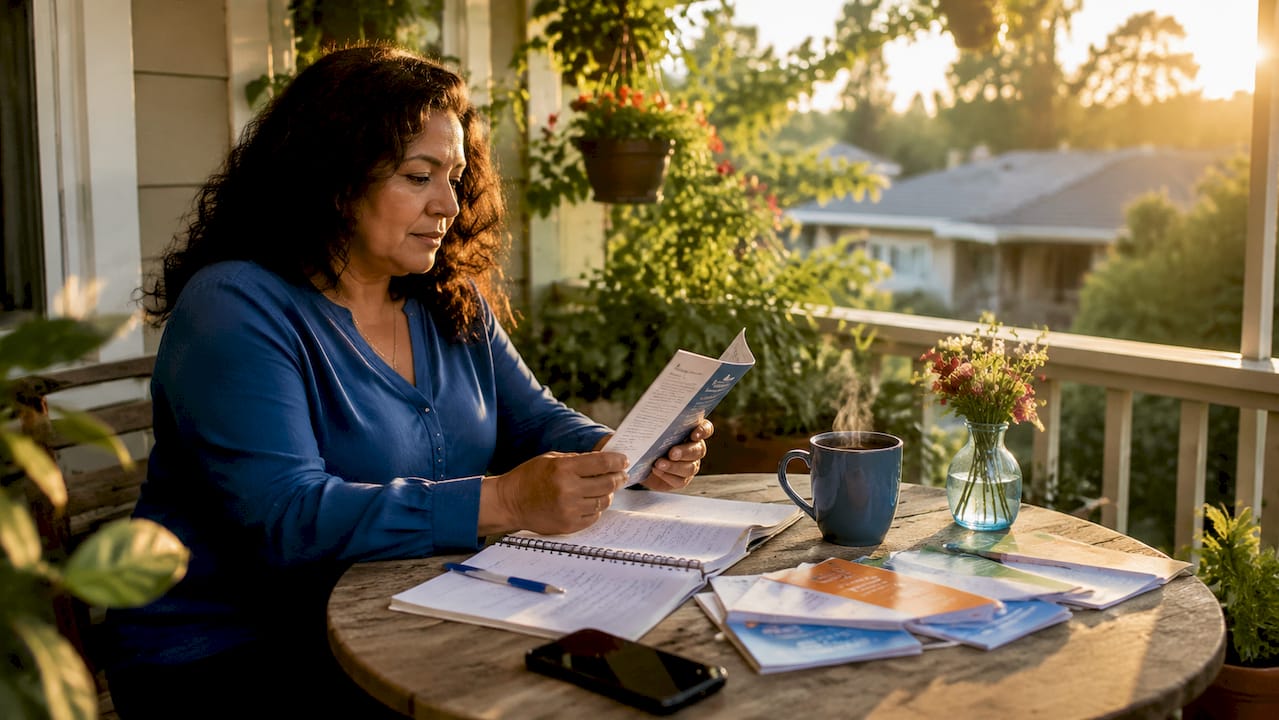
Addiction recovery support is defined as the network of services, relationships, and resources that help individuals sustain sobriety and rebuild their lives after initial treatment. Recovery itself is a process of change through which people improve their health, live self-directed lives, and reach their full potential. The scale of need is significant: over 7 in 10 adults who perceived having a substance use problem in 2023 considered themselves in recovery. That figure tells us recovery is achievable for most people who seek it. What makes the difference is the quality and consistency of support surrounding them. Peer specialists, addiction counseling services, community centers, and family programs all form part of this network. Understanding what these resources are and how to use them is the first step toward lasting change.
What is addiction recovery support and what types exist?
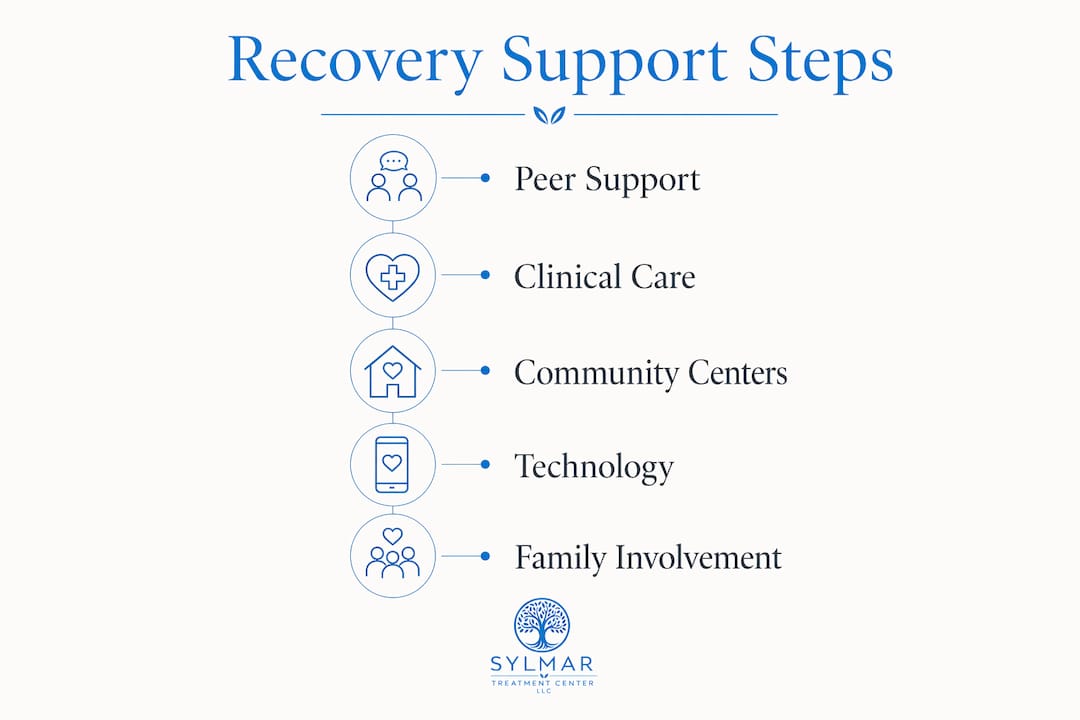
Addiction recovery support, known in clinical settings as recovery support services (RSS), covers every form of assistance that extends beyond formal detox or residential treatment. The Substance Abuse and Mental Health Services Administration (SAMHSA) groups these services into four broad domains: social, educational, vocational, and health-related support. Each domain addresses a different barrier that can push someone back toward substance use.
Peer support and mutual-help groups
Peer-delivered interventions reduce relapse rates and increase social support by connecting people in recovery with trained specialists who have lived experience. Peer specialists help with counseling access, sober housing, transportation, and medication support before, during, and after formal treatment. Mutual-help groups like 12-step programs (Alcoholics Anonymous, Narcotics Anonymous) and SMART Recovery offer structured, community-based accountability at no cost. These groups meet in person and online, making them accessible across most communities.

Clinical continuing care
Clinical continuing care includes scheduled follow-up appointments, recovery check-ups, and outpatient therapy after residential treatment ends. Proactive scheduling of follow-ups and local group attendance directly reduces relapse risk by preventing the “cliff” effect, the sudden loss of structure many people feel when formal treatment concludes. Continuing care can include individual therapy, medication-assisted treatment monitoring, and case management.
Recovery community centers and sober housing
Recovery community centers are physical spaces where people in recovery gather for peer support, job training, and social activities. Sober living homes provide structured, substance-free housing that bridges the gap between residential treatment and independent living. Both resources build the daily routines and accountability that early recovery requires.
Technology and telehealth
Virtual support options expand access to recovery resources, especially in rural or underserved areas where in-person meetings are scarce. Telehealth platforms connect people with licensed counselors and online mutual-help meetings from any location. This continuity of care is particularly valuable during transitions like moving, changing jobs, or managing health issues.
Pro Tip: If you are unsure where to start, try attending one online mutual-help meeting before committing to a format. Most platforms allow anonymous participation, which lowers the barrier to that first step.
How does recovery support help people maintain long-term sobriety?
Recovery support works by building what researchers call recovery capital, the internal and external resources a person draws on to sustain sobriety. Higher recovery capital correlates directly with lower relapse risk. Recovery capital includes social connections, stable housing, employment, and a sense of purpose. Support services actively build each of these assets.
The mechanism is practical, not abstract. Here is how support addresses the most common relapse triggers:
- Isolation. Peer support groups create regular human contact and reduce the shame that keeps many people from asking for help. Addiction alters brain function, shifting people toward chemical coping rather than human connection. Recovery support reverses that pattern by making connection the default.
- Loss of structure. After residential treatment ends, unstructured time is a significant relapse risk. Recovery community centers, outpatient programs, and scheduled check-ins fill that gap with purposeful activity.
- Practical barriers. Transportation to appointments, access to medication, and stable housing are not secondary concerns. Peer specialists address these barriers directly, removing the friction that can derail recovery before it gains momentum.
- Evolving needs. Support systems must adapt as recovery progresses. What a person needs at 30 days sober differs sharply from what they need at two years. Flexible, evolving supports prevent stagnation and address new challenges as they arise.
- Relapse response. Long-term recovery often follows a non-linear path. A strong support network does not treat relapse as failure. It treats it as information and adjusts the plan accordingly.
“Support systems act as a safety net, designed to evolve as recovery progresses to meet shifting individual needs.” — National Addiction Specialists
The role of support in recovery is not passive. It is an active, ongoing process that requires regular engagement from the person in recovery and the people around them.
How can families use addiction recovery support effectively?
Families are not bystanders in recovery. They are participants who need their own support structure. The distinction between individual recovery support and family recovery support is critical. A person in recovery needs help rebuilding their life. A family member needs help processing grief, setting boundaries, and avoiding patterns that unintentionally enable continued use.
Specialized groups exist precisely for this reason:
- Al-Anon serves family members and friends of people with alcohol use disorder, offering peer support and structured guidance on detachment with love.
- Nar-Anon provides the same framework for families affected by drug use.
- SMART Recovery Family and Friends offers a science-based alternative to 12-step family programs.
- Family therapy through licensed counselors addresses communication patterns and trauma within the family system.
Family group participation improves emotional health and recovery outcomes for both the person in recovery and their loved ones. That dual benefit makes family involvement one of the highest-return investments in the recovery process.
Healthy boundaries are not about punishment. They are about protecting the family’s wellbeing while refusing to absorb the consequences of another person’s choices. An integrated treatment plan that includes family members from the start produces better outcomes than one that treats the family as an afterthought.
Pro Tip: Family members should seek their own counselor or support group before trying to “fix” their loved one’s recovery. You cannot pour from an empty cup, and burnout is the most common reason family support collapses.
How to find addiction recovery support resources
Locating credible addiction recovery resources does not require navigating a complex system alone. Several well-established entry points exist.
- SAMHSA National Helpline: The SAMHSA helpline is free, confidential, and available 24 hours a day, 7 days a week. Call 1-800-662-HELP or text your zip code to HELP4U for local referrals and treatment resources.
- SAMHSA Treatment Locator: The online Behavioral Health Treatment Services Locator at findtreatment.gov searches by zip code for licensed treatment providers and support groups.
- Recovery community organizations: Local recovery community centers often maintain referral lists for sober housing, peer support, and outpatient services.
- Telehealth directories: Platforms that list licensed addiction counselors accepting telehealth appointments are searchable by insurance type and specialty.
- Hospital social workers: Inpatient and emergency department social workers can connect patients to local recovery support services before discharge.
| Resource | Access Method | Cost |
|---|---|---|
| SAMHSA National Helpline | Call or text, 24/7 | Free |
| SAMHSA Treatment Locator | findtreatment.gov | Free |
| Al-Anon / Nar-Anon | al-anon.org / nar-anon.org | Free |
| SMART Recovery | smartrecovery.org | Free |
| Telehealth counseling | Insurance or private pay | Varies |
When evaluating any resource, check for state licensure, accreditation from bodies like The Joint Commission, and clear privacy practices. A credible program will answer questions about its credentials without hesitation. Sylmartreatmentcenter, for example, holds both a DHCS license and Joint Commission accreditation, which are the two primary quality benchmarks for addiction treatment in California.
Key takeaways
Addiction recovery support is most effective when it combines peer connection, clinical follow-up, and family involvement across every phase of recovery.
| Point | Details |
|---|---|
| Recovery support is defined broadly | It includes peer services, clinical care, housing, and family programs, not just therapy. |
| Recovery capital predicts outcomes | Higher social support, stable housing, and employment directly lower relapse risk. |
| Families need separate support | Al-Anon, Nar-Anon, and family therapy address burnout and boundary-setting for loved ones. |
| The “cliff” effect is preventable | Scheduling follow-ups and group attendance before treatment ends reduces post-discharge relapse risk. |
| SAMHSA helpline is the fastest entry point | Call 1-800-662-HELP or text your zip code to HELP4U for free, confidential local referrals. |
What I’ve learned about recovery support after years in this field
The most common mistake I see families make is treating recovery support as a phase that ends. They assume that once their loved one completes a residential program, the hard work is done. The data and the clinical reality say the opposite. Support needs evolve continuously, and the period immediately after formal treatment is often the highest-risk window of the entire recovery process.
The second mistake is over-relying on a single resource. I have seen people build their entire recovery around one meeting, one sponsor, or one therapist. When that resource becomes unavailable, the whole structure collapses. Diverse networks are more resilient. A person who has a peer support group, a counselor, a sober living community, and a family system that understands boundaries is far better positioned than someone with one strong connection and nothing else.
What actually works, in my experience, is building the support network before it is urgently needed. The best time to find a peer support group is not the day after discharge. It is the week before. The best time for a family to find Al-Anon is not during a crisis. It is during a period of relative stability, when they can absorb the information without panic driving every decision.
Recovery is not a destination. It is a practice. The people who sustain it longest are the ones who treat their support network the same way they treat their physical health: with regular attention, honest assessment, and a willingness to adjust when something stops working.
— Jim
Recovery programs at Sylmartreatmentcenter
Sylmartreatmentcenter operates from a six-bed residential setting in Sylmar, California, which means every person who walks through the door receives individualized attention rather than a standardized program. The center’s treatment programs integrate clinical care with recovery support services, addressing both substance use and co-occurring mental health conditions through evidence-based practices.
Sylmartreatmentcenter holds both a DHCS license and Joint Commission accreditation, the two benchmarks families should look for when evaluating any treatment provider. The center offers dual diagnosis support, behavioral rehabilitation, and residential treatment, all built around a custom care plan developed through a thorough intake assessment. Admissions support is available 24 hours a day, 7 days a week for families who need guidance on next steps.
FAQ
What is addiction recovery support?
Addiction recovery support, clinically called recovery support services (RSS), is the network of peer, clinical, social, and community resources that help individuals sustain sobriety and rebuild their lives after initial treatment.
How do support groups for addiction actually help?
Support groups reduce isolation, provide accountability, and connect people with others who understand the recovery process firsthand. Peer-delivered interventions specifically reduce relapse rates and increase social support.
What is the fastest way to find recovery support?
Call the SAMHSA National Helpline at 1-800-662-HELP or text your zip code to HELP4U. The service is free, confidential, and available 24/7 with referrals to local treatment and support resources.
Do families need their own recovery support?
Yes. Family members benefit from dedicated groups like Al-Anon and Nar-Anon, which address emotional burnout and boundary-setting separately from the person in recovery. Family group participation improves outcomes for both the individual and the family.
When should recovery support begin?
Recovery support should begin before formal treatment ends, not after. Early establishment of support prevents the post-discharge “cliff” effect and significantly reduces the risk of relapse during the transition period.
Recommended
- What Does Detox Involve for Families: A Guide | Sylmar Treatment Center
- Choosing Residential Addiction Treatment: A Family Guide | Sylmar Treatment Center
- Why Long-Term Recovery Requires Community Support | Sylmar Treatment Center
- Personalized Recovery Program Components That Work | Sylmar Treatment Center