

A small residential rehab setting is defined as a licensed treatment facility with a limited patient census, typically fewer than 10 beds, designed to deliver individualized addiction recovery care in a structured, intimate environment. The benefits of small residential rehab setting programs are well supported by clinical research: treatment duration is the strongest predictor of positive outcomes, and smaller programs are uniquely positioned to keep patients engaged longer through consistent relationships and responsive care. The American Society of Addiction Medicine (ASAM) criteria frame residential placement as a clinical decision requiring continuous reassessment, not a one-size-fits-all choice. Families and individuals who understand what separates an intimate program from a large facility make better decisions and see better results.
What are the benefits of a small residential rehab setting?
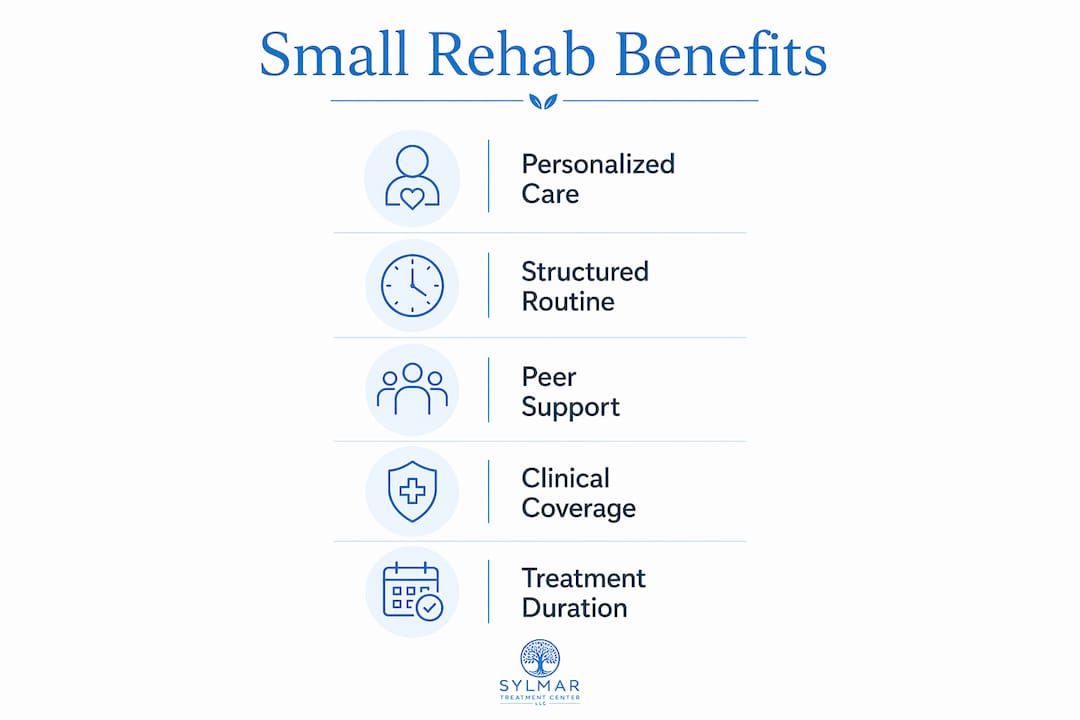
Personalized care is the defining advantage of a small residential rehab setting. When a facility carries fewer patients, clinical staff can build consistent, responsive relationships that larger programs structurally cannot replicate. A realist evaluation found that relational resources such as trust, respect, and motivation are more effective in small programs, particularly when environmental disruptions are minimized. That finding matters because recovery is not a clinical transaction. It depends on a patient feeling known, heard, and supported by the same people day after day.

Treatment continuity is the second major advantage. ASAM’s approach involves reassessing patient needs over at least 12 months to optimize levels of care and continuity of recovery. Small programs can act on those reassessments faster because the care team is smaller, communication is direct, and care plans are updated in real time. A patient whose needs shift from detox to residential stabilization does not fall through the cracks when the same counselor manages both phases.
Key advantages of small rehab facilities include:
- Consistent clinical relationships that reduce the anxiety of starting over with new providers
- Faster care plan updates because fewer staff layers separate the clinician from the decision
- Higher staff-to-patient ratios that allow more frequent check-ins and early identification of relapse risk
- Reduced anonymity, which increases accountability and peer engagement
Pro Tip: When touring a small facility, ask specifically how care plans are updated when a primary clinician is absent. A program without a written coverage protocol loses its continuity advantage the moment a key staff member takes time off.
What role does structure play in small residential rehab success?
A structured daily routine is not a comfort feature. It is a clinical tool. Research on therapeutic community (TC) models shows that structured environments with 24/7 staff availability produce the best outcomes for residents with moderate-to-severe cognitive vulnerabilities. That population is common in residential addiction treatment, where substance use has often affected memory, impulse control, and emotional regulation.
The mechanism is straightforward. Predictable schedules reduce cognitive load. When a patient does not have to decide what comes next, mental energy goes toward therapy rather than navigation. Small settings make this structure easier to maintain because staff know each patient’s baseline and can spot deviations quickly.
Structure in a small residential program typically includes:
- Morning clinical check-ins with the same counselor each day
- Scheduled group therapy sessions with a consistent peer group
- Structured meal and rest times that reinforce circadian rhythm and physical health
- Evening reflection or journaling to consolidate daily therapeutic work
- Weekly individualized treatment plan reviews with the full care team
Not every patient benefits equally from high structure. Studies show that cognitively intact residents may find rigid therapeutic community rules frustrating, which can increase dropout risk. A well-run small program accounts for this by tailoring the intensity of structure to each patient’s cognitive profile and treatment goals. Multidisciplinary planning and adaptive goal setting are critical for residents with complex psychiatric or cognitive presentations.
The practical takeaway for families: ask whether the program adjusts its structure based on individual assessment, or applies a single protocol to every patient regardless of need.
What are the social and peer support advantages of small rehab centers?
Peer support is one of the most underrated mechanisms in addiction recovery. Small group sizes reduce the social intimidation that prevents many patients from engaging honestly in group therapy. Smaller groups are more comfortable for patients, which decreases isolation and improves engagement with the therapeutic process. That comfort is not trivial. A patient who stays quiet in a 30-person group may open up in a group of six, and that disclosure is often where real therapeutic work begins.
The relational quality of small programs extends beyond group therapy. When patients and staff interact daily in a limited space, trust builds faster. That trust becomes a recovery resource in itself.
“The small setting benefit stems primarily from enabling consistent, responsive relationships rather than physical size alone.” — realist evaluation of residential rehabilitation
Peer support in small settings also creates natural accountability. Patients notice when a peer misses a session or seems withdrawn. That social awareness mirrors the community-level accountability that long-term recovery research identifies as a protective factor against relapse. The intimacy of a small program makes that accountability organic rather than enforced.
Outcomes do vary. Patients with severe social anxiety or histories of interpersonal trauma may need additional support before they can fully benefit from peer-based models. Socioeconomic stressors outside the facility also affect engagement. A strong small program addresses both by integrating individual therapy alongside group work and connecting patients to community resources before discharge.
How to evaluate if a small residential rehab setting is right for you
Choosing a small residential program requires more than checking bed count. The quality of clinical operations determines whether the intimacy advantage translates into better outcomes. Families should evaluate programs against a specific set of criteria before committing.
| Evaluation criterion | What to ask |
|---|---|
| Clinical coverage plan | Who covers your loved one’s care when the primary clinician is unavailable? |
| Treatment length capability | Can the program support stays beyond 30 days if clinically indicated? |
| Staff availability | Is clinical staff present 24/7, or only during business hours? |
| Individualized treatment plans | Are care plans written to the patient’s specific diagnosis and goals? |
| Multidisciplinary team | Does the team include medical, psychiatric, and counseling professionals? |
Continuity of care in small settings depends directly on clinical coverage plans and real-time care record updates. A program that cannot answer the coverage question clearly has a structural gap that undermines its intimacy advantage. Families should treat a vague answer as a red flag.
Treatment length is equally important. A 2026 Prevention Science study confirmed that number of days in treatment is the most important predictor of reduced substance use and abstinence. A small program that discharges patients at 28 days regardless of clinical need is not using its structural advantages well. Ask directly whether the program extends stays based on ASAM reassessment rather than insurance timelines.
Pro Tip: Request a copy of the facility’s accreditation status before your first visit. Joint Commission accreditation and a DHCS license are baseline indicators that the program meets verified clinical standards, not just marketing claims.
When reviewing individualized care plans, look for specificity. A plan that lists “group therapy three times per week” without connecting those sessions to the patient’s diagnosis and goals is a template, not a treatment plan. The best small programs write plans that would not apply to any other patient in the facility.
Key Takeaways
Small residential rehab settings deliver their strongest benefits through consistent relationships, structured routines, and treatment continuity, not through size alone.
| Point | Details |
|---|---|
| Treatment duration drives outcomes | Days in treatment predict abstinence more than any other single factor; choose programs that extend stays based on clinical need. |
| Relationships are the core mechanism | Relational trust and consistent staff contact are what make small settings clinically effective. |
| Structure must match the patient | Highly structured environments help cognitively vulnerable patients but may frustrate others; individualized goal setting is required. |
| Peer support reduces isolation | Smaller group therapy sizes increase comfort and honest engagement, which accelerates therapeutic progress. |
| Evaluate operations, not just size | Ask about clinical coverage plans, accreditation, and care plan specificity before selecting any small program. |
What I’ve learned about small rehab settings that most families miss
Families often walk into a facility tour focused on the wrong things. They notice the decor, the amenities, and the staff’s warmth. Those details matter, but they are not what predicts whether a patient leaves with a durable recovery.
What actually matters is whether the program has built the clinical infrastructure to sustain its intimacy advantage under pressure. A small facility with no coverage plan for clinician absences loses its relational continuity the moment a key staff member calls in sick. I have seen patients in otherwise excellent small programs experience significant setbacks simply because their primary counselor left and no one had a documented handoff protocol.
The research is clear that the benefit of a small setting comes from consistent, responsive relationships. That consistency requires deliberate operational design, not just good intentions. When I advise families, I tell them to treat the coverage question as the single most revealing question they can ask. A program that answers it confidently, with specifics, has thought carefully about what makes it work. A program that deflects has not.
The other thing families miss is the importance of treatment length. A 28-day program in a beautiful six-bed facility is still a 28-day program. The personalized care advantage of a small setting compounds over time. The longer a patient stays in a well-run intimate program, the more the relational and structural benefits accumulate. Push for programs that make length-of-stay decisions based on clinical reassessment, not calendar dates.
— Jim
Personalized residential care at Sylmartreatmentcenter
Sylmartreatmentcenter operates from a six-bed facility, which means every patient receives the kind of individualized attention that larger programs cannot offer. The center holds both a DHCS license and Joint Commission accreditation, meeting verified clinical standards across its full range of programs.
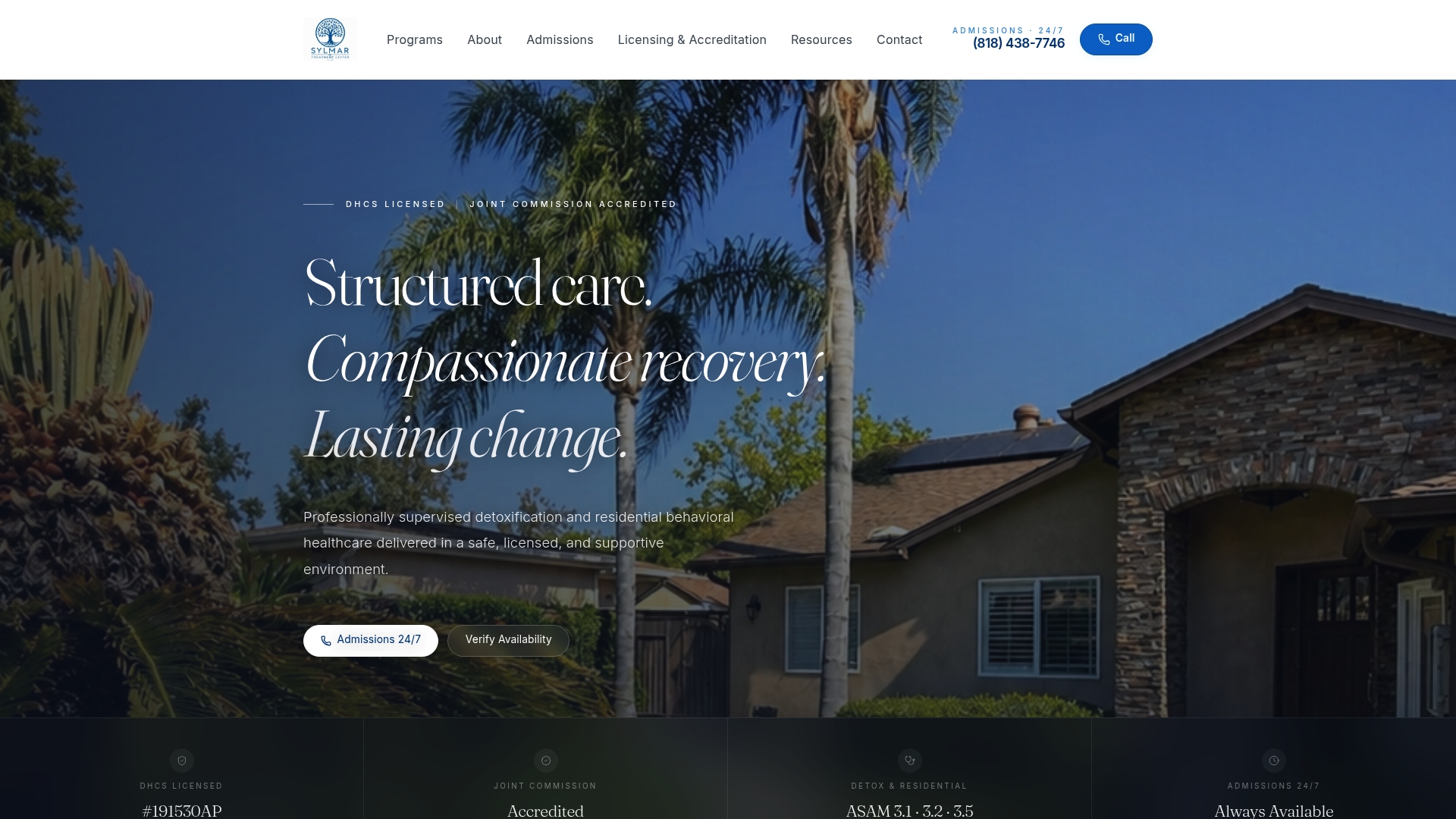
Sylmartreatmentcenter’s programs include medical detox, dual diagnosis support, and long-term residential treatment, all delivered within the same intimate setting. Care plans are built around each patient’s specific diagnosis, history, and goals. Admissions support is available 24/7. Families and individuals ready to learn more can review the full range of treatment programs and connect with the admissions team directly.
FAQ
What makes a small residential rehab setting more effective?
Small residential rehab settings produce better engagement because they enable consistent staff-patient relationships and faster care plan adjustments. Research confirms that relational trust and motivation are stronger recovery mechanisms in small programs than in larger, less personal environments.
How long should someone stay in a small residential rehab program?
Treatment duration is the strongest predictor of positive outcomes. A 2026 Prevention Science study found that days in treatment matter more than any other single variable, so length of stay should be determined by clinical reassessment rather than a fixed calendar.
Are small rehab facilities better for people with mental health conditions?
Small facilities that offer dual diagnosis treatment are well suited for patients with co-occurring mental health conditions because the higher staff-to-patient ratio allows for closer psychiatric monitoring and faster response to symptom changes.
What questions should families ask when choosing a small rehab center?
Families should ask about clinical coverage plans for clinician absences, the facility’s accreditation status, and whether care plans are individualized or templated. Continuity of care depends on having clear answers to all three questions.
Is a six-bed rehab facility too small to offer full clinical services?
A six-bed facility can deliver a full clinical program, including medical detox, group therapy, individual counseling, and psychiatric support, when it is properly staffed and accredited. Sylmartreatmentcenter’s six-bed model is designed specifically to provide that full range of services within an intimate, structured environment.