

The only reliable long-term treatment for cannabis hyperemesis syndrome is complete cessation of cannabis. Acute symptoms respond to emergency stabilization with IV fluids, benzodiazepines, haloperidol, or topical capsaicin, but those measures only manage an episode. If you’re dehydrated, vomiting blood, fainting, or can’t keep down liquids, get to an emergency room now. Otherwise, talk to a provider about starting a cessation plan.
TL;DR:
- Complete cessation of cannabis is the only proven long-term solution for resolving CHS; medications only manage episodes temporarily.
- Emergency stabilization relies on IV fluids, benzodiazepines, haloperidol, or capsaicin, as standard antiemetics like ondansetron often fail in CHS cases.
- Hot showers and topical capsaicin can reduce nausea symptoms temporarily, but hot water use should be limited to prevent burns or dehydration.
- Recurrent CHS episodes typically recur if cannabis use resumes, so behavioral therapies and supervised withdrawal are critical for sustained recovery.
- Serious complications like dehydration, electrolyte imbalance, kidney injury, or esophageal tears require urgent ER attention and individualized treatment plans.
Table of Contents
- What Is CHS and How Do Doctors Diagnose It?
- How Do ERs Stabilize a Severe CHS Episode?
- Do Hot Showers and Capsaicin Cream Actually Help?
- What Actually Stops Cannabis Hyperemesis for Good?
- When Should CHS Symptoms Send You to the ER?
- A Clinician’s View on Treating CHS Through Residential Care
- How Sylmar Treatment Center Supports Sustained Recovery From CHS
- Where to Read More on CHS Diagnosis and Treatment
- Sources
What Is CHS and How Do Doctors Diagnose It?
Cannabis hyperemesis syndrome (CHS) is a cyclical vomiting disorder that shows up almost exclusively in people who use cannabis daily or near daily, often for months or years before symptoms start. The pattern is distinctive enough that clinicians use it as a diagnostic anchor: recurring bouts of severe nausea and vomiting, a history of heavy cannabis use, and a hallmark clue that trips up a lot of patients, symptoms improve or vanish once cannabis use stops.
Clinicians borrow diagnostic logic from the Rome IV criteria used for other cyclic vomiting disorders, then layer in cannabis-specific features. A typical presentation involves prolonged, heavy use, sometimes daily consumption for a year or more, followed by episodic waves of intense nausea and vomiting that can last hours or days. Between episodes, many patients feel essentially normal, which is part of why CHS often gets misdiagnosed for years as cyclic vomiting syndrome, gastroparesis, or even a psychiatric condition.
Ruling out other causes matters because the treatment path is so different. A workup for suspected CHS typically includes:
- A detailed history focused on frequency, duration, and quantity of cannabis use
- Pregnancy testing in anyone who could be pregnant, since hyperemesis gravidarum can mimic CHS
- Basic labs to check electrolytes, kidney function, and signs of dehydration
- Imaging (usually abdominal ultrasound or CT) when gallbladder disease, bowel obstruction, or other structural issues are suspected
- A trial period of abstinence, when feasible, since symptom resolution after stopping cannabis is one of the more telling diagnostic clues
That last point sounds obvious, but it’s genuinely useful. If someone insists they can’t have gastrointestinal symptoms because they use cannabis to control nausea, and the vomiting cycles keep happening anyway, that contradiction itself is diagnostically meaningful.
How Do ERs Stabilize a Severe CHS Episode?
The first hour in the emergency department is about correcting the physical damage of relentless vomiting before anyone worries about the underlying cause. IV fluids and electrolyte repletion come first, since repeated vomiting drains sodium, potassium, and chloride fast enough to cause dangerous arrhythmias or kidney strain. Continuous monitoring lets staff catch a patient tipping into acute kidney injury before it becomes a bigger problem.
Standard antiemetics like ondansetron often fall flat in CHS. That’s one of the strange signatures of this condition: a drug that reliably calms nausea from chemotherapy or a stomach bug frequently does nothing here. When first-line antiemetics fail, emergency physicians typically escalate to:
- Benzodiazepines, usually IV lorazepam dosed around 1 to 2 milligrams every 4 to 6 hours, which can interrupt the cycle even though the mechanism isn’t fully understood.
- Dopamine antagonists, specifically haloperidol or droperidol, which target dopamine pathways implicated in CHS nausea and have shown some benefit compared to ondansetron in limited trials.
- Topical capsaicin, applied to the abdomen as a low-cost adjunct that some ED protocols now use alongside medication.
CHS by the numbers: Case series and clinical trials have found that haloperidol and droperidol reduced emergency department length of stay and nausea scores compared to ondansetron alone in patients with confirmed CHS.
Most patients stabilize within hours and get discharged with instructions to stop cannabis use. Admission becomes necessary when electrolyte disturbances are severe, vomiting won’t stop despite aggressive treatment, or there’s concern about kidney injury that needs closer monitoring than an ED visit allows.
Do Hot Showers and Capsaicin Cream Actually Help?
Yes, and the reason is more interesting than “hot water feels nice.” Researchers believe hot water activates TRPV1 receptors, the same heat and pain sensors that capsaicin (the compound in chili peppers) targets, which may redirect blood flow and interrupt the nausea signal. It’s a real physiological effect, not a placebo story, but it’s also purely symptomatic. It buys comfort, not a cure.
The catch with hot showers is that people can develop compulsive bathing habits, spending hours under scalding water multiple times a day, which raises real risks of burns, dehydration, and falls in the bathroom. If you’re using hot water for relief, keep sessions reasonably short and stay hydrated before and after.

Topical capsaicin has more direct clinical support. Studies on abdominal application, generally in concentrations between 0.025% and 0.15%, have shown meaningful short-term reductions in nausea and faster ED discharge in case series and at least one small randomized trial. Patients typically apply the cream to the epigastric area or broader abdomen, and relief can show up within 30 to 60 minutes.
Other adjuncts occasionally show up in the literature, including propranolol, scopolamine, and aprepitant, but the evidence behind them is limited to case reports and small series rather than controlled trials.
- Wash your hands immediately after applying capsaicin cream to avoid transferring it to your eyes.
- Expect mild burning or redness at the application site; that’s normal and usually temporary.
- Hot showers should be short, warm rather than scalding, and never a substitute for calling a provider if symptoms persist.
- If home measures aren’t controlling symptoms within a few hours, or you’re unable to keep fluids down, stop trying to manage it yourself and seek care.
Pro Tip: Keep a small tube of capsaicin cream and a log of your symptom timing on hand if you have recurrent CHS episodes. Showing an ER team exactly when symptoms started and what you’ve already tried speeds up the right treatment decision.
What Actually Stops Cannabis Hyperemesis for Good?
Every acute treatment in the previous sections manages a single episode. None of them address why the episodes keep happening. Stopping cannabis use is the only intervention that resolves CHS at the root, and it typically works, symptoms usually fade over days to weeks once cannabinoids clear the system, though relapse is common if cannabis use resumes.
That relapse pattern is the whole problem. A lot of patients feel dramatically better within a week of quitting, decide they were probably wrong about the cannabis connection, start using again, and end up back in the ER within a month. Clinical reviewers note that medication alone rarely prevents this cycle. Lasting recovery requires treating cannabis use disorder itself, not just the vomiting it causes.
The behavioral treatments with the best track record for cannabis use disorder include:
- Cognitive behavioral therapy (CBT), which helps patients identify triggers and build coping strategies that don’t involve cannabis
- Motivational enhancement therapy, useful for patients who feel ambivalent about quitting
- Group therapy, where hearing from others navigating the same withdrawal and relapse challenges tends to reduce isolation and improve follow-through
- Family involvement, since household use patterns and enabling behaviors can quietly undercut an otherwise solid recovery plan
For patients with heavy, long-standing dependence, or those who’ve already tried outpatient cessation and relapsed, medically supervised withdrawal or residential treatment becomes worth considering. These settings provide structured support during the physical and psychological discomfort of quitting, something Sylmar Treatment Center’s approach to medically supervised detox is built around. Adjunct medications like low-dose TCAs, SSRIs, or mirtazapine sometimes help with sleep, mood, or lingering GI discomfort during this period, though the evidence for these is limited to smaller studies, and they work best as part of a broader, multidisciplinary plan rather than a standalone fix.
When Should CHS Symptoms Send You to the ER?
Repeated, forceful vomiting isn’t just miserable, it can cause real physical damage. Watch for these complications and act fast if they show up:
- Severe dehydration, marked by dizziness, dark urine, or an inability to keep any liquid down for more than a few hours.
- Electrolyte disturbance, which can trigger muscle cramps, weakness, or irregular heartbeat.
- Acute kidney injury, a downstream risk of prolonged dehydration that requires lab testing to catch.
- Mallory-Weiss tear, a tear in the esophagus from violent retching, often signaled by blood in vomit.
- Pneumomediastinum, a rare but serious complication where forceful vomiting pushes air into the chest cavity, documented in clinical case reviews of severe CHS episodes.
If you see blood in your vomit, feel severe chest or neck pain, faint, or simply cannot keep liquids down, go to the ER. When you arrive, tell staff exactly how long and how often you’ve used cannabis, whether you’ve had CHS episodes before, and what medications you’re currently taking. That information shapes which treatment they reach for first.
A Clinician’s View on Treating CHS Through Residential Care
Integrated programs work because they treat the vomiting and the dependence in the same room, not in sequence. Medical stabilization, a real addiction assessment, and dual-diagnosis screening all happen together, which is why 24/7 psychiatric oversight and a structured setting help patients who’ve cycled through the ER without lasting relief.
— Jim
How Sylmar Treatment Center Supports Sustained Recovery From CHS
If you’ve been through multiple CHS episodes, feel physically dependent on cannabis, or you’re managing a co-occurring mental health condition alongside the vomiting cycles, outpatient willpower alone often isn’t enough. That’s the exact gap Sylmar Treatment Center was built to close.

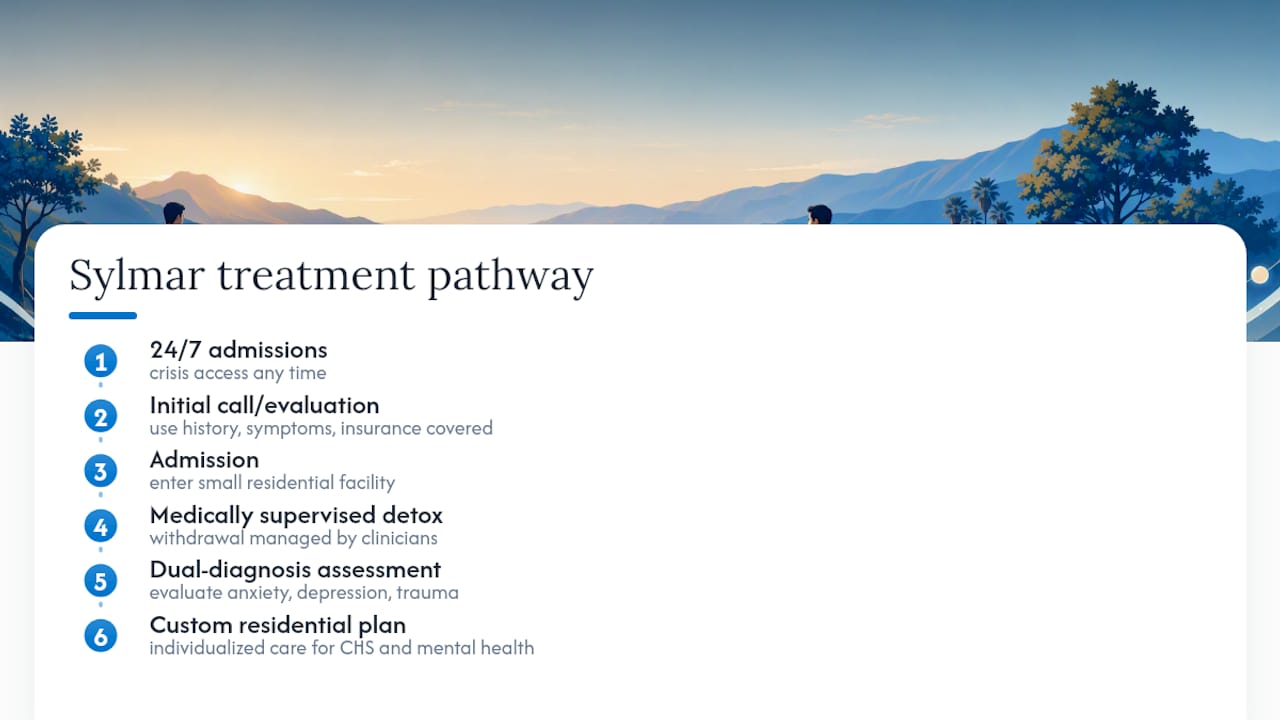
Sylmar runs a small residential facility, small enough that every client gets a genuinely individualized care plan instead of a one-size-fits-all protocol. Admissions support is available 24/7, so you’re not left waiting through a crisis. Once admitted, clients go through medically supervised detox, comprehensive assessment for dual-diagnosis needs, and a custom residential treatment plan that addresses both the cannabis dependence and any underlying anxiety, depression, or trauma driving the use pattern. The center holds a DHCS license and Joint Commission accreditation, indicating adherence to recognized clinical standards.
If recurrent CHS has brought you back to the ER more than once, explore Sylmar’s treatment programs or reach out through admissions to talk through what a first evaluation looks like. That initial call typically covers your use history, current symptoms, and insurance or payment options before anything else.
Where to Read More on CHS Diagnosis and Treatment
For deeper clinical detail, the StatPearls overview of cannabinoid hyperemesis syndrome covers pathophysiology and diagnostic criteria in depth. The systematic review on CHS management options summarizes current evidence quality across treatments, and the emergency department treatment review focuses specifically on acute-care protocols and medication dosing.
This article is general information, not a substitute for advice from a qualified doctor. Consult a qualified healthcare professional about your own circumstances before acting on anything here.