

A structured detox schedule is a medically supervised, time-sequenced plan that manages acute withdrawal safely through scheduled assessment, monitoring, medication administration, hydration and nutrition support, and clear escalation criteria. It is not a juice cleanse or a commercial “reset.” It is a clinical document, built around a patient’s specific substance history, medical risk factors, and level-of-care placement, that tells every member of the care team exactly what to do and when.
The typical arc looks like this:
- Hours 0–24: Triage, full medical and psychiatric intake, baseline labs and vitals, medication initiation, and stabilization
- Hours 24–72+: Acute withdrawal management with scheduled symptom-scale checks (CIWA-Ar for alcohol, COWS for opioids), medication windows, and nursing monitoring at set intervals
- Days 3–7 and beyond: Early recovery support, discharge planning, referral to ongoing treatment, and transition to outpatient or residential care
ASAM’s placement framework defines distinct levels of detox care, from ambulatory without extended monitoring all the way to medically managed intensive inpatient detoxification. SAMHSA’s Treatment Improvement Protocol 45 (TIP 45) remains the foundational federal guidance for clinicians designing these schedules. Sylmartreatmentcenter is one example of a licensed, Joint Commission-accredited residential facility that organizes care around exactly this kind of structured, individualized plan.
Most acute medically supervised detox programs run a period that varies depending on the substance, severity, and any co-occurring medical conditions. The schedule does not end at discharge. Transition planning, follow-up appointments, and linkage to ongoing treatment are built into the schedule from day one.
Table of Contents
- What are the clinical goals of a structured detox schedule?
- What are the phases and timelines of medically supervised detox?
- What clinical elements are scheduled into a detox program?
- How does the setting change the intensity of a detox schedule?
- What does a day-by-day detox schedule actually look like?
- Why is unsupervised detox dangerous?
- How does a detox schedule include discharge and aftercare planning?
- How does Sylmartreatmentcenter organize a structured detox schedule?
- Key Takeaways
- Why scheduling is the most underrated part of detox
- Sylmartreatmentcenter offers medically supervised detox in a six-bed residential setting
- Useful sources and further reading
What are the clinical goals of a structured detox schedule?
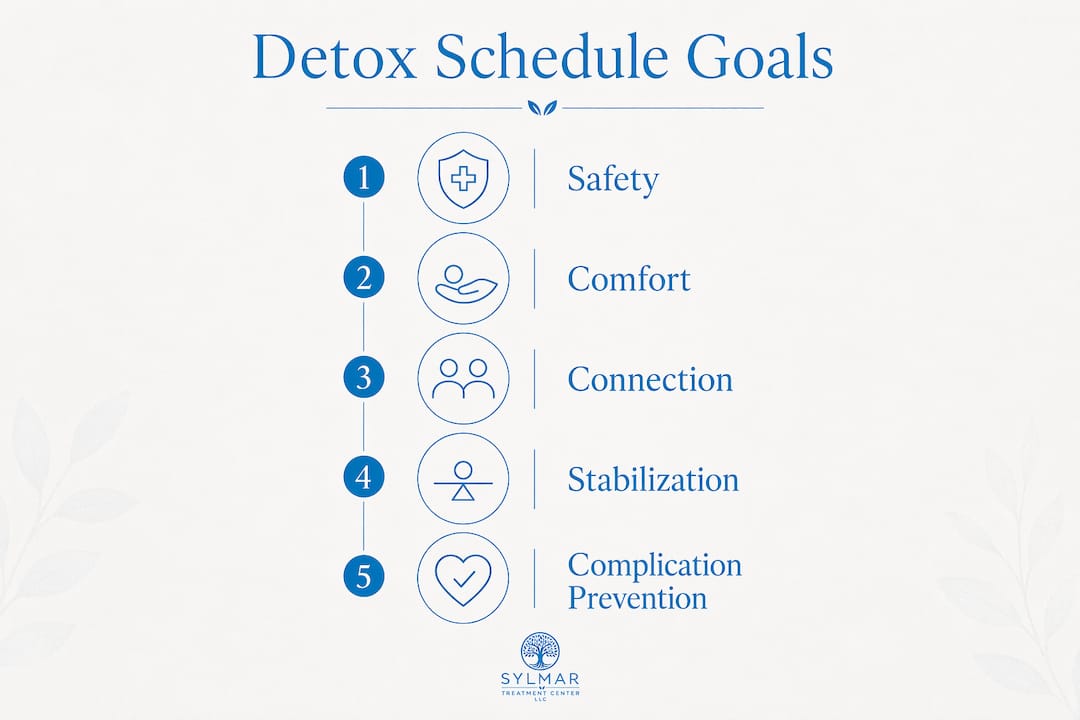
Safety comes first, then comfort, then connection to ongoing care. Those three priorities, in that order, shape every element of a structured detox program.
The primary clinical goals are to stabilize physiology, prevent life-threatening complications like seizures and delirium tremens, manage withdrawal symptoms to a tolerable level, and create a clear pathway into treatment. A schedule achieves this by removing guesswork: medication windows are set in advance, vital-sign checks happen at defined intervals, and escalation criteria are written into the protocol so staff do not have to improvise when a patient deteriorates.
Several organizing principles determine what goes into a schedule and when. Risk stratification comes first. A patient with a history of alcohol withdrawal seizures gets a very different monitoring cadence than someone tapering off nicotine. Substance-specific timing matters too. Alcohol withdrawal peaks differently than opioid withdrawal, and benzodiazepine withdrawal can drag on for weeks. Clinicians also balance hepatic support carefully. A physician-guided approach emphasizes not accelerating Phase I liver metabolism without first confirming adequate Phase II conjugation capacity, because aggressive Phase I stimulation without the right nutrient cofactors can transiently worsen how a patient feels.
Predictable scheduling also benefits patients psychologically. Knowing that a nurse will check in at 8 AM, that lunch is at noon, and that the physician rounds at 3 PM reduces anxiety and builds trust in the process.
Commercial “detox cleanses” are a completely different category. Consumer-facing medical institutions, including UT MD Anderson Cancer Center, note that juice cleanses and commercial detox products lack evidence and can leave people underfed or physiologically unstable. They are not substitutes for clinical care.
Pro Tip: Before your intake appointment, write down every medication, supplement, and over-the-counter product you currently take, including the dose and timing. Medication reconciliation at intake is one of the most important safety steps in the schedule, and an incomplete list can delay or complicate your first medication window.
What are the phases and timelines of medically supervised detox?
Detox does not follow a single universal clock. The timeline depends on the substance, how long and heavily it was used, and the patient’s overall medical picture. That said, three broad phases apply across most clinical scenarios.
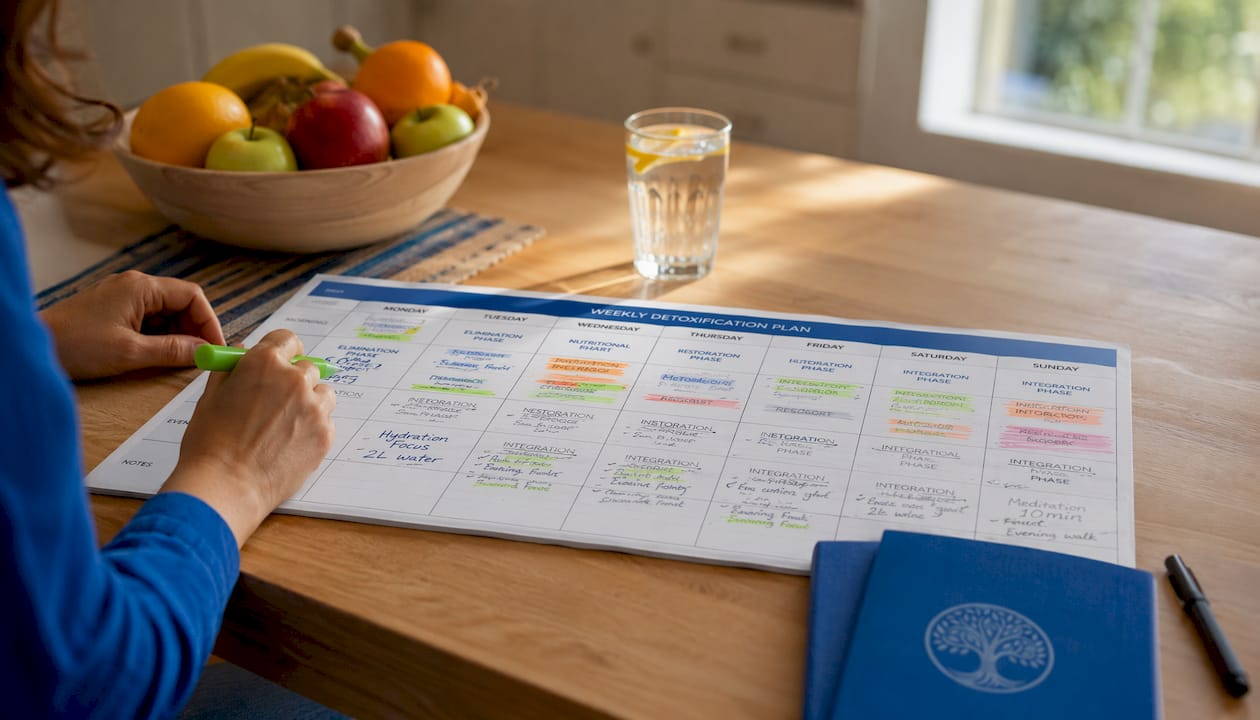
Phase 1: Intake and stabilization (hours 0–24). This is the highest-intensity window. Clinicians complete a full medical and psychiatric history, draw baseline labs, establish IV or oral hydration, and initiate medications if indicated. The goal is to prevent the patient from entering a dangerous withdrawal state before the care team has a full clinical picture.
Phase 2: Acute withdrawal management (hours 24–72+). This is when withdrawal symptoms peak for most substances. Symptom-scale scores drive medication decisions during this window. Nursing checks are most frequent here.
Phase 3: Early recovery and transition (days 3–7 and beyond). Acute symptoms begin to resolve, but protracted withdrawal and post-acute withdrawal syndrome (PAWS) can persist for weeks or months. Discharge planning, referrals, and behavioral health engagement start during this phase.
Substance-specific timing
| Substance | Peak Withdrawal Window | Typical Acute Detox Duration | Key Risk |
|---|---|---|---|
| Alcohol | 48–96 hours | 5–7 days | Seizures, delirium tremens |
| Opioids | 24–72 hours | 5–7 days | Dehydration, severe discomfort |
| Benzodiazepines | Days to weeks (varies) | 1–4+ weeks (tapering) | Prolonged seizure risk |
| Stimulants | 1–3 days (crash), then weeks | 7 days acute | Mood dysregulation, suicidal ideation |
| Nicotine | 24–72 hours peak craving | 1–2 weeks acute | Strong behavioral craving cycle |
Factors that extend timelines include long-term or heavy use, poly-substance use, co-occurring psychiatric conditions, older age, and liver or renal impairment. A patient detoxing from both alcohol and benzodiazepines simultaneously faces a compounded risk profile that requires a longer, more intensive schedule than either substance alone.
For nicotine specifically, the acute physical phase is relatively short, but the behavioral craving cycle persists well beyond it. Structured nicotine habit management approaches that address both the physical and behavioral components tend to produce better outcomes than addressing either in isolation.
Warning: Benzodiazepine and alcohol withdrawal are the two substance categories where unsupervised detox carries the highest risk of death. Seizures can occur without warning, and delirium tremens can develop rapidly between 48 and 96 hours after the last drink. These are medical emergencies, not discomforts to push through at home.
What clinical elements are scheduled into a detox program?
A well-built detox schedule is essentially a clinical calendar. Every activity, from the first blood draw to the last nursing check before discharge, has an assigned time and a responsible clinician.
Intake elements (day 0)
The first hours include triage, a full medical and psychiatric history, medication reconciliation, baseline vital signs, and baseline labs. Standard labs typically include a complete blood count (CBC), comprehensive metabolic panel (CMP), urine toxicology screen, and a pregnancy test when clinically indicated. These results shape the entire schedule that follows.
Monitoring cadence
Monitoring frequency is determined by level of care and clinical severity. In a medically managed inpatient setting, vital signs and symptom-scale scores may be checked every 15–60 minutes during the acute window. In a lower-acuity ambulatory program, checks may occur once per shift or once daily. The CIWA-Ar scale guides alcohol withdrawal management; the COWS scale guides opioid withdrawal. Both produce numeric scores that trigger specific medication responses.
| Setting | Vitals Frequency | Symptom Scale Frequency |
|---|---|---|
| Medically managed inpatient | Every 15–60 minutes (acute phase) | Every 1–4 hours |
| Ambulatory with extended monitoring | Every 1–4 hours | Every 4–8 hours |
| Ambulatory without extended monitoring | Once per visit | Once per visit |
Medication classes
Physicians schedule medications based on the substance and the patient’s clinical picture. Common classes include:
- Benzodiazepines for alcohol withdrawal seizure prevention and symptom management
- Buprenorphine/naloxone or methadone for opioid withdrawal under appropriate medical supervision
- Clonidine as a non-opioid adjunct for autonomic symptoms
- Antiemetics for nausea and vomiting
- Short-term sleep and anxiety support as clinically indicated under physician protocols
One scheduling detail that matters more than most patients realize: if binders or certain supplements are part of the plan, they must be spaced at least one hour away from prescribed medications. Binders can neutralize medications if given too close together, which is why the one-hour spacing rule is a standard scheduling constraint in clinician-designed protocols.
Supportive care blocks
Clinician-designed detox plans consistently emphasize adequate protein, hydration, minerals, and bowel regularity as non-negotiable schedule components. Dehydration and electrolyte imbalances are among the most common causes of intolerable detox experiences, often more impactful than the specific medication protocol. Scheduled hydration checks, electrolyte replacement, and regular meals are not optional extras. They are clinical interventions. Bowel care, including fiber and movement planning, is also scheduled because constipation during detox compounds discomfort and can mask other symptoms.
Behavioral check-ins, psychiatry consult windows, and social work sessions round out the daily schedule. These are not afterthoughts. They are the bridge between acute stabilization and the ongoing treatment that determines long-term outcomes.
How does the setting change the intensity of a detox schedule?
Where detox happens determines how intensive the schedule can be. ASAM’s placement framework differentiates levels from ambulatory without extended monitoring to medically managed intensive inpatient detoxification, and the scheduling features at each level are meaningfully different.
| Setting | Monitoring Intensity | Medication Administration | Transfer Protocol |
|---|---|---|---|
| Ambulatory without extended monitoring | Scheduled visits only | Self-administered with supervision | Escalate to higher care if symptoms worsen |
| Ambulatory with extended monitoring | Onsite monitoring during program hours | Nurse-administered during sessions | On-site nursing escalation, ER transfer if needed |
| Medically managed inpatient | 24/7 nursing, q15–q60 min checks | Nurse-administered around the clock | STAT protocol, on-site physician, ER transfer criteria |
Inpatient care is the appropriate level when any of the following apply:
- Unstable vital signs at intake
- History of withdrawal seizures or delirium tremens
- Poly-substance use with compounded withdrawal risk
- Serious co-occurring medical or psychiatric conditions
- No reliable social support for outpatient monitoring
Ambulatory placement is appropriate only when social support and nursing resources exist to match the patient’s clinical severity. Placing a high-risk patient in a low-monitoring setting because it is more convenient is not a scheduling decision. It is a safety failure. For patients who need the structure and round-the-clock observation of a residential program, residential treatment provides the continuous monitoring that ambulatory settings cannot replicate.
What does a day-by-day detox schedule actually look like?
The three examples below are illustrative only. Every actual schedule is individualized and clinician-determined. These are meant to help you picture the structure, not to serve as a template.
Example A: Low-risk outpatient opioid withdrawal (days 0–7)
- Day 0 (intake): Medical history, COWS assessment, baseline labs, first buprenorphine/naloxone dose under observation, hydration plan initiated, follow-up appointment scheduled within 24 hours
- Day 1: Morning check-in call or visit, COWS re-score, medication adjustment if indicated, hydration and nutrition review
- Days 2–3: Daily or every-other-day visits, symptom tracking, medication stabilization, introduction to peer support or counseling
- Days 4–5: Reduced visit frequency if stable, sleep and appetite assessment, relapse-prevention education begins
- Days 6–7: Discharge planning, referral to IOP or outpatient counseling, follow-up appointment confirmed within 48–72 hours of program end
Example B: Medically monitored alcohol detox, inpatient (focus on first 72 hours)
- Day 0 (hours 0–6): Triage, full intake, IV hydration, CIWA-Ar baseline score, thiamine and multivitamin administration, first benzodiazepine dose per protocol
- Day 0–1 (hours 6–24): CIWA-Ar every 1–2 hours, vital signs every 30–60 minutes, PRN medications per score thresholds, nursing assessment every shift, physician on-call
- Day 1–2 (hours 24–48): Continued CIWA-Ar monitoring, oral nutrition introduced when tolerated, psychiatry consult scheduled, seizure precautions maintained
- Day 2–3 (hours 48–72): Peak DT risk window. Monitoring remains intensive. If CIWA-Ar scores stabilize below threshold, monitoring frequency begins to taper. Any worsening mental status triggers immediate escalation.
- Days 4–7: Transition to oral medications, daily nursing rounds, discharge planning, referral to residential or IOP care
Example C: Benzodiazepine taper in a residential setting (extended schedule)
- Week 1: Full psychiatric and medical intake, baseline taper dose established, daily psychiatry rounds, CIWA-B or equivalent scale checks twice daily, sleep and anxiety tracking
- Week 2: Taper reduction per physician protocol, continued daily psychiatry, behavioral therapy sessions introduced, nutrition and hydration monitoring ongoing
- Weeks 3–4+: Gradual taper continues at a pace determined by symptom response, not a fixed calendar. Discharge planning begins when taper is at a clinically safe endpoint. Referral to outpatient psychiatry and therapy confirmed before discharge.
Disclaimer: These examples are non-prescriptive illustrations. Actual detox schedules are individualized by a licensed clinician based on a full medical and psychiatric evaluation. Never use these examples as a self-treatment guide.
For a deeper look at how clinical protocols are structured across different substances, the detox treatment protocol guide at Sylmartreatmentcenter covers facility-level examples in more detail.
Why is unsupervised detox dangerous?
Stopping certain substances without medical supervision is not just uncomfortable. For alcohol and benzodiazepines in particular, it can be fatal.
The major risks of unsupervised detox include:
- Seizures: Can occur without warning, particularly in alcohol and benzodiazepine withdrawal, and can be fatal or cause serious injury
- Delirium tremens (DTs): A severe alcohol withdrawal syndrome involving confusion, fever, and autonomic instability that requires emergency medical management
- Severe dehydration and electrolyte imbalance: Persistent vomiting and diarrhea can rapidly deplete sodium, potassium, and magnesium to dangerous levels
- Cardiac instability: Electrolyte abnormalities and autonomic dysregulation during withdrawal can trigger arrhythmias
- Suicidal ideation: Stimulant withdrawal in particular carries a significant mood crash that can include acute suicidal thinking
Urgent warning: Alcohol and benzodiazepine withdrawal can kill. If you or someone you know is experiencing high fever, worsening confusion, persistent vomiting with little or no urination, chest irregularities, or a witnessed seizure during withdrawal, call 911 immediately. These are not symptoms to manage at home.
Red flags that require immediate escalation include a temperature above 101°F, worsening mental status or disorientation, a CIWA-Ar score above 15, persistent vomiting with signs of dehydration, arrhythmia symptoms, or any witnessed seizure activity. Structured medical protocols build escalation triggers directly into the schedule so staff respond to these signs before they become emergencies.
Commercial cleanses and self-directed “detox plans” carry none of these safeguards. The supervised detox safety case is not a marketing claim. It is a clinical reality backed by decades of withdrawal management research.
How does a detox schedule include discharge and aftercare planning?
Discharge planning is not something that happens on the last day. In a well-structured program, it starts at intake and runs as a parallel track throughout the entire detox schedule.
Key discharge-planning elements that are scheduled before a patient leaves include:
- Finalized medication plan: Prescriptions written, pharmacy confirmed, and patient educated on dosing before they walk out the door
- Referral to next level of care: IOP, residential treatment, or outpatient counseling confirmed with a specific start date, not just a phone number
- Family support contacts: Identified and briefed, with the patient’s consent, on what to watch for and who to call
- Follow-up appointment within 24–72 hours: The first post-discharge contact is the highest-risk window for relapse and medical complications
A typical short-term follow-up schedule includes outpatient contact shortly after discharge, psychiatry or medication management within a few weeks, and behavioral treatment entry (IOP or residential) as clinically indicated. Medication-assisted treatment enrollment, when appropriate, is confirmed before discharge rather than left as a to-do item.
Social work and case management sessions are scheduled during detox specifically to address the practical barriers that derail recovery: housing instability, insurance gaps, and transportation. These are not soft add-ons. Patients who leave detox without a confirmed next step are significantly more likely to relapse before their first follow-up appointment. The family guide to medically supervised detox at Sylmartreatmentcenter covers the family communication and discharge coordination process in detail.
Relapse-prevention education is also scheduled as a formal block during the later days of detox, not delivered as a pamphlet at checkout. Patients who understand their own withdrawal timeline, craving triggers, and medication plan before they leave are better equipped to use that information when it counts.
How does Sylmartreatmentcenter organize a structured detox schedule?
Sylmartreatmentcenter operates as a six-bed, licensed residential facility, and that size is a deliberate clinical choice. With a small census, the care team can maintain the kind of individualized monitoring cadence that larger facilities often cannot sustain.
The schedule at Sylmartreatmentcenter follows the same clinical arc described throughout this article, organized around the patient’s specific substance history, medical risk, and psychiatric needs.
Day 0 (arrival and triage): Admissions staff are available 24/7. Intake begins with a full medical and psychiatric assessment, medication reconciliation, baseline vitals and labs, and initiation of the individualized care plan. No patient enters the program without a documented clinical picture.
Days 1–3 (acute monitoring): Nursing observation runs around the clock. Symptom-scale checks are scheduled at set intervals, morning medication windows are consistent, and the physician or psychiatrist conducts daily rounds. Nutrition and hydration are monitored as clinical interventions, not amenities.
Days 3–7+ (transition and planning): As acute symptoms stabilize, the schedule shifts toward behavioral health engagement, discharge planning, and referral coordination. Social work sessions, family briefings (with patient consent), and next-level-of-care confirmations are all scheduled before discharge.
Sylmartreatmentcenter holds Joint Commission accreditation and a DHCS license, the two primary trust signals patients and families should verify when evaluating any residential detox program. Accreditation means the facility meets independently audited standards for safety, staffing, and clinical practice.
The six-bed model also means that dual diagnosis support, including co-occurring mental health care, is integrated into the schedule from the start rather than added as a referral after discharge. Psychiatry oversight and medication management are built into the daily structure, not bolted on.
Patients and families who want to verify placement availability or ask about the admissions process can reach Sylmartreatmentcenter’s admissions team at any hour. The verify availability page is the fastest route for time-sensitive placement questions.
Key Takeaways
A structured detox schedule is a medically supervised, time-sequenced clinical plan that manages acute withdrawal through scheduled assessment, monitoring, medication, and aftercare planning, with the level of care matched to the patient’s specific risk profile.
| Point | Details |
|---|---|
| Acute window timing | Most medically supervised detox programs run multiple days for the acute phase, depending on substance and severity. |
| Highest-risk substances | Alcohol and benzodiazepine withdrawal carry the highest risk of seizures and death without medical supervision. |
| Setting determines intensity | ASAM levels range from ambulatory without extended monitoring to 24/7 medically managed inpatient care; placement must match clinical severity. |
| Discharge planning starts at intake | Confirmed referrals, follow-up within 24–72 hours, and a finalized medication plan before discharge reduce relapse risk in the critical post-detox window. |
| Sylmartreatmentcenter | A six-bed, DHCS-licensed, Joint Commission-accredited residential facility offering individualized, medically supervised detox with 24/7 admissions support. |
Why scheduling is the most underrated part of detox
Most conversations about detox focus on the medications. Which drug manages alcohol withdrawal? What do you give for opioid cravings? Those are legitimate questions, but they miss the structural reality: the schedule is what makes the medications work.
A benzodiazepine given at the right CIWA-Ar threshold, at the right time, prevents a seizure. The same medication given too late, or skipped because a nurse was busy and no protocol required a check, does not. The schedule is the enforcement mechanism for every clinical decision. Without it, you have good intentions and a medication list. With it, you have a system.
What most patients and families underestimate is how much the schedule does for the patient psychologically. Withdrawal is disorienting. The body is in chaos, sleep is disrupted, and the mind is unreliable. Knowing that something predictable will happen at 8 AM, at noon, and at 8 PM, that someone will check on you, that there is a plan, is genuinely stabilizing. It is not a soft benefit. It is part of the treatment.
The other thing worth saying plainly: a schedule that ends at discharge is not a complete schedule. The 48–72 hours after leaving a detox program are among the most dangerous in the entire recovery arc. Patients who leave without a confirmed follow-up appointment, a medication plan in hand, and a specific next-level-of-care start date are not finishing detox. They are stopping in the middle of it. The schedule has to extend beyond the facility walls to do its job.
Sylmartreatmentcenter offers medically supervised detox in a six-bed residential setting
Recovery from withdrawal is not something to navigate alone, and the difference between a structured clinical schedule and an improvised attempt at home is not a matter of willpower. It is a matter of safety infrastructure.
Sylmartreatmentcenter provides medically supervised detox and residential treatment in a six-bed, DHCS-licensed, Joint Commission-accredited facility. The small census means every patient gets a genuinely individualized care plan, daily psychiatry and nursing rounds, 24/7 monitoring, and a discharge plan that is confirmed before they leave. Dual diagnosis support is built into the schedule from day one, not referred out after the fact.
For patients with co-occurring mental health conditions, court-directed placement needs, or complex substance histories, the individualized treatment programs at Sylmartreatmentcenter are designed to match the schedule to the patient, not the other way around. Admissions staff are available 24 hours a day, seven days a week. Contact admissions directly or use the verify availability page to check placement availability now.
Useful sources and further reading
The sources below are the primary clinical and consumer-facing references that informed this article. Clinical references are marked accordingly.
- SAMHSA TIP 45: Detoxification and Substance Abuse Treatment — The foundational federal clinical guide for detox scheduling, levels of care, and withdrawal management protocols. store.samhsa.gov (Clinical reference)
- NCBI Bookshelf: Settings, Levels of Care, and Patient Placement — ASAM-based placement framework explaining monitoring and scheduling features at each level of care. ncbi.nlm.nih.gov (Clinical reference)
- Texas Health Resources: How Long Does Detox Take? — Consumer-facing overview of acute detox duration ranges by substance. texashealth.org (Consumer guide)
- UT MD Anderson Cancer Center: Detoxes, Cleanses, and Fasts — Medical institution guidance distinguishing commercial cleanses from medically supervised detox. mdanderson.org (Consumer guide)
- Julian Douwes M.D.: Gentle Detoxification Protocol — Physician-authored protocol covering Phase I/II liver balance, binder spacing, and staged nutritional support. juliandouwes.com (Clinical reference)
- Lifeworks: The 10 Day Detox That Works — Clinician-designed reset emphasizing protein, hydration, bowel regularity, and electrolyte management. drmattgianforte.com (Clinical reference)
- UW Family Medicine: Detoxification to Promote Health (7-Day Handout) — Structured self-guided plan with clinician-review recommendation for medically complex patients. fammed.wisc.edu (Consumer guide)
- Sylmartreatmentcenter: Medical Detoxification Program — Program page describing clinical detox services, individualized care plans, and admissions process. sylmartreatmentcenter.com (Provider resource)
- Sylmartreatmentcenter: Detox Safety Best Practices — Checklist-based safety guide covering hydration, monitoring, bowel regularity, and medication reconciliation. sylmartreatmentcenter.com (Provider resource)
This article is general health information, not medical advice. Detox protocols vary by individual, substance, and clinical setting. Consult a licensed clinician or contact a qualified treatment program to determine the appropriate level of care for your specific situation.
Recommended
- Medically Supervised Detox Process: A Family Guide | Sylmar Treatment Center
- Substances Requiring Medical Detox: A Safety Guide | Sylmar Treatment Center
- Examples of Detox Treatment Protocols: A Clinical Guide | Sylmar Treatment Center
- Detox Safety Best Practices: Your 2026 Guide | Sylmar Treatment Center