
Accreditation is the single most reliable indicator of clinical quality in addiction and mental health treatment. Only about 40% of US treatment facilities hold voluntary national accreditation from recognized bodies like CARF International or The Joint Commission. That gap makes this finding accredited treatment center guide necessary for any family or individual who wants safe, effective care. State licensure sets the legal floor, but accreditation raises the bar by requiring periodic on-site audits of clinical practices, safety protocols, and patient outcomes. Knowing the difference between the two protects you from facilities that are technically legal but clinically inadequate.
What does a finding accredited treatment center guide actually cover?
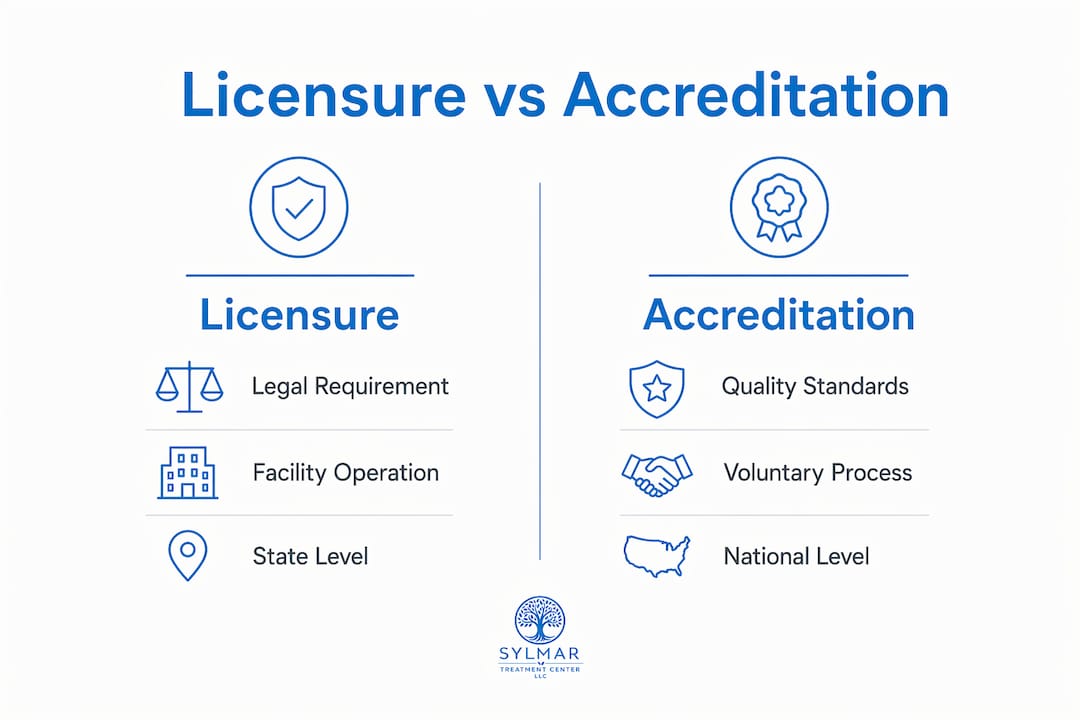
The two credentials that matter most are state licensure and national accreditation. State licensure is a legal requirement. Every treatment facility must hold a current license from its state behavioral health agency before it can operate. National accreditation from CARF International or The Joint Commission is voluntary, but it signals that a facility has passed rigorous on-site clinical reviews that unlicensed facilities never face. Those reviews examine staffing ratios, treatment protocols, safety standards, and patient rights. A facility can be licensed but never accredited. That distinction matters enormously when you are choosing where a loved one will spend 30, 60, or 90 days.
Staff credentials to verify
Beyond the facility’s paperwork, the people delivering care define the quality of treatment. Look for licensed addiction counselors holding a CADC (Certified Alcohol and Drug Counselor) or LADC (Licensed Alcohol and Drug Counselor) credential. Licensed therapists should carry an LCSW (Licensed Clinical Social Worker) or LPC (Licensed Professional Counselor) designation. Physicians overseeing medication-assisted treatment (MAT) should be board-certified in addiction medicine. A facility that cannot name the credentials of its clinical staff is a facility worth skipping.
Pro Tip: Ask every facility you contact to send you their current state license number. Then spend two minutes verifying it on your state’s behavioral health agency website. License verification is fast and filters out subpar operations immediately.
- State license: Confirms legal authorization to operate in that state.
- CARF or Joint Commission accreditation: Confirms voluntary compliance with national clinical standards.
- CADC/LADC counselors: Confirms addiction-specific training and supervised practice hours.
- LCSW/LPC therapists: Confirms licensed mental health treatment for co-occurring disorders.
- Board-certified addiction medicine physician: Confirms medical oversight for detox and MAT.
How do you find accredited treatment centers using federal resources?
The most reliable free tool for locating licensed programs nationwide is FindTreatment.gov, the federal database maintained by SAMHSA (Substance Abuse and Mental Health Services Administration). You can filter results by location, level of care, payment type, and specific services like dual diagnosis or MAT. SAMHSA also operates a 24/7 helpline at 1-800-662-4357 that connects callers with trained specialists who can narrow options by insurance and clinical need. These resources confirm legal licensure, but they do not rate clinical quality. That step requires your own verification work.
Use this process to build a shortlist before you commit to any calls:
- Search FindTreatment.gov by zip code and filter for the level of care you need: inpatient, outpatient, partial hospitalization (PHP), or intensive outpatient (IOP).
- Filter by accreditation status to limit results to CARF or Joint Commission-accredited facilities.
- Filter by payment type to match your insurance plan or identify facilities offering sliding-scale fees.
- Cross-reference each result against your state behavioral health agency’s license lookup tool to confirm active licensure.
- Call SAMHSA’s helpline if you need help interpreting results or identifying programs for co-occurring mental health disorders.
Experts recommend building a shortlist of 3–5 centers before conducting deeper verification. That number gives you real options without creating so many choices that the process stalls.
| Filter | What it tells you | What it does not tell you |
|---|---|---|
| State licensure | Facility is legally authorized to operate | Clinical quality or staffing standards |
| CARF/Joint Commission | Facility passed national clinical audits | Current staff turnover or patient outcomes |
| Payment/insurance | Facility accepts your coverage | Out-of-pocket costs or billing practices |
| Level of care | Facility offers the right treatment intensity | Whether the program fits your specific needs |
How do you verify and evaluate centers on your shortlist?
Verification is not a single phone call. It is a structured process that takes a few hours and protects against costly mistakes. Work through these steps for every facility on your shortlist.
- Request the license number and accreditation certificate directly from the facility’s admissions team. Any hesitation here is a warning sign.
- Verify the license on your state behavioral health agency’s public database. This takes about two minutes and confirms the license is active, not expired or suspended.
- Confirm accreditation on the CARF or Joint Commission website using the facility’s name and location. Both organizations maintain public directories.
- Ask about evidence-based therapies. Programs should offer Cognitive Behavioral Therapy (CBT), Dialectical Behavior Therapy (DBT), and MAT where clinically appropriate. These are the treatments with the strongest research support.
- Ask about the staff-to-patient ratio. The ideal ratio for high-quality clinical care is approximately 1:6. A higher ratio means less individual attention per patient.
- Request outcome data. Ask for 30-day, 60-day, and 90-day post-discharge sobriety rates. Facilities that track and share this data take accountability seriously.
- Confirm insurance acceptance and ask the billing team to walk you through your specific benefits before you commit. Verbal confirmation is not enough; get it in writing.
- Ask about aftercare planning. A strong program builds a continuing care plan before discharge, not on the last day.
Pro Tip: Before the first consultation call, review the treatment center intake process so you know what questions to ask about clinical assessments and care planning. Families who prepare for that conversation get far more useful information.
A clinical detox evaluation before admission is not optional. It matches the patient’s medical needs to the right level of care and prevents unnecessary or harmful placements. Facilities that skip this step and push for immediate enrollment without assessment are prioritizing beds over patients.

What red flags should you watch for when choosing a treatment center?
Accreditation does not guarantee ethical behavior. Some accredited facilities still use practices that harm patients or waste families’ money. Knowing the warning signs protects you even after you have confirmed credentials.
- No transparency about credentials. Lack of transparency about license numbers, accreditation status, or staff qualifications is a significant warning sign. Legitimate facilities share this information without hesitation.
- Guaranteed outcomes. No treatment program can guarantee sobriety or a “cure.” Facilities that make these promises are misrepresenting how addiction recovery works.
- Pressure to enroll immediately. Ethical admissions teams give families time to ask questions and verify credentials. High-pressure tactics serve the facility’s census, not the patient’s wellbeing.
- Payment required before clinical assessment. Legitimate centers conduct a formal clinical evaluation before enrollment. Requiring payment first reverses that order.
- Unlicensed or unverifiable staff. If a facility cannot confirm the credentials of its therapists and counselors, those staff may not hold the licenses they claim.
- Aesthetics over clinical quality. A facility with a beautiful campus and poor staffing ratios delivers worse outcomes than a plain facility with strong clinical oversight. Prioritize long-term clinical recovery over amenities.
“Families should look beyond insurance-driven programs toward centers that prioritize long-term recovery with clinical integrity and documented aftercare plans. A facility that cannot show you its outcomes data has no accountability to the people it serves.”
Independent verification of licenses and accreditation is a critical best practice. Do not rely solely on what a facility tells you about itself. The state database and the CARF or Joint Commission directory take minutes to check and give you facts no sales call can replace.
Key Takeaways
Choosing an accredited treatment center requires verifying state licensure, confirming national accreditation from CARF or The Joint Commission, evaluating clinical quality indicators, and independently checking every credential before enrollment.
| Point | Details |
|---|---|
| Accreditation is not universal | Only about 40% of US treatment facilities hold national accreditation, so verification is mandatory. |
| State license is the legal floor | Confirm active licensure on your state behavioral health agency’s website before any other step. |
| Use federal tools to build a shortlist | FindTreatment.gov and SAMHSA’s helpline help you identify 3–5 accredited candidates efficiently. |
| Clinical quality goes beyond credentials | Ask for staff ratios, evidence-based therapies, and 30-to-90-day outcome data before committing. |
| Red flags override accreditation | Pressure tactics, guaranteed outcomes, and payment before assessment disqualify any facility. |
Why accreditation is your starting point, not your finish line
I have spent years watching families make the same mistake: they find a facility with a Joint Commission seal on its website, feel relieved, and stop asking questions. Accreditation matters. It means the facility has passed independent clinical audits that most programs never face. But it does not tell you whether the counselors on staff actually show up for sessions, whether the aftercare plan is real or a one-page template, or whether the admissions team is focused on your family member’s clinical needs or on filling a bed.
The families who get the best outcomes treat accreditation as a filter, not a destination. They use it to cut the list from hundreds of options to a manageable shortlist, and then they do the harder work: calling the facility, asking specific questions about staffing ratios and outcome data, and verifying credentials independently. The benefits of accredited treatment are real, but they show up in the details of how a program operates, not just in the certificate on the wall.
One more thing families rarely consider: ethical admissions practices are themselves a clinical signal. A facility that gives you time, answers your questions directly, and conducts a thorough intake evaluation before discussing enrollment is showing you how it treats patients. That behavior reflects the same values that produce good clinical outcomes. Trust the process of a facility that respects yours.
— Jim
Sylmartreatmentcenter: accredited care with a personal approach
Sylmartreatmentcenter holds both a DHCS license and Joint Commission accreditation, meeting the two credential standards this guide identifies as non-negotiable. Its six-bed residential setting means the staff-to-patient ratio stays well within the 1:6 benchmark that clinical research supports.
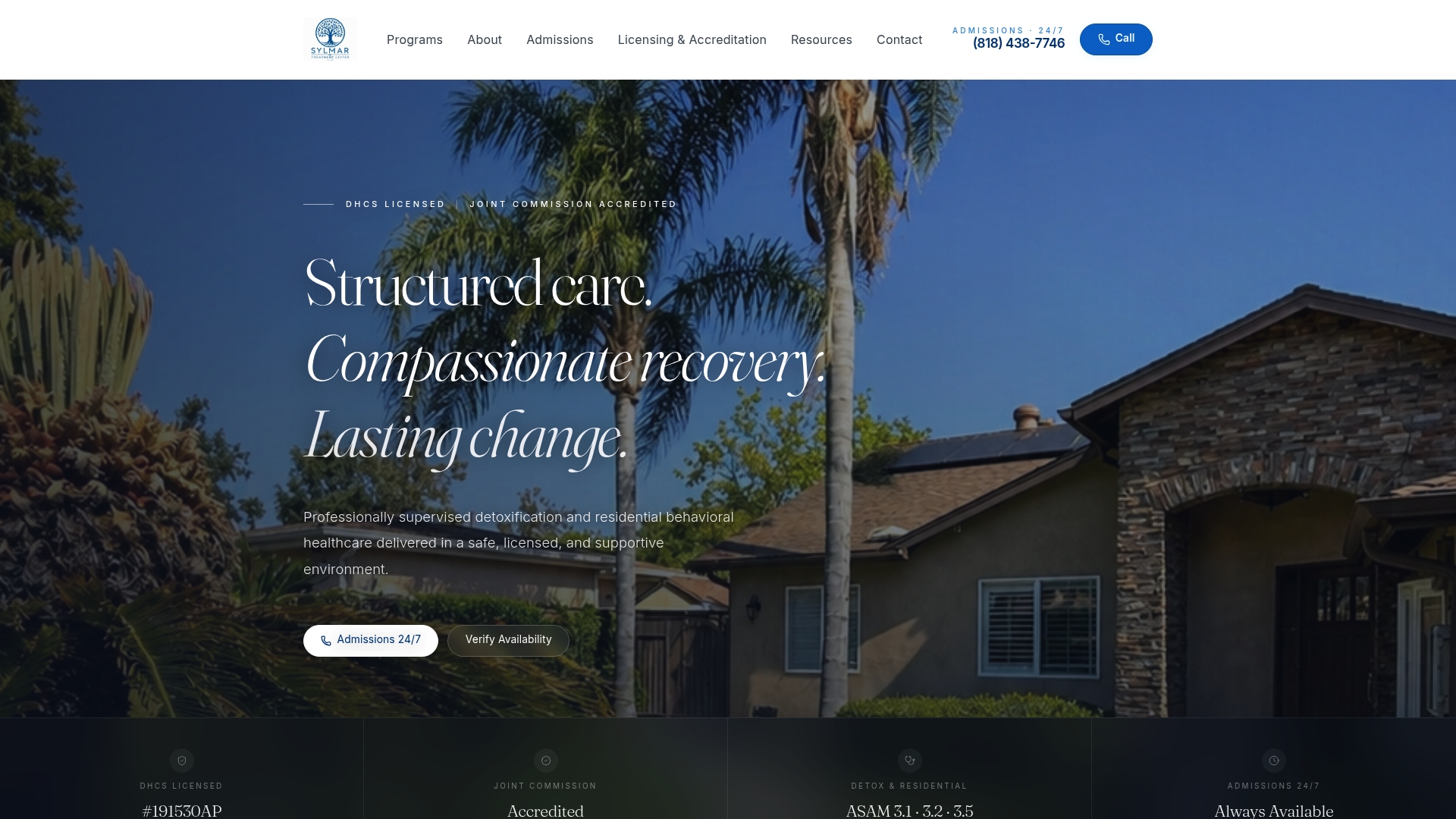
Every patient receives a thorough clinical assessment before admission and a custom care plan built around their specific needs, including dual diagnosis support for co-occurring mental health disorders. Admissions coordinators are available 24/7 to answer your questions, verify coverage, and walk your family through the intake process. Review the full range of accredited treatment programs at Sylmartreatmentcenter to find the right level of care.
FAQ
What is the difference between state licensure and accreditation?
State licensure is a legal requirement that allows a facility to operate. National accreditation from CARF or The Joint Commission is voluntary and confirms the facility has passed independent clinical quality audits.
How do I verify a treatment center’s accreditation?
Search the CARF International or Joint Commission public directories using the facility’s name and location. Both databases are free and confirm whether accreditation is current.
What is the best free resource for locating accredited treatment centers?
FindTreatment.gov, maintained by SAMHSA, is the most reliable free database for locating licensed programs nationwide. You can also call SAMHSA’s 24/7 helpline at 1-800-662-4357 for personalized guidance.
What staff credentials should an accredited treatment center have?
Look for CADC or LADC addiction counselors, LCSW or LPC licensed therapists, and a board-certified addiction medicine physician overseeing medical care and MAT.
Should I choose a treatment center based on location or clinical quality?
Clinical quality, staffing ratios, evidence-based therapies, and aftercare planning should drive your decision. Location is a secondary factor that should never outweigh the strength of the clinical program.
Recommended
- Benefits of Accredited Treatment Centers: 2026 Guide | Sylmar Treatment Center
- Choosing Residential Addiction Treatment: A Family Guide | Sylmar Treatment Center
- What Is a Family Recovery Program? A Guide for Families | Sylmar Treatment Center
- What Does Detox Involve for Families: A Guide | Sylmar Treatment Center