

Yes. Eligible employees can use FMLA to take job-protected leave for rehab when the treatment meets the FMLA’s serious-health-condition standard. The catch that trips people up: FMLA covers the treatment itself, not absences caused by active substance use. Three facts determine whether you qualify, and they’re worth checking before you say anything to your employer.
- You need 12 months on the job and at least 1,250 hours worked in the past year.
- Your employer needs 50 or more employees within 75 miles, or be a public agency or school (those are covered regardless of size).
- Treatment has to come from, or be referred by, a licensed health care provider.
Quick math: if you clear those three bars, you’re looking at up to twelve workweeks of unpaid, protected leave in a year. Your next move is simple: confirm your employer’s size and your own tenure, get your treatment provider to start paperwork, and put your leave request in writing to HR.
Key Takeaways
FMLA protects up to 12 weeks of job-protected leave for rehab treatment ordered or referred by a health care provider, but not for absences caused by active substance use itself.
| Point | Details |
|---|---|
| Eligibility has three tests | You need 12 months of tenure, 1,250 hours worked, and a covered employer with 50+ employees within 75 miles. |
| Treatment must be provider-directed | Detox, residential care, IOP, MAT, and therapy all qualify when ordered or referred by a health care provider. |
| Timelines are strict | Employers confirm eligibility within 5 business days; certification is typically due within 15 calendar days. |
| Leave is unpaid by default | FMLA guarantees job protection and health benefits, not pay, so check state programs or paid time off to bridge income. |
| Sylmar Treatment Center supports documentation | Its licensed detox and residential programs can provide admission dates and provider contact for FMLA certification. |
Table of Contents
- What FMLA Covers for Rehab: Legal Basis and Scope
- Who Is Eligible for FMLA Coverage?
- Which Types of Rehab Qualify, and How Does Scheduling Work?
- How Do You Request FMLA for Rehab, Step By Step?
- What About Medical Certification and Privacy?
- What Are Your Employer’s Rights and Limits Under FMLA and the ADA?
- How Does Sylmar Treatment Center Support an FMLA Request?
- An Editorial Take on Using FMLA for Treatment
- Start Your FMLA Paperwork With a Real Admission Date
- Where to Verify These Rules Yourself
- Sources
What FMLA Covers for Rehab: Legal Basis and Scope
The rule comes straight from federal regulation. 29 C.F.R. § 825.119 states that substance abuse can count as a serious health condition, but leave only applies to time spent in treatment provided by, or referred by, a health care provider. Miss a shift because you’re actively using? That’s not protected. Miss a shift because you’re in a program a doctor referred you to? That is.
The Department of Labor recognizes a fairly wide range of qualifying formats:
- Inpatient or residential rehab
- Intensive outpatient programs (IOP)
- Medication-assisted treatment (MAT)
- Individual or group therapy sessions
- Medically supervised detox
Leave can run continuous, which fits a residential stay, or intermittent, which fits ongoing outpatient visits spread across weeks or months. Either way, FMLA also keeps your group health benefits active during the leave period, on the same terms as if you’d kept working. That detail matters more than people realize, especially if treatment itself depends on insurance coverage.
Who Is Eligible for FMLA Coverage?
Eligibility runs on three separate tests, and you need to clear all three, not just one.
- Employer coverage: 50 or more employees within a 75-mile radius, or you work for a covered public agency or school district.
- Tenure: You’ve worked for that employer for at least 12 months (they don’t have to be consecutive).
- Hours: You logged at least 1,250 hours in the 12 months right before your leave request, roughly 24 hours a week on average.
If your employer is smaller than the federal threshold, don’t assume you’re out of luck. A growing number of states run their own family and medical leave programs with lower employer-size thresholds and, in some cases, partial wage replacement that federal FMLA doesn’t offer. Check your state labor department’s site before writing off your options.
Which Types of Rehab Qualify, and How Does Scheduling Work?
Not every treatment path looks the same on a calendar, and FMLA flexes to match. Here’s how the major formats typically break down:
- Medically supervised detox (roughly 5 to 7 days) usually rolls straight into continuous leave, often extending into a longer residential stay.
- Residential treatment (commonly 28 to 30 days) calls for continuous leave covering the full admission-to-discharge window.
- Intensive outpatient programs run several sessions a week over weeks or months, which usually fits intermittent or reduced-schedule leave.
- MAT and ongoing therapy often mean recurring appointments, sometimes daily early on, tapering to weekly. Intermittent leave covers this in blocks of hours rather than full days.
Pro Tip: Ask your treatment provider for a written estimate of your program length before you contact HR. A specific date range makes your leave request far easier for an employer to process than “some amount of time.”
How Do You Request FMLA for Rehab, Step By Step?
Timing drives everything here, both yours and your employer’s. Follow this sequence:
- Give notice. If treatment is foreseeable, give your employer about a month’s notice. If it isn’t, notify them as soon as practicable, generally within a day or two of learning you need care.
- Wait for eligibility confirmation. Your employer must tell you whether you’re FMLA-eligible within 5 business days of your request.
- Submit medical certification. You’ll typically be given a couple of weeks to return certification once your employer requests it.
- Confirm in writing. Ask HR to confirm your leave dates and status in writing, and keep a copy for yourself.
Before you request leave, gather:
- Admissions paperwork showing expected start and end dates
- Contact information for the provider handling your medical certification
- A saved copy of every email or form you send to HR
Miss the certification deadline and your employer can delay or deny protection, so treat that 15-day window as firm, not flexible.
What About Medical Certification and Privacy?
Your employer can require certification, but they can’t turn it into a fishing expedition. The standard form (DOL’s WH-380-E) asks your provider to confirm the condition, expected treatment duration, and whether leave will be continuous or intermittent. It does not require your provider to disclose your diagnosis or treatment details beyond what’s needed to verify the leave.
- Certification goes to HR or a designated benefits administrator, not your direct supervisor.
- Employers must keep medical records in a separate, confidential file apart from your regular personnel file.
- Certification typically stays private from coworkers and managers by design, not just by courtesy.
Pro Tip: When you submit paperwork, ask HR in writing to confirm who will see it and how it will be stored. A short email creates a paper trail if confidentiality ever becomes an issue later.
What Are Your Employer’s Rights and Limits Under FMLA and the ADA?
FMLA protects your job and your health benefits while you’re in treatment, but it isn’t a blanket shield. Employers can still enforce consistent, previously documented policies.
- A pattern of misconduct that happened before you requested leave can still lead to disciplinary action, FMLA doesn’t erase it.
- Employers can apply the same substance-use policy to everyone, as long as it’s applied evenly and not used to single out someone for taking leave.
- The ADA can add protection once you’re in recovery, including reasonable accommodations like a modified schedule for ongoing outpatient care, though it doesn’t protect current illegal drug use.
If your employer raises a prior disciplinary issue before you go on leave, ask HR directly whether it affects your reinstatement rights. Getting that answer before you leave beats guessing after you return, and a resource like Dewy Counselling’s guide on relapse warning signs can help you and your care team plan for a stable return to work.
How Does Sylmar Treatment Center Support an FMLA Request?
A licensed provider does more than deliver care. Sylmar Treatment Center’s medically supervised detox, residential programs, and dual-diagnosis support all fall squarely within FMLA’s qualifying treatment categories, since every plan is directed by a health care provider from admission through discharge.
- Admission and expected discharge dates, provided early enough to support your notice to HR.
- Direct provider contact information your certifying clinician can use to complete Form WH-380-E.
- Documentation built around Sylmar’s DHCS license and Joint Commission accreditation, which employers can verify without needing extra explanation.
Pro Tip: Ask admissions for a projected length-of-stay letter on day one. It becomes the anchor document your HR department uses to calculate your leave dates.
An Editorial Take on Using FMLA for Treatment
People delay treatment because they assume asking for leave means explaining themselves to a manager. It doesn’t. HR handles this, not your supervisor, and the law is built around that separation. If you’re eligible, using FMLA isn’t a favor anyone’s granting you. It’s a right. Check your employer’s size, call a provider for documentation, and put your leave request in writing this week.
— Jim
Start Your FMLA Paperwork With a Real Admission Date
Every FMLA request needs an anchor: a real admission date, a projected discharge date, and a provider willing to complete certification without delay. That’s the piece most people struggle to pin down before they’ve even talked to a treatment center. Sylmar Treatment Center runs a six-bed, DHCS-licensed facility with 24/7 admissions support, so you can get a projected length-of-stay letter in hand fast enough to meet your employer’s notice window instead of scrambling against it.
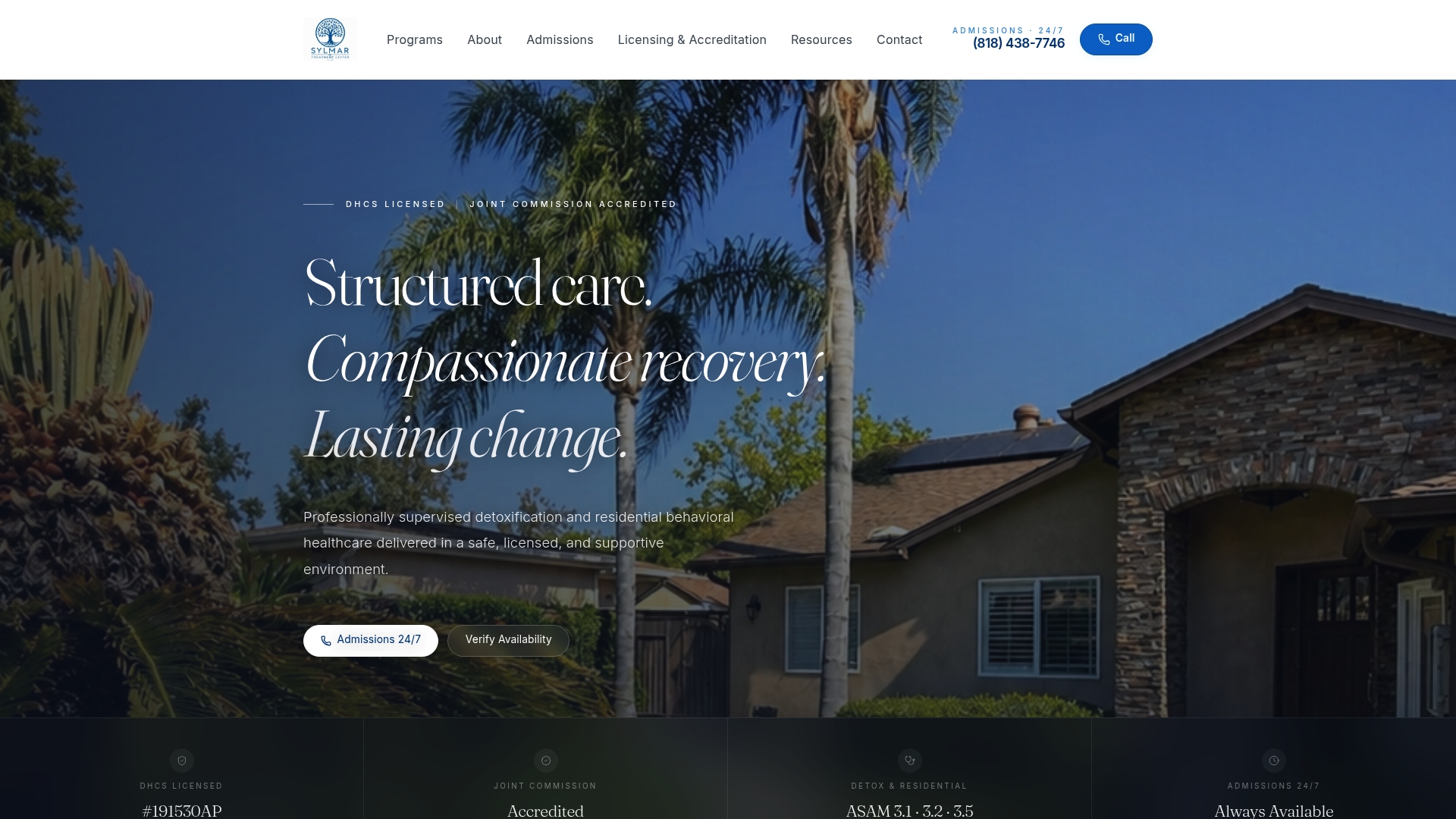
Whether you need medically supervised detox, residential care, or individualized treatment for a co-occurring condition, Sylmar’s admissions team can supply the dates and provider contact your HR department needs for certification. Reach out to Sylmar’s admissions team today to confirm program dates and start building the paperwork your FMLA request depends on.
Where to Verify These Rules Yourself
- DOL’s FMLA FAQ and 29 C.F.R. § 825.119 cover the legal text and employer obligations.
- DOL Fact Sheet 28P defines what counts as a serious health condition.
This article is general information, not a substitute for advice from a qualified doctor. Consult a qualified healthcare professional about your own circumstances before acting on anything here.
Sources
- WHD: Family and Medical Leave Act (FMLA) FAQ
- 29 C.F.R. § 825.119 - Leave for treatment of substance abuse
- DOL Fact Sheet 28P: Taking leave when you or your family member has a serious health condition
Recommended
- Asking for Individualized Care in Rehab: A Family Guide | Sylmar Treatment Center
- Best thehouseoflife.com Alternatives for Rehab in 2026 | Sylmar Treatment Center
- Residential Rehab Cost: What U.S. Families Should Expect | Sylmar Treatment Center
- Role of Treatment Centers in Legal Cases: 2026 Guide | Sylmar Treatment Center