

Meth detox typically unfolds in three stages: a crash lasting several hours to a couple of days, an acute withdrawal phase that peaks within the first week and can last up to about 10 days, and a protracted phase that can stretch for weeks to months. Physical symptoms usually fade first; psychological symptoms like depression and craving often linger significantly longer. Suicidal thoughts or severe psychosis during this window are medical emergencies, not something to manage alone.
TL;DR:
- Physical symptoms typically resolve within one to two weeks, but psychological symptoms like depression and cravings can persist for weeks or months.
- Heavy, long-term meth use, existing mental health conditions, and polydrug use significantly prolong and intensify withdrawal symptoms.
- Supervised detox, including psychiatric monitoring and structured routines, improves safety and reduces the risk of emergencies during withdrawal.
- Supportive treatments like cognitive behavioral therapy and contingency management increase the chances of sustained recovery after detox.
- The psychological phase of withdrawal generally lasts longer than physical recovery, making ongoing care essential to prevent relapse.
Table of Contents
- What Are the Stages of the Meth Withdrawal Timeline?
- What Symptoms Should You Expect, and Which Ones Need Urgent Care?
- What Makes Meth Withdrawal Longer or More Severe?
- How Is Meth Withdrawal Managed Safely?
- What Happens After Detox to Prevent Relapse?
- A Clinical Reality Check on Timelines
- How Sylmar Treatment Center Supports Safe Detox and Recovery
- Where to Verify This Information
- Sources
What Are the Stages of the Meth Withdrawal Timeline?
Withdrawal doesn’t hit all at once. It moves through distinct phases, and knowing which one someone is in changes what kind of help actually makes sense.
The crash phase lasts several hours to a couple of days. The body shuts down hard after the last dose. Expect extreme exhaustion, oversleeping that can run many hours, and a flat, foggy mood. This is the nervous system paying back a stimulant debt.
Acute withdrawal (days 2 through 7 to 10). This is where symptoms peak. Research tracking withdrawal severity found it climbs within the first 24 to 72 hours and stays elevated through roughly the first week before starting to ease toward near-baseline levels. Expect intense cravings, irritability, anxiety, and disrupted sleep that swings between insomnia and hypersomnia. A systematic review of controlled trials on withdrawal treatment describes this acute window as running about two to four weeks in total, with the sharpest symptoms front-loaded into days one through seven.
Early protracted phase (weeks 2 through 4). Physical symptoms mostly resolve here, but mood instability and cravings often don’t. Clinical guidance on stimulant withdrawal management notes this stretch is when relapse risk is pronounced, which is why many programs recommend at least three weeks of monitored care for anyone with a heavy or long-term use history.
Late protracted phase (months to a year). Some people carry cognitive slowing, anhedonia, or emotional blunting for several months after last use. Someone who used daily for years will likely take longer to stabilize than someone who used occasionally for a few months.
What Symptoms Should You Expect, and Which Ones Need Urgent Care?
Not every symptom follows the same clock. Some clear up in days; others outlast the acute phase by months.
- Physical symptoms (resolve fastest, usually within 1 to 2 weeks): fatigue, muscle aches, increased appetite, headaches, and sleep disturbances that flip between too much and too little.
- Psychological symptoms (often persist weeks to months): depression, anhedonia (loss of pleasure in things that used to feel good), intense drug cravings, anxiety, and paranoia that can flare unpredictably.
- Cognitive symptoms (slowest to resolve): trouble concentrating, memory gaps, and slowed thinking that can take months to lift as dopamine receptor function gradually recovers.
- Emergency warning signs (seek care immediately): suicidal thoughts or statements, hallucinations or delusions that don’t respond to reassurance, chest pain, seizures, or aggressive behavior that puts the person or others at risk.
The gap between physical and psychological recovery is the part most people underestimate. Feeling physically fine by week two doesn’t mean the crash is over. If someone seems “recovered” but still can’t feel joy in anything or keeps talking about hopelessness, that’s not weakness. It’s the withdrawal curve doing exactly what the research says it does.
What Makes Meth Withdrawal Longer or More Severe?
Four variables consistently predict a harder detox. Use pattern matters most: someone who smoked or injected meth daily for years will face a longer, rockier timeline than someone with lighter, less frequent use, because higher doses and faster routes of administration (smoking and injection hit the brain quicker than swallowing) drive deeper receptor changes.
Co-occurring conditions compound everything. Depression, bipolar disorder, or anxiety that existed before meth use tends to resurface hard during withdrawal, and mixing meth with alcohol, opioids, or benzodiazepines complicates both the symptom picture and the medical risk. Poor sleep, malnutrition, and untreated medical issues like cardiovascular strain also slow recovery. None of these factors are things a person can just push through with willpower.
How Is Meth Withdrawal Managed Safely?
Meth withdrawal has no single approved medication that resolves it. Clinical reviews are consistent on this point: management is primarily supportive, and pharmacological options remain symptomatic rather than curative, used to ease sleep disruption, anxiety, or depression rather than shorten the timeline itself.
That doesn’t mean supervision doesn’t matter. It changes the outcome, especially during the high-risk psychological phase.
- Medical monitoring catches dangerous shifts in mood, blood pressure, or mental status before they become emergencies.
- Psychiatric oversight allows same-day intervention if suicidal ideation or psychosis appears.
- Structured routines (sleep schedules, nutrition, light activity) reduce the physical toll of the crash.
- Behavioral coping tools, like recognizing craving triggers and practicing delay tactics, build skills that outlast the detox window itself.
Pro Tip: Track mood and sleep daily during the first month, even with simple notes. Because psychological symptoms fluctuate, a written record helps a clinician spot whether someone is actually improving or quietly getting worse.
Inpatient or residential care makes the most sense for heavy, long-term use, co-occurring mental health diagnoses, or any history of suicidal thoughts. Outpatient support can work for lighter use patterns with strong stability at home, but the decision should involve a medically supervised detox evaluation, not a guess.

What Happens After Detox to Prevent Relapse?
Detox ends the physical dependence. It doesn’t end the risk. Only about 23 to 39 percent of people treated for methamphetamine use disorder maintain sustained abstinence at one year, and that statistic is exactly why treatment planning matters more than the detox itself.
Detox is the necessary first step, not the finish line. Structured continuing care during the early weeks, when cravings and mood swings are still active, consistently predicts better long-term outcomes.
- Residential treatment extends the structure of detox into the high-risk protracted phase.
- Cognitive behavioral therapy (CBT) targets the thought patterns that fuel relapse.
- Contingency management, which rewards verified abstinence, has some of the strongest evidence in stimulant recovery.
- Peer support groups and continuing outpatient care fill the gap after residential treatment ends.
- SAMHSA’s treatment locator and insurance verification calls are practical starting points for finding a vetted program.
Relapse risk doesn’t disappear after 30 days. It shifts, and understanding what actually drives relapse matters as much as surviving the detox window itself.
A Clinical Reality Check on Timelines
Most people searching for a meth detox timeline want a fixed number of days. There isn’t one. What’s consistent is that the psychological phase outlasts the physical one, and that gap is where relapse happens. A licensed, six-bed setting with psychiatric oversight and 24/7 admissions exists precisely for that stretch, when symptoms feel resolved on the surface but aren’t underneath.
— Jim
How Sylmar Treatment Center Supports Safe Detox and Recovery
Sylmar Treatment Center runs medically supervised detox inside a six-bed residential setting, so the psychological phase of withdrawal, the part that outlasts the physical crash and drives most relapse, gets watched by clinical staff around the clock instead of managed alone at home. That’s the real difference from riding out withdrawal solo: psychiatric oversight catches mood crashes and craving spikes before they turn into a crisis.

Admissions is available 24/7, and the first call typically covers insurance verification, a clinical intake assessment, and a same-day or next-day placement plan. For anyone with a co-occurring diagnosis like depression or anxiety alongside meth use, dual diagnosis support addresses both conditions under one care plan rather than treating them separately. Explore the full detox and residential treatment programs to see which level of care fits, or call admissions directly to start the intake conversation today.
Where to Verify This Information
For deeper clinical detail, consult NIDA on methamphetamine effects and treatment, SAMHSA’s treatment options, and Findtreatment to locate verified programs near you.
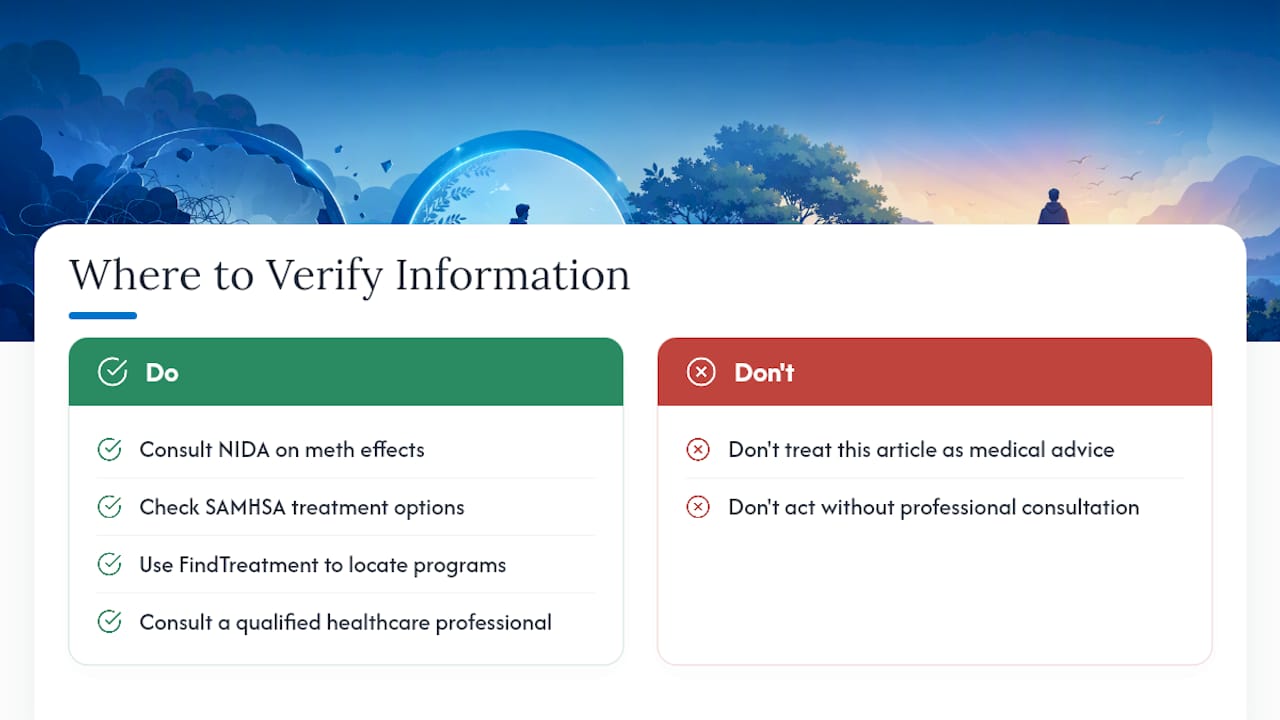
This article is general information, not a substitute for advice from a qualified doctor. Consult a qualified healthcare professional about your own circumstances before acting on anything here.
Sources
- The nature, time course and severity of methamphetamine withdrawal
- Clinical Management of Psychostimulant Withdrawal: Review of the Evidence
- National Institute on Drug Abuse (NIDA)