
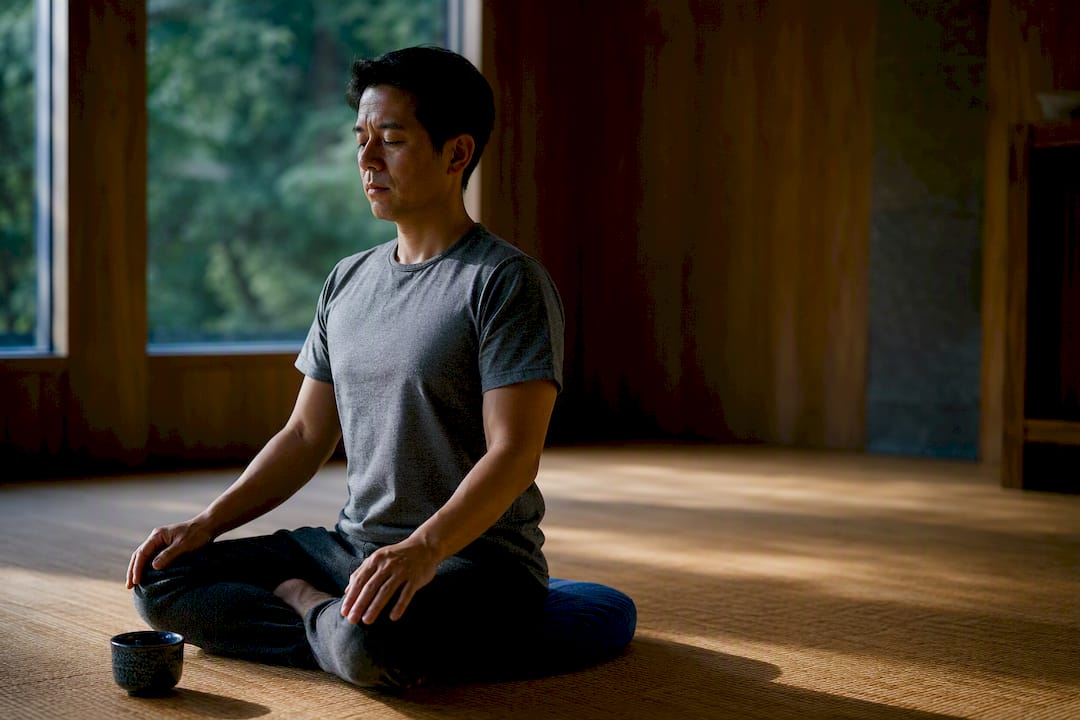
Mindfulness in addiction treatment works as an evidence-supported adjunct that reduces craving intensity and helps prevent relapse, not as a standalone cure. Randomized trials and systematic reviews back programs like Mindfulness-Based Relapse Prevention (MBRP) and Mindfulness-Oriented Recovery Enhancement (MORE) for cutting craving and substance use frequency, especially when paired with medication or therapy. It never substitutes for clinical or medication-based care. The sections below walk through the trial data, the underlying mechanisms, and the exact techniques clinicians teach.
TL;DR:
- Mindfulness-based programs like MBRP and MORE show moderate to strong evidence of reducing cravings and substance use short-term, especially when combined with medication or therapy.
- Craving reduction through mindfulness mainly works by increasing awareness, disrupting automatic responses, and improving emotion regulation and executive control.
- Effect sizes are most reliable for craving and short-term use outcomes, with less clear evidence for long-term abstinence beyond one year.
- These techniques are most effective when practiced regularly over weeks, with skills like urge surfing and SOBER breathing space being core tools for relapse prevention.
- Mindfulness should supplement, not replace, clinical treatment for addiction, and is best introduced when an individual is medically and psychologically stabilized.
Table of Contents
- How Strong Is the Evidence for Mindfulness in Addiction Treatment?
- Why Does Mindfulness Help With Cravings and Relapse Risk?
- What Are the Main Mindfulness-Based Programs Used in Treatment?
- What Mindfulness Techniques Actually Help With Cravings?
- How Does Mindfulness Fit With Medication and Clinical Treatment?
- Who Benefits Most From Mindfulness-Based Recovery Tools?
- How Do I Start Using Mindfulness Safely in Recovery?
- How Sylmar Treatment Center Builds Mindfulness Into Individualized Care
- A Realistic Take on Mindfulness and Recovery
- Consider Individualized Residential Care That Integrates Mindfulness
- Where This Article’s Claims Come From
- Sources
- FAQ
How Strong Is the Evidence for Mindfulness in Addiction Treatment?
The research base has moved well past the wellness-trend stage. Multiple systematic reviews now treat mindfulness-based interventions (MBIs) as comparable to established evidence-based treatments for substance use disorders, and generally superior to minimal or non-specific control conditions according to a systematic review of manualized mindfulness treatments.
The most concrete recent data point comes from a randomized clinical trial testing a mindfulness-based group curriculum called M-ROCC in adults already receiving buprenorphine for opioid use disorder. The trial found that participants who added the mindfulness curriculum to their medication treatment showed significantly larger reductions in opioid craving than those in a standard recovery support group. The difference was statistically significant, with a P value of .01 for craving outcomes, according to the M-ROCC randomized clinical trial. Biochemical abstinence rates, measured through urine screens, came out similar between the two groups over the trial period. That distinction matters for how you interpret the results: mindfulness moved the subjective experience of craving more than it moved the objective drug-test numbers.
MORE has its own separate evidence trail. A 2022 multilevel meta-analysis pooling 8 randomized controlled trials and 816 participants found that MORE produced moderate to small positive effects on addictive behaviors, with a pooled craving reduction effect size (SMC) of around negative 0.42, plus measurable decreases in opioid dosage among chronic pain patients tapering opioids, according to the multilevel meta-analysis of MORE trials. That effect size sits in the moderate range for behavioral interventions, roughly on par with what many CBT-based relapse prevention programs report.
Broader reviews reinforce the pattern across substance types, not just opioids:
- Systematic reviews covering MBRP, MORE, MTS, and Mindfulness-Based Addiction Treatment (MBAT) consistently report reductions in substance use frequency, craving, and related psychological distress, particularly when the mindfulness program is layered onto treatment-as-usual rather than substituted for it, per the manualized treatments review.
- Trials of mindfulness approaches adapted for smoking cessation and stimulant dependence report improved recovery from lapses and reduced use during active treatment, according to a systematic review of mindfulness-based interventions for addictive and behavioral disorders.
- Some trial follow-ups, including work summarized by the University of Utah, describe reductions in addictive behavior persisting for at least nine months after an 8-week mindfulness program ended, suggesting durability isn’t automatically lost once formal sessions stop, per University of Utah Health’s coverage of mindfulness and addiction research.
None of this means the evidence is airtight. The same reviews flag real limitations: study samples vary widely in severity of substance use disorder, follow-up periods are often too short to say much about maintenance past a year, and effect sizes swing depending on which outcome you measure, craving versus use frequency versus abstinence, according to a systematic review on mindfulness-based interventions for substance and behavioral addictions. Evidence is strongest for craving reduction and short-term use reduction. It’s thinner for long-term abstinence maintenance beyond twelve months, and thinner still for how MBIs perform in specific subgroups like adolescents or people with severe co-occurring psychiatric illness.
Why Does Mindfulness Help With Cravings and Relapse Risk?
The mechanism isn’t mystical. It’s about interrupting automaticity. Substance use disorders build strong automatic pathways: a trigger appears, and the brain runs a well-worn script toward using, often before conscious deliberation kicks in. Mindfulness training builds the capacity to notice that script starting and create a gap before acting on it, according to research on neurocognitive mechanisms of mindfulness in substance use disorder treatment.
That gap is where urge surfing lives. Cravings feel urgent and permanent in the moment, but physiologically they behave like a wave: they build, peak, and fade, typically within a predictable window rather than lasting indefinitely. Practitioners describe the clinical technique as repeatedly exposing yourself to the craving sensation, in a nonjudgmental, observational stance, until the automatic reaction weakens. You track the bodily markers as they change, the tightness in the chest, the restlessness, the pull toward using, and you watch them peak and recede rather than acting on the first spike.
Three connected effects show up across the mechanism research:
- Habit disruption. Deliberately noticing a craving as “a sensation happening right now” instead of “a command I must obey” pulls the response out of autopilot and into a moment of actual choice.
- Emotion regulation. Regular practice appears to lower reactivity to stress and negative affect, two of the most common relapse triggers, by training a more tolerant relationship with uncomfortable internal states.
- Executive control. Sustained practice is associated with strengthened attention and self-monitoring capacity, the same cognitive functions that erode under chronic substance use and that relapse prevention depends on.
None of this erases the biological reality of addiction. It reshapes how a person relates to the craving signal, which is precisely why mindfulness gets paired with, not swapped for, medication and therapy in almost every serious clinical protocol.
What Are the Main Mindfulness-Based Programs Used in Treatment?
If you’re comparing programs, four names come up repeatedly in the clinical literature, and they aren’t interchangeable. Each targets slightly different outcomes and populations.
- Mindfulness-Based Relapse Prevention (MBRP). Originally built for substance use relapse prevention, MBRP typically runs 8 sessions in a weekly group format. Core exercises include the raisin exercise (slow, sensory attention to eating a single raisin, used to teach present-moment awareness), body scans, sitting meditation, and urge surfing practice specifically aimed at cravings and high-risk situations.
- Mindfulness-Oriented Recovery Enhancement (MORE). Developed for addictive behavior alongside chronic pain and psychiatric distress, MORE usually spans 8 to 10 sessions and blends mindfulness training with reappraisal skills and savoring practices, deliberately noticing pleasure in non-substance rewards. It’s the program with the strongest data on opioid dosage reduction in pain populations.
- Mindfulness-Based Addiction Treatment (MBAT). A more recent adaptation used in broader addiction treatment settings, MBAT integrates mindfulness skills with standard relapse-prevention content, generally over a similar 8 to 10 week arc, and is often layered onto existing group therapy structures rather than run as a freestanding program.
- Mindfulness Training for Smokers (MTS). Tailored specifically for nicotine dependence, MTS focuses on craving observation and lapse recovery, teaching smokers to treat a slip as data rather than failure, an approach shown in trial settings to improve recovery from lapses.
A few practical patterns hold across all four:
- Sessions run weekly, in groups, with homework between sessions, usually short daily practice logs or recorded guided meditations.
- Reliable outcomes in trials track closely with program fidelity: manualized structure, trained facilitators, and consistent homework expectations outperform loosely adapted versions, according to the systematic review of manualized treatments.
- Facilitators are typically licensed clinicians (counselors, psychologists, social workers) who’ve completed specific training in the manualized protocol, not general meditation teachers without clinical credentials.
MBRP tends to fit best for someone focused squarely on relapse prevention after primary treatment. MORE fits better if chronic pain or heavy psychiatric distress is part of the picture. MBAT and MTS solve narrower problems: integration into existing group care and smoking cessation, respectively.
What Mindfulness Techniques Actually Help With Cravings?
These are the tools clinicians teach clients to use in real time, not abstract theory. Each takes minutes, not hours, and works best with regular practice before you’re in a crisis moment.
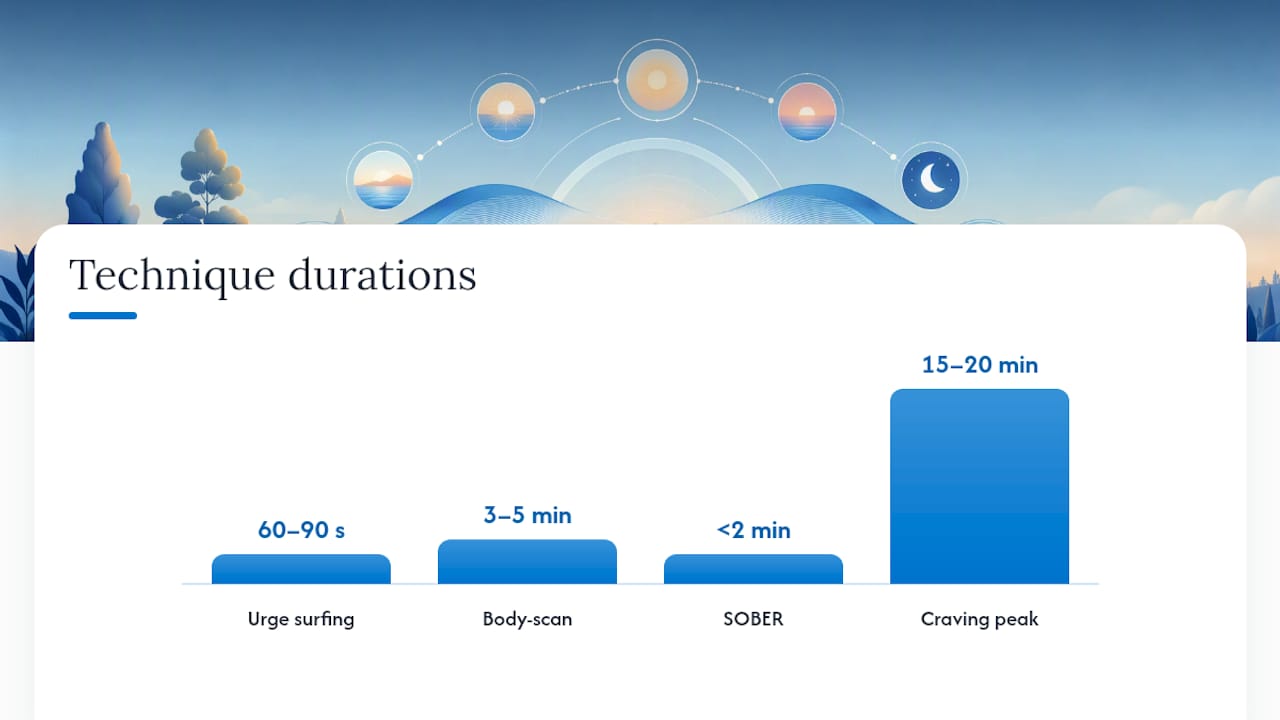
- Urge surfing, step by step. Notice where the craving shows up physically first, chest, stomach, hands, jaw. Name it silently (“craving, chest, tight”) without trying to push it away. Watch it for 60 to 90 seconds, tracking whether the intensity is rising, holding steady, or dropping. Cravings that aren’t acted on typically peak within about 15 to 20 minutes and then fade on their own; the goal is riding that wave rather than jumping off it.
- A short breath and body-scan practice. Sit or lie down. Take three slow breaths, counting four seconds in, six seconds out. Then move attention slowly from feet to head, noticing tension without trying to fix it. Three to five minutes is enough for a genuine reset, and it works as well at your desk as it does at home.
- SOBER breathing space. Stop what you’re doing. Observe what’s happening in your body and mind right now. Breathe, taking a few deliberate breaths. Expand awareness to the whole situation, including options available to you. Respond, choosing an action instead of reacting automatically. The whole sequence takes under two minutes and is designed for exactly the moment a craving or trigger hits.
- HALT as a daily check-in. Ask: am I Hungry, Angry, Lonely, or Tired? Each of these lowers your capacity to manage a craving, and each is fixable in the moment, eating something, calling someone, resting, naming the anger. HALT works best taught and practiced during calm, stable periods, not saved for crisis moments, so it becomes automatic when you actually need it, according to clinical guidance on HALT as a relapse-prevention tool.
Pro Tip: Practice urge surfing and SOBER when you’re calm, not just when a craving hits. The skill needs to be automatic before you’re under pressure, the same way you wouldn’t practice a fire escape route for the first time during an actual fire.
Realistic expectations matter here. A single session of any of these techniques rarely resolves a strong craving completely. What tends to happen with regular practice, daily for several weeks, is that the craving’s intensity and duration both shrink over time, and your confidence in riding it out without using grows alongside that.
How Does Mindfulness Fit With Medication and Clinical Treatment?
Mindfulness performs best as a layer added onto existing clinical care, not a replacement for it. The M-ROCC trial makes this concrete: participants were already stabilized on buprenorphine, and the mindfulness curriculum was added on top of that medication, not instead of it, according to the M-ROCC trial. The craving reductions showed up specifically in that combined context.
Practitioners generally combine mindfulness-based interventions with medication-assisted treatments and psychotherapy to address both the biological and behavioral drivers of substance use disorder at the same time.
If you’re bringing mindfulness into an existing treatment plan, or helping a family member do so, a few questions are worth putting directly to a clinician or program coordinator:
- Is this mindfulness program designed to run alongside my current medication, or does it assume I’m not on one?
- What training does the facilitator have in the specific manualized protocol (MBRP, MORE, MBAT, MTS), versus general meditation instruction?
- What does the weekly time commitment look like, and is there homework or between-session practice expected?
- How does the program coordinate with my existing therapist or prescriber, and is there a formal handoff or shared notes process?
There’s a hard boundary worth stating plainly. Mindfulness should never substitute for clinical supervision in cases of severe psychiatric instability, active suicidal ideation, acute psychosis, or unmanaged withdrawal risk. Those situations call for medical stabilization first. Mindfulness gets introduced once someone is clinically stable enough to engage with the practice safely, usually determined through a comprehensive assessment as part of an individualized care plan.
Who Benefits Most From Mindfulness-Based Recovery Tools?
The evidence points most strongly toward people already in stable treatment, on medication if that’s part of their plan, working on relapse prevention rather than acute crisis management. People managing chronic pain alongside opioid use, people working through the anxiety and irritability of early recovery, and people who’ve relapsed before and want a tool specifically aimed at the craving moment tend to see the clearest benefit from programs like MBRP and MORE.
Caution is warranted, not avoidance, for people with severe psychosis, unmanaged suicidality, or significant dissociative symptoms. Sitting with internal sensations, which is the core skill mindfulness teaches, can be genuinely destabilizing for someone in acute psychiatric crisis. That’s a case where a clinician needs to be directly involved in deciding timing and format, not a reason to rule mindfulness out permanently.
Two myths are worth correcting directly:
- “It should work immediately.” Most manualized programs run 8 to 10 weeks precisely because the skill takes repeated practice to build. A single session teaches the concept; it doesn’t build the capacity.
- “Once I finish the program, I’m done practicing.” Follow-up data suggesting benefits lasting nine months or more comes from people who kept practicing informally after the structured program ended, not people who stopped entirely at week eight.
Cultural context also shapes how mindfulness lands for different people. Programs adapted for specific communities, adjusting language around meditation to fit religious or cultural framing, tend to see better engagement than one-size-fits-all delivery, which is part of why individualized assessment at intake matters more than which specific curriculum a program uses.
How Do I Start Using Mindfulness Safely in Recovery?
Start small and build up. A 5 to 10 minute daily practice, breath awareness or a short body scan, done at roughly the same time each day, is enough to begin building the skill. Most people find mornings or right before a known high-risk window, evenings for some, weekends for others, work best for consistency.
Progress from there rather than jumping to advanced practice immediately:
- Practice 5 to 10 minutes daily for two to three weeks before expecting noticeable change in how cravings feel.
- Extend toward 20 to 30 minutes daily, or add a second short session, once the shorter practice feels familiar.
- Look into joining a structured 8-week manualized program (MBRP, MORE, MBAT, or MTS) once you want more than self-guided practice.
- Ask any program you’re considering whether it’s backed by published trial data, what the facilitator’s specific training is, and how it coordinates with any medication you’re already taking.
Access is a real barrier for a lot of people. In-person 8-week groups aren’t available everywhere, insurance coverage for mindfulness-specific programs varies widely by plan, and remote or app-based delivery, while more accessible, hasn’t been tested as rigorously as the in-person manualized protocols reviewed above. If in-person group access isn’t realistic right now, ask a treatment provider what’s actually available and covered before assuming a remote option is equivalent.
How Sylmar Treatment Center Builds Mindfulness Into Individualized Care
A treatment center with 24/7 admissions support, a small residential setting, DHCS licensing, and Joint Commission accreditation provides the kind of infrastructure that lets mindfulness get introduced carefully rather than as an afterthought. In a facility that small, a client working through urge surfing after a rough night doesn’t get lost in a crowded schedule.
Individualized treatment plans at Sylmar start with a comprehensive assessment, then build in adjunctive practices like mindfulness alongside medically supervised detox, medication management with psychiatric oversight, and ongoing therapy. That sequencing matters given what the trial data shows: mindfulness works best layered onto stabilized clinical care, not introduced before someone is medically ready for it. For clients managing co-occurring mental health conditions alongside substance use, that same individualized structure allows mindfulness practice to be adjusted around psychiatric stability rather than applied as a blanket protocol.
A Realistic Take on Mindfulness and Recovery
Mindfulness gets oversold in a lot of recovery content as something close to a cure, and undersold in a lot of clinical settings as a soft extra that doesn’t deserve real time in a treatment plan. Both are wrong. The trial data, particularly the M-ROCC results on top of buprenorphine, shows a specific, measurable effect on craving that doesn’t require believing in anything mystical about meditation.
What gets missed most often is the practice requirement. People want the urge-surfing technique to work the first time they try it under real pressure, and when it doesn’t fully dissolve a craving in ninety seconds, they conclude mindfulness isn’t for them. The research suggests otherwise: this is a trainable skill with a real learning curve, not a switch you flip. Anyone considering it as part of a treatment plan should ask directly what individualized assessment their provider offers before starting, since timing and readiness matter as much as the technique itself.
— Jim
Consider Individualized Residential Care That Integrates Mindfulness
Reading about urge surfing and SOBER breathing is one thing. Practicing them safely while you’re still in early recovery, especially with medical or psychiatric complexity, is another. Sylmar Treatment Center is built around that gap: a six-bed residential model where mindfulness gets introduced inside a structured, individualized plan rather than handed to you as a worksheet on your way out the door.
Sylmar’s individualized treatment programs start with a full clinical assessment, then combine medically supervised detox, medication management, and adjunctive practices like mindfulness based on what each client actually needs. Clients managing both substance use and a mental health diagnosis can access dual diagnosis support within the same small-group setting, so psychiatric stability and craving-management skills get addressed together rather than in separate silos. If you’re weighing whether residential care with this level of individual attention fits your situation, or a family member’s, view Sylmar’s full program offerings or reach out to admissions, available 24/7, to talk through next steps.
Where This Article’s Claims Come From
For readers who want to check the primary research directly: the M-ROCC randomized trial covers craving outcomes on buprenorphine, the MORE meta-analysis covers pooled effect sizes across 8 RCTs, and the manualized treatments systematic review covers program structure and fidelity across MBRP, MORE, MBAT, and MTS. Readers rebuilding a broader sense of identity in recovery may also find Reclaim Sobriety’s guide on identity after addiction useful alongside mindfulness practice.
This article is general information, not a substitute for advice from a qualified doctor. Consult a qualified healthcare professional about your own circumstances before acting on anything here.
Sources
- Randomized clinical trial of a 24-week mindfulness-based group curriculum for adults receiving buprenorphine (M-ROCC)
- Mindfulness-based programs for substance use disorders: a systematic review of manualized treatments
FAQ
What are the “5 R’s” often mentioned in mindfulness for recovery?
Definitions vary across programs, but mindfulness-based relapse prevention generally emphasizes recognizing a craving, allowing it to be present without judgment, and responding rather than reacting; specific “5 R’s” frameworks differ by curriculum, so ask your specific program’s facilitator which version they teach.
What coping skills work well alongside mindfulness in addiction recovery?
HALT check-ins (Hungry, Angry, Lonely, Tired), urge surfing, SOBER breathing space, and regular body-scan practice are the most researched mindfulness-specific coping skills, and they typically work best paired with therapy and, where appropriate, medication-assisted treatment.
Is there a standard “seven stages of addiction” model?
There’s no single universally agreed seven-stage model in the clinical literature reviewed here; addiction is more commonly described through frameworks like the stages of change (precontemplation through maintenance), and specific stage counts vary by source.
What therapy is considered most effective for addiction treatment?
No single therapy outperforms all others across every population; cognitive behavioral therapy, motivational interviewing, and mindfulness-based interventions like MBRP and MORE all show solid evidence, and outcomes improve most when the chosen therapy is combined with medication-assisted treatment where indicated and delivered through an individualized treatment plan.
How long does it take to see results from mindfulness in addiction treatment?
Most manualized programs run 8 to 10 weeks, and measurable craving reductions in trials like M-ROCC showed up over a 24-week intervention period, so meaningful change typically requires consistent weekly practice over at least two months rather than a single session.