

Mental health directly determines whether addiction recovery succeeds or fails. About 8 million US adults live with both a mental disorder and a substance use disorder simultaneously. This overlap, clinically called dual diagnosis or co-occurring disorders, means that treating addiction without addressing mental health leaves the root causes of substance use untouched. The result is predictable: higher relapse rates, shorter periods of sobriety, and a harder road back. Understanding why mental health affects addiction recovery is the first step toward choosing treatment that actually works.
Why mental health affects addiction recovery at the biological level
Mental health and addiction are not separate problems that happen to show up together. Addiction and mental health disorders share neurobiological disruptions in the brain’s dopamine reward system and executive control circuits. That neural overlap explains why the two conditions reinforce each other so powerfully. When your brain’s reward system is dysregulated by depression or anxiety, substances offer fast, temporary relief. Over time, that relief becomes dependency.
The clinical term for this overlap is dual diagnosis. Roughly 50% of individuals with substance use disorder have at least one co-occurring mental health condition. That statistic means the majority of people in recovery are managing two conditions at once, whether they know it or not.

Common mental health conditions linked to addiction
Several mental health disorders appear most frequently alongside substance use disorders:
- Depression: Persistent low mood, loss of motivation, and emotional numbness drive many people toward substances as a coping mechanism.
- Anxiety disorders: Chronic worry and panic create a strong pull toward alcohol or sedatives for short-term relief.
- Bipolar disorder: The highs and lows of bipolar disorder make mood stabilization difficult, and substances often get used to self-regulate.
- PTSD: Trauma survivors frequently use substances to suppress intrusive memories and hyperarousal.
- ADHD: Impulsivity and difficulty with emotional regulation increase vulnerability to substance misuse.
Each of these conditions disrupts the same brain circuits that addiction targets. That is why the relationship between mental health and addiction is bidirectional. Mental illness can lead to substance use, and substance use can trigger or worsen mental illness.
Does treating both conditions at once actually improve outcomes?
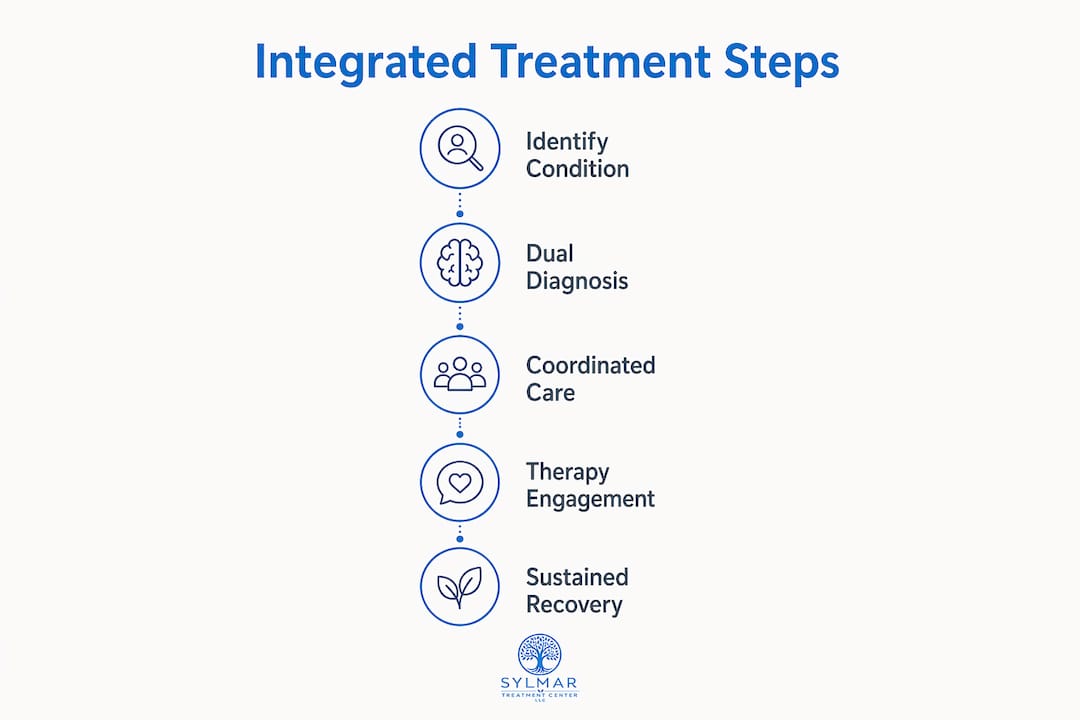
The evidence is clear: integrated psychological treatment improves outcomes and reduces relapse compared to treating disorders separately. Yet over 90% of adults with dual disorders do not receive integrated treatment. That gap between what works and what most people receive explains a significant portion of preventable relapses.
The older model of care told people to “get sober first” before addressing mental health. That approach is now understood to be counterproductive. Simultaneous trauma and addiction treatment outperforms sequential treatment in clinical outcomes. Waiting to address trauma, depression, or anxiety while in early recovery leaves the emotional pain that drives substance use completely unmanaged.
What integrated treatment looks like in practice
Integrated care combines multiple evidence-based approaches within a single coordinated program. Motivational interviewing, cognitive behavioral therapy, medication-assisted treatment, and trauma-informed care are the four most effective tools for dual diagnosis. Each one serves a specific function:
| Approach | Primary function in dual diagnosis care |
|---|---|
| Motivational interviewing | Builds readiness to change and reduces resistance to treatment |
| Cognitive behavioral therapy | Identifies and rewires thought patterns driving both addiction and mental health symptoms |
| Medication-assisted treatment | Stabilizes brain chemistry to reduce cravings and mood instability |
| Trauma-informed care | Addresses the emotional roots of substance use without destabilizing recovery |
Fragmented care, where a psychiatrist treats depression and a separate counselor treats addiction with no coordination, produces worse outcomes. The conditions interact constantly. Treatment must reflect that reality.
Pro Tip: When evaluating any treatment program, ask directly whether mental health and addiction are treated by the same clinical team using a shared care plan. If the answer is no, the program is not truly integrated.
How does depression affect addiction recovery specifically?
Depression is the mental health condition most commonly seen alongside substance use disorders, and its impact on recovery is severe. Depression and substance use disorders reinforce each other, creating a cycle that is difficult to break without targeted clinical support. Depression increases cravings, reduces motivation to attend therapy, and lowers the threshold for relapse.
Here is how depression specifically complicates the recovery process:
- Increased cravings: Low dopamine levels during depression make the brain seek the artificial reward that substances provide.
- Impaired motivation: Depression makes it genuinely harder to attend appointments, complete assignments, or engage in group therapy.
- Trigger stacking: A buildup of stressors like poor sleep, mood instability, and isolation compounds relapse risk. This is often mistaken for “lack of willpower” rather than recognized as a clinical symptom.
- Symptom confusion: Fatigue, emotional numbness, and ongoing isolation during recovery may indicate depression rather than just withdrawal effects. Without professional assessment, depression goes undiagnosed and untreated.
- Withdrawal overlap: The symptoms of early sobriety and depression look nearly identical. That overlap makes accurate diagnosis critical and difficult without a trained clinician.
Recognizing depression as part of relapse prevention, not just a separate personal struggle, changes how you approach your own recovery. It shifts the question from “Why can’t I stay motivated?” to “Is my depression being treated effectively?”
Practical strategies for managing mental health during recovery
Managing the impact of mental health on recovery requires a structured, consistent approach. No single strategy works alone. The most effective plans combine clinical treatment with daily habits that support brain health.
-
Get a comprehensive mental health assessment early. A thorough evaluation at the start of treatment identifies co-occurring conditions before they derail recovery. Ongoing monitoring matters just as much, since mental health symptoms shift over time.
-
Take medication management seriously. For many people in recovery, medication stabilizes mood and reduces cravings enough to make therapy effective. Skipping or stopping medication without clinical guidance is one of the most common triggers for relapse.
-
Use therapy that targets both conditions. Cognitive behavioral therapy and dialectical behavior therapy both address the thought patterns and emotional regulation skills that underlie addiction and mental health disorders. Dual diagnosis support programs integrate these therapies into a single treatment track.
-
Build peer support into your routine. Peer support groups specifically for dual diagnosis provide a space where you do not have to explain why sobriety alone did not fix everything. Connection with others who understand the mental health component reduces isolation, which is itself a relapse trigger.
-
Create a relapse prevention plan that includes mental health warning signs. A plan that only lists substance-related triggers misses half the picture. Include early signs of depression, anxiety spikes, and sleep disruption as warning signals that require immediate clinical attention.
Pro Tip: Track your mood daily using a simple 1–10 scale alongside your sobriety log. Patterns in mood data often predict relapse risk days before cravings appear, giving you and your treatment team time to respond.
Understanding what integrated treatment means for recovery helps you ask better questions and make more informed decisions about your care.
Key Takeaways
Untreated mental health conditions are the single most consistent predictor of relapse in addiction recovery, and integrated dual diagnosis treatment is the evidence-based standard for lasting sobriety.
| Point | Details |
|---|---|
| Dual diagnosis is common | Roughly 50% of people with substance use disorder have a co-occurring mental health condition. |
| Integrated treatment works | Treating addiction and mental health simultaneously reduces relapse and improves long-term outcomes. |
| Depression complicates recovery | Depression increases cravings, impairs motivation, and creates trigger stacking that raises relapse risk. |
| Sequential care falls short | Addressing mental health only after achieving sobriety leaves emotional pain unmanaged during the most vulnerable period. |
| Relapse is clinical feedback | A relapse in dual diagnosis recovery signals a need to adjust treatment, not a reason to abandon recovery. |
What I’ve learned watching people recover with and without mental health support
After years of observing recovery outcomes, one pattern stands out above all others. People who receive mental health treatment alongside addiction care do not just stay sober longer. They build lives that feel worth staying sober for. That distinction matters more than any clinical metric.
The hardest conversations I have seen are with people who completed a 30-day program, stayed clean for several months, and then relapsed. They blame themselves. They call it weakness. What they rarely know is that their untreated depression or unresolved trauma was working against them the entire time. The brain does not reward willpower when its chemistry is dysregulated. It rewards relief.
Relapse in co-occurring disorders should be treated as vital clinical feedback, not as failure. That reframe is not just compassionate. It is accurate. A relapse tells you and your treatment team that something in the plan needs to change. It is diagnostic information, not a verdict on your character.
The stigma around mental health in recovery settings still runs deep. Some people resist a depression diagnosis because they believe it means they are “too broken” to recover. The opposite is true. Identifying a co-occurring condition gives your treatment team a target. It turns a vague struggle into a solvable clinical problem. Pursuing integrated dual diagnosis treatment is not an admission of weakness. It is the most evidence-based decision you can make for your recovery.
— Jim
How Sylmartreatmentcenter supports your recovery from both sides
Sylmartreatmentcenter treats addiction and mental health as the connected conditions they are. The center’s individualized treatment programs begin with a comprehensive assessment that identifies co-occurring disorders before treatment starts, not after a relapse reveals them. Every care plan addresses both substance use and mental health symptoms through evidence-based methods including cognitive behavioral therapy, medication-assisted treatment, and trauma-informed care. The intimate six-bed setting means your treatment team knows your case in detail, not just your diagnosis. Sylmartreatmentcenter holds a DHCS license and Joint Commission accreditation, so the quality of care meets the highest clinical standards. If you are ready to address both sides of your recovery, contact Sylmartreatmentcenter to speak with an admissions specialist 24/7.
FAQ
What is dual diagnosis in addiction recovery?
Dual diagnosis means a person has both a substance use disorder and at least one co-occurring mental health condition. Roughly 50% of people with substance use disorder meet this definition.
How does depression affect addiction recovery?
Depression increases cravings, reduces motivation to engage in therapy, and creates trigger stacking that raises relapse risk. Treating depression as part of recovery, not separately from it, significantly improves outcomes.
Why is integrated treatment better than treating addiction alone?
Integrated treatment addresses the neurobiological and emotional roots of both conditions at the same time. Over 90% of adults with dual disorders do not receive integrated care, which is a leading cause of preventable relapse.
Can relapse mean my treatment plan needs to change?
Yes. In dual diagnosis recovery, a relapse is best understood as clinical feedback indicating that the current treatment plan needs adjustment. It is not a sign that recovery is impossible.
How do I know if my mental health is affecting my recovery?
Signs include persistent fatigue, emotional numbness, social withdrawal, difficulty engaging in therapy, and cravings that feel tied to mood rather than habit. A professional mental health assessment is the most reliable way to get an accurate answer.