
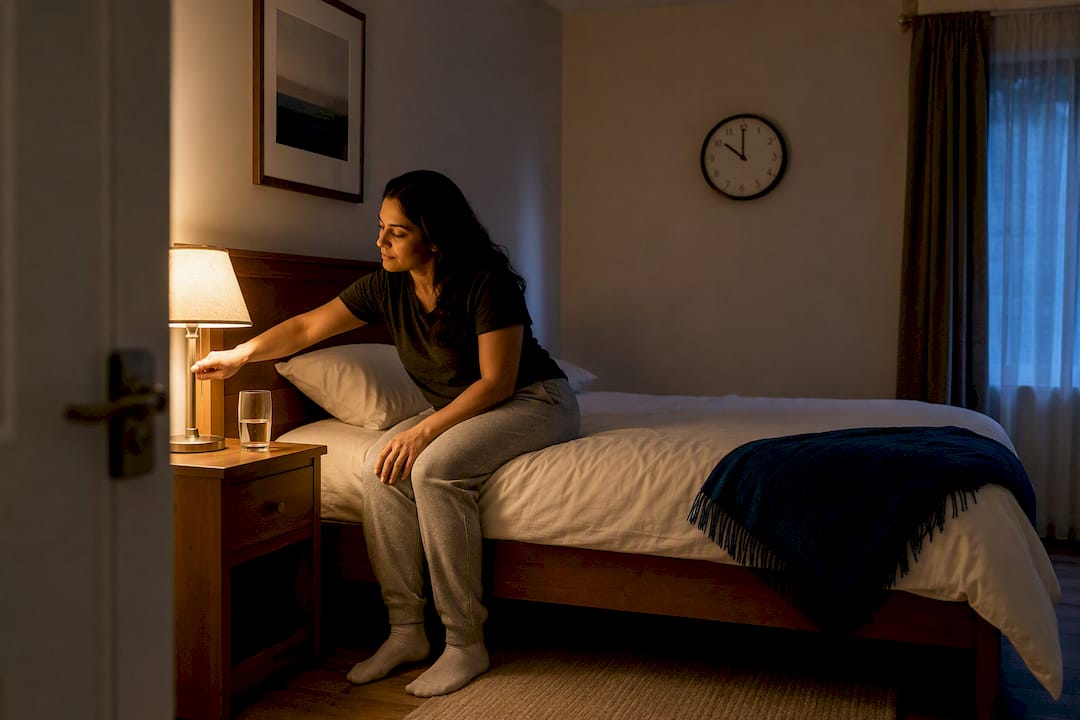
A typical inpatient rehab day runs from early morning vitals and breakfast through two structured therapy blocks, wellness time, and a set evening wind-down, with lights out by 10 p.m. Programs usually last 30, 60, or 90 days, and daily programming intensifies once initial detox has cleared. Below is an hour-by-hour example, followed by how that structure shifts across the phases of treatment.
TL;DR:
- The initial days of inpatient rehab focus on medical stabilization, with detox lasting 48 to 96 hours depending on the substance and patient health.
- The recovery schedule accelerates after detox, with therapy intensifying around days 4 to 10, and reaching full clinical pace by days 11 to 20.
- Weekend and holiday schedules often reduce therapy hours, replacing groups with recreational activities, family visits, or optional support meetings.
- Treatment plans are highly individualized, with flexibility to adjust session frequency based on co-occurring conditions and patient needs.
- Discharge planning begins early, usually within the first week, to ensure medication continuity and smooth community reintegration.
Table of Contents
- Inpatient Rehab Schedule: An Hour-by-Hour Sample Day
- How the Schedule Changes From Detox Through Discharge
- What’s Actually Happening in Each Scheduled Block
- Admission and the First Days of Medically Supervised Detox
- Why the Structure Itself Is Part of the Treatment
- Getting Ready for Admission Day
- Why Individualized Scheduling Matters More Than People Expect
- Ready to Talk to Admissions About What Your Days Will Look Like?
- Sources
- FAQ
Inpatient Rehab Schedule: An Hour-by-Hour Sample Day
Most residential programs build their daily activities around three fixed anchors: meals, medical checks, and therapy blocks. Everything else gets scheduled around those. The version below reflects a common weekday structure once a patient is past acute detox and into the core therapy phase, drawing on patterns RehabSearch documents across residential programs.
- 6:30–8:00 a.m.: Wake, vitals, and breakfast. Staff check vital signs and administer any scheduled medications before patients eat. This window also covers hygiene and making beds, a small routine that matters more than it sounds like it should.
- 8:30–11:00 a.m.: Morning clinical block. This is usually the heaviest lift of the day, opening with a community meeting where the group sets intentions or reviews house matters, then moving into process group therapy and a psychoeducation session on topics like relapse triggers or the neuroscience of addiction.
- 11:30 a.m.–1:30 p.m.: Individual sessions and lunch. Patients rotate through one-on-one appointments with their primary therapist, then eat lunch and get a genuine break. No programming, no expectations, just downtime.
- 2:00–4:30 p.m.: Afternoon specialty block. This slot varies more than any other. It might hold a relapse-prevention skills group, a trauma-informed session, or wellness programming like yoga, art therapy, or supervised exercise.
- 5:30–8:30 p.m.: Dinner and evening support. After dinner, many facilities run a 12-step meeting, a peer support group, or scheduled family therapy time. This is often where family sessions land specifically, since patients have already worked through a full clinical day and have less emotional reserve left to spend, so the schedule protects that window rather than stacking family work on top of morning therapy.
- 8:30–10:00 p.m.: Wind-down. Journaling, reading, a final medication check, and lights out. Some programs build in a short reflection group here instead of leaving it unstructured.
Weekends and holidays loosen this template. Clinical hours often shrink to one therapy block instead of two, replaced by recreational outings, extended family visiting hours, or optional 12-step meetings. Special events like holiday dinners or alumni panels sometimes replace an afternoon group entirely. About one in eight people who receive substance use treatment nationally do so in a residential setting, and the schedules across those settings tend to converge on this same basic rhythm even when the specific groups differ.
How the Schedule Changes From Detox Through Discharge
The daily routine on day two looks nothing like the routine on day twenty five, and that gap is intentional. Most inpatient rehabilitation timetables follow a phased model: intake and detox, a settling-in period, core therapy weeks, and step-down toward discharge, according to RehabSearch’s breakdown of residential treatment.
- Days 0 to 3: The schedule slows way down. Medical monitoring takes priority, activity is limited, and formal group therapy usually waits until withdrawal symptoms ease.
- Days 4 to 10: Therapy and group participation increase gradually as the body stabilizes. Patients often join their first process groups here rather than jumping straight into a full clinical day.
- Days 11 to 20: This is the full-intensity stretch, with regular individual sessions layered on top of daily groups and psychoeducation.
- Days 21 and beyond: The emphasis shifts toward step-down. Aftercare planning, community reintegration exercises, and relapse-prevention rehearsal take up more of the day as clinical intensity levels off.
Clinical leaders specifically avoid ramping intensity up too fast. SAMHSA’s research on residential treatment scheduling notes that programs typically ease the schedule in the days right after detox and build to a high-intensity clinical schedule by the second week, specifically to avoid overwhelming patients before they’re ready. Programs longer than 30 days use that extra runway for deeper trauma processing and vocational or life-skills work that shorter stays simply don’t have room for.
Pro Tip: If your first few days feel lighter than you expected, that’s not the program going easy on you. It’s deliberate pacing, and the workload will climb once your body has caught up.
What’s Actually Happening in Each Scheduled Block
Reading a printed schedule with labels like “process group” or “psychoeducation” doesn’t tell you much unless you know what each block is for. Here’s what those labels typically mean in practice.
- Process groups let patients work through real, current issues together in real time, guided by a therapist. Skills groups teach a specific technique, like grounding exercises or communication tactics. Relapse-prevention groups focus narrowly on identifying triggers and building a concrete response plan.
- Individual therapy usually happens two to four times a week, often built on cognitive behavioral therapy, dialectical behavior therapy, or motivational interviewing, depending on the patient’s needs and diagnosis.
- Medication and psychiatric management runs on its own separate track, with nursing checks at set times daily and psychiatric consultations scheduled weekly or as needed, especially for patients managing a co-occurring mental health diagnosis alongside substance use.
- Wellness and recreational therapy, things like exercise, art, or mindfulness sessions, aren’t filler. They give the nervous system a break from intensive processing and often surface material patients don’t access through talk therapy alone.
- Family programming typically starts in week two or three, once the patient has some clinical footing, and gets scheduled in the evening so patients aren’t asked to do family work right after a demanding morning group.
Admission and the First Days of Medically Supervised Detox
The first thing that happens at intake is a full clinical picture: medical history, lab work, and a psychiatric assessment, usually completed within the first few hours of arrival. From there, medically supervised detox typically runs 48 to 96 hours, though the exact length depends heavily on the substance involved and the patient’s overall health. Sylmar Treatment Center’s approach to 24/7 detox admissions reflects why round-the-clock monitoring matters during this window: withdrawal symptoms don’t follow business hours.
During detox itself, the daily schedule is stripped down. Group therapy usually waits until vital signs stabilize, and most of the day is medical monitoring, rest, and light check-ins rather than clinical programming.
- Expect vitals checks every few hours, sometimes more often depending on the substance.
- Withdrawal medications (commonly buprenorphine, clonidine, or benzodiazepines, depending on what’s being treated) are managed under close supervision.
- Bring your current medication list and your prescriber’s contact information; it speeds up the medical history process significantly.
By the numbers: Medically supervised detox commonly lasts 48 to 96 hours, based on clinical guidance on withdrawal management, and transitioning directly from detox into rehab programming tends to preserve momentum that a gap between the two can undermine.
Why the Structure Itself Is Part of the Treatment
A packed schedule isn’t just about keeping people busy. Unstructured time is exactly when cravings and rumination take hold, so a full daily routine closes off the hours where relapse risk tends to spike. That’s not a minor design choice. NIDA’s research shows that longer stays, 60 to 90 days or more, correlate with better long-term recovery outcomes compared to shorter stays, and consistent daily programming is a big part of why duration matters.
The rhythm itself does real clinical work. Consistent wake times, shared meals, and repeated therapy slots build a stability that’s sometimes more predictive of outcomes than any single therapy modality a patient goes through. Adherence to the daily routine, not just attendance at any one group, tends to be the stronger predictor.
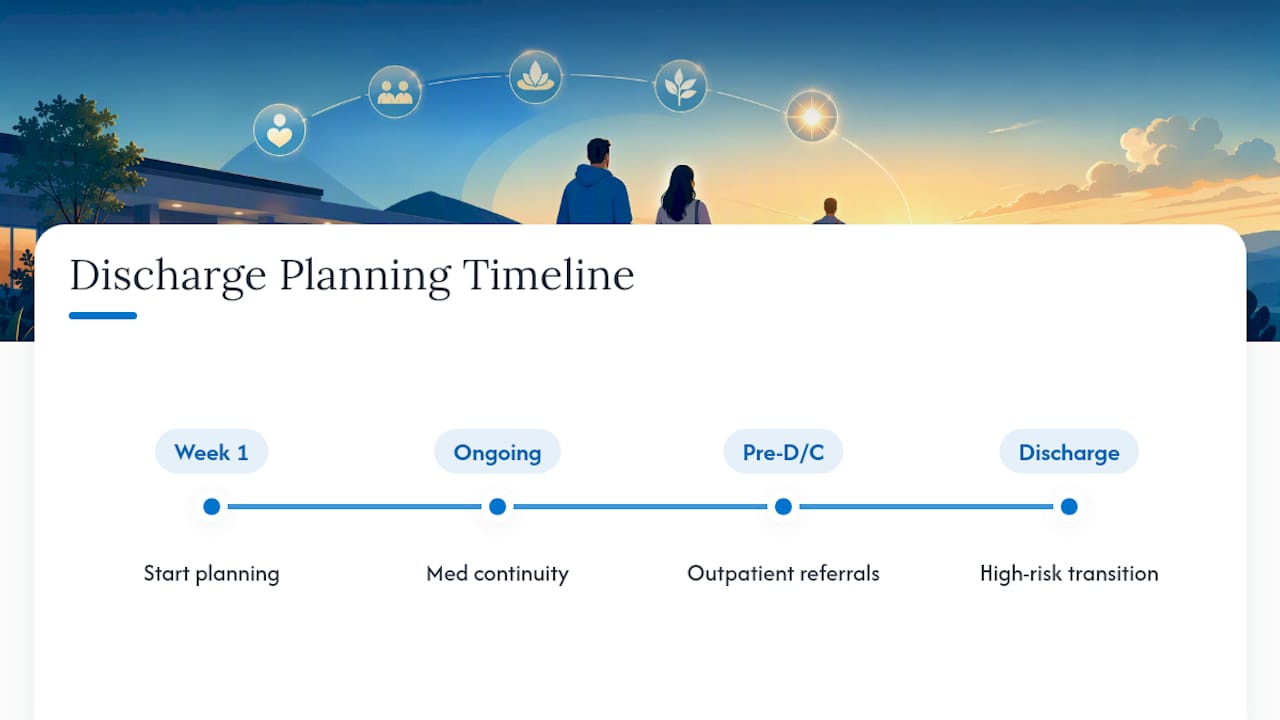
Discharge planning starts far earlier than most people expect, often in the first week. A case manager typically begins coordinating medication continuity, outpatient referrals, and even the first post-discharge support meeting well before a patient nears their actual discharge date, precisely because the exit from residential care is one of the highest-risk periods for relapse.
Getting Ready for Admission Day
Walking in prepared makes the first 48 hours considerably less stressful, and it gets you engaging with the schedule faster instead of losing the first day to paperwork.
- Pack identification, insurance information, and current prescriptions with the original bottles.
- Bring comfortable clothing that fits facility guidelines; most programs restrict certain items like drawstrings or provocative graphics.
- Ask admissions directly about phone access policy, visiting hours, and how the daily schedule shifts on weekends.
- Confirm what family involvement looks like early, since some programs schedule family sessions only after the first two weeks.
Pro Tip: Write down your questions before your admission call. Once intake starts moving, it’s easy to forget to ask about visiting hours or phone policy until you’re already three days in.
Why Individualized Scheduling Matters More Than People Expect
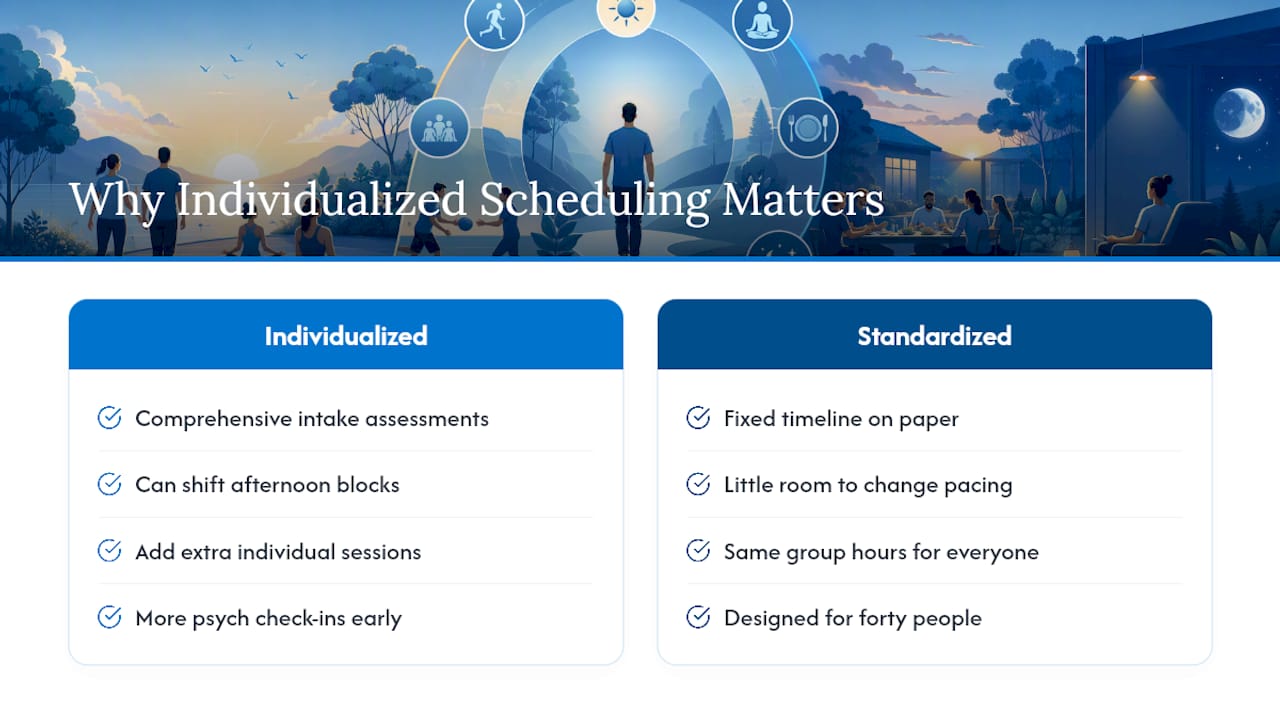
Standardized schedules make sense on paper, but recovery rarely happens on a fixed timeline. At Sylmar Treatment Center, comprehensive intake assessments shape not just the treatment plan but the actual pacing of a patient’s day. Someone managing a co-occurring dual diagnosis may need more psychiatric check-ins and fewer group hours early on than someone without that overlap.
A six-bed setting makes that kind of adjustment realistic instead of aspirational. Staff can shift someone’s afternoon block or add an extra individual session without disrupting a facility-wide schedule built for forty people. That flexibility, paired with individualized residential treatment, is what a rigid, one-size schedule can’t replicate.
— Jim
Ready to Talk to Admissions About What Your Days Will Look Like?
If you’ve read this far, you already know the real question isn’t just “what’s the schedule,” it’s “will the schedule actually fit what I need.” A rigid, high-volume facility schedules by the calendar. Some treatment centers schedule around the patient, often enabled by smaller settings that allow for more individualized care.
Sylmar’s programs cover medically supervised detox, individualized residential care, and integrated support for co-occurring mental health conditions, all built around comprehensive intake rather than a fixed template. Admissions is available 24/7, and getting a same-day answer about bed availability and how your daily schedule would actually look is one call away. Reach out through Sylmar Treatment Center’s admissions line to ask what your first week would realistically involve.
Sources
- Inpatient Rehab: What to Expect From Residential Treatment | RehabSearch
- NIDA Principles of Drug Addiction Treatment
- Clinical guidance on withdrawal management (NCBI/NIH)
This article is general information, not a substitute for advice from a qualified doctor. Consult a qualified healthcare professional about your own circumstances before acting on anything here.
FAQ
What is the 3-hour rule for inpatient rehabilitation?
The 3-hour rule is a Medicare requirement specifically for inpatient rehabilitation facilities (not addiction treatment centers), requiring patients to tolerate at least three hours of therapy daily; it doesn’t apply to residential substance use treatment schedules. For addiction-specific inpatient programs, therapy hours vary by phase and typically build gradually after detox rather than following a fixed hourly minimum.
What are the stages of inpatient rehab?
Most programs move through four stages: intake and medically supervised detox, a settling-in period as clinical intensity increases, core therapy weeks at full intensity, and a step-down phase focused on aftercare and discharge planning, as described in RehabSearch’s overview.
How many days does Medicare allow for a rehab facility stay?
Medicare coverage rules for inpatient rehabilitation facilities are set out in CMS’s payment system guidance, and coverage length depends on medical necessity and specific plan details rather than one fixed number of days.
How long does inpatient rehab typically last?
Common program lengths run 30, 60, or 90 days, with NIDA research associating stays of 60 to 90 days or longer with better long-term recovery outcomes than shorter stays.
When does detox end and therapy begin?
Medically supervised detox commonly lasts 48 to 96 hours, and formal group therapy usually starts once vital signs stabilize, often within the first several days after admission.