

If substance use and mental health symptoms keep showing up together, and each makes the other harder to manage, you may need dual diagnosis treatment: care that treats both conditions at the same time, by one coordinated team. A dual diagnosis means a mental disorder and a substance use disorder at the same time, also called co-occurring disorders. This guide lists the signs, explains why they are hard to separate, and shows when to ask for an assessment. At Sylmar Treatment Center, our dual diagnosis program is built for exactly this situation, in a six-bed residential setting.
TL;DR
- Dual diagnosis means a mental health condition and a substance use disorder exist together. Treating both at once is usually better than treating them separately.
- Key signs: using more to get through the day, mood swings, withdrawal from people, trouble at work or school, and sleep or appetite changes that do not settle.
- SAMHSA says two or more weeks of changes that make daily life hard is a point to ask for help.
- Symptoms overlap, so only a professional integrated assessment can tell what is driving what.
- In a crisis, call or text 988.
Table of Contents
- What dual diagnosis means in plain terms
- Signs in how you feel and think
- Signs in substance use
- Signs other people notice
- Why the signs are hard to read
- When to ask for an assessment
- What a proper assessment covers
- What integrated treatment looks like
- How Sylmar approaches it
- Our perspective
- FAQ
- Sources
What dual diagnosis means in plain terms
Mental health conditions include depression, anxiety, bipolar disorder, PTSD and others. Substance use disorders involve alcohol or drugs. When someone has one of each, that is a dual diagnosis. It is common: 17 million people in the U.S. had both a mental health and a substance use issue in 2020, according to DuPage County Health in Illinois.
Researchers describe three possible links: shared risk factors such as genetics, stress and trauma; a mental disorder leading someone to use substances to cope; and substance use contributing to a mental disorder. In real life, more than one of these is often at work.

Signs in how you feel and think
These are the emotional and mental signals that deserve attention, especially when they appear alongside drinking or drug use:
- Frequent sadness, anxiety, worry or hopelessness
- Trouble concentrating or feeling “off” so that you cannot work or attend school
- Loss of interest in things you used to enjoy
- Loss of self-worth or thoughts of ending your life
- Anger outbursts, irritability or sudden mood changes
Medicare.gov’s mental health guide lists several of these, including hopeless feelings, social withdrawal, trouble sleeping and increased use of alcohol or other drugs, as reasons to talk with a doctor or other health care provider.
If you have thoughts of suicide, do not wait for an appointment. 988 takes calls and texts at any hour, and you can also chat at 988lifeline.org.
Signs in substance use
SAMHSA’s guidance names these patterns as signs that help may be needed:
- Needing to use more and more often to keep from getting sick
- Not taking care of yourself
- Facing consequences from your behavior
- Becoming involved with the legal system
A useful self-check from the DuPage County Health guidance: if things like needing a substance just to get through the day happen many times in a week, it may signal a mental health or substance use issue.
If you stop using and feel physically ill, anxious or low, do not stop suddenly on your own. Withdrawal from some substances can be dangerous, and a medically supervised detox exists to manage it safely. Our medical detoxification is medically supervised.
Signs other people notice
Families often see the pattern before the person does. SAMHSA lists these behavioral and physical changes:
- A drop in attendance or performance at work or school
- Frequently getting into trouble
- Secretive or suspicious behavior
- Appetite or sleep changes
- Unexplained personality or attitude changes, mood swings, irritability, angry outbursts
- Unusual hyperactivity, agitation or giddiness
- Bloodshot eyes, unusual pupil size, sudden weight loss or gain, declining appearance, unusual smells, tremors, slurred speech or poor coordination
No single item proves anything. What matters is a cluster that persists, and a person pulling away from family and friends while their substance use rises.
Why the signs are hard to read
Substances can mimic or mask mental health symptoms, and the reverse is also true. NIMH explains that symptoms may overlap, so an accurate diagnosis is key, and that providers experienced in both areas can use comprehensive assessment tools to lower the chance of a missed diagnosis.
SAMHSA notes that it is not always apparent whether a mental disorder is caused by substance misuse, whether the person is using to cope, or whether the mental disorder stands on its own. Telling these apart is difficult but critically important because it shapes treatment decisions.
This is the core reason families get stuck. Treat only the drinking, and untreated anxiety or depression can pull the person back. Treat only the depression, and ongoing substance use can undermine every gain. Worked example: a person starts drinking nightly to quiet panic attacks. Within months the drinking causes poor sleep and low mood, which worsens the anxiety. Neither problem can be solved alone.

When to ask for an assessment
SAMHSA says it may be time to ask for help after two or more weeks of changes in thoughts, mood or body that make it hard to manage work, school, home or relationships. Ask sooner if any of these apply:
- Substance use is increasing while mood or anxiety worsens
- There has been a legal consequence, such as a DUI or a court referral
- Past attempts to cut back or quit failed because symptoms returned
- There are thoughts of self-harm
Early detection matters. SAMHSA reports that with early detection, integrated treatment can improve outcomes, including reduced substance use, better psychiatric symptoms and functioning, decreased hospitalization, increased housing stability and fewer arrests.
For mood symptoms in particular, it helps to understand when changes in mood call for an evaluation by a healthcare provider.
What a proper assessment covers
A good assessment looks at the whole person. SAMHSA’s treatment guidance describes steps that include engaging the client, gathering information from family or other providers, screening for co-occurring disorders, determining level of care, diagnosis, functional impairment, strengths and supports, stage of change and treatment planning.
For families, the practical takeaway: your observations are useful information, and a good program will ask for them.
SAMHSA also notes some counselors think people should be alcohol and drug free for at least 3 to 4 weeks before emotional illness can be identified correctly. That is one reason a structured, supervised setting, starting with detox, can give clearer answers than outpatient visits alone.
What integrated treatment looks like
MedlinePlus says it is usually better to treat both conditions at the same time, with a plan that reflects your age, the substances involved and the specific mental disorders. It may include behavioral therapy, medicines and long-term residential treatment.
In integrated care, the same clinicians or teams, working in one setting, deliver both mental health and substance use interventions in a coordinated way, so services feel seamless. That is the opposite of being bounced between a rehab and a separate psychiatrist who never speak.
To learn more about what to ask any program, see our guide on dual diagnosis versus co-occurring disorders and our overview of integrated treatment options. If specific conditions concern you, we have also written about anxiety and substance use, ADHD and substance use and OCD and addiction.
How Sylmar approaches it
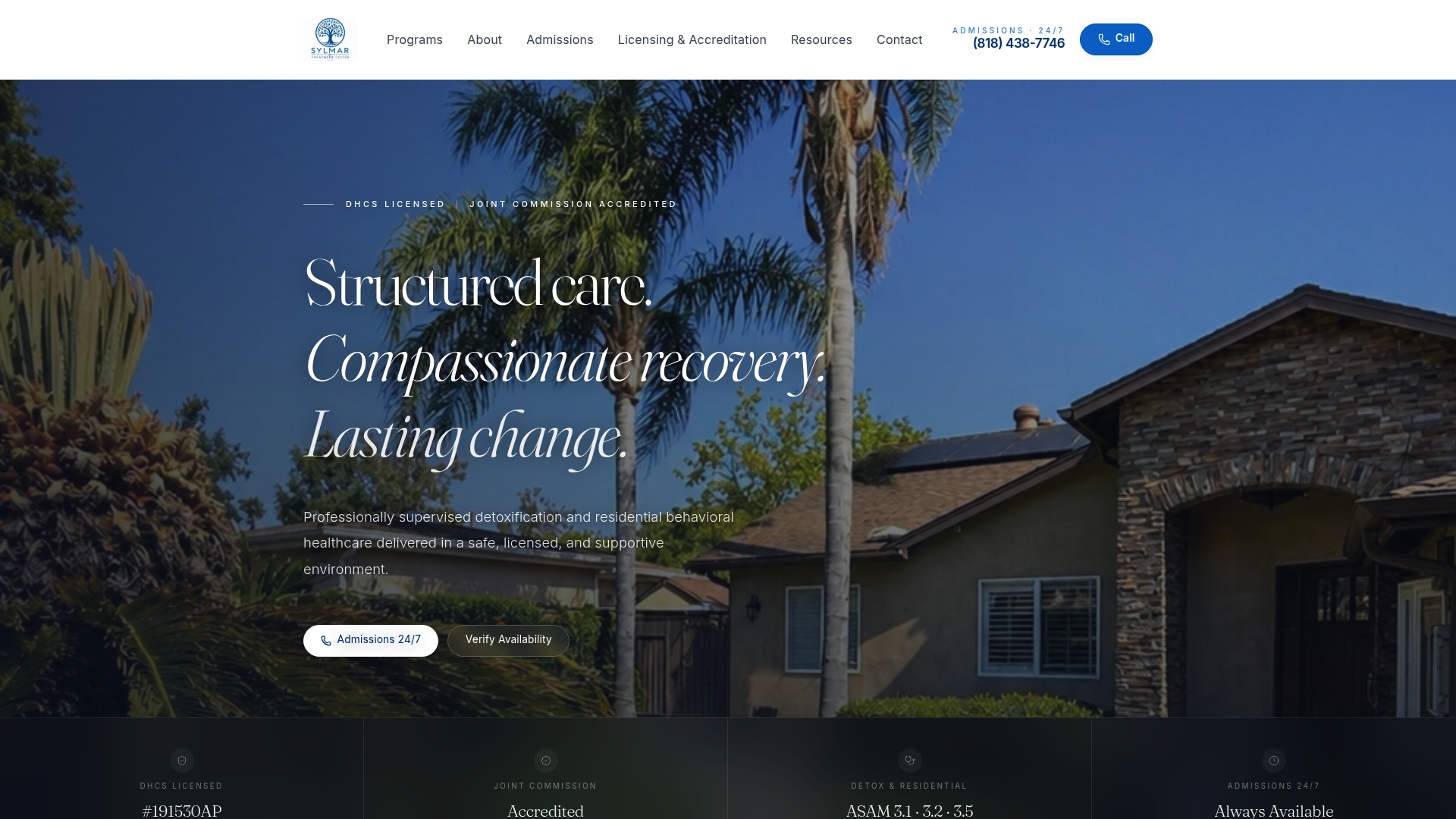
Sylmar Treatment Center treats substance use and co-occurring mental health disorders together through evidence-based practices. We are a six-bed residential center, so clients and staff know each other. Care starts with a comprehensive assessment and a custom care plan, and we offer medically supervised detox, residential treatment, behavioral rehabilitation and medication management with psychiatric oversight. We hold a California DHCS license and Joint Commission accreditation, and admissions support is available 24/7.
If you are ready to talk about next steps, our dual diagnosis program page explains how we work, and you can reach us through our main site. We also coordinate court-directed placements for legal professionals and families.
Our perspective
The families who reach us rarely arrive with a neat label. They arrive with a story: the drinking got worse after the panic started, or the depression deepened once the pills began. Both are true at once.
We believe that is why size and continuity matter. In a six-bed home, one team gets to know the whole person, medication and therapy are coordinated under psychiatric oversight, and nobody has to repeat their history to a new stranger each week.
If you recognize the signs in this article, you do not need to be certain of a diagnosis to call. An assessment is how certainty starts.
Jim
FAQ
Can I have a dual diagnosis without knowing it?
Yes. Symptoms overlap, and substance use can hide or imitate mental health conditions, so many people only learn about both during a thorough assessment. NIMH says experienced providers use comprehensive tools to reduce missed diagnoses.
How long should symptoms last before I seek help?
SAMHSA suggests that two or more weeks of changes making work, school, home or relationships hard to manage is a point to ask for help. If you have thoughts of suicide, call or text 988 right away.
Is it better to treat addiction first and mental health later?
MedlinePlus says treating both conditions at the same time is usually better than treating them separately. SAMHSA also states that treating both increases the chances of recovery.
How can a family help someone who denies there is a problem?
Share specific, calm observations rather than labels, and offer to help them get an assessment. Many people with dual diagnosis find it hard to engage with services, and consistent, supportive involvement from family helps over months and years.
Sources
- Dual Diagnosis: MedlinePlus
- DuPage County Health: Co-Occurring Mental Health and Substance Use Disorder
- Medicare & Your Mental Health Benefits
- SAMHSA: Signs You Need To Seek Help
- SAMHSA: What are Co-Occurring Disorders?
- NIMH: Finding Help for Co-Occurring Substance Use and Mental Disorders
- SAMHSA: Substance Use Disorder Treatment for People with Co-Occurring Disorders
- SAMHSA: Managing Life with Co-Occurring Disorders
- SAMHSA: What is substance abuse treatment?
- Psychiatric Services: Implementing Dual Diagnosis Services