

Detox is a medical process that clears substances from the body safely, but it is not a standalone treatment for addiction. The clinical term is medically managed withdrawal, and it addresses only the physical side of a condition that runs far deeper. Relapse rates for substance use disorders sit at 40%–60% even with full treatment. Without follow-up care, those numbers climb sharply. SAMHSA and the broader addiction medicine field are clear: detox is the entry point, not the destination. Understanding why detox alone is not treatment is the first step toward choosing care that actually works.
Why detox alone is not treatment: what the medical evidence shows
Detox accomplishes one specific goal. It manages acute withdrawal symptoms under medical supervision so the body can clear the substance safely. That is genuinely necessary. Unsupervised withdrawal from alcohol or benzodiazepines can be fatal, and supervised detox prevents those complications.
The problem is what detox cannot do. Medically managed withdrawal lasts 3–5 days on average. Brain healing after chronic substance use takes 3–6 months or more. That gap is not a minor detail. It means a person leaving detox still has disrupted dopamine pathways, impaired impulse control, and no new skills for managing stress or cravings.
Detox also does not touch the behavioral or psychological drivers of addiction. The thought patterns that led to substance use, the environments that trigger cravings, the unresolved trauma or mental health conditions underneath it all remain completely intact. Addiction and mental health disorders affect overlapping brain systems, and treating only the physical withdrawal leaves those systems unaddressed.

Pro Tip: If you or someone you love is completing detox, ask the treatment team directly: “What is the plan for the next 30 days?” If there is no clear answer, that is a warning sign.
Why does detox so often lead to relapse and overdose?
The relapse risk after detox alone is not a matter of willpower. It is a predictable outcome of incomplete treatment.
- Tolerance drops sharply during detox. A person who returns to their previous dose after detox faces a serious overdose risk because their body can no longer handle that amount.
- Triggers and environmental cues remain unchanged. The same people, places, and emotional states that drove use before detox are still present afterward.
- Post-acute withdrawal syndrome (PAWS) produces anxiety, disrupted sleep, and intense cravings for weeks to months after detox ends.
- Coping deficits persist. Detox does not teach relapse prevention strategies, stress management, or how to rebuild a sober support network.
- Most relapse cases occur without structured post-detox support, often within weeks of discharge.
The numbers are stark. Detox plus rehab and aftercare produces 1-year success rates of 40%–60%. Detox alone produces success rates of 10%–20%. That difference represents real lives.
Addiction is a chronic relapsing condition that often requires multiple recovery attempts. Framing it otherwise sets people up for shame when relapse occurs, rather than prompting them to seek the additional care they need. Naloxone availability and education during the early sobriety period are critical precisely because the overdose risk is highest right after detox ends.
What comprehensive treatment actually includes
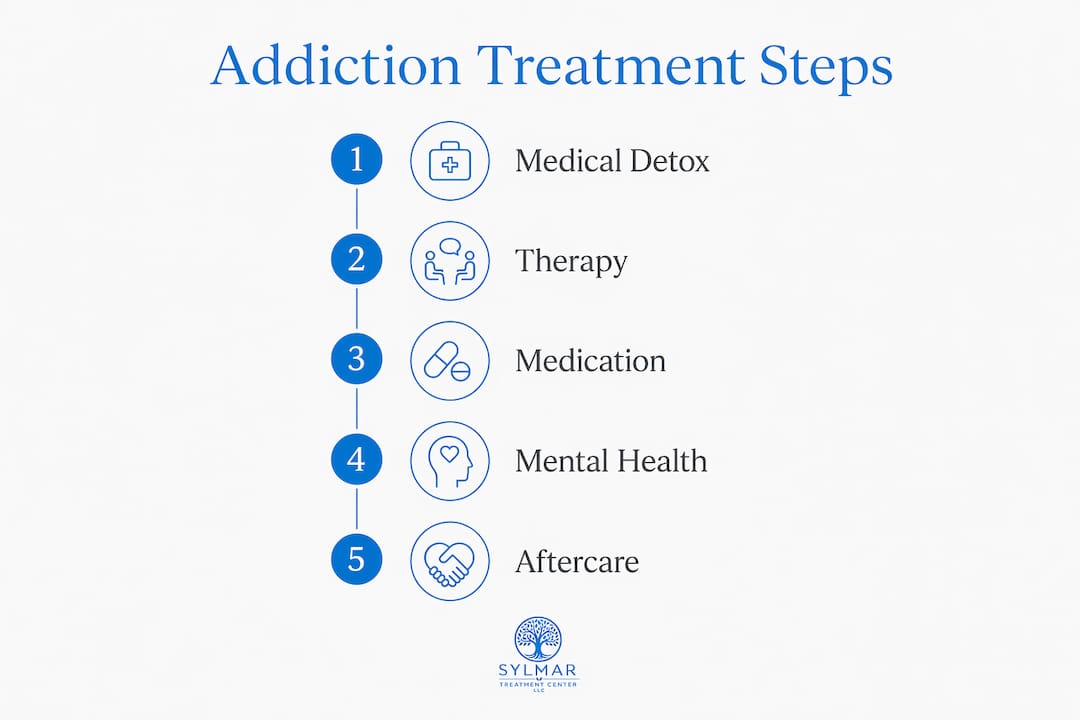
Comprehensive addiction treatment is the clinical standard that follows detox. Rehab programs typically run 30–90 days for inpatient care, with outpatient options extending 8–24 weeks. That duration exists for a reason: it takes time to rewire behavioral patterns and build the skills that prevent relapse.
Medication-assisted treatment and therapy working together
Individuals receiving combined medication-assisted treatment (MOUD) and psychotherapy show significantly lower emergency and inpatient admissions compared to those who received detox only. MOUD medications such as buprenorphine and naltrexone reduce physiological cravings, making it possible for therapy to do its work. Neither approach alone is as effective as both together.
Behavioral therapies like Cognitive Behavioral Therapy (CBT) and Dialectical Behavior Therapy (DBT) address the thought patterns and emotional regulation deficits that drive substance use. They teach concrete skills: how to identify a trigger, how to interrupt a craving cycle, how to ask for help. These are not abstract concepts. They are practiced repeatedly until they become automatic.
Treating co-occurring mental health conditions
A large share of people with substance use disorders also live with depression, anxiety, PTSD, or other mental health conditions. Integrated treatment for co-occurring disorders addresses both simultaneously. Treating only the addiction while leaving a mental health condition unmanaged creates a revolving door. The mental health symptoms drive substance use, and the substance use worsens the mental health symptoms.
| Treatment component | What it addresses |
|---|---|
| Medical detox (3–5 days) | Acute withdrawal and physical stabilization |
| Medication management (MOUD) | Physiological cravings and withdrawal symptoms |
| Behavioral therapy (CBT, DBT) | Thought patterns, triggers, and coping skills |
| Dual diagnosis treatment | Co-occurring mental health conditions |
| Aftercare and peer support | Long-term accountability and relapse prevention |
Pro Tip: When evaluating a treatment program, ask whether mental health screening is part of the intake process. If it is not, the program may miss a major driver of your substance use.
How to move safely from detox into full treatment
The transition from detox to ongoing treatment is the most vulnerable moment in early recovery. Patients often relapse within weeks after detox because triggers, environment, and coping deficits remain unaddressed. Planning the next step before detox ends is not optional. It is the difference between recovery and relapse.
- Plan rehab placement during detox, not after. The detox team should begin coordinating the next level of care on day one, not on discharge day. Detox and rehab staff working as one team improves treatment completion and reduces relapse.
- Choose the right level of care. Severity of use, co-occurring conditions, and home environment all determine whether residential treatment, partial hospitalization, or intensive outpatient is the right fit. A clinical assessment during detox guides this decision.
- Keep medical supervision continuous. Some patients need medication management to continue through the transition. Stopping medications abruptly between detox and rehab creates unnecessary risk.
- Involve family early. Family members who understand addiction as a chronic condition, rather than a moral failure, provide more effective support. Many programs include family education as part of the treatment plan.
- Build an aftercare plan before discharge. Aftercare includes ongoing therapy, peer support groups, and check-ins with a counselor. Knowing what comes next reduces the anxiety that drives early relapse.
The goal of this sequence is continuity. Every gap between steps is an opportunity for relapse. Eliminating those gaps is what structured, coordinated care does.
Key Takeaways
Detox alone is not treatment because it clears the body but leaves the behavioral, psychological, and social roots of addiction completely untouched.
| Point | Details |
|---|---|
| Detox is a starting point | Medically managed withdrawal lasts 3–5 days; brain healing takes 3–6 months or more. |
| Relapse risk is highest after detox | Success rates jump from 10%–20% with detox alone to 40%–60% with full treatment and aftercare. |
| Overdose danger spikes post-detox | Tolerance drops during detox, making a return to previous doses potentially fatal. |
| Comprehensive treatment addresses root causes | Behavioral therapy, MOUD, and dual diagnosis care tackle what detox cannot. |
| Transition planning saves lives | Coordinating rehab during detox, not after, is the single most effective way to prevent early relapse. |
The misconception that costs people the most
I have watched this pattern repeat more times than I can count. A family member calls, exhausted and relieved, to say their loved one just completed detox. They believe the hard part is over. Three weeks later, they call again.
Detox is sold, sometimes literally, as a solution. Treatment centers that offer only detox have a financial incentive to present it as sufficient. Families, desperate for good news, hear what they want to hear. The result is that people spend real money on detox, feel genuine hope, and then face relapse with no framework for understanding why it happened.
The uncomfortable truth is that addiction is a chronic condition, not an acute one. You do not complete treatment for a chronic condition in five days. A person leaving detox is not recovered. They are physically stabilized and, if anything, more vulnerable than before because their tolerance is gone and their environment has not changed.
What I have seen work is the opposite of a quick fix. It is a structured, sequential plan that begins in detox and extends through residential care, outpatient therapy, medication management, and peer support. It is integrated treatment that treats the whole person, not just the withdrawal. And it requires families and patients to resist the temptation to stop at the first milestone.
Detox is chapter one. Stopping there means the story never gets written.
— Jim
Sylmartreatmentcenter: care that starts with detox and goes further
Detox is where recovery begins, not where it ends. Sylmartreatmentcenter is built around that principle.
The center’s six-bed setting means every patient receives a personalized assessment and a care plan built around their specific history, not a generic protocol. From medical detox through behavioral rehabilitation and medication management, the programs are designed to work as a sequence. Sylmartreatmentcenter holds both a DHCS license and Joint Commission accreditation, which means the care meets independently verified clinical standards. If you are ready to move beyond detox, view the full programs or call the 24/7 admissions line to speak with someone today.
FAQ
What is the difference between detox and addiction treatment?
Detox is the medically supervised process of clearing substances from the body and managing withdrawal symptoms, typically lasting 3–10 days. Addiction treatment is the broader, longer process of addressing the behavioral, psychological, and social factors that drive substance use.
How long does comprehensive addiction treatment take?
Inpatient rehab programs typically run 30–90 days, while outpatient options extend 8–24 weeks. The right duration depends on the severity of use, co-occurring conditions, and individual progress.
Why is relapse risk so high right after detox?
Tolerance drops during detox, so returning to a previous dose carries a serious overdose risk. Triggers, behavioral patterns, and coping deficits remain unchanged, making relapse highly likely without structured follow-up care.
What is post-acute withdrawal syndrome (PAWS)?
PAWS refers to symptoms like anxiety, disrupted sleep, and cravings that persist for weeks to months after detox ends. These symptoms require ongoing clinical support and are a primary reason why detox alone is insufficient.
Does medication-assisted treatment work alongside therapy?
Patients receiving combined MOUD and psychotherapy show significantly lower emergency and inpatient admissions than those who received detox only. The two approaches address different aspects of addiction and are most effective when used together.
Recommended
- How Detox Prepares Patients for Rehab: 2026 Guide | Sylmar Treatment Center
- Why Supervised Detox Is Necessary for Safe Recovery | Sylmar Treatment Center
- Examples of Detox Treatment Protocols: A Clinical Guide | Sylmar Treatment Center
- Substances Requiring Medical Detox: A Safety Guide | Sylmar Treatment Center