
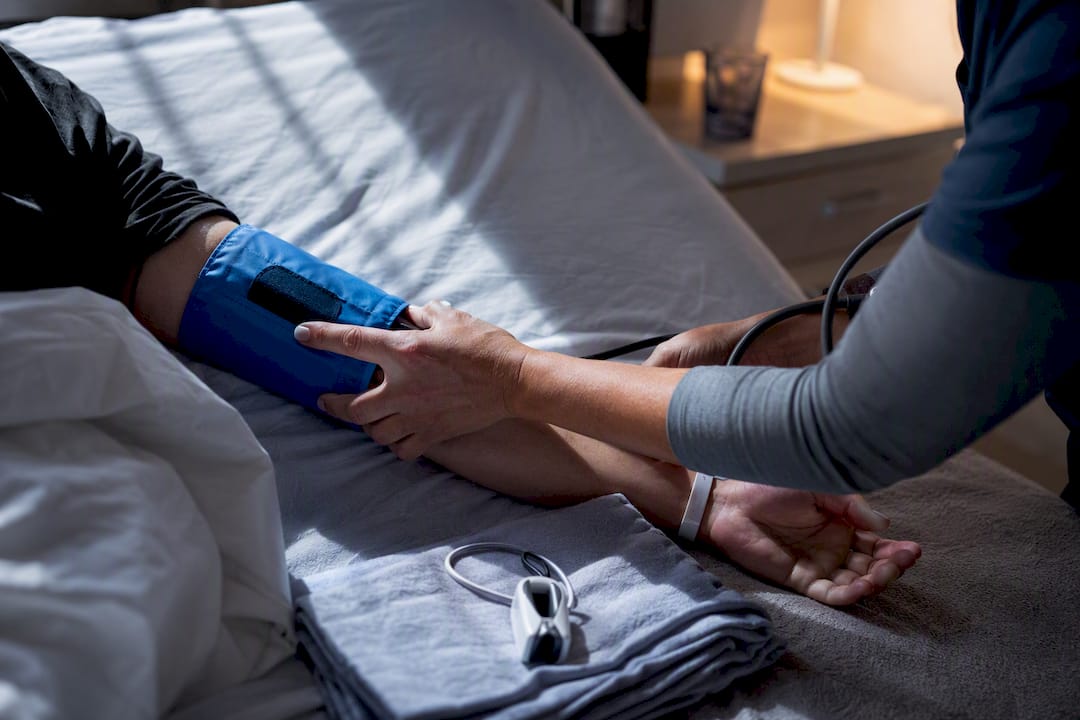
Xylazine withdrawal is best managed with medically supervised, multimodal treatment centered on alpha-2 agonists plus targeted symptom control. Opioid medications for opioid use disorder alone often fail to touch the sympathetic overdrive xylazine leaves behind. Anyone facing severe agitation, dangerously high blood pressure, breathing trouble, or infected wounds needs supervised detox, not a home attempt. Getting addiction medicine, psychiatry, and wound care involved early is what keeps people in treatment instead of walking out against medical advice.
TL;DR:
- Xylazine withdrawal symptoms often persist despite adequate opioid treatment, highlighting the need for targeted alpha-2 agonist therapy.
- Oral clonidine is the primary outpatient medication used to manage autonomic symptoms, with ICU options like dexmedetomidine reserved for severe cases.
- Early involvement of wound care, infectious disease, and mental health services improves stability and reduces early discharge risks.
- Polysubstance use complicates withdrawal management, especially with alcohol or benzodiazepines, requiring careful, integrated treatment.
- Transition to outpatient care must include planned symptom control, continued medication, and comprehensive support to prevent relapse or adverse events.
Table of Contents
- What Does Xylazine Withdrawal Management Actually Involve?
- What Medications Treat Xylazine Withdrawal Symptoms?
- How Should Clinicians Structure the Treatment Pathway?
- What Complicates Xylazine Withdrawal in Certain Patients?
- How Do You Plan a Safe Transition to Outpatient Care?
- Why Multimodal Care Beats a One-Drug Approach
- Get Medically Supervised Support for Xylazine Withdrawal
- Where to Read More on Xylazine Withdrawal
- Sources
- FAQ
What Does Xylazine Withdrawal Management Actually Involve?
Xylazine withdrawal management starts with recognizing that this isn’t standard opioid withdrawal wearing a disguise. Xylazine is a veterinary alpha-2 agonist sedative, not an opioid, and it produces its own distinct rebound syndrome when it clears the body. Symptoms typically emerge 6 to 24 hours after last use, and they hit hard: severe anxiety, restlessness, tremor, heavy sweating, a racing heart, and elevated blood pressure.
The diagnostic trap is real. Clinical Opiate Withdrawal Scale (COWS) tools were built for opioid withdrawal, and they don’t separate opioid-driven symptoms from xylazine-driven ones. A patient can receive adequate opioid dosing or buprenorphine and still look miserable, restless, and hypertensive. That persistence despite proper opioid treatment is the clue: it points toward xylazine, not treatment failure.
Testing adds another layer of difficulty. Most standard toxicology panels don’t screen for xylazine, so xylazine increasingly shows up unannounced in the illicit opioid supply, meaning many patients don’t know they’ve been exposed until withdrawal symptoms refuse to respond to standard opioid protocols.
Key clinical features to watch for:
- Anxiety and restlessness disproportionate to opioid withdrawal severity
- Tremor and diaphoresis that persist after opioid dosing
- Tachycardia and hypertension out of proportion to typical opioid withdrawal
- Symptom onset window of 6 to 24 hours post last use
- Skin and soft-tissue wounds suggesting chronic injection exposure, a common tranq dope marker
What Medications Treat Xylazine Withdrawal Symptoms?
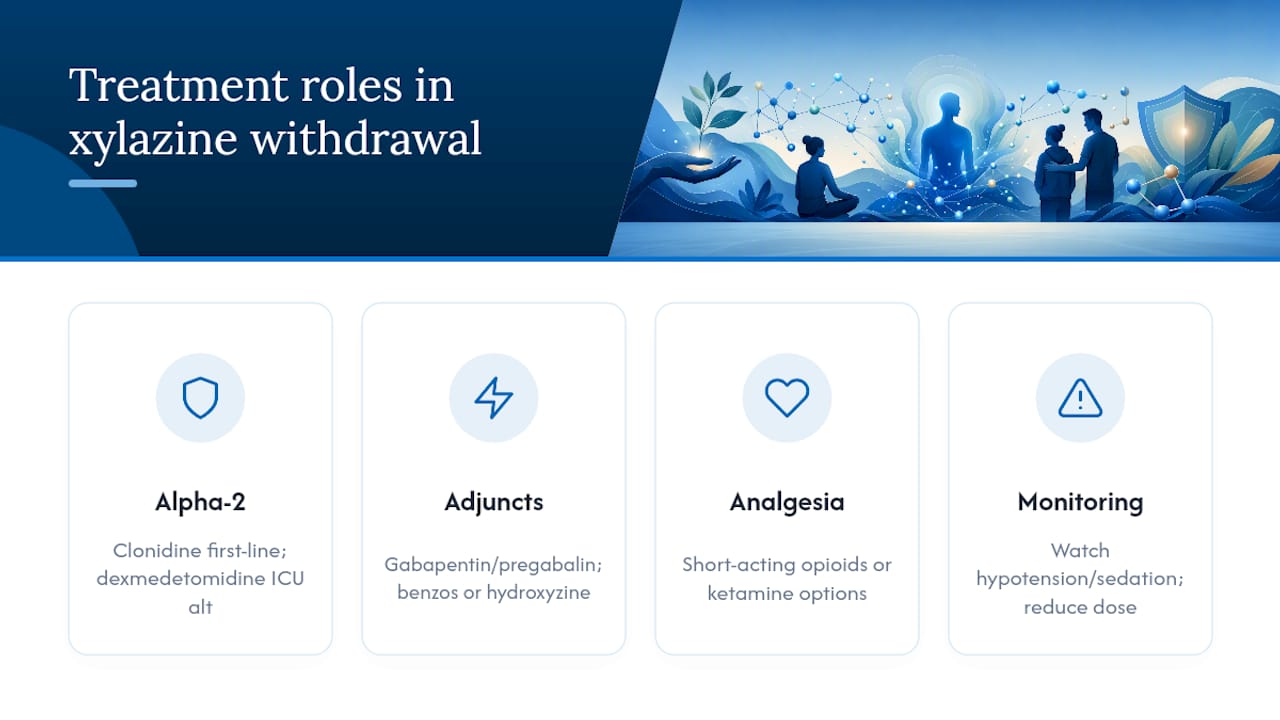
No medication is FDA approved specifically for xylazine, so xylazine withdrawal treatment relies on a symptom-directed, multimodal strategy built around alpha-2 agonists. Case reports and public health guidance converge on this pattern, even without a single official protocol.
Alpha-2 agonists carry the load. Oral clonidine is the workhorse for outpatient and lower-acuity inpatient settings, usually scheduled rather than given as needed so blood pressure and sympathetic symptoms stay blunted throughout the day. When oral dosing isn’t cutting it, one published case report documented successful use of an ICU dexmedetomidine infusion, later transitioned to clonidine, buprenorphine, and gabapentin as the patient stabilized. Tizanidine and guanfacine serve as alternatives or adjuncts when clonidine causes excessive sedation or hypotension.
Adjunctive agents round out the picture. Gabapentin or pregabalin help with residual pain and restlessness. Benzodiazepines or hydroxyzine address severe anxiety when clinically warranted. Antipsychotics sometimes manage agitation and insomnia in inpatient settings.
Analgesia deserves separate attention. Chronic wounds and injection-related pain are common in this population, so short-acting full opioid agonists and ketamine work as opioid-sparing options that avoid the pitfalls of long-acting opioids in an already unstable patient.
According to StatPearls, the multimodal combination of alpha-2 agonists with gabapentin and benzodiazepines when indicated reflects the current best-evidence approach, even in the absence of a dedicated FDA-approved therapy.
Monitoring cannot be an afterthought. Clonidine and dexmedetomidine both risk hypotension and sedation, and dose reduction is warranted in older adults or anyone with renal impairment.
Pro Tip: Trial standard opioid dosing first and watch the response. If sympathetic symptoms like sweating, tremor, and hypertension persist despite adequate opioid coverage, treat that persistence as your signal to escalate alpha-2 agonist therapy rather than simply raising the opioid dose.
How Should Clinicians Structure the Treatment Pathway?
A structured pathway keeps xylazine detox treatment from becoming a guessing game. The sequence below reflects what case reports and hospital order sets have found effective for stabilizing patients and reducing early discharge.
- Assess on arrival. Check vitals, run a urine drug screen, examine wounds closely, and screen for concurrent alcohol or benzodiazepine withdrawal, both of which change the urgency of the plan. Get a baseline ECG if you’re planning to use agents with QTc effects.
- Decide on MOUD timing. For patients with heavy fentanyl exposure, standard buprenorphine induction can trigger precipitated withdrawal, so microinduction approaches or careful timing matter. Short-acting opioids may serve analgesia needs while MOUD induction is staged.
- Start alpha-2 therapy early and stay on schedule. Scheduled clonidine dosing, titrated to blood pressure and symptom response, outperforms as-needed dosing for blunting the autonomic swings.
- Watch for escalation triggers. Refractory hypertension, severe agitation, or any hint of respiratory depression should move a patient toward ICU-level care and dexmedetomidine infusion.
- Loop in allied services immediately. Wound care, infectious disease, and psychiatry should be consulted early, not after symptoms are already out of control.
Hospital pathways that build in this kind of combination therapy with alpha-2 agonists, ketamine, and antipsychotics have been associated with lower post-treatment withdrawal scores and fewer patients leaving against medical advice.
Pro Tip: Document the response to your first dose of opioid analgesia separately from the response to your first dose of clonidine. That paper trail makes it far easier to justify escalation to the next clinician who picks up the case.
What Complicates Xylazine Withdrawal in Certain Patients?
Chronic xylazine injection often leaves behind deep, slow-healing skin ulcers, and these wounds frequently need care that outlasts the withdrawal period itself. Patients with extensive wounds may need longer admissions simply to get infection under control before any discharge conversation makes sense.

Pregnant patients and older adults need adjusted approaches. Alpha-2 agonists carry blood pressure and sedation risks that hit these groups harder, so tighter monitoring and early consultation with obstetrics or geriatrics is worth building into the plan rather than treating as optional.
Polysubstance use is the norm, not the exception, in this population, as discussed in ADHD in adolescents and the unique challenges of substance use patterns, which explores complex substance use patterns. A few points worth keeping in mind:
- Concurrent alcohol or benzodiazepine use disorder can mask or mimic xylazine withdrawal symptoms
- Untreated benzodiazepine or alcohol withdrawal carries its own seizure risk that must be managed in parallel
- Renal impairment changes dosing thresholds for clonidine and related agents
- Wound severity, not just withdrawal symptoms, often dictates length of stay
How Do You Plan a Safe Transition to Outpatient Care?
Discharge planning for xylazine substance use treatment should start the moment symptoms are under control, not the day someone is ready to leave. Patients often need a bridging supply of clonidine and continued MOUD to prevent a rebound of symptoms once they’re back in an unsupervised environment.
Before discharge, line up:
- A wound-care follow-up appointment, especially for patients with chronic injection sites
- Infectious-disease screening if wounds suggest possible systemic infection
- Connection to harm reduction resources and community-based recovery supports
- A realistic outpatient plan for continuing clonidine or gabapentin if withdrawal symptoms haven’t fully resolved
Reducing the risk of leaving against medical advice comes down to comfort: patients who feel their symptoms are actually controlled, and who have a peer or recovery support person engaged early, are far more likely to stay through the full course of care.
Why Multimodal Care Beats a One-Drug Approach
Most people assume opioid withdrawal management and xylazine withdrawal management are the same problem wearing different labels. That assumption causes real harm. I’ve seen the logic play out in case after case: a patient gets adequate buprenorphine or methadone, their opioid cravings ease, and yet they’re still sweating through their sheets, their blood pressure is climbing, and their nurses assume something else is wrong or that the patient is drug-seeking.
The uncomfortable truth is that xylazine withdrawal management demands its own toolkit, and treating it as an opioid problem with extra steps sets patients up to fail treatment, not because they lack willpower but because their nervous system is fighting a different battle than the one being treated. Alpha-2 agonists aren’t an add-on. They’re often the primary intervention, with opioid therapy playing a supporting role for pain and cravings rather than carrying the whole burden.
At Sylmar Treatment Center, our six-bed, DHCS-licensed and Joint Commission accredited setting exists because this level of individualized attention is exactly what complex, multi-substance withdrawal requires. Small numbers mean our clinical team can actually watch for the subtle signs that separate a patient having a rough night from one who needs ICU-level escalation. Every custom care plan we build integrates medical detox, psychiatric support, and wound management from day one, because treating any one piece in isolation is how patients end up back where they started.
— Jim
Get Medically Supervised Support for Xylazine Withdrawal
Some treatment centers provide round-the-clock clinical oversight in small residential settings where staff can observe changes in patients’ conditions. If you’re dealing with autonomic symptoms that opioid treatment alone hasn’t touched, or wounds that need real attention alongside detox, that level of watchfulness is exactly what reduces risk.
Admissions support is available 24/7, and intake typically includes a full medical and psychiatric assessment, wound evaluation, and a review of your insurance or payment options before any care plan is finalized. Our dual diagnosis support addresses co-occurring mental health conditions alongside substance use, and our emerging substance recovery program is built for exactly the kind of unpredictable exposure xylazine represents. If you or someone you care about is struggling with tranq dope withdrawal symptoms, call our admissions line or explore our treatment programs to see what individualized detox and residential care looks like here.
Where to Read More on Xylazine Withdrawal
For deeper clinical background: StatPearls covers pharmacology and treatment evidence; the Philadelphia Department of Public Health guidance offers protocol-level dosing detail; the CDC tracks supply-side epidemiology; and this case report walks through a real inpatient management course.
This article is general information, not a substitute for advice from a qualified doctor. Consult a qualified healthcare professional about your own circumstances before acting on anything here.
Sources
- Xylazine Toxicity - StatPearls - NCBI Bookshelf
- Management of Xylazine Withdrawal in a Hospitalized Patient: A Case Report (Journal of Addiction Medicine, 2022)
- PDPH HAN: Guidance on xylazine (Philadelphia Department of Public Health)
- What you should know about xylazine | CDC
FAQ
What Medication Is Given for Xylazine Withdrawal?
Alpha-2 agonists, especially clonidine, form the backbone of treatment, often paired with gabapentin, benzodiazepines when indicated, and short-acting opioids or ketamine for pain, according to StatPearls.
Does Clonidine Help With Xylazine Withdrawal?
Yes. Scheduled, titrated clonidine dosing blunts the tremor, sweating, and hypertension that define xylazine withdrawal, and case reports document its use both as a first-line agent and as a step-down from dexmedetomidine infusion.
How Long Does Tranq Dope Withdrawal Typically Last?
Symptoms usually begin 6 to 24 hours after last use, and while opioid withdrawal often resolves within about a week, xylazine-driven autonomic symptoms can persist longer and may need continued alpha-2 agonist support after discharge.
What Other Drugs Treat Withdrawal Symptoms Beyond Alpha-2 Agonists?
Gabapentin or pregabalin address residual pain and restlessness, hydroxyzine or benzodiazepines manage severe anxiety, and antipsychotics sometimes help with agitation or insomnia in inpatient settings.
When Should Someone Seek Inpatient Detox for Xylazine Withdrawal?
Severe agitation, dangerously high blood pressure, any sign of respiratory compromise, or infected wounds needing active care all point toward medically supervised detox rather than an outpatient or unsupervised attempt.