

Integrated chronic pain and addiction treatment means one coordinated plan that addresses both conditions at the same time, not sequentially. The core structure: a combined clinical assessment, a multimodal nonopioid-first treatment plan, carefully coordinated medication-assisted treatment (MAT) when needed, and structured safety monitoring. If you or someone you care about has both chronic pain and a substance use disorder (SUD), the single most important next step is requesting a comprehensive interprofessional assessment, not a pain appointment alone and not an addiction appointment alone. Ask your provider specifically about SAMHSA TIP 54 and the CDC 2022 opioid prescribing guideline as frameworks for your care.
Core elements of integrated care:
- Comprehensive assessment covering pain history, SUD history, mental health, medications, and function
- Nonpharmacologic therapies first: physical therapy (PT), cognitive behavioral therapy (CBT), exercise, mindfulness
- Nonopioid medications where indicated: NSAIDs, acetaminophen, duloxetine, gabapentin
- MAT coordination (methadone, buprenorphine, or naltrexone) when opioid use disorder (OUD) is present
- Treatment agreements, urine drug testing, and naloxone access
- Functional restoration goals rather than complete pain elimination
When to seek urgent care: Go to an emergency room or call 911 if you are experiencing signs of overdose, uncontrolled withdrawal with medical complications (severe dehydration, seizures), or acute severe pain that may signal a new medical emergency. Naloxone should be accessible to anyone receiving opioids or in recovery from OUD.
Pro Tip: Before your first integrated care appointment, write down your three most limiting daily activities. Clinicians use functional goals, not pain scores alone, to measure treatment success, and your list gives the team a concrete starting point.
Key Takeaways
Integrated chronic pain and addiction treatment requires a team-based, nonopioid-first plan that addresses both conditions simultaneously, with MAT coordination, safety monitoring, and functional restoration as the core targets.
| Point | Details |
|---|---|
| Nonopioid therapies come first | PT, CBT, exercise, and nonopioid medications should be maximized before opioids are considered. |
| MAT treats OUD and can address pain | Methadone and buprenorphine have analgesic properties; naltrexone does not and blocks opioid effects. |
| Opioid use fell from 58% to 15% | Interdisciplinary pain rehab produced this reduction at discharge, alongside large functional gains. |
| Functional goals, not zero pain | SAMHSA TIP 54 frames success as improved daily function and quality of life, not pain elimination. |
| Sylmartreatmentcenter offers integrated care | DHCS-licensed, Joint Commission-accredited residential program with dual-diagnosis and MAT coordination. |
Table of Contents
- 1. What a comprehensive assessment covers for chronic pain and SUD
- 2. Nonpharmacologic therapies are first-line, not a fallback
- 3. Nonopioid medications: what works and what to watch for
- 4. When opioids or MAT are used: roles, risks, and monitoring
- 5. How interprofessional care actually works in practice
- 6. Special situations: pregnancy, older adults, and active use
- 7. When to refer and how to find integrated services
- 8. What an integrated residential program typically looks like
- 9. Guidelines and evidence you can point to
- What treating both conditions at once actually demands
- Sylmar Treatment Center offers coordinated care for pain and addiction
- Sources
1. What a comprehensive assessment covers for chronic pain and SUD
A combined assessment does not simply add a pain questionnaire to a standard addiction intake. It evaluates pain history, SUD history, mental health, current medications, functional limitations, and overdose risk as an interconnected picture. Clinicians use this to build a risk-stratified, individualized plan rather than treating each condition in isolation.
What clinicians evaluate:
- Pain history: location, duration, quality, prior treatments, imaging, and what has and has not worked
- SUD history: substances used, duration, prior treatment attempts, current MAT status, and relapse triggers
- Mental health screening: depression (PHQ-9), anxiety (GAD-7), PTSD, and trauma history, since these conditions amplify pain perception and complicate recovery
- Medication review: all prescriptions, over-the-counter medications, supplements, prior opioid tapers, and current naloxone access
- Functional assessment: what activities of daily living are limited, work status, sleep quality, and social supports
- Risk stratification: overdose history, current active use, pregnancy, renal or cardiac disease, and prior treatment response
What to bring to your first appointment:
- A complete medication list including dosages and prescribers
- A brief pain diary (even three to five days of notes on pain level, triggers, and activity limitations)
- Records from prior pain or addiction treatment
- Names of current providers so the team can coordinate
Chronic pain affects roughly 1 in 5 U.S. adults, yet most receive care from a single provider who manages either pain or addiction, rarely both. That gap is exactly what integrated assessment is designed to close. The individualized care plan process at a residential program typically begins with this kind of structured intake, translating assessment findings directly into a written treatment plan.
2. Nonpharmacologic therapies are first-line, not a fallback
The CDC 2022 Clinical Practice Guideline recommends maximizing nonpharmacologic and nonopioid therapies for subacute and chronic pain before considering opioids. For people with co-occurring SUD, this is not just a preference; it is a safety priority. Nonpharmacologic approaches reduce reliance on opioids, improve function, and address the psychological dimensions of pain that medication alone cannot reach.

| Therapy | Typical benefit | Evidence strength / guideline support |
|---|---|---|
| Exercise / PT | Reduces pain intensity, improves function and mood | Strong; CDC 2022, AAFP, SAMHSA TIP 54 |
| CBT for pain | Reduces pain catastrophizing, improves coping and function | Strong; multiple systematic reviews |
| Mindfulness / MBSR | Modest pain reduction; meaningful improvement in psychological distress | Moderate; CDC 2022 lists as recommended |
| Interdisciplinary pain rehab (PRP) | Largest functional gains; reduces opioid use | Strong for refractory cases; PMC evidence |
| Acupuncture | Modest pain reduction for certain conditions | Moderate; CDC 2022 includes as option |
| Manual therapy | Short-term pain and function improvement | Moderate for musculoskeletal pain |
One program evaluation found that opioid use fell from 58% at entry to 15% at discharge among patients in an interdisciplinary pain rehabilitation program, with statistically significant gains in function and quality of life. That kind of result does not come from medication changes alone.
Practical access points:
- Outpatient PT: most insurance covers it; ask for a pain-focused referral, not just a musculoskeletal one
- Pain psychology / CBT: look for psychologists with training in acceptance and commitment therapy (ACT) or pain-specific CBT protocols
- Community programs: YMCA chronic disease programs, hospital-based wellness classes, and telehealth CBT platforms have expanded access significantly
- Intensive interdisciplinary rehab (PRP): reserved for refractory cases; typically requires prior authorization and a referral from a pain specialist
The goal of these therapies is not zero pain. It is measurable improvement in what you can do: walking farther, sleeping better, returning to work, or engaging with family. Expect meaningful change in six to twelve weeks for most outpatient approaches, though PRPs often show the largest gains in three to four weeks of intensive programming.
Some patients ask about complementary approaches like hypnotherapy, which has a growing evidence base for anxiety and pain-related psychological distress. Research on hypnotherapy for anxiety and OCD suggests it can complement CBT-based pain programs, though it works best as an adjunct rather than a standalone treatment.
3. Nonopioid medications: what works and what to watch for
AAFP guidance and StatPearls evidence reviews both identify nonopioid pharmacologic options as first-line for chronic noncancer pain. For people with SUD, the choice of medication also has to account for abuse potential, drug interactions with MAT, and organ function.
Key nonopioid medication options:
- NSAIDs (ibuprofen, naproxen): Effective for nociceptive and inflammatory pain. Use with caution in older adults, people with renal disease, cardiovascular disease, or GI history. Short-term use preferred.
- Acetaminophen: Useful for mild to moderate pain with fewer GI and cardiovascular risks than NSAIDs. Liver toxicity risk at high doses; critical caution for people with alcohol use disorder.
- Duloxetine (SNRI): Strong evidence for diabetic neuropathy, fibromyalgia, and musculoskeletal pain. Also addresses comorbid depression and anxiety, which is a meaningful advantage in this population.
- Gabapentin / pregabalin: Evidence for postherpetic neuralgia, diabetic neuropathy, and some central sensitization syndromes. Both carry abuse potential, particularly pregabalin, and require monitoring in people with SUD.
- Topical agents (lidocaine patches, diclofenac gel, capsaicin): Localized pain with minimal systemic exposure; a good option when systemic side effects are a concern.
- Tricyclic antidepressants (TCAs, e.g., amitriptyline): Evidence for neuropathic pain; sedation and cardiac effects limit use in older adults and those with cardiac history.
| Medication | Best for | Key caution in SUD population |
|---|---|---|
| NSAIDs | Inflammatory, musculoskeletal pain | Renal/cardiac risk; GI bleeding; avoid with heavy alcohol use |
| Acetaminophen | Mild to moderate pain | Hepatotoxicity risk with alcohol use disorder |
| Duloxetine | Neuropathic, fibromyalgia, depression-comorbid | Drug interactions with MAT; monitor blood pressure |
| Gabapentin | Neuropathic pain, central sensitization | Abuse potential; respiratory depression risk with opioids or benzodiazepines |
| Pregabalin | Neuropathic pain, fibromyalgia | Higher abuse potential than gabapentin; schedule V controlled substance |
| Topical agents | Localized pain | Minimal; preferred when systemic risk is high |
Caution on gabapentin and pregabalin: Both are increasingly misused, particularly in people with opioid use disorder. Pregabalin is a Schedule V controlled substance. Neither should be prescribed without a clear indication, a defined trial period, and monitoring for misuse. Combined with opioids or benzodiazepines, they increase respiratory depression risk substantially.
Give nonopioid medications a genuine trial before concluding they are ineffective. Duloxetine, for example, typically requires four to six weeks at therapeutic dose to show full effect. Integrating medication with PT and CBT consistently produces better outcomes than either approach alone.
4. When opioids or MAT are used: roles, risks, and monitoring
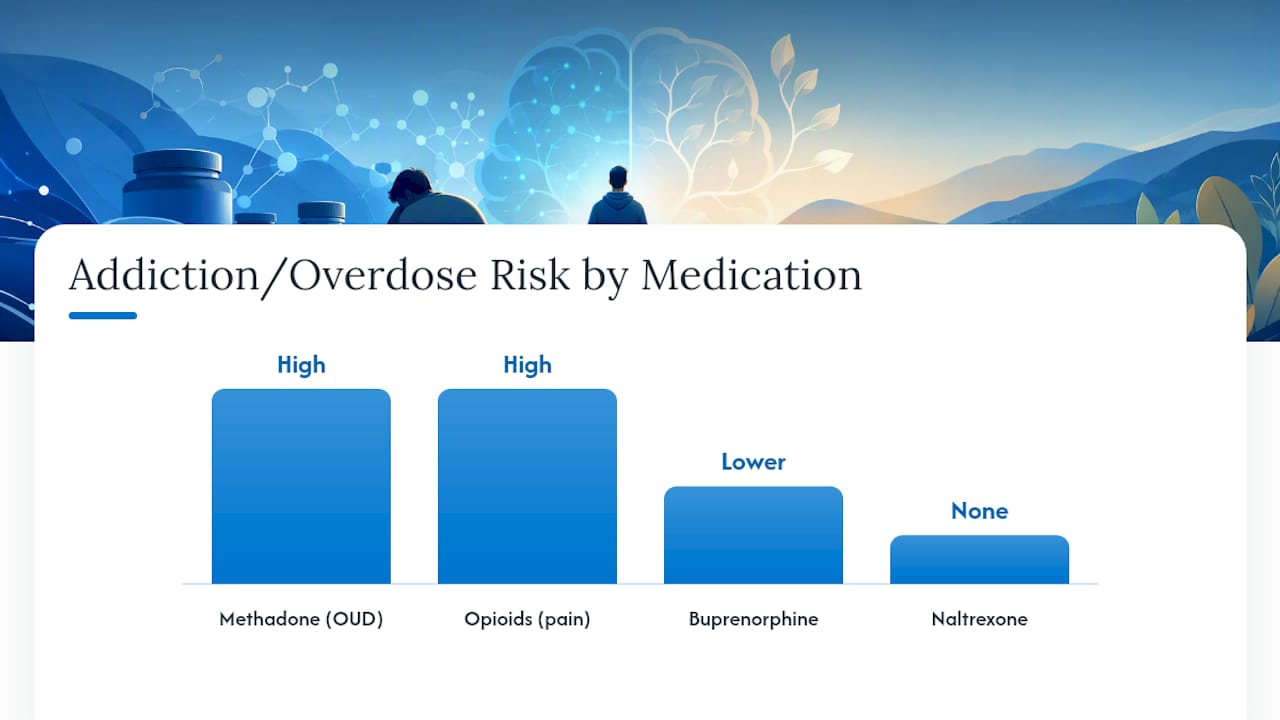
Opioids are not routine first-line treatment for chronic noncancer pain, and for people with OUD, the calculus is more complex still. SAMHSA TIP 54 is explicit: when opioids are used in people with or in recovery from SUD, they require close monitoring, treatment agreements, and coordination between pain and addiction specialists. MAT medications, methadone and buprenorphine, have analgesic properties in addition to their OUD treatment role. Naltrexone is not an analgesic and blocks opioid effects entirely.
| Medication | Treatment goal | Evidence strength | Addiction/overdose risk | Active SUD vs. stable recovery | Monitoring needs |
|---|---|---|---|---|---|
| Methadone (OUD) | OUD treatment; analgesic secondary | Strong for OUD | High; narrow therapeutic window; QTc risk | Both; requires OTP enrollment for OUD | Daily dispensing initially; EKG; urine drug testing |
| Buprenorphine | OUD treatment; partial analgesic | Strong for OUD | Lower than full agonists; ceiling effect | Both; office-based prescribing available | Monthly visits once stable; urine drug testing |
| Naltrexone | OUD/AUD relapse prevention | Strong for OUD/AUD | None; not an analgesic | Stable recovery (requires opioid-free period) | Monthly injection or daily oral; liver function |
| Opioids (pain) | Pain reduction | Moderate short-term; weak long-term | High in SUD population | Stable recovery only with strict monitoring | Frequent visits; UDT; pill counts; treatment agreement |
Monitoring checklist for anyone receiving opioids or MAT:
- Signed treatment agreement covering goals, dosing rules, and consequences of misuse
- Urine drug testing at baseline and at regular intervals (frequency based on risk level)
- Pill counts or dispensing verification
- Naloxone prescription with training for patient and household members
- Visit cadence: at minimum monthly for stable patients; more frequently during dose changes or instability
- Functional reassessment at each visit, not just pain scores
Pro Tip: If you are already on buprenorphine for OUD and need pain management, ask your prescriber about divided dosing. Buprenorphine’s analgesic effect lasts 6–8 hours, shorter than its OUD effect, so splitting the daily dose can provide more consistent pain coverage without changing the total amount.
Naloxone should be prescribed to anyone receiving opioids for pain and to anyone in recovery, regardless of current MAT status. Fentanyl test strips and naloxone kits are available through many state health departments and harm reduction programs at no cost.
5. How interprofessional care actually works in practice
Integrated care is not just a philosophy. It is a defined structure with specific roles, shared records, and coordinated decision-making. SAMHSA TIP 54 guidance emphasizes that team-based care prevents the treatment cycles that escalate medication use when pain and SUD are managed in silos.
Team members and their roles:
- Primary care physician: Coordinates overall care, manages nonopioid medications, monitors for comorbidities
- Addiction specialist / addiction medicine physician: Oversees MAT, manages withdrawal, addresses relapse risk
- Pain specialist: Evaluates interventional options, manages complex analgesic regimens
- Psychiatrist / psychologist: Treats comorbid depression, anxiety, PTSD; delivers CBT for pain
- Physical therapist: Functional rehabilitation, exercise prescription, body mechanics
- Pharmacist: Reviews drug interactions, monitors for misuse patterns, patient education
- Social worker / case manager: Addresses housing, insurance, transportation, and family support
- Peer support specialist: Lived experience support, recovery coaching, community connection
What a treatment agreement typically includes:
- Specific functional goals (not just pain reduction targets)
- Medication names, doses, and dispensing rules
- Monitoring schedule (visit frequency, UDT schedule)
- Naloxone plan (who has it, where it is stored)
- Conditions under which the plan will be reviewed or changed
- Patient rights and how to raise concerns
Pro Tip: Ask your care team for a written shared care plan and request a case conference if your providers are not communicating directly. A one-page summary listing your diagnoses, current medications, goals, and monitoring schedule, shared across all providers, prevents conflicting prescriptions and duplicated assessments.
Integrated dual-diagnosis treatment works best when the team meets regularly and uses a shared record system. If your providers are in separate systems, ask each one to send visit notes to the others. It is a simple step that prevents dangerous gaps.
6. Special situations: pregnancy, older adults, and active use
Care must be individualized, and certain groups face risks that change the treatment equation significantly. Active substance use often prompts referral for formal addiction treatment first, but pain still needs to be addressed safely during that process, not deferred until recovery is “complete.”
Pregnant people with OUD and chronic pain:
- Methadone and buprenorphine are both recommended for OUD during pregnancy; untreated OUD carries greater risk than MAT
- NSAIDs are generally avoided after 20 weeks due to fetal renal risk; acetaminophen is preferred for mild pain
- Neonatal opioid withdrawal syndrome (NOWS) is expected with MAT and is manageable; it is not a reason to discontinue MAT
- Coordinate with maternal-fetal medicine, addiction medicine, and neonatology from the first trimester
Older adults:
- NSAIDs carry elevated risk of GI bleeding, renal impairment, and cardiovascular events; use the lowest effective dose for the shortest time or avoid entirely
- Gabapentin and pregabalin increase fall risk and sedation in older adults; start low, titrate slowly
- Opioids in older adults carry higher risk of cognitive impairment, falls, and constipation
- Functional goals are especially important: maintaining independence in daily activities is often the primary treatment target
Patients already on MAT:
- Buprenorphine’s partial agonist ceiling limits its analgesic ceiling; patients on buprenorphine for OUD may need divided dosing or supplemental nonopioid strategies for acute or chronic pain
- Methadone’s analgesic duration (6–8 hours) is shorter than its OUD dosing interval; pain management may require coordination with the opioid treatment program (OTP) for dose adjustment
- Naltrexone blocks all opioid analgesia; patients on naltrexone needing surgery or acute pain management require a planned opioid-free protocol and specialist coordination
Opioid detox and withdrawal management in these populations requires medical supervision. Withdrawal is not simply uncomfortable; in pregnant people and medically complex older adults, it can be dangerous.
7. When to refer and how to find integrated services
Refer when pain and SUD cannot be safely managed together in a single outpatient setting. That threshold is lower than most people expect.
Referral criteria checklist:
- Active substance use that is not stabilizing with outpatient support
- Uncontrolled pain despite a genuine trial of multimodal nonopioid care
- High overdose risk (prior overdose, fentanyl exposure, concurrent benzodiazepine use)
- Pregnancy with OUD
- Severe psychiatric comorbidity (active suicidality, psychosis, untreated PTSD)
- Need for complex opioid taper that requires daily medical supervision
- Functional decline despite outpatient treatment
What to look for in an integrated program:
- ASAM-aligned services with addiction medicine physician oversight
- MAT availability (buprenorphine, methadone coordination, or naltrexone)
- Interdisciplinary pain rehabilitation or PT on-site
- Behavioral health services: CBT, trauma-informed therapy, group therapy
- Joint Commission accreditation or state DHCS licensure
- Dual-diagnosis capability: simultaneous treatment of SUD and mental health conditions
- Discharge planning and step-down support
Questions to ask prospective programs:
- Do you treat chronic pain and SUD at the same time, or sequentially?
- Is there a pain specialist or addiction medicine physician on staff?
- What MAT options do you offer and manage on-site?
- How do you measure treatment success?
- What does your discharge and aftercare plan look like?
For insurance, call the member services number on your card and ask specifically for “dual-diagnosis residential programs” or “integrated pain and addiction treatment.” Medicaid covers MAT in all 50 states. Many programs also offer sliding-scale fees or financial counseling.
8. What an integrated residential program typically looks like
A well-designed integrated residential program blends medical oversight, behavioral therapy, functional rehabilitation, medication management, and discharge planning into a structured daily schedule. Personalized recovery program components at the residential level typically include all of these elements, coordinated around an individualized care plan built at admission.
What to expect on admission:
- Comprehensive intake assessment (pain, SUD, mental health, medications, labs)
- Baseline laboratory work and physical examination
- Naloxone education and prescription for patient and designated support person
- Written individualized care plan with functional goals, medication plan, and monitoring schedule
- Introduction to the treatment team
Sample residential day structure:
- Morning medical check-in: vital signs, medication administration, symptom review
- Physical therapy or structured exercise: 45–60 minutes, pain-adapted
- CBT or pain psychology group: cognitive restructuring, coping skills, pain education
- Individual therapy session: trauma, SUD, or pain-focused depending on the day
- Medication management review: MAT dosing, nonopioid medication assessment
- Peer support group or 12-step facilitation
- Family meeting or case management (several times per week)
- Evening wind-down: mindfulness, sleep hygiene, journaling
Length of stay varies by acuity. Detox alone typically runs five to ten days. Residential rehabilitation for co-occurring pain and SUD commonly runs 28–90 days, with longer stays associated with better long-term outcomes for complex cases. Pain rehab programs measure success by functional benchmarks, such as measurable increases in daily living activities at discharge, not just pain score reductions.
9. Guidelines and evidence you can point to
The evidence base for integrated care is solid, and the major guidelines agree on the core framework.
Guideline takeaways:
- SAMHSA TIP 54: Assess and treat chronic pain and SUD concurrently; prioritize nonopioid and nonpharmacologic therapies; use team-based care; apply close monitoring and treatment agreements if opioids are used. The shift from “zero pain” to functional restoration is a core TIP 54 principle.
- CDC 2022 Clinical Practice Guideline: Maximize nonpharmacologic and nonopioid therapies for subacute and chronic pain; exercise, CBT, mindfulness, PT, topical NSAIDs, and oral NSAIDs are listed as evidence-based options.
- AAFP 2025 pharmacotherapy guidance: Nonopioid therapies are first-line for chronic noncancer pain; duloxetine, gabapentin, and pregabalin are recommended for neuropathic pain.
- ASAM: Supports MAT as the standard of care for OUD; emphasizes that MAT should not be withheld because a patient also has chronic pain.
Evidence strength summary:
- Strong evidence: CBT and exercise for functional improvement; duloxetine for neuropathic pain and fibromyalgia; buprenorphine and methadone for OUD; interdisciplinary pain rehab for reducing opioid use and improving function
- Moderate evidence: Mindfulness-based approaches for psychological distress; acupuncture for certain pain types; gabapentin for postherpetic neuralgia and diabetic neuropathy
- Limited or mixed evidence: Long-term opioids for chronic noncancer pain; cannabis-based products (evolving; patients often ask about cannabinoids and terpene-based options, though the clinical evidence base remains early-stage)
What treating both conditions at once actually demands
Most people who come to integrated care have already tried the single-condition route. They have seen a pain specialist who did not ask about their drinking. They have been through addiction treatment where the staff said pain management was “not our area.” That sequential, siloed approach is not a failure of individual providers; it is a structural problem in how the U.S. healthcare system has historically organized these two specialties.
The insight that changes outcomes is this: chronic pain and addiction share overlapping neurobiology. Both involve dysregulated reward and stress systems, altered pain processing, and psychological amplification through catastrophizing and hypervigilance. Treating one without the other does not just leave a gap; it actively undermines the treatment you are getting. Unmanaged pain is one of the most consistent relapse triggers. Untreated addiction makes pain harder to manage and medications less safe to prescribe.
What this means practically is that the goal of integrated care is not to find a medication that solves both problems. It is to build a team and a plan that addresses the full picture, adjusts over time, and measures success by what you can do, not by a number on a pain scale. The functional restoration frame, which SAMHSA TIP 54 emphasizes, is not a consolation prize for people who cannot get their pain to zero. It is the clinically correct target for nearly everyone with chronic pain, with or without SUD.
One more thing that rarely gets said plainly: stigma is a treatment barrier with real clinical consequences. People with SUD are sometimes undertreated for pain because providers fear enabling misuse. People with chronic pain sometimes avoid disclosing substance use because they fear losing their pain medications. Both fears are understandable, and both lead to worse outcomes. The best integrated programs are built around the assumption that you deserve honest, complete care for both conditions simultaneously.
Sylmar Treatment Center offers coordinated care for pain and addiction
People navigating both chronic pain and a substance use disorder need more than a referral list. They need a program that treats both conditions in the same setting, with the same team, from day one. Sylmartreatmentcenter provides medically supervised detox, individualized residential care, and dual-diagnosis programming that coordinates pain management and addiction treatment under one roof.
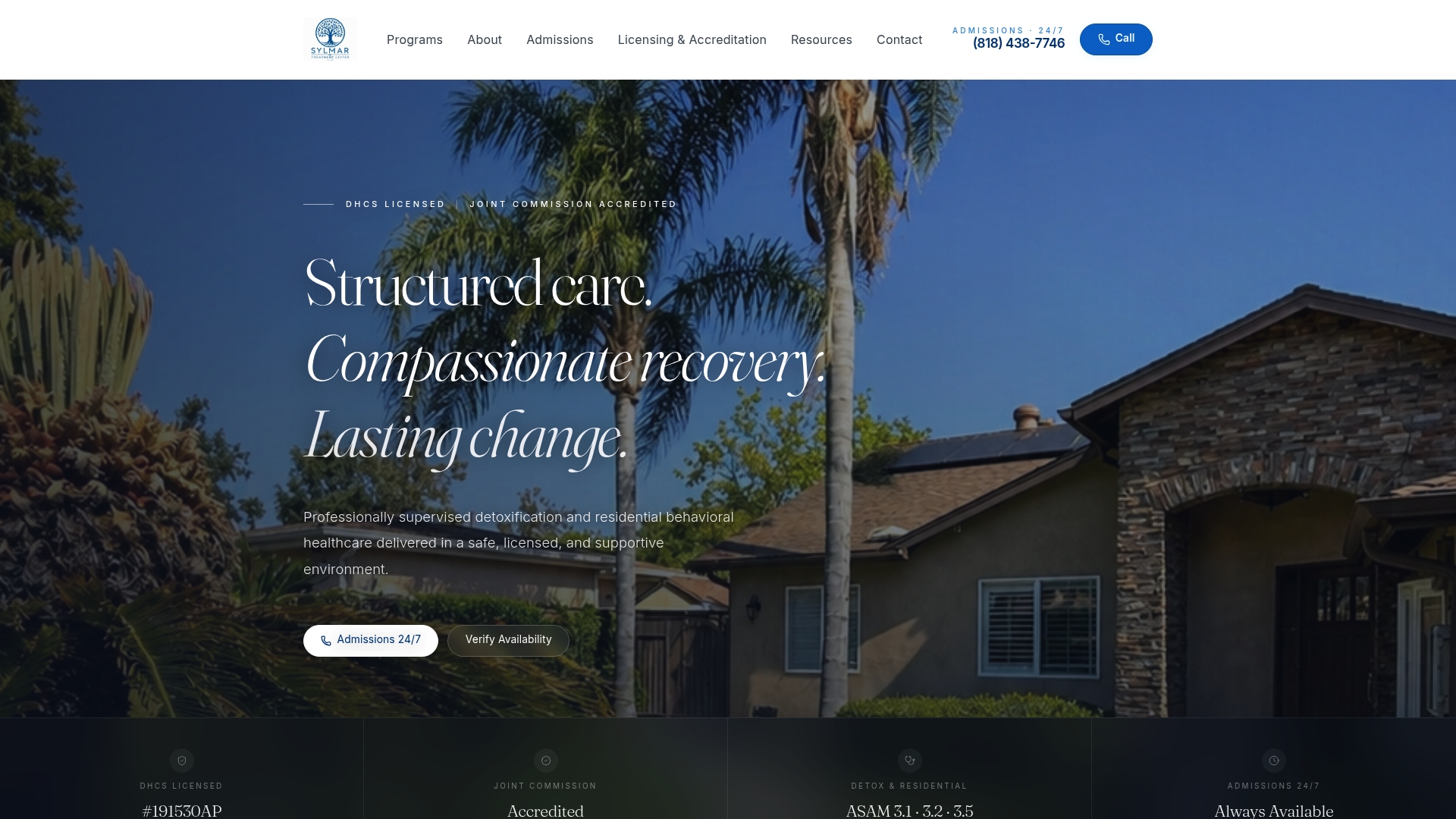
The six-bed residential setting means your care team actually knows you. Medication management includes psychiatric oversight and MAT coordination. Behavioral rehabilitation integrates CBT, group therapy, and evidence-based pain psychology approaches. Sylmartreatmentcenter holds both a DHCS license and Joint Commission accreditation, the two credentials that signal genuine clinical accountability in California residential care. Admissions support is available 24/7. If you are ready for a coordinated assessment that addresses both your pain and your recovery, call or submit an intake request through Sylmartreatmentcenter’s programs page today.
Sources
The sources below are the primary guidelines and evidence reviews this article draws from. Each is publicly available and free to access.
- Pharmacotherapy for chronic noncancer pain — AAFP (2025)
- Non-Opioid Therapies for Pain Management — CDC
- Managing Chronic Pain in Adults With or in Recovery From Substance Use Disorders — NCBI Bookshelf (SAMHSA TIP 54)
- Pain Rehabilitation’s Dual Power: Treatment for Chronic Pain and Prevention of Opioid-Related Risks — PMC
This article is general information, not a substitute for advice from a qualified doctor. Consult a qualified healthcare professional about your own circumstances before acting on anything here.
Recommended
- Bipolar Disorder Recovery: Finding the Right Addiction Program | Sylmar Treatment Center
- How Detox Prepares Patients for Rehab: 2026 Guide | Sylmar Treatment Center
- Why Detox Alone Is Not Treatment for Addiction | Sylmar Treatment Center
- Opioid Detox Process Explained: What to Expect | Sylmar Treatment Center