

What strong detox program evaluation criteria actually cover
Effective detox program evaluation criteria rest on six clinical dimensions defined by the American Society of Addiction Medicine (ASAM): acute intoxication and withdrawal potential, biomedical conditions, emotional and behavioral conditions, readiness to change, relapse and continued use potential, and recovery environment. These dimensions form the backbone of every credible assessment framework in U.S. addiction medicine, and any program that cannot demonstrate structured evaluation across all six should raise immediate flags for administrators.
Beyond the clinical dimensions, quality programs also meet administrative expectations: standardized biopsychosocial screening, validated placement tools such as ASAM CONTINUUM, timely and legally compliant documentation, and a documented pathway linking patients to ongoing addiction treatment after physiological stabilization.
Key criteria professionals and administrators should look for include:
- Comprehensive biopsychosocial intake screening covering all six ASAM dimensions
- Use of validated assessment instruments rather than informal clinical judgment alone
- Medical supervision calibrated to withdrawal risk level
- Documented safety protocols including vital sign monitoring and emergency response readiness
- Ethical patient consent procedures and confidentiality protections
- Clear linkage to post-detox treatment, not just discharge planning
Pro Tip: Detoxification and addiction treatment are not the same phase of care. Per ASAM Standards of Care, detox is physiological stabilization and preparation for treatment — evaluating it solely on long-term recovery outcomes misframes the entire assessment. Measure it on safe withdrawal management and successful transition to the next level of care.
Table of Contents
- 1. Physical health assessment and biomedical screening
- 2. Substance use history and severity scoring
- 3. Mental health screening and co-occurring disorder evaluation
- 4. Readiness to change and relapse potential
- 5. Recovery environment and social support evaluation
- 6. Medical supervision and safety protocols are non-negotiable
- 7. Administrative documentation standards and accreditation
- 8. Performance metrics that actually measure program quality
- 9. What the evaluation process looks like from intake to follow-up
- Key Takeaways
- Sylmartreatmentcenter brings these standards into a six-bed clinical setting
1. Physical health assessment and biomedical screening
The first dimension any evaluator examines is the patient’s current physical condition and withdrawal risk. This means a full medical history, a physical examination, and laboratory work sufficient to identify conditions that could complicate withdrawal management. Alcohol, sedative-hypnotic, and opioid withdrawal syndromes carry genuine mortality risk, and NCBI’s executive summary on detoxification notes that hospitalization or 24-hour medical care is often the preferred setting for these substances based on safety and humanitarian grounds.
Evaluators should confirm that the program can assess:
- Current intoxication status and degree
- Type and severity of the anticipated withdrawal syndrome
- History of prior withdrawals, including any history of seizures or delirium tremens
- Co-occurring medical or surgical conditions requiring specialized care
- Vital sign monitoring capacity appropriate to the patient’s risk level
Patients with a history of severe or multiple withdrawals are not appropriate candidates for non-medical settings. A program that cannot document this triage process is not meeting contemporary care standards.

2. Substance use history and severity scoring
A thorough substance use history goes well beyond asking what a patient uses. Evaluators need to confirm that programs collect data on frequency, quantity, duration of use, route of administration, and any prior treatment episodes. This history directly informs withdrawal risk stratification and appropriate level-of-care placement across ASAM’s five withdrawal management levels, from Level 1-WM ambulatory outpatient to Level 4-WM medically managed intensive inpatient care.
Severity scoring should use validated instruments rather than clinician impression alone. The Clinical Institute Withdrawal Assessment for Alcohol (CIWA-Ar) is the standard tool for alcohol withdrawal severity; the Clinical Opiate Withdrawal Scale (COWS) serves the same function for opioid withdrawal. Programs that rely on informal observation without these instruments introduce unnecessary variability into placement decisions. Understanding the detox assessment process in depth helps administrators recognize whether a program’s intake protocol is genuinely structured or just procedurally compliant on paper.
3. Mental health screening and co-occurring disorder evaluation
Co-occurring psychiatric disorders are the rule in detox populations, not the exception. Under-screening for these conditions remains one of the most common professional shortfalls in U.S. detox programs, and it directly undermines patient safety. SAMHSA’s TIP 45 is explicit: programs lacking integrated assessments for co-occurring medical and psychiatric disorders fail contemporary care standards.
Strong programs do more than screen. The ASAM Criteria’s 4th Edition distinguishes between programs that screen for co-occurring disorders and those designated as Co-Occurring Enhanced (COE), meaning they actively integrate psychiatric services to manage dual diagnoses during the withdrawal phase. That distinction matters operationally. A program that identifies a major depressive episode or psychosis during intake but cannot manage it on-site is a different clinical environment than one that can.
Evaluators should verify:
- Use of validated mental health screening tools (PHQ-9, GAD-7, or equivalent)
- Capacity to conduct a formal mental status examination
- Access to psychiatric consultation, either on-site or via documented referral protocol
- Documentation of behavioral risk factors including suicidality and self-harm history
4. Readiness to change and relapse potential
Motivational readiness is ASAM Dimension 4, and it shapes treatment planning more than most administrators initially expect. A patient who completes withdrawal but has no motivation to engage in ongoing treatment is a high readout for the “revolving door” pattern of repeated detox admissions. Evaluating this dimension means using structured instruments, not a single intake question about whether the patient “wants help.”
The University of Rhode Island Change Assessment (URICA) and the Stages of Change Readiness and Treatment Eagerness Scale (SOCRATES) are validated tools for this purpose. Relapse potential assessment under Dimension 5 overlaps here: evaluators should confirm that programs document coping skills, craving intensity, and prior relapse history as part of the intake record. This data directly informs the intensity of the post-detox treatment recommendation. A therapy assessment framework that integrates motivational and psychiatric screening gives administrators a clearer picture of what a quality intake protocol should include.
5. Recovery environment and social support evaluation
ASAM Dimension 6 covers the patient’s living situation, social supports, and environmental stressors. It is frequently the most under-documented dimension in program records, yet it predicts post-detox treatment engagement as reliably as clinical severity scores. A patient returning to an active using environment with no sober supports needs a different discharge plan than someone with stable housing and family involvement.
Programs should document:
- Current living situation and housing stability
- Presence of supportive versus enabling relationships
- Employment status and financial stressors
- Legal involvement that may affect treatment options
- Transportation and geographic access to follow-up care
This information does not just inform discharge planning. It determines whether the program’s recommended level of care is realistic for the patient to actually access.
6. Medical supervision and safety protocols are non-negotiable
Clinical withdrawal management and unmonitored detox are not interchangeable terms. The difference is medical oversight, pharmacological management, and the capacity to respond to acute complications. TIP 45 draws this line clearly: programs without medical oversight are medically inappropriate for high-risk patients.
ASAM’s five withdrawal management levels define the minimum supervision required at each risk tier. Level 3.7-WM requires 24-hour nursing observation and physician-monitored protocols. Level 4-WM adds daily physician visits and access to intensive care. Evaluators should confirm that a program’s staffing model actually matches the level of care it claims to provide.
Safety protocol requirements include:
- Regular vital sign monitoring with documented frequency
- Standardized withdrawal severity scoring at defined intervals
- Written emergency response protocols and transfer agreements with acute care facilities
- Staff training in recognizing and responding to delirium tremens, respiratory depression, and seizure activity
- Capacity to conduct or arrange laboratory and toxicology testing on-site or through a documented affiliate
Staff qualifications matter as much as protocols. Physicians, nurse practitioners, and physician assistants with addiction medicine experience should be involved in the clinical oversight structure, not just available by phone. Programs where nursing staff manage withdrawal without physician-approved protocols are operating below the standard ASAM defines for every level above 1-WM.
7. Administrative documentation standards and accreditation
Administrative rigor is not a bureaucratic afterthought. It is how programs demonstrate that clinical decisions are consistent, legally defensible, and reimbursable. ASAM Criteria 4th Edition specifies that documentation should be structured, timely, and compliant with ethical and reimbursement standards, covering suicide risk assessments, physical examinations, biopsychosocial summaries, and patient consent.
The use of ASAM CONTINUUM, the digital decision-support tool built on ASAM Criteria, is a concrete indicator of administrative quality. It standardizes placement decisions by objectively matching care intensity to withdrawal risk, replacing subjective intake impressions with a documented, reproducible process. Programs that still rely on informal clinical judgment for placement decisions introduce inconsistency that affects both patient safety and payer relationships.
Key administrative evaluation criteria:
- Documented informed consent covering treatment scope, data use, and confidentiality protections under 42 CFR Part 2
- Timely completion of biopsychosocial assessments within program-defined windows
- Structured risk assessment documentation, including suicide and violence risk
- Managed care coordination protocols, including familiarity with MCO authorization criteria
- Accreditation by The Joint Commission or CARF, which signals adherence to independently verified quality and safety standards
Accreditation status is one of the clearest external signals of program quality. Facilities accredited by The Joint Commission and licensed by DHCS demonstrate adherence to quality and safety protocols that go beyond state minimum licensing requirements.
8. Performance metrics that actually measure program quality
Measuring detox program quality beyond clinical outcomes requires a defined set of process and performance indicators. Three measures were pilot tested in research published in ASAM’s quality standards work: pharmacotherapy use, timely follow-up after withdrawal, and documented linkage to subsequent addiction care. That same research found facility-level variability across all three, meaning the gap between high-performing and low-performing programs is real and measurable.
Timely outpatient follow-up after discharge is a key indicator of program quality. Programs that demonstrate stronger rates of follow-up shortly after discharge tend to have better transition success, though rates vary considerably across facilities. Administrators evaluating programs are encouraged to consider this metric with an understanding of facility-level variability.
Additional performance indicators worth tracking:
- Rate of successful transition to residential or outpatient addiction treatment (not just discharge)
- Pharmacotherapy initiation rates for opioid use disorder (buprenorphine, naltrexone, or methadone)
- Readmission rates within 30 days, which signal revolving door patterns
- Completion of biopsychosocial assessments within 24 hours of admission
- Documented warm hand-offs to ongoing care, not just referral lists given at discharge
The distinction between a referral and a warm hand-off is operationally significant. A warm hand-off means the program has made direct contact with the receiving provider and confirmed the patient’s appointment before discharge. Programs that can document this consistently are doing something most facilities do not.
9. What the evaluation process looks like from intake to follow-up
A well-run detox evaluation is not a single intake interview. Per ASAM Standards of Care, the clinical process involves multisession assessments including clinical interviews, mental status examinations, collateral information gathering, and readiness evaluations. Each component shapes individualized treatment planning and ensures patient safety throughout the withdrawal period.
Administrators should expect the evaluation sequence to include:
- Initial clinical interview covering presenting complaint, substance use history, and immediate safety concerns
- Physical examination and laboratory screening completed within the first 24 hours
- Formal mental health screening and motivational readiness assessment
- Collateral information from family members, prior treatment providers, or legal contacts when available and consented
- Patient consent process covering treatment scope, data sharing, and confidentiality rights
- Documented treatment plan with level-of-care recommendation and post-detox linkage
Evaluation duration varies by patient complexity. Straightforward cases may complete the full biopsychosocial assessment within 24–48 hours. Patients with multiple co-occurring conditions or incomplete histories may require additional sessions before a placement decision is finalized. Understanding how detox prepares patients for rehab helps administrators set realistic expectations for both the evaluation timeline and the transition planning that follows.
Follow-up procedures should be built into the program’s standard workflow, not left to the patient to initiate. Scheduled check-ins at seven and thirty days post-discharge, with documented outcomes, are the minimum standard for programs serious about measuring their own effectiveness. The goal of the entire evaluation process, as ASAM and SAMHSA consistently frame it, is matching patients to the appropriate care setting in the least restrictive, most clinically appropriate manner — and then confirming that the match actually held.
Key Takeaways
Effective detox program evaluation requires clinical rigor across all six ASAM dimensions, validated administrative documentation, and measurable transition outcomes that confirm patients reach ongoing addiction treatment.
| Point | Details |
|---|---|
| Six ASAM dimensions are the clinical core | Every credible evaluation covers intoxication, biomedical, behavioral, readiness, relapse risk, and recovery environment. |
| Medical supervision level must match withdrawal risk | ASAM’s five withdrawal management levels define minimum staffing and monitoring requirements for each risk tier. |
| Validated tools prevent inconsistent placement | ASAM CONTINUUM and instruments like CIWA-Ar replace subjective intake judgment with reproducible, documented decisions. |
| Timely follow-up is a measurable quality signal | Follow-up within seven days of discharge varies widely across facilities and directly predicts transition success. |
| Sylmartreatmentcenter meets benchmark accreditation standards | Joint Commission accreditation and DHCS licensure confirm adherence to independently verified quality and safety protocols. |
Sylmartreatmentcenter brings these standards into a six-bed clinical setting
Most programs that meet ASAM and Joint Commission standards operate at a scale where individualized attention is genuinely difficult to deliver. Sylmartreatmentcenter is structured differently. The six-bed residential model means every patient receives a comprehensive biopsychosocial assessment, a custom care plan, and consistent engagement with the same clinical staff throughout their stay — not a rotating roster of providers who read from a chart.
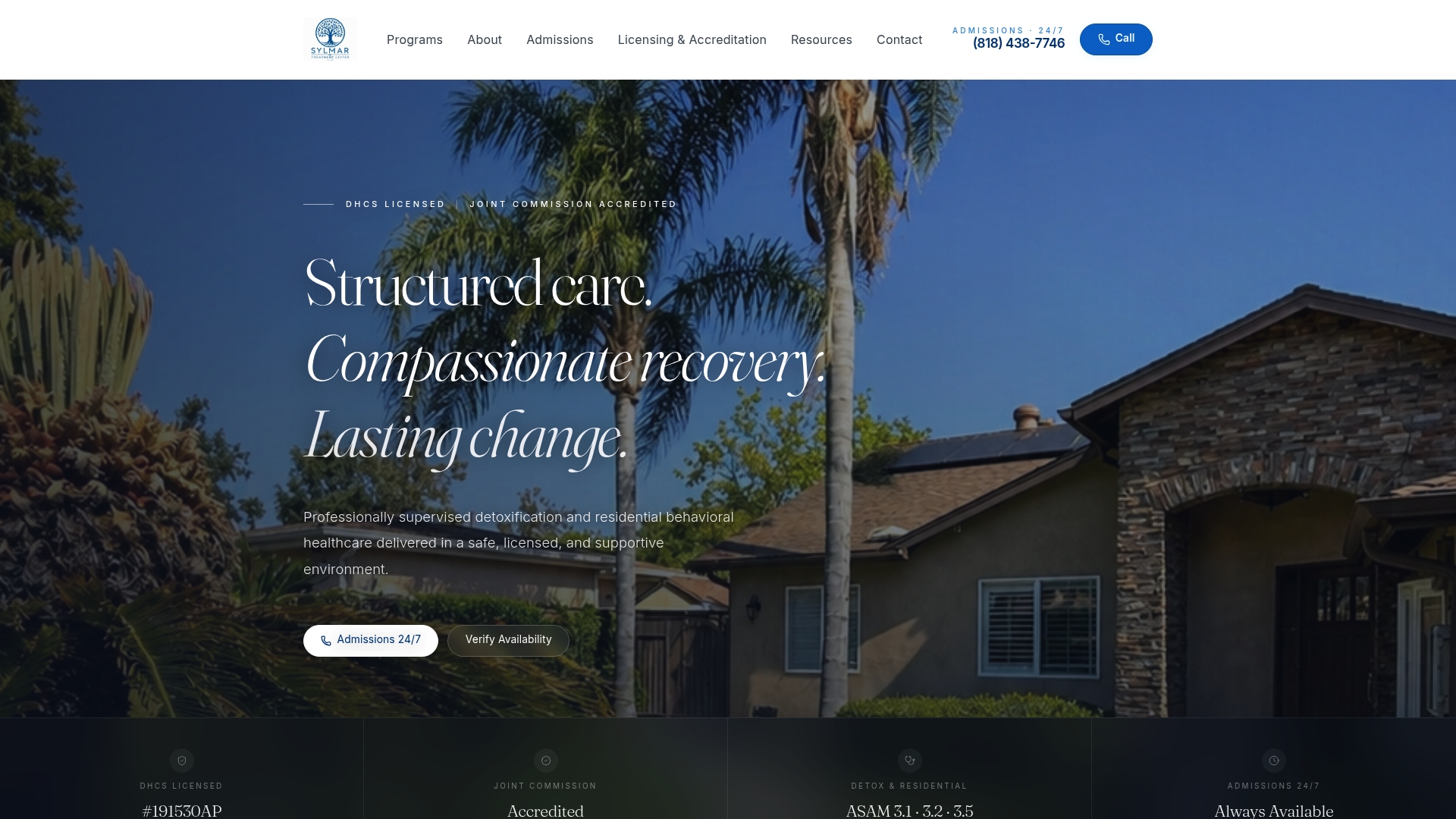
The center holds both Joint Commission accreditation and a DHCS license, satisfying the external verification criteria that administrators and managed care organizations look for when evaluating program quality. Co-occurring mental health disorders are addressed alongside substance use, not deferred to a separate referral. For patients who need structured residential care after withdrawal stabilization, Sylmartreatmentcenter’s residential treatment program and dual diagnosis support provide the documented continuity of care that quality metrics demand.
Admissions support is available 24/7. If you are evaluating placement options for a patient or reviewing programs against clinical standards, the full range of treatment programs at Sylmartreatmentcenter is the right starting point.