

If someone near you is having a severe reaction to K2 right now, call 911 immediately. For addiction help and treatment referrals, call the SAMHSA National Helpline at 1-800-662-HELP (free, confidential, 24/7) or dial 988 for the Suicide and Crisis Lifeline. These are your fastest paths to medically supervised care.
Call 911 right now if you see any of these:
- Seizure or convulsions
- Unconsciousness or unresponsiveness
- Severe chest pain or difficulty breathing
- Uncontrolled psychosis or violent behavior
- Suicidal statements or actions
For non-life-threatening situations, use these resources:
- 988 (Suicide and Crisis Lifeline): mental health crisis, severe paranoia, or suicidal thoughts linked to K2 use
- SAMHSA Helpline, 1-800-662-HELP: treatment referrals, program information, next steps for admission
- Poison Control, 800-222-1222: suspected ingestion or exposure questions when the person is conscious and stable (Poison Control provides immediate clinical guidance)
Because there is no specific antidote for synthetic cannabinoid toxicity, emergency care is supportive and symptom-directed. Getting the person to a medical setting fast is what matters most.
Pro Tip: If you can do so safely, secure any remaining K2 product in a bag and bring it to the ER or give it to paramedics. Do not leave the person alone until help arrives. Stay calm and keep your voice low.
Key Takeaways
K2 addiction treatment requires medically supervised detox, psychiatric oversight, and evidence-based behavioral therapy because synthetic cannabinoids carry risks of seizure, psychosis, and severe withdrawal that cannot be safely managed at home.
| Point | Details |
|---|---|
| Call 911 or 988 first | Seizures, unconsciousness, or psychosis require emergency response before any treatment referral. |
| SAMHSA Helpline is free and 24/7 | Call 1-800-662-HELP for confidential treatment referrals regardless of insurance status. |
| Medical detox is the safest start | Quitting cold turkey risks seizures and psychosis; inpatient monitoring with off-label medications is the recommended approach. |
| K2 is significantly more potent than THC, with potency varying widely across different products | Potency variability makes every use unpredictable and every withdrawal potentially more severe than the last. |
| Sylmartreatmentcenter offers 24/7 admissions | DHCS-licensed, Joint Commission-accredited, with dual-diagnosis care and individualized treatment in a six-bed residential setting. |
Table of Contents
- What is K2/Spice, and how does it differ from cannabis?
- How do you recognize K2 use, addiction, and overdose?
- Why is K2 especially dangerous?
- What does K2 withdrawal feel like, and why does detox require medical supervision?
- What are the evidence-based treatment options for K2 addiction?
- How do you find K2 treatment in the U.S. right now?
- What should you expect during K2 withdrawal and early recovery?
- How Sylmartreatmentcenter treats K2 addiction
- Why waiting is the part that actually costs you
- Sylmartreatmentcenter is ready to help right now
- Sources
What is K2/Spice, and how does it differ from cannabis?
K2 and Spice are street names for synthetic cannabinoids: man-made chemicals sprayed onto dried plant material and sold as a cannabis substitute, with no approved medical use and no consistent formula. According to WebMD, K2 carries a high risk of dependence and unpredictable health reactions that go well beyond what natural cannabis produces.
Synthetic cannabinoids are not a safer version of marijuana. They are chemically distinct compounds that can trigger severe psychiatric and physical crises that natural THC rarely causes at typical doses.
The core danger is the manufacturing process. Because the chemicals are applied to plant material in uncontrolled settings, the concentration varies from batch to batch and even from one part of the same package to another. A dose that felt manageable last week can be overwhelming today. NIDA’s research background on synthetic cannabinoids highlights this unpredictability as a central public health concern, not just a potency issue.
How do you recognize K2 use, addiction, and overdose?
The clearest sign of acute K2 intoxication is a cluster of symptoms that looks more like a psychiatric emergency than typical cannabis intoxication: sudden severe agitation, hallucinations, paranoia, rapid heart rate, vomiting, and in serious cases, seizures or loss of consciousness. The onset can be fast and the severity can escalate within minutes.
Ongoing addiction looks different. Watch for:
- Tolerance: needing more K2 to get the same effect
- Daily or near-daily use despite wanting to stop
- Severe cravings that override other priorities
- Continued use after a bad reaction or hospitalization
- Withdrawal symptoms when not using (anxiety, insomnia, sweating, nausea)
- Neglecting work, relationships, or health to use or recover from use
Warning signs that warrant an emergency call or immediate treatment referral:
- Confusion or disorientation lasting more than a few minutes
- Chest pain, irregular heartbeat, or difficulty breathing
- Hallucinations or paranoid delusions
- Inability to communicate or respond normally
- Any mention of self-harm
Pro Tip: When talking to someone in crisis, keep your voice calm and even. Remove any K2 or paraphernalia from the immediate area if you can do so without confrontation. If the person is conscious, offer water. Avoid arguing about their use — your goal right now is to keep them safe, not to convince them of anything.
Why is K2 especially dangerous?
K2 can cause unpredictable, severe physical and psychiatric complications including cardiac events, seizures, acute psychosis, and kidney injury. The reason the risk profile is so different from cannabis comes down to potency and chemical variability.
A 2025 systematic review of case reports found that synthetic cannabinoids can be 2–100 times more potent than THC and are associated with more severe, unpredictable withdrawal and higher rates of acute adverse events than natural cannabis in reported cases. That range is not a typo. The same chemical class that produces a mild effect at one concentration can trigger a life-threatening reaction at another.
Statistic to know: The systematic review found that synthetic cannabinoid cases consistently showed more severe acute presentations than comparable cannabis cases, including a higher proportion of cases requiring emergency intervention.
Long-term use compounds the risk. Polysubstance use is common among people who use K2 regularly, and underlying psychiatric disorders frequently co-occur, making treatment more complex. Kidney injury from certain synthetic cannabinoid compounds has been documented in clusters of cases, and cardiovascular stress is a recurring theme in emergency presentations.
What does K2 withdrawal feel like, and why does detox require medical supervision?
Withdrawal from K2 can be severe and unpredictable, and medically supervised detox is the safest route for most people with established dependence. Quitting cold turkey carries real risks: seizures, severe dehydration, and acute psychosis are all documented complications of unsupervised cessation, as NHCHC clinical guidance makes clear.
Common K2 withdrawal symptoms:
- Intense anxiety and restlessness
- Insomnia and vivid nightmares
- Sweating, chills, and tremors
- Nausea, vomiting, and diarrhea
- Severe cravings
- Irritability and mood swings
- In serious cases: psychosis, seizures, and cardiovascular instability
Symptoms typically begin within hours of the last use and often peak around days 2–4. In an inpatient setting, many acute physical symptoms stabilize within about a week, though psychological symptoms can persist considerably longer.
Medically supervised detox addresses this through 24/7 monitoring, IV fluids for dehydration, and off-label medications. Because there are no FDA-approved medications specifically for synthetic cannabinoid withdrawal, clinicians rely on clinical judgment: benzodiazepines for agitation and seizure control, atypical antipsychotics such as quetiapine for psychosis and sleep disruption, and anti-emetics for nausea. This is not improvised care — it is a documented, interdisciplinary approach recommended by clinical outreach groups for this specific substance class. You can read more about which substances require medical detox and why inpatient monitoring matters.
Pro Tip: When preparing for a detox admission, gather the following before you call: a list of all substances used and approximate last-use dates, any current medications, insurance information, and a government-issued ID. Having this ready shortens the intake process significantly.
What are the evidence-based treatment options for K2 addiction?
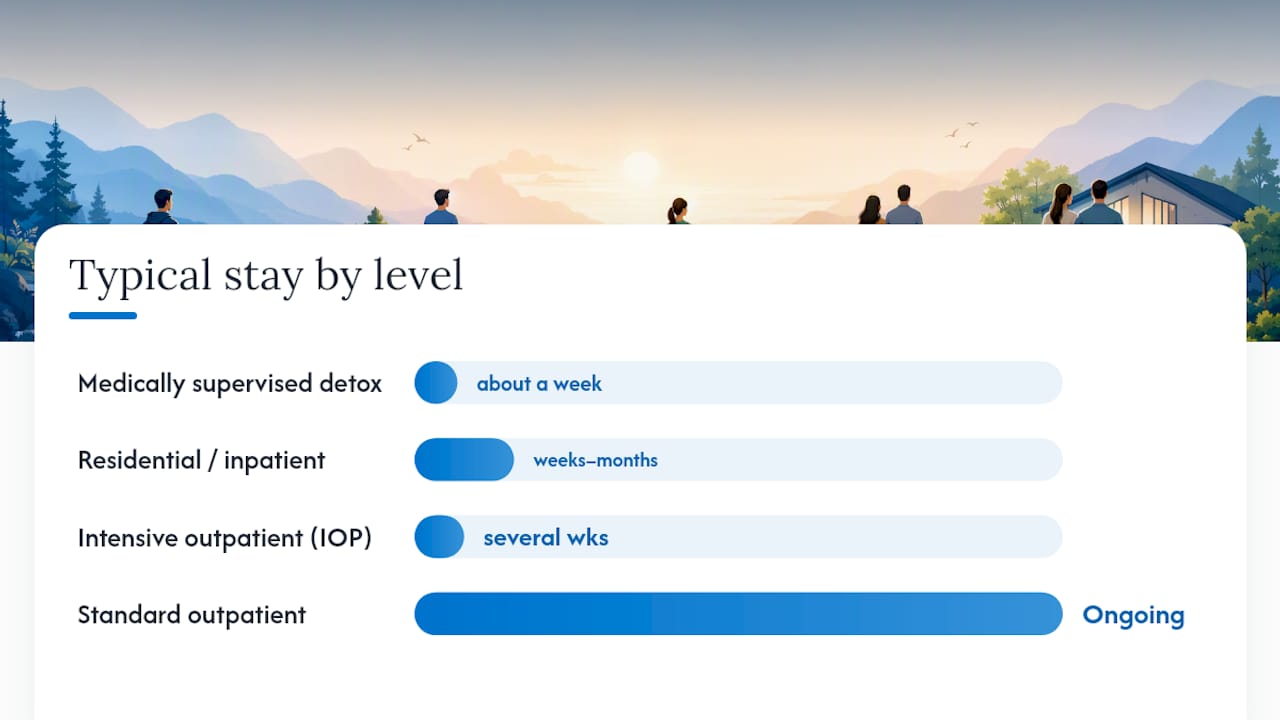
The typical pathway starts with medically supervised detox when dependence is established, then transitions to residential or outpatient treatment based on severity, social supports, and co-occurring conditions.
| Level of Care | What It Provides | Typical Stay |
|---|---|---|
| Medically supervised detox | 24/7 vital monitoring, IV fluids, off-label medications (benzodiazepines, antipsychotics), psychiatric oversight | about a week |
| Residential/inpatient | Structured daily therapy, medication management, dual-diagnosis care, no access to substances | several weeks to months |
| Intensive outpatient (IOP) | Multiple therapy sessions per week, medication management, peer support, while living at home or in sober housing | several weeks |
| Standard outpatient | Weekly individual and group therapy, relapse prevention planning, continuing care | Ongoing |
The behavioral therapies with the strongest evidence base for substance use disorders include Cognitive Behavioral Therapy (CBT), Motivational Enhancement Therapy (MET), and contingency management. None of these were developed specifically for K2, but they address the core mechanisms of addiction: distorted thinking patterns, ambivalence about change, and reinforcing abstinence with concrete rewards.
A critical trust signal when evaluating any program: Joint Commission accreditation and state licensing (such as a DHCS license in California) indicate that the facility meets independently verified standards for clinical care. Dual-diagnosis capability matters specifically for K2 cases because psychiatric symptoms often persist beyond acute withdrawal and require ongoing psychiatric oversight. Co-occurring anxiety and depression are particularly common and benefit from integrated mental health support alongside addiction treatment.
No FDA-approved medication exists specifically for synthetic cannabinoid use disorder. Every medication used in this context is off-label, which makes the quality of psychiatric oversight at a facility a more important selection criterion than the medication list alone.
How do you find K2 treatment in the U.S. right now?
Call the right number for your situation, then use the federal search tool to find a local program.
- 911: active medical emergency (seizure, unconsciousness, severe cardiac or breathing symptoms)
- 988: mental health crisis, suicidal ideation, or severe psychosis
- SAMHSA National Helpline, 1-800-662-HELP: free, confidential, 24/7 treatment referrals and information
- Findtreatment: federal locator to search programs by location and filter for medically supervised detox, dual-diagnosis care, and insurance type
When you call a facility, have this information ready:
- Last substance used and approximate time of last use
- All substances currently being used (polysubstance use affects treatment planning)
- Current symptoms (especially any psychiatric symptoms or recent seizures)
- Insurance carrier and member ID, or confirmation of no insurance
- Willingness to transfer if the first facility cannot admit immediately
On a facility’s Findtreatment profile, look for: medically supervised detox listed as an available service, psychiatric oversight or dual-diagnosis capability, accreditation status, and 24/7 admission hours. A facility that cannot admit around the clock is a problem if the person is actively withdrawing.
For people without insurance, 24/7 helplines can identify publicly funded detox programs and sliding-scale community options. Do not let insurance status delay a call — SAMHSA’s helpline handles uninsured callers routinely.
Pro Tip: If the person is actively withdrawing or has had a recent severe reaction, say so explicitly when you call. Phrases like “currently symptomatic” or “had a seizure in the last 48 hours” move the conversation toward emergency admission faster than a general inquiry.
You can also use the detox program evaluation criteria guide to build a checklist of questions before you call any facility.
What should you expect during K2 withdrawal and early recovery?
Many severe withdrawal symptoms begin within 24–72 hours of the last use, often peak around days 2–4, and in inpatient settings may stabilize within about a week. Psychological recovery takes longer and can extend for months.
Early recovery milestones to track:
- Days 1–3: Stabilized vital signs, reduced agitation, beginning of hydration and nutrition
- Days 3–7: Decreased acute psychiatric symptoms, improved sleep, engagement with clinical staff
- Week 2: Reduced cravings, clearer thinking, initial therapy sessions
- Weeks 3–4: Transition planning from detox to residential or outpatient care
- Months 1–3: Sustained engagement in therapy, management of co-occurring disorders, building relapse prevention skills
The relapse risk is highest in the first weeks after detox, when cravings are still strong and the psychological work has barely started. How detox prepares patients for the next phase of rehab matters enormously here — detox alone is not treatment, it is the medical stabilization that makes treatment possible. Continuing care, peer support, and community connection are what sustain recovery over time.
How Sylmartreatmentcenter treats K2 addiction
Sylmartreatmentcenter provides medically supervised detox, residential treatment, dual-diagnosis care, and 24/7 admissions appropriate for K2 withdrawal and addiction. The center’s six-bed setting is deliberately small, which means the staff-to-patient ratio stays high and care stays personal.
Program features relevant to K2 cases:
- 24/7 medical and psychiatric oversight during detox
- Medication management using off-label protocols for synthetic cannabinoid withdrawal
- Dual-diagnosis evaluation and integrated mental health treatment
- Individualized treatment plans built from comprehensive clinical assessments
- Evidence-based behavioral therapies (CBT, MET, contingency management)
- Court-directed placement capability for clients with legal requirements
- DHCS license and Joint Commission accreditation
Sylmartreatmentcenter’s intimate six-bed model means every patient receives a custom care plan — not a standardized protocol — with direct access to clinical and psychiatric staff throughout their stay.
Families preparing for intake should have the following ready: the patient’s full medication list, a timeline of K2 use and any other substances, recent medical history (especially any prior seizures or psychiatric hospitalizations), insurance information, and a government-issued ID. Admissions staff are available around the clock and can walk families through the process step by step.
Why waiting is the part that actually costs you
The most common mistake families make with K2 addiction is treating it like cannabis dependence and assuming the person can manage withdrawal at home. They cannot, reliably. The same chemical unpredictability that makes K2 dangerous to use makes withdrawal dangerous to manage without medical oversight. A person who had a mild withdrawal last time may have a seizure this time, because the compound they used this week is not the same compound they used last month.
The second mistake is waiting for the person to “be ready.” Severe psychiatric symptoms from K2 use, including psychosis and paranoia, can impair the judgment needed to recognize that help is necessary. Families often have a clearer view of the crisis than the person in it. Acting on that clarity, calling SAMHSA, calling 988, or calling a facility directly, is not overstepping. It is the most useful thing you can do.
Medically supervised detox and integrated psychiatric care are not a last resort. They are the appropriate first response to a substance that carries this level of physiological and psychiatric risk.
Sylmartreatmentcenter is ready to help right now
Six-bed, accredited, and staffed around the clock: Sylmartreatmentcenter offers something most residential programs cannot — a setting where every admission gets direct clinical attention from day one, not a bed in a crowded unit.
If you or someone you care about is dealing with K2 dependence, the fastest next step is a call to admissions. The team can assess the situation, explain what medically supervised detox looks like at the center, and walk through insurance or payment options on the same call. No commitment required to have that conversation.
Explore the full programs overview, including residential treatment and dual-diagnosis support, or go directly to Sylmartreatmentcenter to reach admissions now.
Sources
- National Helpline for Mental Health, Drug, Alcohol Issues
- Findtreatment
- Synthetic Cannabinoid Withdrawal: A Systematic Review of Case Reports
- Substance use guidelines: synthetic cannabinoids (NHCHC guidance PDF)
- K2/Spice: Overview, Uses, Side Effects, Precautions, Interactions, Dosing and Reviews
- Synthetic cannabinoids (Spice): An overview for healthcare providers (archived CDC resource)
- Poison Help — About us
- NIDA — Synthetic cannabinoids
This article is general information, not a substitute for advice from a qualified doctor. Consult a qualified healthcare professional about your own circumstances before acting on anything here.