

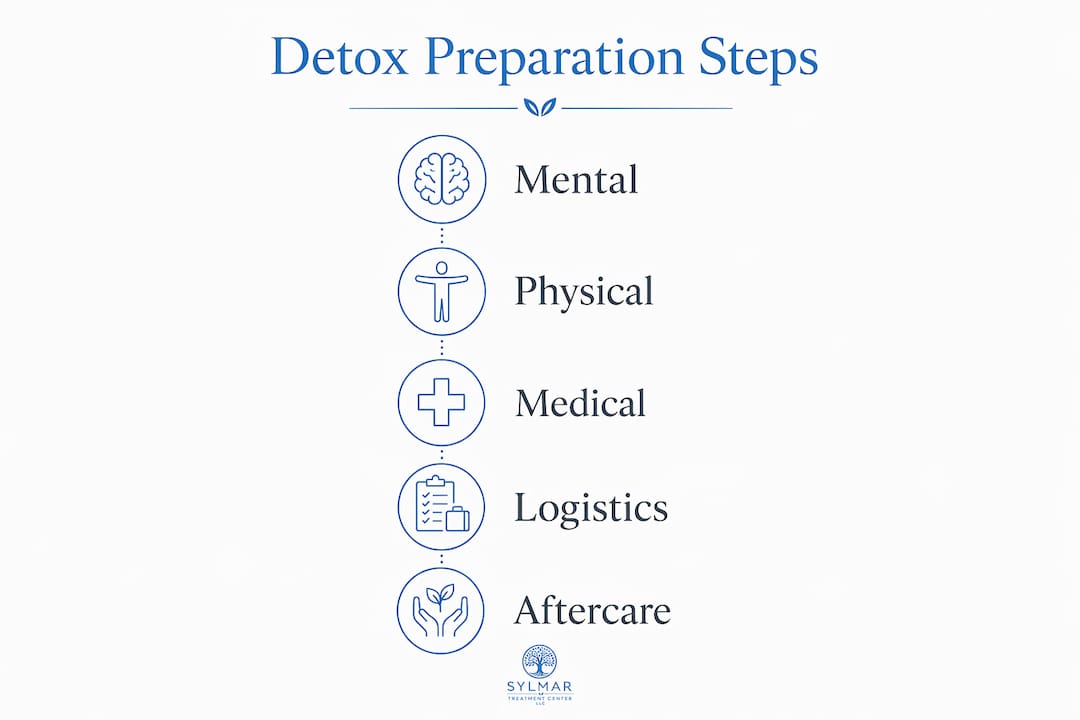
Preparing your body for a detox program is not something you do the morning of admission. The most successful detox experiences start days or weeks earlier, with deliberate steps across four areas: mental readiness, physical conditioning, medical coordination, and logistical planning. Each one matters. Skip the mental piece and anxiety can derail your first 48 hours. Skip the medical piece and withdrawal symptoms can become dangerous.
Here is what thorough preparation actually looks like:
- Mental: Set realistic expectations, begin counseling or therapy, and build a support network before you arrive.
- Physical: Shift toward an anti-inflammatory diet, increase water intake, and add gentle movement to support your body’s natural elimination pathways.
- Medical: Review all current medications with your prescribing doctor, disclose every substance you use, and get a baseline health assessment.
- Logistical: Confirm insurance coverage, understand the admission timeline, and pack what you need so your first day is focused on healing, not scrambling.
Pro Tip: Start making gradual changes well in advance of admission. Staged preparation, including dietary shifts and hydration increases, reduces the severity of early withdrawal symptoms and gives your body a head start on the process.
Table of Contents
- How mental preparation shapes your detox readiness
- How diet, hydration, and exercise get your body ready
- Why coordinating with your healthcare providers matters
- What to pack and how to handle logistics before you arrive
- How Sylmartreatmentcenter approaches detox preparation and care
- Managing anxiety, trauma, and depression during detox
- Planning for life after detox: aftercare and relapse prevention
- Sylmartreatmentcenter offers personalized detox care when you are ready
- Key Takeaways
How mental preparation shapes your detox readiness
Most people focus entirely on the physical side of detox and underestimate how much their mental state drives the outcome. Anxiety, unresolved trauma, and depression do not pause during withdrawal. They intensify. Walking in with some emotional tools already in hand changes the experience significantly.
Realistic expectations are the foundation. Detox is uncomfortable. Knowing that in advance, rather than being blindsided by it, keeps people from interpreting normal withdrawal discomfort as a sign something has gone terribly wrong. Behavioral therapy and pre-admission counseling help you build that frame before you need it.
Emotional regulation techniques like meditation, controlled breathing, and journaling reduce anxiety and depression risks during withdrawal. These are not soft suggestions. Mental preparation measurably reduces dropout rates and withdrawal distress. A few weeks of consistent practice before admission gives you a real skill set to draw on when things get hard.
Building your support network before you go is equally practical. Tell the people you trust what you are doing. Identify who you can call during and after treatment. Arrange for someone to handle responsibilities at home so you are not mentally managing two lives while trying to detox.
- Attend at least one pre-admission counseling session.
- Practice a daily mindfulness or breathing routine for one to two weeks before admission.
- Write down your reasons for seeking treatment and keep them accessible.
- Identify two or three people who will support your recovery without judgment.
- Discuss any history of trauma or mental health diagnoses with your intake coordinator.
Pro Tip: Ask your treatment center whether they offer a pre-admission phone consultation with a counselor. Many do, and a single conversation can reduce first-day anxiety dramatically.
How diet, hydration, and exercise get your body ready
Physical preparation for detox is not about a crash cleanse or a juice fast. Commercial detox products lack strong scientific evidence and can cause dehydration, electrolyte imbalance, and fainting. What actually works is supporting the body’s own elimination systems, specifically the liver, kidneys, lymphatic system, skin, and lungs, through diet, water, and movement.
Diet
Shift toward whole, nutrient-dense foods in the week before admission. Anti-inflammatory options like leafy greens, berries, legumes, and fatty fish reduce systemic inflammation that substance use typically worsens. Cut processed foods, refined sugar, and alcohol as much as possible. Your liver is already working hard; giving it less junk to process before detox begins makes a real difference.

Consistent daily bowel movements before detox matter more than most people realize. Constipation signals poor elimination and a higher toxin burden, which increases the risk of more intense detox reactions. Fiber-rich foods and adequate hydration keep things moving.
Hydration
Water is the simplest and most overlooked preparation tool. Proper hydration supports kidney function and every major detox pathway in the body. Aim for consistent daily hydration in the days before admission. Herbal teas, particularly dandelion root and ginger, offer additional kidney and digestive support without the risks of commercial cleanse products.

Exercise
Gentle, consistent movement supports lymphatic circulation, which has no pump of its own and depends entirely on physical activity. Gentle, consistent movement like walking, light yoga, or swimming is appropriate. Avoid intense training in the final days before admission; your body needs energy reserves, not depletion.
Why coordinating with your healthcare providers matters
This is the step people most often skip, and it carries the highest risk when they do. Managing medications and chronic health conditions with a healthcare provider before detox reduces complications and supports safer withdrawal. That coordination is not optional for anyone on prescription medications or managing a chronic illness.
Start with a full medical assessment, following guidance on safe detox preparatory steps as described in Why Do Dabs Give Me Headaches? Causes and Fixes. Your treatment team needs to know your complete health picture: every substance you use, every medication you take, and every diagnosed condition. Omitting anything, even something that feels minor, can lead to dangerous drug interactions or unmanaged withdrawal.
Certain substances require medically supervised detox specifically because withdrawal without monitoring can be life-threatening. Alcohol, benzodiazepines, and opioids all fall into this category. Your prescribing doctor needs to know you are entering a detox program so they can adjust or taper medications appropriately beforehand.
Chronic conditions like hypertension, diabetes, and seizure disorders need active management during detox, not a pause. Work with your primary care physician to create a plan that your detox team can continue. Bring written documentation of your conditions and current medication list to admission.
Commercial cleanses are not a substitute for any of this. The FDA and FTC have both flagged unproven detox products for making unsupported health claims. Medical detox is a clinical process, not a product.
Pro Tip: Write down every symptom you expect to experience based on your substance use history and share that list with your intake coordinator. Anticipating withdrawal symptoms together with your care team leads to a more targeted, comfortable management plan.
What to pack and how to handle logistics before you arrive
Practical preparation reduces the mental load on admission day and helps you stay focused on treatment rather than what you forgot at home. Packing comfort clothing, personal hygiene items, and medical documentation improves patient focus and compliance from day one.
Packing checklist:
- Comfortable, loose-fitting clothing for several days
- Personal hygiene products (check with the facility on restrictions)
- Prescription medications in original labeled bottles
- Photo ID and insurance cards
- Written list of current medications, dosages, and prescribing physicians
- Emergency contact information
- A journal or notebook
- Books, light reading, or other approved personal items
Beyond packing, handle your personal affairs before admission. Arrange coverage at work, set up automatic bill payments, and let your household know the timeline. The less you have pulling at your attention from outside, the more present you can be in treatment.
Insurance and costs: Call your insurance provider before admission to confirm what your plan covers for inpatient detox. Ask specifically about prior authorization requirements, in-network facilities, and any out-of-pocket maximums. Many treatment centers have admissions staff who can help verify benefits directly. If cost is a barrier, ask about payment plans or sliding-scale options.
Admission procedures: Most medically supervised detox programs begin with a comprehensive intake assessment covering your medical history, substance use, mental health, and social situation. This typically takes one to three hours. Arriving rested and with documentation in hand makes the process smoother for everyone.
How Sylmartreatmentcenter approaches detox preparation and care
Sylmartreatmentcenter is licensed by DHCS and accredited by The Joint Commission, two of the most rigorous quality standards in U.S. addiction treatment. Those credentials are not decorative. They mean the center’s protocols, staff qualifications, and patient safety practices have been independently verified.
What genuinely distinguishes Sylmartreatmentcenter is its six-bed capacity. Most detox facilities run dozens of patients simultaneously, which makes truly individualized care difficult. At six beds, the staff-to-patient ratio allows for the kind of attention that catches a developing complication early, adjusts a medication plan the same day, and builds a real therapeutic relationship within the first 48 hours.
Every patient at Sylmartreatmentcenter begins with a comprehensive assessment that covers medical history, substance use patterns, co-occurring mental health conditions, and social circumstances. That assessment drives a custom care plan, not a standard protocol applied to everyone. For patients with dual diagnosis needs, meaning a substance use disorder alongside a mental health condition, this integrated approach is especially important.
The center’s 24/7 admissions support means you do not have to wait for business hours to ask a question or begin the intake process. That around-the-clock availability matters most in the moments when someone is ready to take the step and does not want to lose momentum waiting until Monday morning.
Pro Tip: Use Sylmartreatmentcenter’s pre-admission consultation to ask specifically about what preparation steps they recommend for your substance use history. Their clinical team can give you a personalized pre-detox plan rather than a generic checklist.
Managing anxiety, trauma, and depression during detox
Anxiety, trauma responses, and depression are not side effects that appear only in people with a prior mental health diagnosis. Withdrawal itself triggers neurochemical shifts that can produce intense anxiety, mood crashes, and intrusive thoughts even in people who have never experienced these before. Knowing this in advance is genuinely useful.
The most effective approach is not to suppress these responses but to have a plan for them. Cognitive behavioral therapy (CBT) techniques, practiced before admission, give you a concrete way to interrupt a spiral of anxious thinking. Grounding exercises, like the 5-4-3-2-1 sensory method, are simple enough to use during acute distress without any equipment.
Trauma history complicates detox in a specific way: substances are often used to manage trauma symptoms, and removing them can cause those symptoms to surface intensely. A trauma-informed care team recognizes this pattern and responds to it clinically rather than treating it as a behavioral problem. When evaluating a detox program, ask directly whether their staff is trained in trauma-informed care.
Depression during detox is common and usually peaks in the first week as the brain’s dopamine system recalibrates. This is temporary, but it does not feel temporary when you are in it. Medication management, peer support, and structured daily activity all help. Sylmartreatmentcenter’s medication management program addresses exactly this window, supporting patients through the neurochemical adjustment with clinical oversight.
Planning for life after detox: aftercare and relapse prevention
Detox is the beginning of recovery, not the end of it. The period immediately following discharge carries the highest relapse risk, which makes post-detox planning as important as the preparation that came before. People who leave detox with a structured aftercare plan in place have meaningfully better outcomes than those who do not.
Aftercare options in the U.S. typically include residential treatment, partial hospitalization programs (PHP), intensive outpatient programs (IOP), and standard outpatient therapy. The right level of care depends on the severity of the substance use disorder, the presence of co-occurring conditions, and the stability of the home environment. Your detox team should help you identify the appropriate step-down level before you leave.
Relapse prevention is a skill set, not a mindset. Specific tools include identifying personal triggers, building a sober support network, establishing a daily structure, and having a concrete plan for high-risk situations. Twelve-step programs like Alcoholics Anonymous and SMART Recovery offer peer-based support that many people find valuable alongside clinical treatment.
Medication-assisted treatment (MAT) is an evidence-based option for opioid and alcohol use disorders that significantly reduces relapse rates. Medications like buprenorphine, naltrexone, and acamprosate are approved by the FDA for this purpose and work best when combined with behavioral therapy. If MAT is appropriate for your situation, discuss it with your treatment team before discharge so the prescription is in place when you leave.
One practical step that often gets overlooked: schedule your first post-discharge therapy appointment before you leave the detox facility. The gap between discharge and the first outpatient appointment is a vulnerable window. Closing it in advance is one of the simplest and most effective things you can do.
Sylmartreatmentcenter offers personalized detox care when you are ready
Detox preparation is serious work, and the facility you choose should match that seriousness. Sylmartreatmentcenter provides adult detox and residential care in an intimate, six-bed setting where every patient receives a comprehensive assessment and a treatment plan built specifically for them, not a one-size-fits-all protocol.
The center holds both DHCS licensing and Joint Commission accreditation, and its clinical team is trained to manage co-occurring mental health conditions alongside substance detox. For patients who need individualized treatment that accounts for their full medical and psychological picture, that integration is the difference between a detox that holds and one that does not.
Admissions support is available 24 hours a day, seven days a week. When you are ready to take the next step, you can reach Sylmartreatmentcenter’s team at any hour to begin the intake process, ask about your specific situation, or verify insurance coverage. Review the full range of detox and recovery programs to find the right fit for where you are right now.
Key Takeaways
Thorough preparation across mental, physical, medical, and logistical dimensions gives you the best chance of a safe, effective medically supervised detox experience.
| Point | Details |
|---|---|
| Start preparation early | Seven days of staged preparation reduces symptom severity and improves detox comfort. |
| Support physical elimination | Anti-inflammatory diet, daily hydration, and gentle exercise prime the liver, kidneys, and lymphatic system before admission. |
| Coordinate medically | Disclose all substances and medications to your care team; managing chronic conditions before detox prevents dangerous complications. |
| Plan logistics in advance | Confirm insurance, pack medical documentation, and arrange personal affairs so your focus stays on treatment from day one. |
| Sylmartreatmentcenter | Offers DHCS-licensed, Joint Commission-accredited detox in a six-bed setting with individualized care plans and 24/7 admissions support. |