

A rehab progress report for court is a short, structured account from your treatment provider of how you are doing: whether you show up, whether your tests are clean, and whether you follow the plan. Courts and probation officers use it to decide what happens next. The report is only as strong as the treatment record behind it, so the best preparation is a program that documents attendance, testing and clinical progress from day one, and that handles your consent correctly. At Sylmar Treatment Center, our six-bed residential setting, 24/7 admissions support and court-directed placements are built around that kind of documentation.
TL;DR
- A progress report usually covers attendance, drug and alcohol test results, participation, treatment goals and a plan for continued care.
- Courts use reports to decide on incentives, reduced requirements or sanctions, so accuracy and timeliness matter.
- Federal rules (42 CFR Part 2) protect substance use treatment records. Your written consent, or a qualifying court order, is generally required before a provider shares them.
- You can limit what is released to what the court actually asks for, and some forms can go straight to your attorney.
- Ask the court, your attorney or your probation officer which form and deadline apply before treatment starts.
Table of Contents
- What a rehab progress report for court is
- What the report usually includes
- Why the report matters to your case
- Consent: who can authorize the release
- Keeping the report to what the court needs
- A checklist before the report is due
- Building a record that reads well
- How Sylmar supports court-involved clients
- Our perspective
- FAQ
- Sources
What a rehab progress report for court is
A progress report is a document, often a standard form, that a treatment provider completes for a judge, probation officer or treatment court team. It tells the court how a person is engaging with a court-ordered or court-linked program.
In drug courts the report is built into the process. One county’s drug court handbook says the judge receives a progress report from the drug court team before each status review hearing. In federal supervision it can be monthly: the U.S. District Court for Nevada’s PROB 46 monthly treatment report must be completed and submitted with each monthly billing.
The requester varies by case. It can be a drug or mental health court, a probation or pretrial officer, a diversion program, or a family treatment court handling a child-welfare matter. The court or your attorney will tell you which applies. Our guide to court-mandated treatment programs explains how those paths differ.

What the report usually includes
Forms differ by court, but the same building blocks appear again and again.
| Element | Example from a public court form |
|---|---|
| Attendance and punctuality | Whatcom County District Court’s progress report asks whether the client attends required appointments on time |
| Plan compliance | The same form asks whether the client follows the recommended plan and is in overall compliance, with explanations and a counselor signature and date |
| Testing | The federal PROB 46 requests urine testing results, no-shows and tardiness |
| Goals and progress | PROB 46 asks for treatment goals, whether they were met, progress steps, obstacles or setbacks, and provider observations |
| Plan going forward | PROB 46 also asks for a plan for continued treatment |
| Participation rating | Solano County Superior Court’s mental health diversion form rates participation as satisfactory, partial, higher level of care needed, non-compliant or other |
A drug court report may also list self-help meeting attendance and employment or other imposed requirements, according to the LaSalle County handbook.
Notice what is not on most of these forms: session notes, full diagnoses or your life story. A report is a summary of compliance and progress, not your chart.
Why the report matters to your case
Courts treat progress reporting as both monitoring and motivation. In the LaSalle County program, good progress may lead to reduced requirements or other incentives, and poor progress to sanctions such as increased requirements or incarceration. Other courts set their own consequences, so ask yours.
That makes three things worth protecting:
- Consistency. Every missed appointment appears on the form. Treatment that fits your schedule and health needs prevents gaps.
- Context. Setbacks are asked about directly on forms like PROB 46, along with the plan to address them. A provider who notes what happened and what changed gives the court something to work with.
- Timeliness. The Solano form should be submitted before the next court date. A report that arrives late can look like non-compliance even when treatment is going well.
For a deeper look at how attendance records help in court, see our article on rehab attendance for court and our overview of probation rehab compliance.
Consent: who can authorize the release
Substance use treatment records get stronger protection than ordinary medical records. Under the federal Part 2 rule, records that identify a person as having or having had a substance use disorder generally cannot be shared by a covered program unless an exception applies. HHS explains that written consent or a qualifying court order and subpoena are the routes for use in legal proceedings against the patient.
What a valid consent contains, according to 42 CFR 2.31:
- who the patient is
- who may disclose the information
- what information will be shared
- who will receive it
- the purpose
Consent can be on paper or electronic. The same section says consent for using records in a civil, criminal, administrative or legislative proceeding cannot be combined with consent for another purpose. So a court release should be its own document.
Recent changes
HHS says its 2024 final rule brought Part 2 closer to HIPAA and allows one consent for future treatment, payment and health care operations disclosures. It kept special limits on using these records in legal proceedings against a patient. The rule took effect April 16, 2024, and compliance was required by February 16, 2026, per HHS. Our guide to HIPAA and Part 2 changes walks through what that means for families.
Consent can have limits
Policies in some courts show how this works in practice. Skagit County’s Family Recovery Court policies require participant consent for providers to relay progress to the team. Its consent text says you may revoke consent, subject to actions already taken in reliance on it, and that the consent does not waive attorney-client confidentiality. Ask your attorney how revocation would work in your court before you sign.
Keeping the report to what the court needs
You do not have to hand over a full treatment record to satisfy a progress requirement. A few practical habits help.
Ask for the court’s form first. If the court or probation office has a form, use it. The Solano form, for example, can be returned to the participant or sent directly to the participant’s attorney of record, which lets your lawyer review it before it reaches the court.
Name the recipients and purpose in your consent. Because 42 CFR 2.31 requires you to specify them, a narrow release is a normal request, not an unusual one.
Keep clinical detail out of open court. One state’s family treatment court guidance says open court is not the place to disclose diagnoses, medications or private treatment-group discussions. Reports can cover testing, attendance and participation without them.

Expect internal team protections. Massachusetts’ family treatment court protocol lets designated team members exchange updates on engagement and progress under a HIPAA authorization and Part 2 consent, and bars duplicating the team worksheet or sharing it with non-members.
Our medical records guide covers your rights to access your own records.
A checklist before the report is due
Work through these with your attorney, probation officer or court coordinator at the start of treatment, not the week before a hearing.
- Which form and which period? The PROB 46 identifies the reporting period and asks for program and provider names and the current treatment plan.
- Who receives it? The court, the probation officer, your attorney, or all three.
- When is it due? Before the next court date at minimum; monthly in some federal cases.
- Who signs? Many forms need a counselor or agency representative’s signature and date.
- What consent is needed? A written, specific release, separate from other consents.
- What if a court order arrives after treatment begins? Maryland’s court-involved therapy guidelines advise seeking court direction before releasing information in that situation and checking state law and custody orders.
Our court-ordered rehab documentation checklist gives families a longer version.
Building a record that reads well
A strong report rarely comes from a single good week. It comes from treatment that is continuous, clinically coherent and documented. Courts look for steady attendance, honest engagement with setbacks, and a plan for what comes next.
When substance use and a mental health condition occur together, the plan matters even more, because a report that shows only attendance can miss why someone is struggling. Our dual diagnosis support treats both at once, and medication management with psychiatric oversight is part of what we offer. For ways to track your own growth between reports, see measuring personal progress during treatment.
How Sylmar supports court-involved clients
Sylmar Treatment Center is a six-bed residential facility licensed by the California Department of Health Care Services (DHCS) and accredited by the Joint Commission. Programs include medical detoxification, residential treatment and behavioral rehabilitation, each shaped by a comprehensive assessment and a custom care plan. We also offer court-directed placements for legal requirements, and admissions support is available 24/7.
If you, a family member or a client is facing a court requirement, our admissions team can talk through placement and what the court expects.
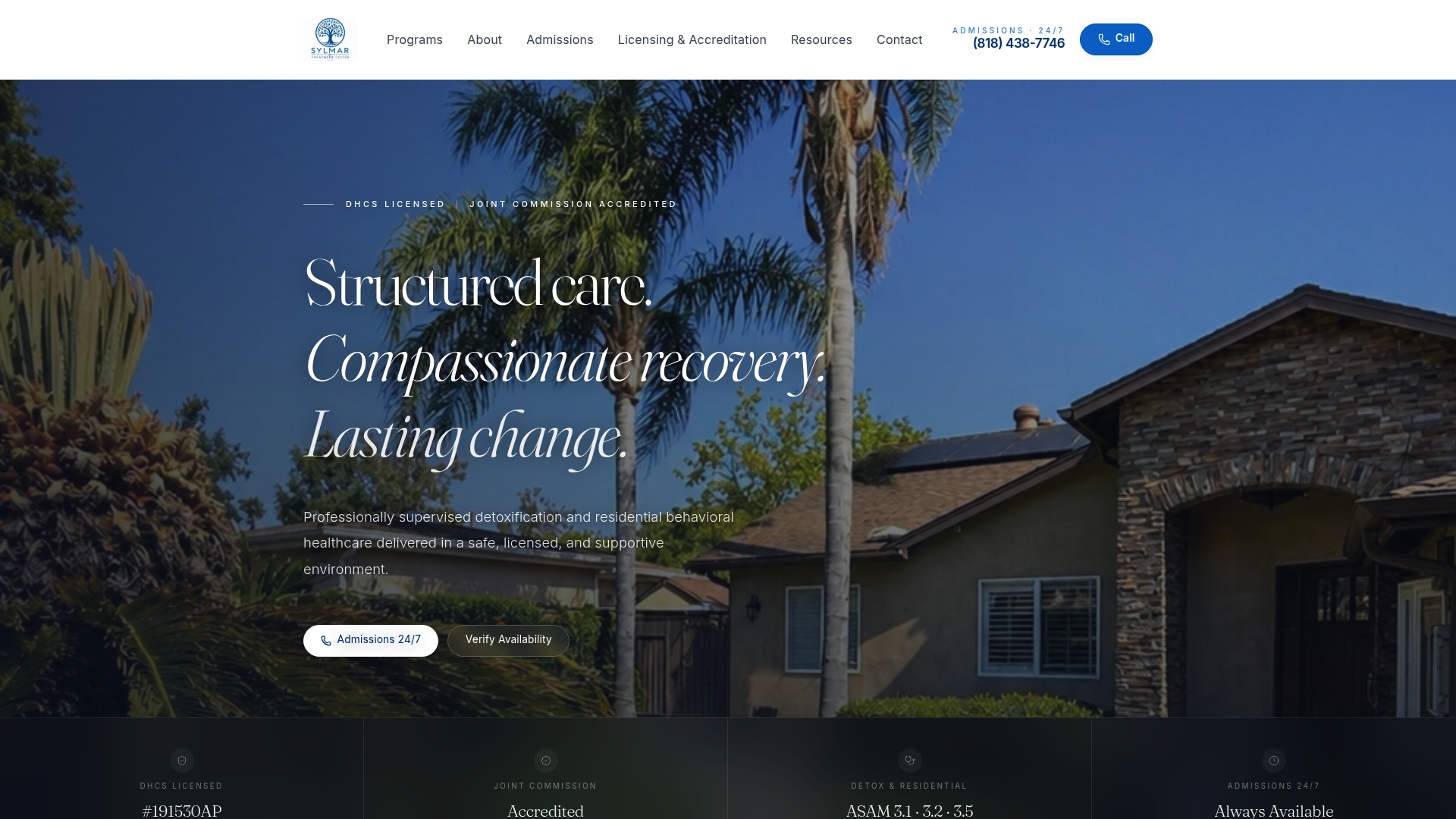
With only six beds, our clinicians and clients know each other well, which is the kind of closeness that individualized care is built on. See also how treatment centers fit into legal cases.
Our perspective
A progress report should never be a surprise. When someone enters treatment under a court requirement, the report is one of the first things we want them to understand: what it will say, who will see it, and what it is based on.
We believe the most honest report comes from a small setting. In a six-bed program, staff see how each person is actually doing day to day, so the report reflects the person and not a form filled out from a distance.
We also believe consent belongs to the patient. A release should be specific, signed freely and explained in plain language, and the court should get what it needs to do its job.
Recovery is not a straight line, and a good report says so. Setbacks paired with a clear plan show a court that treatment is working as it should.
Jim
FAQ
Does going to rehab look good in court?
Engagement in treatment can matter. In some programs, good progress is tied to incentives or reduced requirements, as the LaSalle County handbook describes. How much weight a judge gives it depends on the case and the court, so talk with your attorney.
How often are rehab progress reports submitted?
It depends on the court. Drug courts often supply one before each status hearing, and the federal PROB 46 is monthly. Some forms are due before the next court date. Ask your court, attorney or probation officer for the schedule at the start.
Can the rehab send the report without my permission?
Generally no. Federal Part 2 rules require your written consent or a qualifying court order and subpoena before a covered program discloses these records in legal proceedings against you. Your attorney can tell you which applies in your case.
Can the report go to my lawyer first?
Some courts allow it. Solano County’s form, for example, may be returned to the participant or sent directly to the attorney of record. Ask your court whether that option exists.
Sources
- LaSalle County Adult Drug Court Participant Handbook
- Monthly Treatment Report, PROB 46
- Whatcom County District Court Treatment Progress Report
- Solano County Treatment Participation and Progress Report
- HHS: Understanding Confidentiality of Substance Use Disorder Records
- eCFR, 42 CFR 2.31 Consent requirements
- Family Treatment Court, New England Judicial Council of Georgia Authorities
- Mass.gov Family Treatment Court information sharing
- Skagit County Family Recovery Court policies
- Maryland Courts Guidelines for Court-Involved Therapy