

Detox comfort care is defined as a set of medical and supportive treatments designed to ease withdrawal symptoms and keep patients safe during detoxification. The term “comfort care” is borrowed from palliative medicine, where it means symptom relief over cure. In addiction treatment, the industry standard phrase is medically supervised detox with comfort measures, but “detox comfort care” accurately describes the same practice. Understanding what does detox comfort care include gives you realistic expectations before you or someone you love enters treatment. Programs at facilities like Sylmartreatmentcenter combine medications such as clonidine and gabapentin with emotional support, hydration, and round-the-clock monitoring to address both the physical and psychological sides of withdrawal.
What does detox comfort care include as core components?
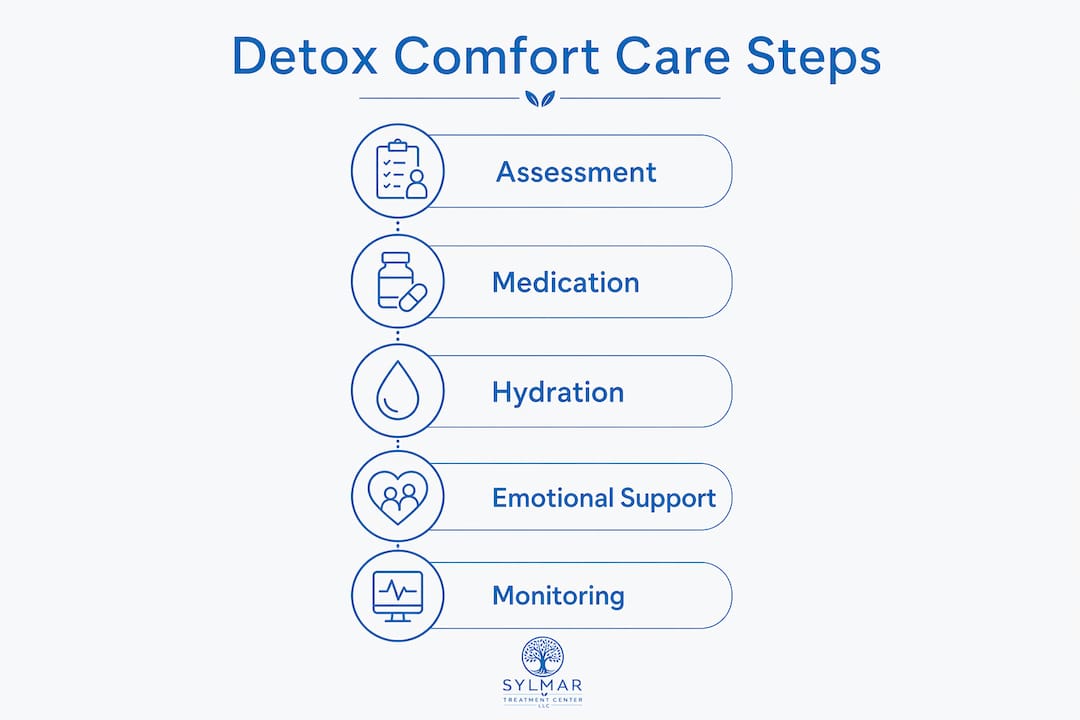
Detox comfort care covers five distinct categories of support, each targeting a different withdrawal symptom or risk. No single medication or service works alone. The strength of the approach comes from layering treatments to match each patient’s changing needs.
Comfort medications are the most visible component. Clonidine calms the nervous system, reducing anxiety, sweating, racing heart rate, and elevated blood pressure during opioid withdrawal. Gabapentin relieves nerve pain, anxiety, and restless legs, making it a frequent addition to detox protocols. Hydroxyzine manages anxiety and promotes sleep without the dependency risk of benzodiazepines.

A layered medication schedule is the standard of care. A patient might receive clonidine in the morning for blood pressure and anxiety, gabapentin during the day for nerve pain, ondansetron for nausea, and trazodone at night for sleep. This timing strategy treats symptoms as they peak rather than applying a one-size-fits-all dose.
Beyond medications, detox comfort care services include:
- Hydration and nutritional support: Withdrawal causes vomiting, diarrhea, and poor appetite. IV fluids or oral rehydration restore electrolyte balance and prevent dangerous dehydration.
- Sleep support: Insomnia is one of the most reported withdrawal complaints. Sleep aids and a structured rest schedule reduce exhaustion that can trigger early departure from treatment.
- Emotional support and counseling: Individual check-ins and psychoeducation sessions help patients understand what their body is doing and why. This reduces fear and builds trust in the process.
- Medical monitoring: Nurses and physicians track vital signs, adjust medications, and watch for complications such as seizures or cardiac events.
- Symptom management for stimulant withdrawal: No FDA-approved medications exist for cocaine or methamphetamine withdrawal. Supportive care including hydration, nutrition, and sleep aids carries patients through the crash phase safely.
Pro Tip: Ask the admissions team for a written list of comfort medications used at the facility before you arrive. Knowing what to expect reduces anxiety on day one.
How does comfort care improve safety and reduce relapse risk?
Comfort care functions as a retention strategy, not just a kindness. Premature discharge is a leading cause of relapse shortly after leaving treatment. Patients who leave early do so because withdrawal feels unbearable, not because they lack motivation. Reducing that physical distress keeps people in the program long enough for stabilization to occur.
Continuous assessment is the engine behind this safety benefit. Clinicians reassess symptoms every few hours during acute withdrawal and adjust medications accordingly. A patient whose blood pressure spikes at hour 18 gets a clonidine dose increase. A patient with worsening nausea gets ondansetron added to the schedule. This real-time responsiveness prevents small problems from becoming medical emergencies.
The detox assessment process also identifies co-occurring mental health conditions that worsen withdrawal. Untreated anxiety disorder, for example, amplifies every withdrawal symptom. Addressing it early with appropriate medication or counseling changes the entire trajectory of detox.
“Comfort care is not about making detox easy. It is about making it survivable enough that patients stay long enough to begin real recovery. The physical symptoms are the first barrier. Remove that barrier and you create space for the psychological work to start.”
This perspective reflects what addiction medicine clinicians observe consistently. Patients who complete a full detox course with comfort measures in place arrive at rehabilitation with more energy, better sleep, and a stronger foundation for behavioral change.
How does comfort care during detox differ from other addiction treatments?
The distinction matters because patients and families often confuse detox, rehabilitation, and medication-assisted treatment. Each serves a different phase and purpose.
Detox addresses physical dependence. The body clears the substance while clinicians manage the physiological risks. Rehabilitation focuses on the behavioral and psychological dimensions of addiction. Comfort care is a subset of detox, not a replacement for either rehabilitation or ongoing treatment.
Medication-assisted treatment (MAT) with FDA-approved drugs like buprenorphine reduces relapse rates and is typically discussed as a post-detox continuing care option. MAT is a long-term maintenance strategy. Comfort care medications like clonidine and gabapentin are short-term symptom managers used during the acute withdrawal window.
Comfort care focuses on symptom control and quality of life during a specific medical event, unlike hospice or end-of-life care, which is a common misconception about the term.
| Treatment type | Primary focus | Duration | Key tools |
|---|---|---|---|
| Detox comfort care | Symptom relief during withdrawal | Days to 1–2 weeks | Clonidine, gabapentin, hydration, monitoring |
| Rehabilitation | Behavioral and psychological recovery | Weeks to months | Therapy, CBT, group sessions |
| Medication-assisted treatment | Long-term relapse prevention | Months to years | Buprenorphine, naltrexone, methadone |
The table shows that these three approaches are sequential, not competing. Comfort care during detox sets the stage for rehabilitation, which then transitions into MAT or other continuing care.
What should patients expect during a detox comfort care program?
The experience follows a predictable structure, even though each patient’s symptom timeline differs. Knowing the sequence reduces fear before admission.
- Intake and clinical evaluation: A physician or nurse practitioner reviews your substance use history, current medications, and medical conditions. This clinical detox evaluation determines which comfort medications are appropriate and flags any risks requiring special monitoring.
- Acute withdrawal phase: This is the most intense period, typically peaking within 24–72 hours depending on the substance. Nurses monitor vital signs frequently. Medications are adjusted based on symptom scores using validated tools like the Clinical Opiate Withdrawal Scale (COWS).
- Stabilization: Symptoms decrease in intensity. Patients begin tolerating food and fluids more easily. Sleep improves. Group education sessions may begin, covering addiction neurobiology and early recovery expectations.
- Continuing care planning: Before discharge, the clinical team discusses next steps. Options include residential rehabilitation, outpatient programs, or MAT. This planning phase is part of the detox program, not an afterthought.
- Family communication: Many programs offer family updates and education during detox. Families who understand the process provide better support after discharge.
Pro Tip: Bring a list of all current medications and supplements to your intake appointment. Interactions between comfort medications and existing prescriptions are a real safety concern that your care team needs to know about upfront.
The medically supervised detox process at quality facilities includes 24-hour nursing coverage. That round-the-clock presence is not just reassuring. It is the mechanism that catches complications before they escalate.
Key Takeaways
Detox comfort care combines symptom-targeted medications, hydration, sleep support, and emotional guidance to keep patients stable, safe, and engaged through the full withdrawal process.
| Point | Details |
|---|---|
| Core medications | Clonidine, gabapentin, and hydroxyzine target anxiety, nerve pain, and sleep disruption during withdrawal. |
| Layered scheduling | Medications are timed to peak symptom windows, not given as a flat daily dose. |
| Retention and relapse | Comfort care reduces premature discharge, which is a primary driver of post-detox relapse. |
| Detox vs. rehab vs. MAT | These three approaches are sequential: comfort care during detox prepares patients for behavioral rehab and long-term MAT. |
| Continuing care planning | Discharge planning begins during detox and directly affects long-term recovery outcomes. |
What I’ve seen comfort care actually change in detox outcomes
I have worked alongside addiction medicine teams long enough to watch the same pattern repeat. Patients who arrive terrified of withdrawal and leave three days later are almost always the ones whose comfort needs were not addressed. The ones who complete detox are almost always the ones whose anxiety was taken seriously on day one.
The mistake families make is assuming that discomfort during detox is necessary or even therapeutic. It is not. Suffering through withdrawal without symptom management does not build character. It builds a reason to leave. The clinical evidence and the clinical reality align on this point.
What I find underappreciated is the role of sleep in early recovery. A patient who sleeps four hours a night for five days arrives at rehabilitation depleted. Trazodone or another sleep aid during detox is not a luxury. It is a clinical decision that affects everything that follows. Facilities that treat sleep as an afterthought are missing a significant lever.
My advice for families navigating this: ask specifically what the facility’s comfort medication protocol looks like. Ask how often nurses assess symptoms. Ask whether there is a physician available overnight. These questions separate programs that use comfort care as a marketing phrase from programs that practice it with rigor. Sylmartreatmentcenter’s six-bed model means nurses know each patient by name, not by room number. That level of attention is what comfort care looks like in practice.
— Jim
Detox comfort care programs at Sylmartreatmentcenter
Sylmartreatmentcenter offers medical detox programs built around the comfort care principles described in this article. The facility’s six-bed setting means every patient receives individualized attention from a clinical team that monitors symptoms around the clock.
Sylmartreatmentcenter holds a DHCS license and Joint Commission accreditation, which means its comfort care protocols meet independently verified standards. The admissions team is available 24/7 to answer questions about medications, monitoring, and what the first 72 hours look like. For patients dealing with both substance use and mental health conditions, the dual diagnosis program addresses both simultaneously from the first day of detox. Reach out to Sylmartreatmentcenter to learn which treatment programs fit your situation.
FAQ
What medications are used in detox comfort care?
Clonidine, gabapentin, hydroxyzine, ondansetron, and trazodone are among the most commonly used comfort medications. Each targets specific withdrawal symptoms such as anxiety, nerve pain, nausea, and insomnia.
Is detox comfort care the same as end-of-life comfort care?
No. In addiction treatment, comfort care refers to symptom relief and supportive services during withdrawal. It is not related to hospice or end-of-life care, despite sharing the same name.
How long does detox comfort care last?
Duration depends on the substance and the individual. Opioid withdrawal typically peaks within 24–72 hours and resolves over 5–10 days. Alcohol withdrawal can require closer monitoring for up to a week due to seizure risk.
Does comfort care during detox prevent relapse?
Comfort care reduces premature discharge, which is a primary driver of relapse immediately after leaving treatment. Patients who complete a full detox course are better positioned for the rehabilitation phase that follows.
What is the difference between detox comfort care and medication-assisted treatment?
Detox comfort care uses short-term medications to manage acute withdrawal symptoms. Medication-assisted treatment uses FDA-approved drugs like buprenorphine or naltrexone for long-term relapse prevention after detox is complete.