

Tianeptine withdrawal typically produces opioid-like symptoms, sometimes severe enough to need medical care, because the drug acts on opioid receptors despite being sold as an antidepressant supplement. Moderate to severe cases call for medical supervision, often through a supervised taper or detox using medications like buprenorphine, methadone, or clonidine. Anyone with chest pain, severe confusion, seizures, or trouble breathing needs emergency care immediately, guided by FDA warnings about the drug’s risks.
TL;DR:
- High-dose tianeptine use leads to rapid dependence, with withdrawal symptoms resembling opioid and tricyclic antidepressant effects.
- Withdrawal onset can occur within hours of last dose, typically lasting a few days physically, but cravings and mood issues may persist for weeks.
- Medications like buprenorphine, methadone, and clonidine are most effective in managing severe withdrawal symptoms, especially in high-dose dependence cases.
- Tianeptine is often missed during standard toxicology screens and can be misdiagnosed, so bringing product labels and reporting exposure to Poison Control improves care.
- Supervised detox in a licensed residential facility provides individualized care crucial for high-dose or polysubstance users, reducing risks of complications and relapse.
Table of Contents
- What Does Tianeptine Withdrawal Feel Like?
- Why Tianeptine Withdrawal Gets Missed or Misdiagnosed
- What Actually Treats Tianeptine Withdrawal
- When to Go to the ER for Tianeptine Withdrawal
- Can You Taper Off Tianeptine at Home?
- How a Licensed Residential Program Handles Tianeptine Withdrawal
- Psychological and Cognitive Withdrawal Symptoms
- Managing Symptoms That Linger After Detox
- Where to Find Help and Support
- Tianeptine Withdrawal With Other Substances or Mental Health Conditions
- An Honest Take on What This Data Actually Tells Us
- Getting Medically Supervised Support for Tianeptine Withdrawal
- Sources
- FAQ
What Does Tianeptine Withdrawal Feel Like?
Tianeptine withdrawal looks a lot like opioid withdrawal, because pharmacologically, that’s close to what it is. The drug binds to mu opioid receptors at high doses, which is why people who take large amounts daily for months develop physical dependence that mirrors what happens with prescription opioids or kratom. But tianeptine is also structurally related to tricyclic antidepressants, so withdrawal doesn’t map perfectly onto any one category. That overlap is exactly what makes it tricky to diagnose and treat.
Opioid-like symptoms tend to dominate the clinical picture. Case reports and poison-center data describe:
- Diarrhea and abdominal cramping
- Tremor and muscle aches
- Heavy sweating (diaphoresis)
- Rapid heart rate (tachycardia) and elevated blood pressure
- Agitation, restlessness, and drug cravings
- Nausea and vomiting
Anticholinergic and TCA-like features show up less often but complicate the picture when they do:
- Constipation
- Urinary retention
- Blurred vision
- Dry mouth
A case review published in PMC analyzing poison-center and case-report data found this exact symptom mix in patients withdrawing from high-dose tianeptine use, and noted that many cases resolved within 24 to 48 hours once appropriate treatment started. That’s a meaningfully shorter acute window than something like alcohol or benzodiazepine withdrawal, where the detox timeline can stretch much longer and carries its own seizure risk.
Pro Tip: Write down exactly when you took your last dose and how much. Onset timing is one of the fastest ways a clinician can distinguish tianeptine withdrawal from something else, and it changes what they’ll try first.
Onset usually starts within hours of the last dose for people using short-acting formulations, which is most of what’s sold as a supplement in gas stations and smoke shops. The acute phase generally lasts a few days. After that, many people notice lingering issues: low mood, fatigue, disrupted sleep, and intense cravings that can persist for weeks. This protracted phase is less physically dangerous but arguably harder to push through, since it’s the stretch where relapse risk climbs.
Dose matters enormously here. People taking gram-level daily amounts, far beyond the discontinued prescription dose of 12.5 milligrams three times a day once used in Europe, build tolerance fast and face rougher withdrawal. Redosing every three to six hours to avoid feeling sick is common among heavy users, which only deepens the dependence cycle. Mixing tianeptine with benzodiazepines, alcohol, or phenibut raises the stakes further, increasing both the severity of withdrawal and the danger of the underlying use pattern. The pattern resembles what’s seen with kratom withdrawal, another short-acting substance with opioid-like effects that catches people off guard with how fast tolerance builds.
Why Tianeptine Withdrawal Gets Missed or Misdiagnosed
Tianeptine occupies a strange pharmacological middle ground. It’s classified as an atypical tricyclic antidepressant, but at the doses people use recreationally, it acts substantially like a full opioid agonist. That dual identity means a patient can walk into an emergency department looking like a straightforward opioid withdrawal case, while also carrying TCA-related risks that a standard opioid protocol won’t catch.
A few practical realities make this worse:
- Tianeptine has a short half-life of roughly 12 hours, so it clears the body quickly, but that speed also means withdrawal can hit hard and fast.
- It does not appear on routine urine drug screens, according to Poison Control, so a negative toxicology panel tells clinicians nothing useful.
- Because it’s sold under brand names like Tianaa or ZaZa rather than as “tianeptine,” patients and even ER staff often don’t recognize what’s actually involved.
- TCA-like toxicity can cause ECG changes, specifically QRS widening, which changes treatment. Sodium bicarbonate, not an opioid protocol alone, may be indicated when that shows up.
Researchers reviewing case reports have flagged this exact blind spot: treating tianeptine withdrawal as pure opioid withdrawal without checking for TCA-like cardiac effects can lead to incomplete or unsafe care.
Pro Tip: If you’re heading to urgent care or the ER, bring the product packaging with you, even the empty bottle. Names like “tianeptine sodium” buried in supplement ingredient lists get missed constantly, and having the label speeds up correct treatment. It also helps to report the exposure to Poison Control at 1-800-222-1222, whose data helps clinicians nationally understand these cases better.
What Actually Treats Tianeptine Withdrawal
Because tianeptine behaves like an opioid at high doses, the medications that work best tend to be the same ones used for opioid use disorder, layered with supportive care for the TCA-like symptoms.
A review from the University of Illinois Chicago Drug Information Group summarizing case reports and poison-center data lists the medications clinicians have reported using:
- Buprenorphine, often started with a microinduction approach to avoid triggering precipitated withdrawal
- Methadone, used in inpatient settings for stabilization
- Clonidine, for autonomic symptoms like sweating, tachycardia, and agitation
- Benzodiazepines, for anxiety and severe agitation, used cautiously and short-term
- Gabapentin, sometimes added for cravings and general discomfort
- Antiemetics, for nausea and vomiting
- IV fluids, to manage dehydration from diarrhea and vomiting
That same review found that withdrawal symptoms often improved within 24 to 48 hours across multiple reported cases once treatment started, a timeline consistent with the PMC case series mentioned earlier.
Clinicians tend to reach for medications for opioid use disorder (MOUD) specifically when there’s evidence of substantial physical dependence: high daily doses, frequent redosing to stave off sickness, or a prior history of opioid use disorder. A 2023 peer-reviewed case report documented a patient with severe tianeptine withdrawal stabilized successfully using buprenorphine/naloxone combined with methadone, with clear symptomatic improvement over the following days. The report also described using a microinduction strategy, introducing buprenorphine in small, gradual doses, specifically to avoid precipitated withdrawal, a risk that comes up whenever someone with recent opioid agonist activity in their system starts buprenorphine too abruptly. Providers managing this transition often lean on the same precipitated withdrawal principles used with fentanyl and other high-affinity opioids.
When physical dependence looks less severe, symptom-driven supportive care alone (fluids, antiemetics, clonidine for autonomic symptoms) may be sufficient. The decision isn’t formulaic. It depends on daily dose, duration of use, prior substance use history, and how the patient is presenting in the moment.
It’s worth being honest about the evidence base here: everything described above comes from case reports and poison-center data analysis, not large randomized trials. Tianeptine isn’t FDA-approved for any use in the United States, so there’s no manufacturer-sponsored research pipeline generating that higher tier of evidence. That doesn’t make the case-report findings unreliable, but it does mean treatment decisions need to stay individualized, made by a clinician who can weigh a specific patient’s dose history, coingestants, and symptom severity rather than following a fixed protocol.
When to Go to the ER for Tianeptine Withdrawal
Certain signs mean don’t wait, call 911 or go straight to an emergency department:
- Respiratory depression — slow, shallow, or labored breathing
- Seizure activity of any kind
- Unresponsiveness or inability to stay awake
- Chest pain or irregular heartbeat
- Severe confusion or disorientation that seems out of proportion to typical withdrawal discomfort
- Signs of TCA toxicity, including a widened QRS complex on ECG, which clinicians check for specifically because of tianeptine’s tricyclic structure
In the ED, treatment depends on presentation. Naloxone may be given if opioid-like overdose is suspected, though tianeptine’s response to naloxone can be inconsistent since its opioid activity differs from classic full agonists. Airway support comes first if breathing is compromised. Sodium bicarbonate is used if QRS widening shows up on telemetry, addressing the TCA-related cardiac risk directly. Bloodwork, IV fluids, and antiemetics round out supportive care.
Tell the clinical team the dose, how often you were using it, and anything else in the mix, alcohol, benzodiazepines, phenibut. Bring the product packaging if you have it. This single detail routinely changes how fast the right treatment starts.
Can You Taper Off Tianeptine at Home?
Stopping tianeptine abruptly, especially at high recreational doses, carries real risk. The same opioid-like dependence that makes withdrawal feel brutal also makes cold-turkey cessation dangerous for some people, particularly those with cardiac issues, psychiatric instability, or heavy polysubstance use. A clinician-supervised taper or a short medically supervised detox stay generally beats going it alone.
For people managing a lower-severity case outside a hospital setting, a few measures help:
- Stay well hydrated, since diarrhea and vomiting are common and dehydration compounds every other symptom.
- Use clonidine or prescribed antiemetics only if a clinician has actually recommended them for your case.
- If a short benzodiazepine course is prescribed for agitation, take it exactly as directed, since these carry their own dependence risk.
- Skip alcohol and other sedatives entirely during withdrawal; combining depressants with tianeptine’s effects raises overdose risk.
Pro Tip: Keep naloxone on hand during any tianeptine taper, even one done under supervision. It won’t necessarily reverse every tianeptine-related emergency, but having it accessible costs nothing and could matter if opioid-like overdose symptoms appear during redosing.
Escalate to residential care when the dose has been high, when other substances are in the mix, or when psychiatric symptoms like severe depression or suicidal thinking accompany the withdrawal. Self-tapering with unregulated substitutes is not a safer alternative; it usually just extends the dependence.
How a Licensed Residential Program Handles Tianeptine Withdrawal
A structured pathway at an accredited facility generally looks like this: 24/7 admissions intake, a full clinical assessment, medically supervised detox with medication management when indicated, residential stabilization paired with dual-diagnosis work if a co-occurring mental health condition is present, then discharge planning with outpatient follow-up.
Sylmar Treatment Center runs medically supervised detox inside a six-bed licensed facility, which means psychiatric oversight and medication management happen in close, direct contact rather than at arm’s length. Look for two quality signals when evaluating any residential program for withdrawal management: state regulatory oversight confirming licensure and independent verification of clinical quality standards through accreditation.
A six-bed setting means the clinical team isn’t managing withdrawal protocols for dozens of patients at once. For a substance as easy to misdiagnose as tianeptine, that kind of attention, someone who actually knows your dose history and can adjust medication in real time, is what supervised care is supposed to deliver.
Residential care makes the most sense when dose history is high, when other substances are involved, or when psychiatric symptoms need monitoring alongside the physical withdrawal.
Psychological and Cognitive Withdrawal Symptoms
The physical symptoms get most of the attention, but the psychological side of tianeptine withdrawal is often what drives relapse. Anxiety, irritability, and a heavy, flattened mood are common during the acute phase and frequently outlast the physical symptoms by weeks.
Cognitive fog is a real complaint too: difficulty concentrating, memory lapses, and a general sense of mental slowness that people describe as feeling “unplugged.” Since tianeptine’s antidepressant-adjacent mechanism affects mood regulation directly, stopping it can trigger a rebound low mood distinct from ordinary withdrawal discomfort, sometimes resembling a depressive episode rather than simple drug withdrawal.
Cravings deserve specific mention. They tend to peak during the first week and can resurface unpredictably for weeks afterward, often triggered by stress, sleep disruption, or exposure to situations tied to prior use. This is where withdrawal shifts from a medical event into a longer psychological process, one that benefits from structured support rather than willpower alone.
Sleep disturbance, ranging from insomnia to vivid, unsettling dreams, shows up consistently in case reports and adds to the exhaustion that makes early recovery feel harder than it should. None of this means something has gone wrong. It means the brain is recalibrating after a substance that was affecting both opioid and serotonergic pathways simultaneously, and that recalibration takes real time.
Managing Symptoms That Linger After Detox
Post-acute symptoms, sometimes called protracted withdrawal, can stretch for weeks past the physical detox window. Persistent low mood, disrupted sleep, and intermittent cravings are the most common holdovers, and they’re precisely the symptoms most likely to trigger relapse if left unaddressed.
Continued clinical support matters here more than most people expect. A structured outpatient plan, ideally coordinated with the same team that managed detox, gives someone a place to report symptoms as they evolve rather than white-knuckling through them alone. Medication management can help stabilize mood symptoms that don’t resolve on their own, especially when a co-occurring depressive or anxiety disorder is part of the picture.
Relapse prevention in this context looks a lot like relapse prevention for any substance with strong psychological pull: identify specific triggers (stress, certain locations, particular people), build a concrete response plan for cravings before they hit, and stay connected to either individual therapy or a peer support structure. Sleep hygiene deserves more attention than it usually gets, since poor sleep during the post-acute phase reliably worsens mood and craving intensity the following day.
The people who do best tend to be the ones who treat the weeks after detox as an active phase of treatment, not a finish line. Detox handles the physical dependence. What comes after handles the reason the dependence developed in the first place.
Where to Find Help and Support
Finding the right kind of help starts with an honest read of severity. Someone using low, occasional amounts might reasonably manage withdrawal with outpatient guidance from a primary care provider. Someone using gram-level daily doses, redosing every few hours, or combining tianeptine with alcohol or benzodiazepines needs a higher level of care, and recognizing that difference early prevents a lot of unnecessary suffering.
Poison Control at 1-800-222-1222 is available around the clock for anyone unsure whether a specific symptom or exposure needs emergency evaluation, and its data collection is part of what’s helping researchers and clinicians understand tianeptine cases better nationally. A primary care doctor or addiction medicine specialist can evaluate dependence severity and refer to appropriate care, whether that’s outpatient management or a medically supervised detox admission.
Families often feel unsure how to bring this up or where to start looking for a program. A good first move is checking whether a facility holds a DHCS license and Joint Commission accreditation, since those two credentials verify both legal operation and independently assessed clinical quality. From there, a phone call to an admissions line, most accredited programs run 24/7 intake, can clarify what level of care actually fits the situation without requiring a commitment on that first call.
Tianeptine Withdrawal With Other Substances or Mental Health Conditions
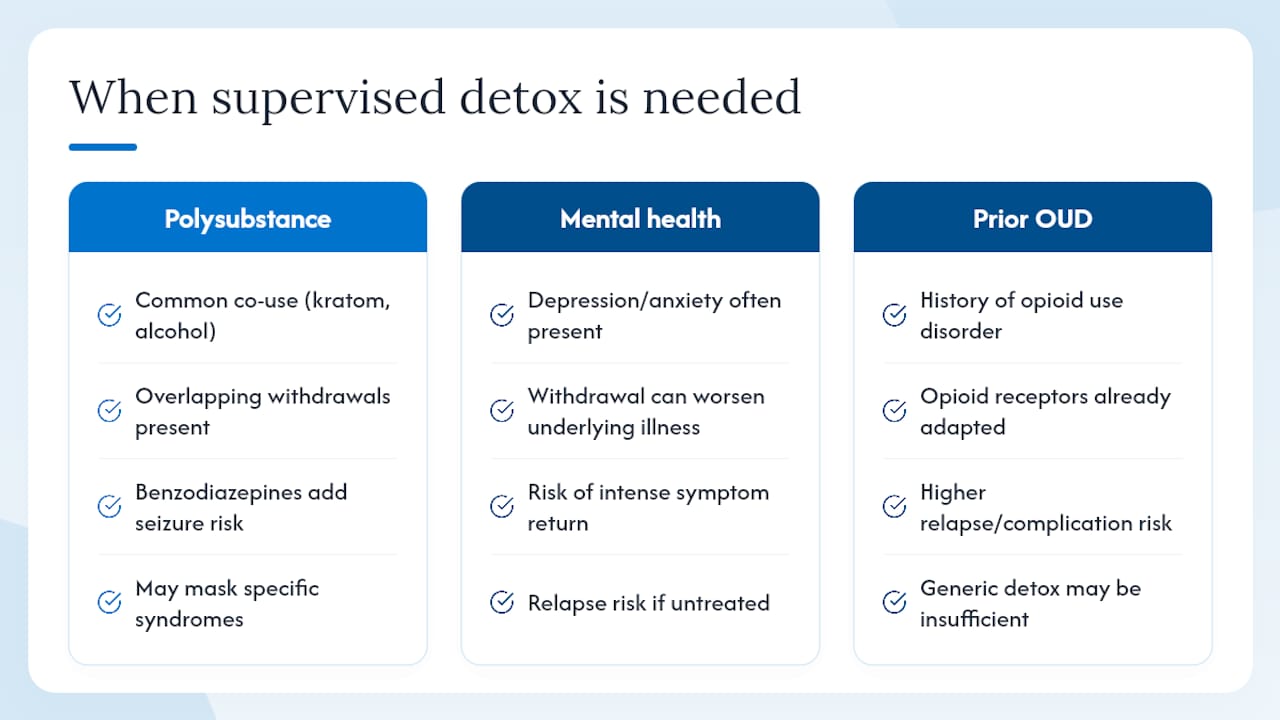
Polysubstance use complicates tianeptine withdrawal significantly, and it’s common. Because tianeptine is often used alongside kratom, alcohol, or benzodiazepines, either as a substitute during shortages or in combination for effect, withdrawal from multiple substances at once can overlap in ways that are hard to disentangle without medical evaluation. Benzodiazepine withdrawal in particular carries seizure risk that tianeptine withdrawal alone typically doesn’t, which is one reason combined use raises the stakes for needing supervised detox rather than home management.
Co-occurring mental health conditions add another layer. Depression and anxiety are common in people who started using tianeptine, sold as an unregulated antidepressant supplement, specifically to self-manage mood symptoms in the first place. Withdrawal can then trigger a return or worsening of the underlying condition it was masking, sometimes intensely. This is where dual diagnosis support becomes relevant rather than optional: treating the withdrawal without addressing the psychiatric condition underneath it tends to set someone up for relapse once detox ends.
A prior history of opioid use disorder also shifts the clinical approach, generally toward earlier use of MOUD like buprenorphine, since it signals the body’s opioid receptor system has already adapted to heavy agonist exposure. None of these overlapping conditions make treatment impossible. They make an individualized medical assessment, rather than a generic detox protocol, the difference between a rough week and a genuinely dangerous one.
An Honest Take on What This Data Actually Tells Us
The conventional advice on stopping tianeptine, “just taper slowly on your own,” undersells how unpredictable this substance is. It behaves like an opioid at the doses people are actually using, but it’s sold and perceived as a supplement, which creates a dangerous gap between how seriously people take the withdrawal and how seriously they should. The case-report evidence is thin compared to a well-studied drug, but it’s consistent: symptoms are opioid-like, sometimes with TCA complications, and the cases that resolved fastest were the ones where someone got buprenorphine, methadone, or clonidine into the picture early rather than waiting it out.
What’s overrated here is the idea that because it’s “not a real opioid,” withdrawal doesn’t warrant real medical infrastructure. What’s underrated is how much dose history and coingestants change the risk picture for any individual person. If there’s one thing worth prioritizing, it’s this: don’t self-diagnose severity based on how tianeptine is marketed. Diagnose it based on how much you were actually taking and how often.
— Jim
Getting Medically Supervised Support for Tianeptine Withdrawal
Outpatient tapers and home remedies can work for genuinely mild cases, but tianeptine’s opioid-like dependence pattern means a lot of people underestimate what they’re facing until they’re already in acute withdrawal. With direct psychiatric oversight in a small residential facility, medication management decisions, including those involving buprenorphine or clonidine, are made by a team monitoring patients’ responses in real time rather than remotely.
The program is built for exactly this kind of case: medically supervised detox with individualized treatment planning, dual diagnosis support when a co-occurring mental health condition is part of the picture, and a DHCS license plus Joint Commission accreditation backing the clinical protocols. If you or someone you love has been using tianeptine at high or frequent doses, or combining it with alcohol or benzodiazepines, admissions is available 24/7 to talk through what level of care actually fits. Call Sylmar Treatment Center’s medical detox program to get a clinical assessment started today.
This article is general information, not a substitute for advice from a qualified doctor. Consult a qualified healthcare professional about your own circumstances before acting on anything here.
Sources
The clinical picture around tianeptine is still emerging, largely because it’s an unregulated substance in the United States with no formal approval pathway generating large-scale trial data. A few sources stand out as consistently reliable:
- Tianeptine’s Obscured Withdrawal, Presentation, and Treatment
- Tianeptine: Gas station heroin | Poison Control
- What is tianeptine, and are there recommendations for managing tianeptine misuse/withdrawal in the medical setting?
- Severe tianeptine withdrawal symptoms managed with medications for opioid use disorder: a case report
- Tianeptine products linked to serious harm, overdoses, and at least 1 death
These are worth reading directly, especially for clinicians encountering a tianeptine case for the first time.
FAQ
Is Tianeptine a Full Opioid Agonist?
Not in the classic pharmaceutical sense. At the high doses used recreationally, tianeptine acts substantially on mu opioid receptors, producing opioid-like effects and dependence, though its overall pharmacology also carries tricyclic-antidepressant-like properties that a pure opioid doesn’t have.
How Long Does Tianeptine Withdrawal Last?
The acute phase typically runs a few days, with many reported cases improving within 24 to 48 hours once treatment starts, according to case-report data reviewed by researchers on PMC. Protracted symptoms like low mood, sleep disruption, and cravings can persist for several weeks afterward.
What Medications Treat Tianeptine Withdrawal Symptoms?
Case reports and clinical reviews describe buprenorphine, methadone, clonidine, benzodiazepines, gabapentin, antiemetics, and IV fluids as the medications used depending on symptom severity, detailed in the UIC Drug Information Group’s review.
Does Benadryl Help With Tianeptine Withdrawal?
Diphenhydramine (Benadryl) isn’t part of the treatments described in tianeptine case reports and doesn’t address the underlying opioid-like dependence or TCA-related risks; it may ease minor discomfort but shouldn’t substitute for clinician-directed care like clonidine or antiemetics.
When Should Someone Choose Residential Detox Over Outpatient Care?
Residential detox, like the medically supervised program at Sylmar Treatment Center, is advisable for high daily doses, frequent redosing, polysubstance use, or co-occurring psychiatric instability, situations where outpatient monitoring alone carries meaningfully higher risk.